The Geography of Immediate Friction
The doors of the international rail carriages slide open at Brussels-Midi to reveal a concrete expanse steeped in institutional gray. Passengers drag wheeled luggage across scarred tile floors, navigating a labyrinth of conflicting departure boards and dimly lit corridors. For the budget traveler moving along the classic European circuit between the manicured romanticism of Paris and the curated canal rings of Amsterdam, this physical encounter generates immediate friction. The surroundings of the station exude a chaotic, working-class grit that fails to align with the heavily filtered expectations of continental backpacking. They depart almost immediately. (A visual miscalculation).
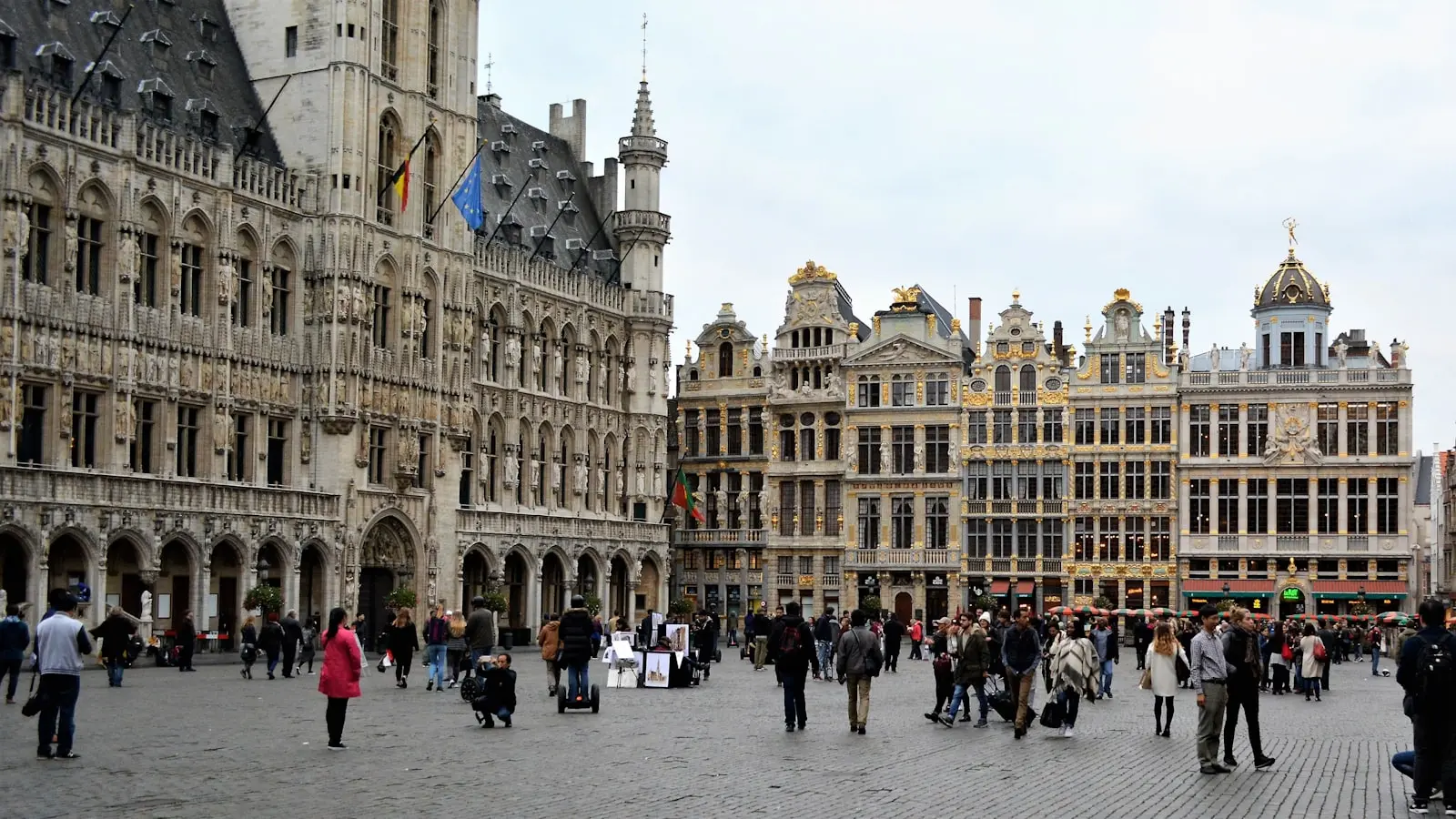
Digital travel forums operate as echo chambers for this specific impatience. Analysts tracking itinerary sentiment across platforms note a persistent directive urging planners to treat the Belgian capital as a mere transit hub. The prevailing strategy allocates an aggressive four-hour layover. Visitors stash their bags in automated lockers, ride the metro to the central station, and walk a predetermined circle around the Grand-Place. They observe the gothic guildhalls, photograph the bronze Manneken Pis statue, purchase a mass-produced waffle drowning in synthetic chocolate syrup, and return to the station. They consume the city as a checklist item.
The Economics of the Layover
The economics of the modern European tour strictly dictate spatial movement. Backpackers operating on constrained budgets calculate their trajectories based on hostel pricing, rail pass validity, and social media validation. The algorithms governing travel content prioritize easily consumable aesthetics. A pristine canal in Ghent translates instantly to digital currency. A complex, politically layered neighborhood in Brussels requires too much exposition. Consequently, budget planners strip their itineraries of nuance. They treat geography as a sequence of transaction points. (Efficiency destroys discovery).
This mechanical approach to travel severs any connection to the cultural fabric of the environment. Design shapes behavior. When a city is engaged solely through its most heavily trafficked commercial corridors, it behaves like a tourist trap. The central nucleus of Brussels caters explicitly to this fleeting demographic. The immediate architecture feels overly preserved, while the surrounding blocks suffer from a jarring lack of cohesion resulting from mid-century urban planning policies. Developers in the 1960s tore down historic blocks to construct sterile office towers. The term ‘Brusselization’ was coined precisely to describe this reckless municipal zoning.
Yet, the narrative fractures completely when the timeline extends. Travelers who commit seventy-two hours to the environment report an entirely different spatial reality. The city demands navigation beyond the superficial center. Pushing southward into municipalities like Saint-Gilles and Ixelles strips away the bureaucratic veneer and reveals an intricate, multicultural density. Here, the architecture shifts from chaotic modernism into the birthplace of the Art Nouveau movement.
Craftsmanship Hidden in Plain Sight
Victor Horta and Paul Hankar designed residences in these neighborhoods at the turn of the twentieth century that treated stone and iron as organic materials. Facades curve with the fluidity of plant stems. Wrought-iron balconies twist into intricate, asymmetrical patterns that catch the low northern light. To walk through the residential streets of Ixelles is to encounter a masterclass in structural craftsmanship hidden in plain sight. These are not cordoned-off museum exhibits. These buildings function as active residences, embassies, and schools.
Taste, much like architecture, requires time to decode. The culinary landscape of Brussels mirrors its urban design. It hides its most profound achievements away from the primary thoroughfares. The Brasserie Cantillon sits in an unassuming brick building within the industrial district of Anderlecht. Inside, the air hangs heavy with the scent of damp wood, oxidized hops, and sour grain. This facility operates as a living organism rather than a sanitized production line.
Brewers here practice spontaneous fermentation. They pump unfermented wort into a massive copper cooling vessel situated beneath a slatted roof. The roof vents remain open to the night air, allowing wild yeasts native only to the Zenne river valley to inoculate the liquid. The beer then ages in oak barrels for years. (Modern efficiency finds no foothold here). The resulting Lambic and Gueuze beers offer a complex, acidic profile tasting of green apples, leather, and earth. It is a beverage that forces the drinker to pause. It challenges the palate.
The Intersection of Demographics
The contrast between a spontaneously fermented gueuze and a mass-market lager perfectly encapsulates the divide between slow travel and frantic tourism. Backpackers operating on rigid, accelerated schedules naturally gravitate toward the accessible and the obvious. They seek immediate gratification in places like Bruges, where the medieval aesthetic remains perfectly intact and requires zero interpretative effort. Bruges operates as a static diorama. Brussels operates as a complex, breathing metropolis.
Local guides repeatedly emphasize that the true value of the capital lies in its living intersections. The Place Flagey in Ixelles serves as a prime example of this kinetic energy. By late afternoon, the square fills with a cross-section of the city demographic. French expatriates, European Union diplomats, Congolese diaspora, and Flemish designers converge around the outdoor seating of Café Belga. The soundscape features a rapid toggling between French, Dutch, and English. The food stalls along the edge of the square dispense paper cones of frites twice-fried in beef tallow. The texture is precise.
Just beyond the upscale boutiques of the Avenue Louise lies the Matongé neighborhood. Originally formed in the late 1950s by Congolese university students, the district pulses with an entirely different sensory frequency. Shop windows display vibrant wax-print fabrics alongside grocery storefronts stacked with plantains, cassava, and smoked fish. The air carries the scent of moambe stew and roasting meats. This neighborhood shatters the monolithic European narrative pushed by traditional guidebooks. It forces visitors to confront the colonial history of the nation while simultaneously experiencing the vibrant diaspora that defines the contemporary capital.
The Verdict on Immersion
The culinary framework extends far beyond the established exports of chocolate and waffles. The city operates as a serious gastronomic hub built on unpretentious execution. Traditional brasseries in the Marolles district serve steaming pots of moules-frites alongside heavy, braised stews like carbonnade flamande, rich with dark beer and mustard. Chefs in these establishments do not chase transient culinary trends. They rely on technique and regional sourcing. The North Sea supplies gray shrimp, heavily featured in crisp croquettes that demand a slow, deliberate consumption.
Furthermore, the architectural dissonance of Brussels tells the story of an evolving continent. The glass-and-steel monoliths of the European Quarter reflect the bureaucratic ambition of a unified Europe. These structures stand in stark, jarring contrast to the cobblestone alleys just a few streets away. This juxtaposition is not a flaw in the urban design. It is the physical manifestation of history actively overwriting itself. To stand at the Mont des Arts and look down over the spire of the Town Hall framed by brutalist administrative blocks is to witness the chaotic reality of a functioning capital.
Understanding Brussels requires abandoning the expectation of a cohesive visual narrative. The city does not present a unified front. It is a mosaic of nineteen distinct municipalities, each operating with its own mayor, its own architectural rhythms, and its own cultural gravity. The friction that repels the rushed backpacker is the exact mechanism that rewards the patient observer.
When travelers dismiss the city based on the grit of the Midi station or the overwhelming crowds of the Grand-Place, they fall victim to an illusion of efficiency. They trade depth for velocity. The structural craftsmanship of an Art Nouveau facade or the intricate acidity of a wild-fermented ale cannot be absorbed in a three-hour transit window. These elements demand a surrender to the pace of the environment. Culture shapes taste, but only when given the oxygen to breathe. Those who stay, observe, and wander discover that the capital is not a layover. It is the destination.