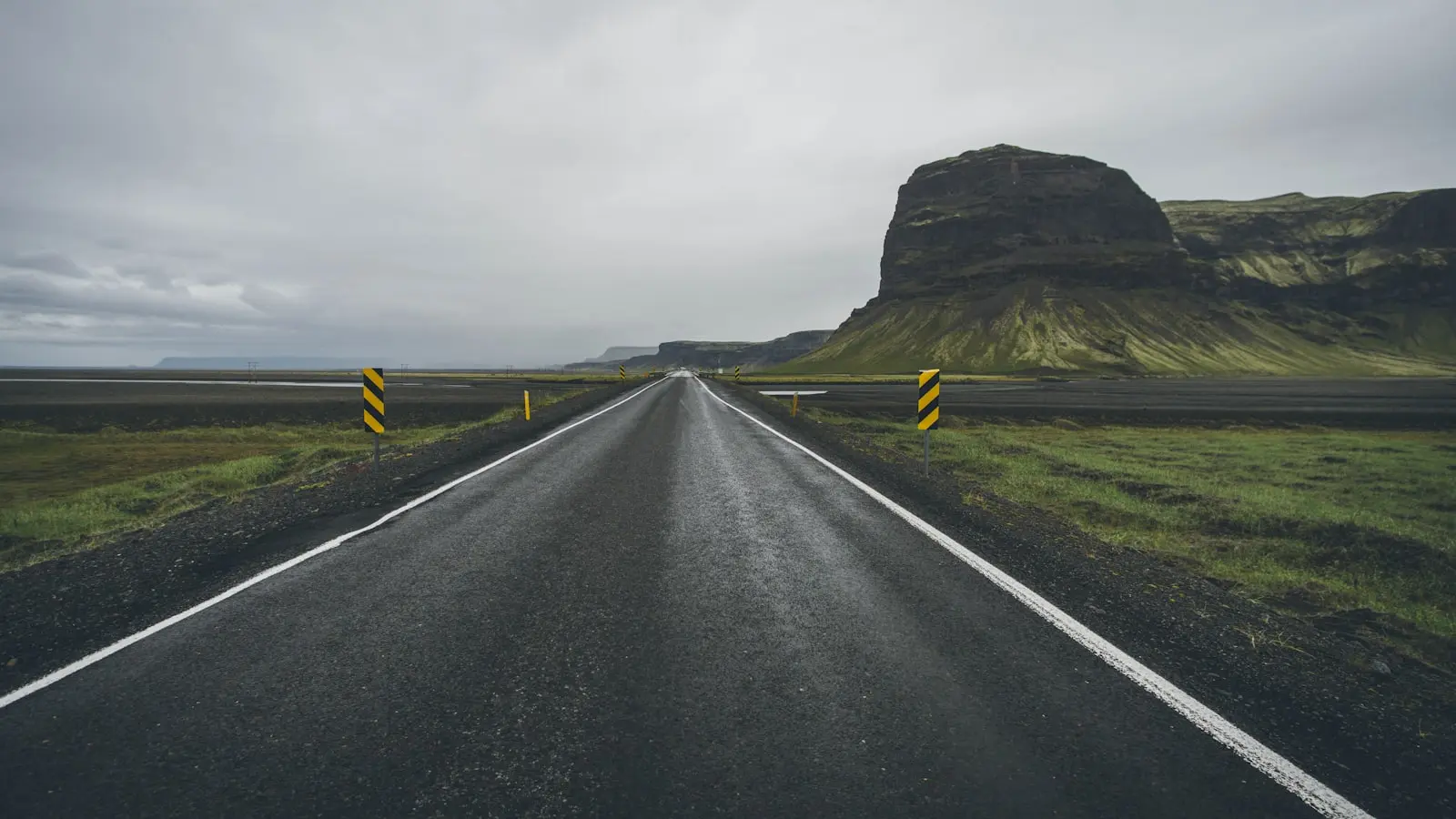
Planning a one-week Iceland itinerary can be overwhelming. Between volcanic landscapes, glaciers, waterfalls, hot springs, and the Northern Lights, it is easy to feel paralyzed by options. The key is matching your route to the season and your tolerance for long drives.
Key Takeaways:
- For a relaxed first visit, choose the Southwest loop: less driving, more time at each sight.
- The full Ring Road is doable only in summer with careful planning and long daily drives.
- Book accommodation and car rentals months in advance, especially for summer.
- Pack layers, waterproof gear, and always check road.is for conditions.
- Northern Lights are possible in winter but never guaranteed; prioritize clear skies and darkness.
Option 1: The Full Ring Road Adventure (7 Days)
Driving the entire Ring Road in one week allows you to see nearly all of Iceland’s diverse regions, from the Eastfjords to the volcanic landscapes around Mývatn. However, this route requires four to six hours of driving each day, leaving little room for spontaneous stops or weather delays.
Pros: You experience the full breadth of Iceland’s landscapes. It is the most comprehensive road trip itinerary for those determined to cover ground.
Cons: A very tight schedule. A single storm can disrupt your entire plan. Many travelers feel rushed and miss deeper experiences due to constant time pressure. Accommodation must be booked months ahead, especially in summer. This route is not recommended between November and March, when daylight drops to four to six hours and mountain passes may close.
Day-by-Day Snapshot (Ring Road):
Day 1: Arrive at Keflavik International Airport. Visit the Blue Lagoon (pre-booked ticket required), then drive about 45 minutes to Reykjavik for the night.
Day 2: Drive the Golden Circle – Þingvellir National Park, Geysir geothermal area, and Gullfoss waterfall. This takes about half a day. Continue to a farmstay near Selfoss or Hella.
Day 3: Head south along the coast. Stop at Seljalandsfoss (walk behind it) and Skógafoss (climb the stairs for a view). Finish at Reynisfjara black sand beach near Vík. Be extremely cautious of sneaker waves here. Overnight in Vík or nearby.
Day 4: Drive east to Jökulsárlón glacier lagoon and Diamond Beach. Continue through the Eastfjords, winding roads with many tunnels. Overnight near Egilsstaðir.
Day 5: Explore the Mývatn area: Dettifoss waterfall (the most powerful in Europe), Mývatn Nature Baths, and the pseudo-craters. Overnight near Mývatn or Akureyri.
Day 6: Drive to Akureyri for a quick look, then head west toward Snæfellsnes Peninsula. This is a long day, around five to six hours of driving. Overnight near Snæfellsnes.
Day 7: Explore Snæfellsnes (Kirkjufell mountain, Arnarstapi sea cliffs) before driving back to Reykjavik and on to Keflavik for your flight.
Key Caution: Verify current road conditions at road.is. F-roads (highland routes) are closed until late June or July. Driving times can double in rain or fog. Fuel stations are sparse between towns, so fill up whenever possible.
Option 2: The Focused Southwest Loop (7 Days)
For most first-time visitors, especially those visiting in winter or with families, the Southwest loop offers a better balance. Daily driving rarely exceeds two to three hours, giving you more time to soak in each location. You still see the Golden Circle, the dramatic south coast, and the Snæfellsnes Peninsula – three of Iceland’s most iconic regions.
Pros: Lower stress. You can adjust the pace if the weather turns. Accommodation is easier to book because you stay in or near established tourist towns. This itinerary works in any season, though winter requires extra care.
Cons: You miss the northeastern sights such as Mývatn and the Eastfjords. However, the landscapes you do see are diverse enough that most travelers do not feel shortchanged.
Day-by-Day Snapshot (Southwest Loop):
Day 1: Arrive KEF, visit Blue Lagoon or Sky Lagoon, then drive to Reykjavik. Spend the evening exploring the compact city center.
Day 2: Explore Reykjavik – Hallgrímskirkja church, Harpa concert hall, and the street art along Laugavegur. Try a hot dog from Bæjarins Beztu Pylsur. Overnight in Reykjavik.
Day 3: Drive the Golden Circle. Allow a full morning and early afternoon. Then head to a guesthouse near Selfoss or Hella.
Day 4: South Coast day. See Seljalandsfoss, Gljúfrabúi (a hidden waterfall nearby), Skógafoss, and the black sand beach at Reynisfjara. Overnight in Vík.
Day 5: Drive to Jökulsárlón glacier lagoon and Diamond Beach. This is a long round trip – about two and a half hours each way from Vík. If you prefer a shorter day, turn around at Skaftafell National Park and hike to Svartifoss. Overnight back in Vík or near Kirkjubæjarklaustur.
Day 6: Drive west to Snæfellsnes Peninsula. Visit Kirkjufell and Grundarfjörður, then the coastal lava fields at Arnarstapi. Overnight near Borgarnes or drive back to Reykjavik.
Day 7: Last-minute sightseeing in Reykjavik or a visit to the Blue Lagoon (if you skipped it on arrival). Head to the airport.
Key Caution: Day 5 to Jökulsárlón is the longest drive of the week. If you are visiting in winter when daylight is short, consider skipping this leg and instead spend more time on the south coast or Snæfellsnes.
Must-See Highlights on Either Route
No matter which itinerary you choose, these attractions appear frequently:
Golden Circle: Þingvellir National Park sits on the rift between the North American and Eurasian tectonic plates. You can snorkel in the crystal-clear Silfra fissure (book in advance). Geysir is mostly dormant, but the active Strokkur erupts every few minutes. Gullfoss is a thunderous two-tier waterfall.
South Coast Waterfalls: Seljalandsfoss lets you walk behind the cascade – expect to get wet. Skógafoss is broader and has a staircase to the top. A short walk from Seljalandsfoss is Gljúfrabúi, a waterfall tucked inside a canyon.
Reynisfjara Black Sand Beach: The basalt sea stacks and black sand are stunning, but the ocean is deadly. Sneaker waves can surge unexpectedly, pulling people into the freezing water. Never turn your back on the sea.
Jökulsárlón Glacier Lagoon and Diamond Beach: Icebergs calved from the glacier float in the lagoon and wash ashore on the black sand. In summer, boat tours are available. In winter, the lagoon may partially freeze but remains beautiful.
Snæfellsnes Peninsula: Often called “Iceland in miniature,” this region includes the iconic Kirkjufell mountain, the jagged cliffs at Arnarstapi, and the Snæfellsjökull glacier.
Seasonal Considerations and Logistics
Summer (June to August): Nearly 24 hours of daylight. All main roads are open (except highland F-roads). This is the only practical time to attempt the Ring Road. Book accommodation and rental cars four to six months ahead. Crowds at popular sites are heavy.
Winter (November to March): Daylight lasts only four to six hours. Roads in the north and east may be closed or icy. The Ring Road is not advisable. The Southwest loop is safer, but you still need a 4WD vehicle and careful planning. Northern Lights are possible on clear nights, usually between 9pm and 2am. Check the aurora forecast at vedur.is.
Shoulder Seasons (April-May, September-October): Moderate crowds, variable weather. Some attractions have reduced hours. The Blue Lagoon and other geothermal pools require advance booking year-round. Verify opening times on official websites before you go.
Driving Tips: A 2WD car is sufficient for the Southwest loop in summer. For winter or any trip involving unpaved roads, rent a 4WD. Download offline maps because cell service is spotty outside towns. Gas stations are limited; fill up when you see one, especially in the east and north.
Packing for Unpredictable Weather
Iceland’s weather can change from sunshine to sideways sleet in minutes. Layering is essential: thermal base layer, fleece, waterproof and windproof jacket and pants. Sturdy, waterproof hiking boots are non-negotiable. Always pack a warm hat, gloves, and scarf.
Bring a swimsuit and a microfiber towel for hot springs. A reusable water bottle is useful because tap water is excellent. For winter, a headlamp helps you navigate attractions in the dark. Pack snacks and a thermos for long drives – restaurant options are limited outside Reykjavik.
FAQ
Can you drive the full Ring Road in one week? Technically yes, but only during the summer months when days are long and roads are clear. You must pre-book every night’s accommodation and be prepared for six hours of driving daily. Most first-timers find the Southwest loop more relaxing and still immensely rewarding.
Is it better to visit in summer or winter for a first-timer? Summer is easier: longer days, better road conditions, and access to the whole Ring Road. Winter offers a chance to see the Northern Lights and far fewer tourists, but requires a flexible itinerary and higher driving skills. If you want a classic, stress-free first trip, aim for summer.
Do I need a 4WD for a one-week Iceland trip? For the Southwest loop in summer, a standard 2WD car is enough. For winter travel or if you plan to drive any F-road (highland roads), a 4WD is strongly recommended. Always check road.is before setting out each day.
A well-planned one-week Iceland itinerary comes down to matching the route with your travel season and personal pace. For the vast majority of first-timers, the Southwest loop delivers the best mix of iconic sights, manageable driving, and flexibility. If you have your heart set on a full circle, save it for a longer trip or a summer with extra buffer days. Either way, Iceland’s raw beauty will leave you planning your return before you even leave.