The Case Against The One-Day Rush
For years, the consensus among transient travelers and hurried backpackers has been clear: treat Brussels as a logistical hurdle rather than a destination. This reductive narrative suggests that the capital of Europe is little more than a bureaucracy-choked waypoint, best bypassed for the postcard-perfect canals of Bruges or the medieval charm of Ghent. Yet, this perspective misses the fundamental reality of urban life. Cities, unlike museum-piece towns, reveal their secrets through texture, accumulation, and patience. (It is rarely the first day that yields a discovery worth remembering.)
Beyond The Grand-Place
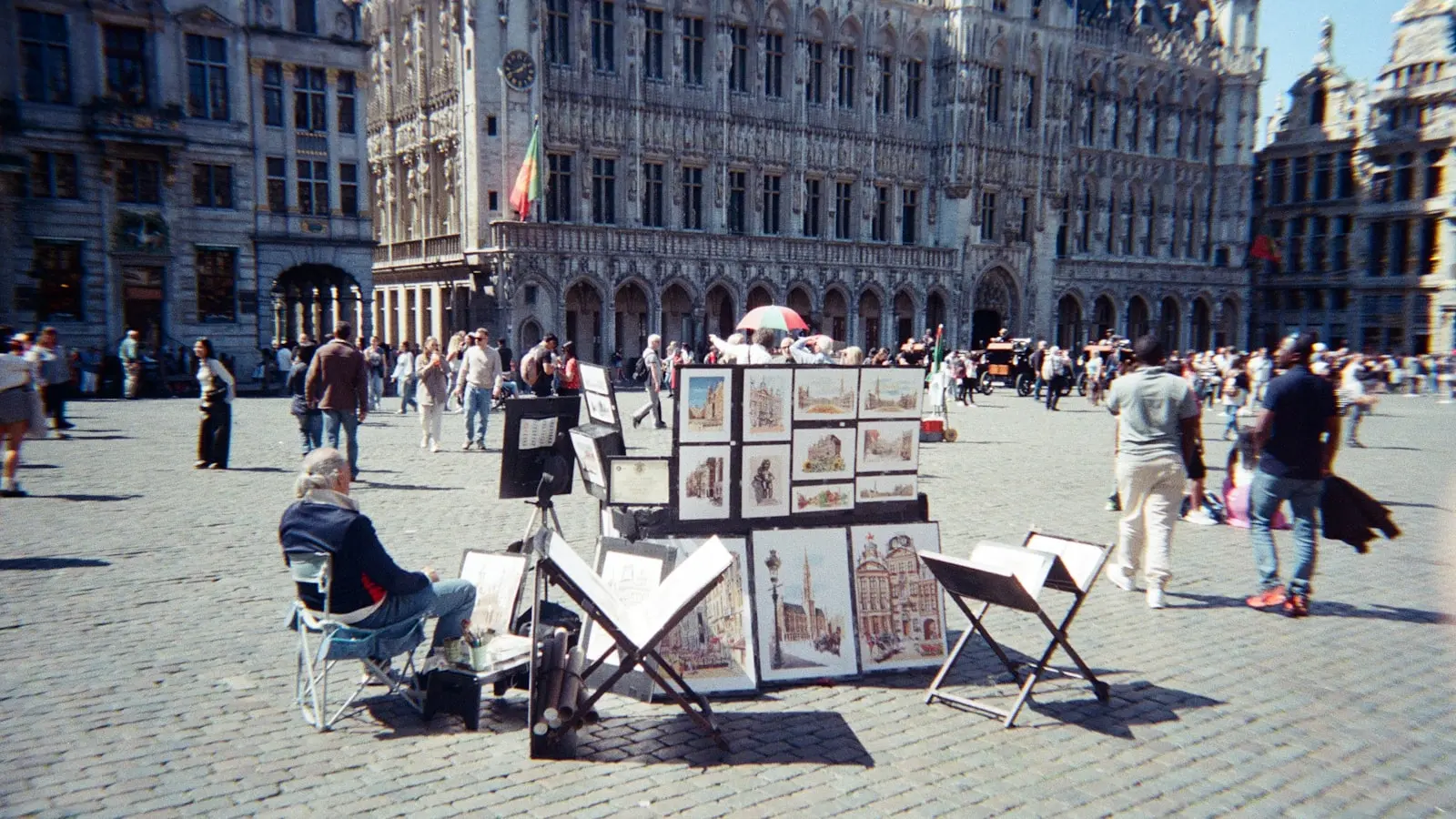
Data from European tourism boards and ongoing discourse within travel communities suggests a tectonic shift in traveler satisfaction. Those who commit to a 72-hour window report significantly higher engagement than those who treat the city as an eight-hour sprint. The architecture here acts as a physical timeline. Visitors who anchor themselves in the capital gain the latitude to leave the crowded orbit of the Grand-Place, drifting instead into the undulating facades of Ixelles or the grit and grace of Saint-Gilles.
- Artistic Immersion: The Royal Museums of Fine Arts demand hours of slow, deliberate navigation, a sharp contrast to the frantic pace of typical sightseeing.
- Neighborhood Rhythm: Ixelles offers an introduction to the city’s celebrated Art Nouveau heritage, where the aesthetic of the structure defines the atmosphere of the street.
The Logic Of The Slow Capital
Brussels is not designed for the efficient tourist. It is a city of layers. The booming specialty coffee scene and the dense, intricate culture of local craft beer represent a shift toward internal consumption rather than external exhibition. When travelers move from being observers to participants—ordering a drink at a neighborhood bar or tracing the geometry of a Victor Horta townhouse—the city moves from a static object to a living environment. (The friction of a lived-in capital is exactly what makes it meaningful.)
Logistical Utility And Cultural Depth
There is also the pragmatic argument for the three-day commitment. Brussels Airport serves as a central European nerve center, making it an efficient base for a larger trip. However, those who use it solely as a transit hub negate its primary value. By choosing to stay, one trades the performative tourism of smaller towns for the layered, contradictory, and deeply authentic energy of a seat of international power. The backpacker trope of “skipping” the capital is effectively an admission of inability to engage with urban complexity. A capital city, by definition, is a place where history, policy, and daily life collide. It is worth more than a single afternoon.