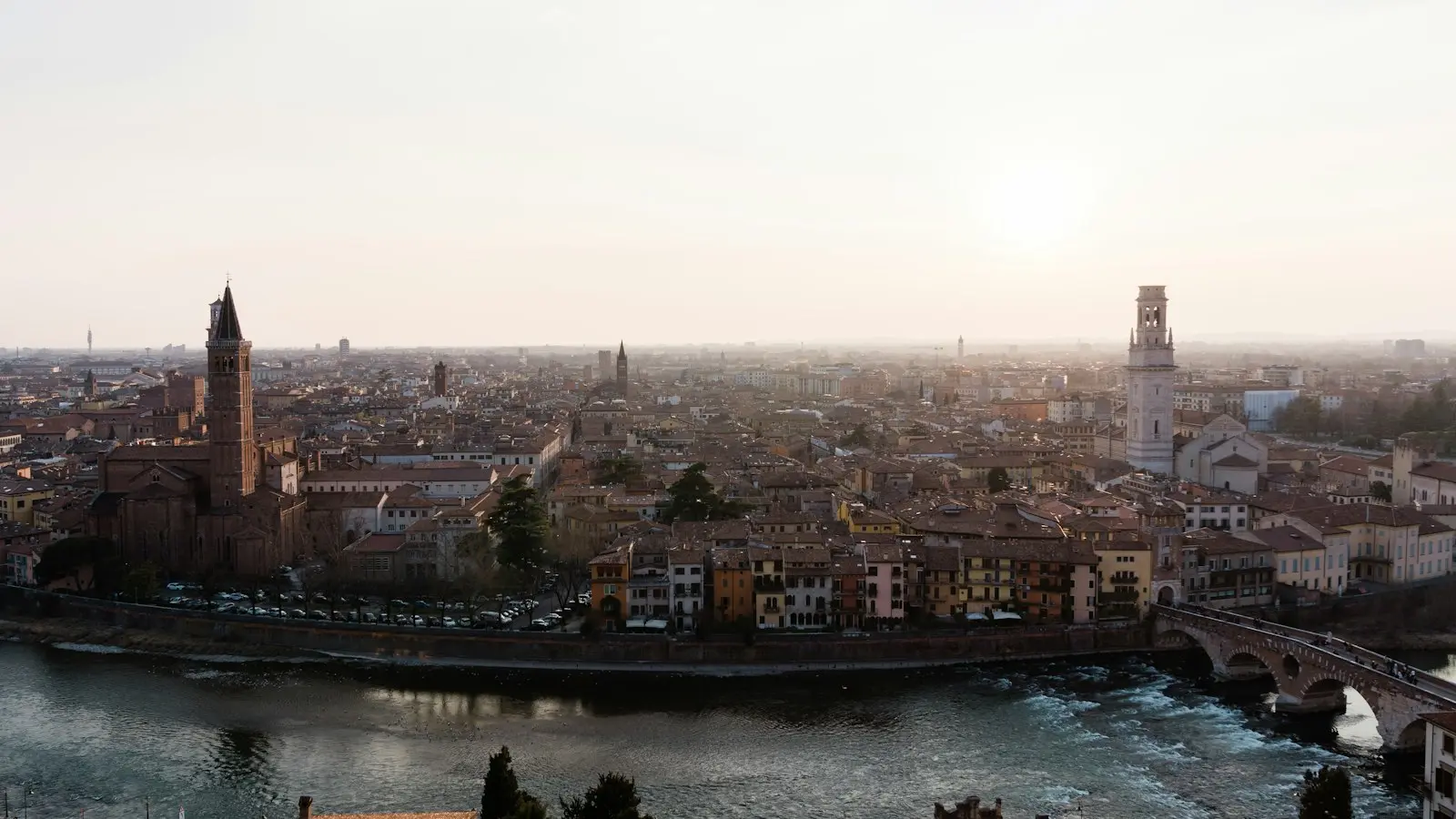
Two days in Verona are enough to see its Roman core, medieval squares, Adige riverfront, and hillside views without making Juliet’s House the whole trip. The most efficient approach is geographic: devote Day 1 to the compact historic center, then spend Day 2 across the river in Veronetta and around Castel San Pietro.
That split reduces backtracking and makes room for what rushed visits often miss: a coffee in a piazza, a shaded indoor stop at midday, an aperitivo near where you finish sightseeing, and time to look beyond the headline landmarks. Juliet’s House can fit into the plan, but it works best as a short optional detour.
Key Takeaways
- Group your Verona itinerary by area: the Arena and medieval center on Day 1; Ponte Pietra, Veronetta, the Roman Theatre, and Castel San Pietro on Day 2.
- Start exposed squares, bridges, and viewpoints early or late in the day to manage heat, crowds, and harsher light.
- Treat Juliet’s House as a brief stop between central sights, not the organizing principle of the trip.
- Check current hours, tickets, event restrictions, transport, and accessibility details for every major attraction before setting out.
Plan the route first for two days in Verona
Verona’s central districts are compact enough for a walking-led city break, though stone paving, cobbles, stairs, and hillside gradients can affect the experience. Most major historic-center sights sit south of the Adige, while Veronetta, the Roman Theatre, and Castel San Pietro form a logical second-day cluster across the river.
If you arrive at Verona Porta Nuova by train, avoid scheduling your first landmark too tightly. Leave time to reach your accommodation or the center, and check current walking, bus, taxi, fare, ticket-validation, and service information before travel. Walking may work well with light luggage and mild weather, but it is less appealing after a long journey or during heavy rain or heat.
Choose accommodation according to the shape of your trip. The historic center makes early starts and late dinners easy, while streets nearer the river can suit a quieter stay and simplify Day 2. A station-area hotel can be practical for early rail departures, although it trades immediate old-city atmosphere for convenience.
Before you leave home, review official visitor information for the Arena, Juliet’s House, Torre dei Lamberti, the Roman Theatre and archaeological museum, and access around Castel San Pietro. Hours, ticket terms, timed entry, lifts, performance schedules, maintenance, weather restrictions, and security rules can change.
A few adjustments make this Verona itinerary more resilient:
- In hot weather, do exposed piazzas and viewpoints early, then use indoor sights around midday.
- In rain, build the day around museums, church interiors, and covered historic spaces rather than forcing a riverside walk.
- With limited mobility, prioritize Day 1’s ground-level squares and individually verified accessible interiors. Treat the hillside as optional until gradients, transport, entrances, and lift access are confirmed.
- On Mondays, holidays, or event days, keep a flexible indoor alternative because schedules can differ.
Day 1: Roman Verona, market squares, and the medieval center
Morning: Piazza Bra and the Arena
Begin near Piazza Bra, when the light is softer and the open space can feel less pressured than later in the day. The square introduces Verona’s scale: broad pavement, café terraces, civic buildings, and the Arena’s massive stone exterior.
The Arena is the right first major stop only if its current entry rules and schedule suit your morning. More than a famous landmark, it establishes the Roman layer that helps the rest of the city make sense. Check for performances or other events that may affect visitor access.
Even if you do not enter, walk around the exterior slowly. The changing angles and worn stone reveal more than a quick photograph from a single spot.
Late morning: Via Mazzini, Piazza delle Erbe, and Piazza dei Signori
From Piazza Bra, head north through the central streets toward Via Mazzini and the old market area. This is one of the easiest sections of a Verona walking itinerary because it naturally shifts from commercial streets into denser medieval civic spaces.
Piazza delle Erbe rewards a slower look. Notice the painted façades, balconies, arcades, and irregular building lines as well as the market activity. It can be busy, so a first pass followed by a brief return later may be more satisfying than trying to linger at the busiest moment.
Continue to Piazza dei Signori, where the atmosphere becomes more enclosed and formal. Its architecture suggests administration and medieval power rather than market bustle. The narrow streets around the Scaligeri monuments are good territory for an unhurried wander before lunch.
Optional literary detour: Juliet’s House
For travelers who want the literary reference point, Juliet’s House fits here because it sits close to the central route. Give it a firm time limit. Its appeal is symbolic and theatrical, while nearby streets can become congested.
Check current access conditions before you go. Controlled entry, queues, or changing visitor rules may make a quick exterior look more sensible than waiting long enough to displace the Arena, Piazza delle Erbe, or the river-focused Day 2.
The trade-off is straightforward: visit if the story matters to you, but do not let it consume the most walkable part of the day. Verona beyond Juliet’s House becomes more interesting when this stop remains a cultural footnote rather than the proof that you have seen the city.
Afternoon: Torre dei Lamberti and the historic-center lanes
After lunch, consider Torre dei Lamberti if the weather and current access arrangements work for you. A high viewpoint can connect the city’s parts: the Arena zone to the south, the old squares below, the Adige’s curve, and the hills across the river.
The tower is not essential for everyone. If you dislike heights, stairs, enclosed lifts, or exposed viewpoints, stay at ground level instead. The lanes around Piazza dei Signori, the Scaligeri area, and nearby churches provide an intimate sense of Verona’s historical density without requiring a climb.
This is also a useful rain swap. Rather than hurrying from square to square under an umbrella, choose one or two indoor stops after checking their current admission terms and hours. A museum or church interior can make a wet afternoon feel deliberate rather than compromised.
Evening: aperitivo and dinner in the center
End Day 1 near wherever you finish sightseeing. The best aperitivo choice is usually practical: find a place whose menu, seating, atmosphere, and current hours suit your group. Apply the same logic to dinner, especially if you have dietary needs or prefer to reserve.
Avoid crossing the city for a supposedly definitive restaurant. A satisfying evening often comes from staying in the district where your day has ended, sitting down before hunger makes every menu look urgent, and leaving time for a post-dinner walk through the lit squares.
Day 2: Cross the Adige for Veronetta and Castel San Pietro
Morning: Ponte Pietra and the riverside
Start Day 2 by the Adige, ideally before the warmest part of the day. Ponte Pietra is a strong opening because it brings together the river, old city fabric, and hillside in a single view. It also signals the day’s shift away from the central circuit toward Verona’s eastern side.
Pause for photographs without blocking the bridge or its narrow approaches. River conditions, works, crowd levels, and path access can vary, so treat a long riverside ramble as a pleasant option rather than a fixed requirement.
Late morning: Roman Theatre and archaeological context
The Roman Theatre complements the Arena rather than repeating it. The Arena presents Roman Verona at monumental civic scale; the theatre offers a more landscape-bound perspective, set against the slope above the river.
Visit the theatre and associated museum only after confirming current hours, tickets, accessibility, and any event restrictions. If access is limited on your date, keep the riverside and Veronetta route, then replace the interior visit with a longer lunch or another verified museum stop.
Midday: a slower Veronetta break
Veronetta is a useful place to slow the pace. Rather than completing a rigid sight list, use this part of the city for coffee, lunch, smaller streets, and a different perspective back toward the historic center.
Choose lunch based on what is open when you arrive, how far you want to walk afterward, and whether you need shade or indoor seating. Current menus and opening information are more reliable than broad claims about which district provides the best meal.
Afternoon: Castel San Pietro viewpoint
Castel San Pietro is the visual payoff of this two-day Verona plan. From above, the city’s layout becomes clearer: the dense historic core, Roman landmarks, the river’s curve, and the landscape beyond the rooftops.
Late afternoon can bring softer light, but it may also mean more people at the viewpoint and less daylight for the descent. The climb can be steep, and any funicular or transport alternative should depend on verified operating status and access details.
If the hill does not suit your mobility, weather, energy level, or comfort with uneven surfaces, do not force it. Spend the afternoon around Ponte Pietra and the lower riverfront, then return to the center for a final circuit of the squares. A city view is memorable, but it should not turn the rest of the day into physical strain.
Evening: sunset or a performance
For the final evening, choose between two good endings. One is simple: return along the Adige as daylight fades, cross toward the center, and have dinner nearby. The other is a concert, opera, or other performance if the official calendar, ticket availability, entry requirements, and venue rules align with your dates.
Do not build the whole day around a performance until the details are confirmed. A booked evening can be memorable, but it also narrows dinner timing and may affect access around major monuments.
Make the itinerary work in real conditions
Use early mornings for Piazza Bra, the Arena exterior, Ponte Pietra, and central photographs. This does not guarantee quiet streets, but it can mean cooler temperatures and less pressure to keep moving. Save sunset for the river or Castel San Pietro when weather and mobility allow.
In heat, carry water, wear shoes that handle uneven stone paving, and plan a shaded midday pause. In rain, do not treat the river walk and hill climb as obligations. Verona still offers plenty indoors, provided you check schedules before reshaping the day.
For a limited-mobility version, make Day 1 the priority. Piazza Bra, Via Mazzini, Piazza delle Erbe, Piazza dei Signori, and selected indoor attractions can fill a day without deliberately seeking steep routes. Confirm step-free entries, seating, toilets, lifts, cobbles, and ticket procedures for each site individually rather than assuming a central location is easy to navigate.
Respect the city while photographing it. Keep doorways, bridges, shopfronts, and worship spaces clear; follow posted rules; avoid touching fragile surfaces; and do not treat residential lanes as private film sets. The strongest images often come from waiting and noticing ordinary movement through an old space.
A compact packing checklist helps: supportive walking shoes, water and sun protection in warm weather, a rain layer when the forecast calls for it, offline map access, and a morning check of attraction, transport, and event information.
FAQs
Is two days in Verona enough to see the Arena, historic center, river views, and Castel San Pietro?
Yes, if you group sights by area. Use Day 1 for the Arena and medieval center, then Day 2 for Ponte Pietra, the Roman Theatre area, Veronetta, and Castel San Pietro. This structure covers Verona’s main layers without repeatedly crossing the city.
Should I visit Juliet’s House during a Verona itinerary of two days?
Visit if the literary association matters to you, but keep it brief and place it between Via Mazzini and Piazza delle Erbe. Check current access rules first, and do not let queues displace the city’s Roman, medieval, and riverside landmarks.
What is the most walkable Verona walking itinerary for travelers arriving by train?
After reaching the center from Verona Porta Nuova using a currently verified transport option, begin near Piazza Bra and keep Day 1 within the historic core. On Day 2, cross at Ponte Pietra and explore the river-and-hillside side together. This approach keeps the longest detours out of the plan.