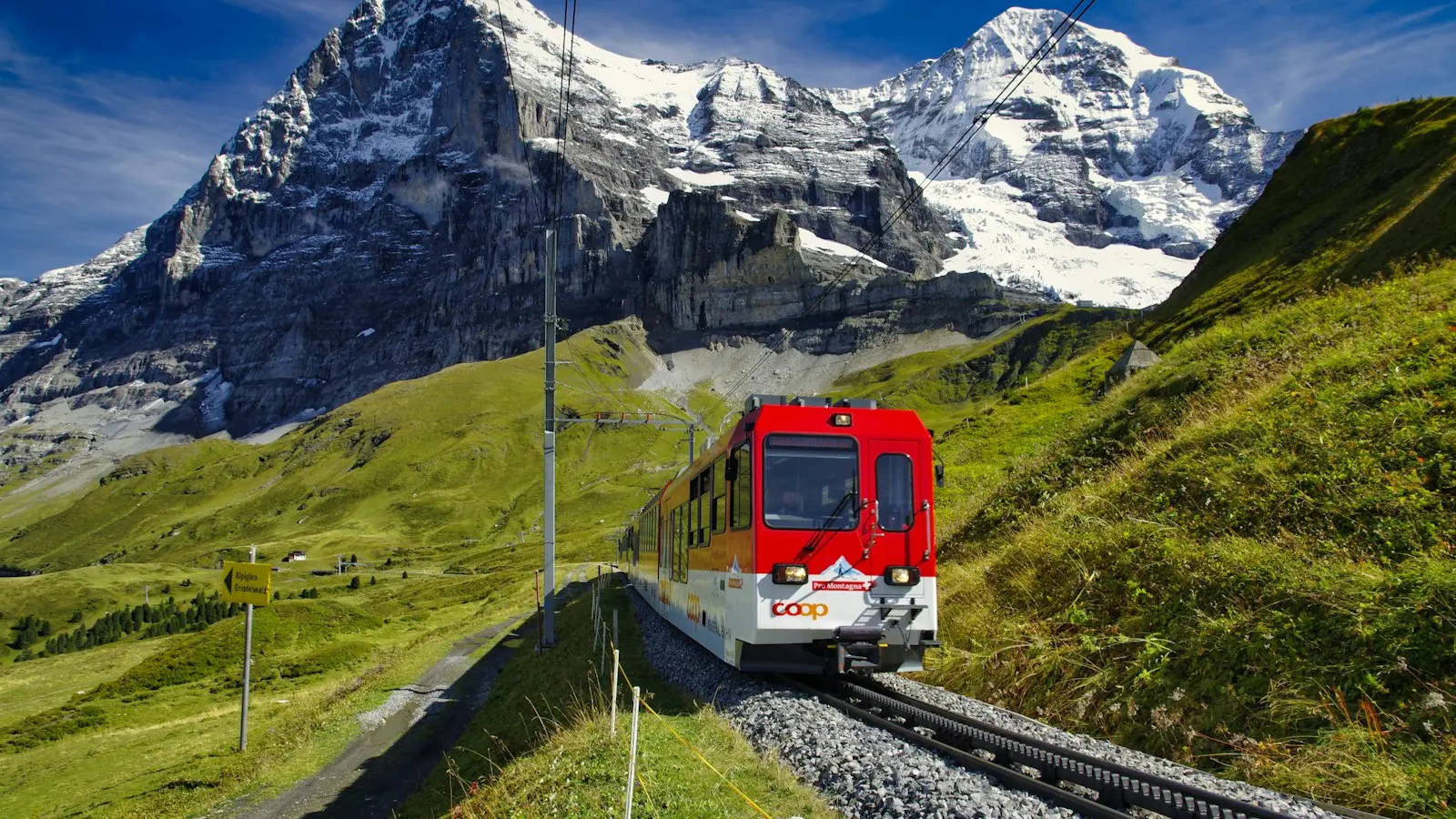
The most efficient Switzerland Milan Munich itinerary is usually a mostly linear journey: Munich to Switzerland to Milan, or the reverse. The better direction depends on your arrival and departure airports, the Swiss regions you want to visit, the season, and whether your priority is city time, lakes, or mountain scenery.
The central planning mistake is treating three countries as three simple stops. Switzerland sits between Munich and Milan, but alpine geography, changing rail operators, luggage, and weather-dependent excursions can turn a short map distance into a full travel day. A good Switzerland Italy Germany itinerary therefore uses fewer bases, protects recovery time, and treats scenic rail journeys as deliberate experiences rather than accidental detours.
Key Takeaways
- Use a mostly linear route—Munich → Switzerland → Milan, or the reverse—to limit backtracking.
- For one week, choose two major cities and one Swiss base rather than trying to cover several alpine towns.
- Treat a scenic train as a planned attraction, not automatically as the best or fastest connection.
- Check separate-ticket rules, reservations, luggage transfers, border documents, and seasonal mountain access before booking.
- Leave buffer time before important flights and keep mountain excursions flexible because weather and transport conditions can change.
Choose the Route Order That Minimizes Backtracking
For many travelers, Munich → Switzerland → Milan is an uncomplicated southbound structure. Munich works well as a northern starting point, a Swiss base follows naturally, and Milan provides a strong southern endpoint with onward rail and air connections. The reverse, Milan → Switzerland → Munich, is equally sensible when flights, hotel availability, or personal priorities favor beginning in Italy.
An open-jaw booking—arriving in Munich and departing from Milan, or arriving in Milan and departing from Munich—often removes the need to return to the first city. This matters more than squeezing one extra destination into the itinerary. If you must use the same airport for both flights, compare the cost and time of returning there before committing to a loop.
A loop can work when returning to the original airport is unavoidable or when a particular scenic route is the main purpose of the trip. It is less attractive when it creates a pattern such as Milan to Switzerland, back to Milan, then north to Munich. That arrangement repeats ground already covered and turns a memorable journey into luggage management.
Do not judge the route solely by map distance. Enter the complete sequence into a current rail planner, using your intended travel date and realistic departure times. Compare the number of changes, transfer stations, and total door-to-door effort—not just the headline train duration. Lake Como, Lugano, Lucerne, or an alpine town can be worthwhile, but each should earn its place by offering an experience you cannot get from an existing base.
Decide How Many Nights Each Base Can Support
A base deserves several nights when it offers more than one kind of day. This is particularly important in Switzerland, where a mountain excursion may depend on visibility, lifts, trains, and trails operating as expected. A one-night Swiss stop can leave you with no practical chance to adapt if the weather turns.
For about one week, keep the plan restrained: two major city bases and one carefully selected Swiss base or excursion. A workable shape might be two or three nights in Munich, three nights in Switzerland, and two or three nights in Milan, depending on flight timing. If the trip includes long transfers, count the arrival and departure days as partial sightseeing days rather than full days.
For about two weeks, you can allow Munich, Milan, and one or two Swiss bases without changing hotels every night. A city-and-lake combination, or one alpine base followed by Milan, is usually easier to enjoy than collecting several towns for a single night each. Longer trips can add depth—such as another Swiss region or a northern Italian stop—but only after the core route feels comfortable.
A simple decision rule helps: add a stop only when its experience is worth the hotel change, station transfer, and lost half-day. Day trips should also be judged honestly. A place that looks close on a map may require a local connection, a walk between platforms, and luggage storage or retrieval. If the visit leaves little time at the destination, it may be better as a future trip.
Balance Fast Connections Against Scenic Rail Routes
A fast practical connection is usually the right choice on a short trip, after a late arrival, before a major reservation, or when you have already built a scenic segment elsewhere. It protects time in Milan and Munich, where a rushed arrival can be just as frustrating as a long train ride.
A slower alpine or lakeside route is worth considering when the train itself is part of the holiday. Give it priority if you have spare time, daylight, favorable seasonal conditions, and an interest in watching the landscape change. It can be more rewarding than adding another rushed town, particularly on a Swiss Alps Milan Munich trip designed around scenery.
Keep an important distinction in mind: an ordinary intercity journey and a named panoramic or tourist service may follow different rules. A scenic service can have its own reservation process, supplement, operating calendar, or pass conditions. A standard rail pass should never be assumed to cover every train, seat, or add-on in the same way.
Check the exact date in a live timetable before booking accommodation around a scenic journey. Confirm operating days, transfer stations, reservation requirements, and what happens if the first train is delayed. A route that is attractive on paper may involve a narrow connection or a seasonal service that does not run during your visit.
Place Milan and Munich Around the Swiss Experience
Milan is useful as more than a city stop. It can be the southern gateway to Switzerland, a final urban contrast after alpine scenery, or the easiest departure point for travelers flying home from northern Italy. Its rail connections also make it a practical anchor for a trip that includes a lake or Italian foothill region.
Munich can play the same role at the northern end. It is a natural starting or finishing city for a route that moves through southern Germany and the Alps. Placing it at the beginning may give you a gentle urban introduction before mountain logistics; placing it at the end can provide a reliable city base before a flight, provided you do not schedule that flight immediately after a long cross-border journey.
Three patterns cover most travelers’ needs:
- Munich → Swiss Alps → Milan: a mostly southbound route that suits an arrival in Germany and departure from Italy.
- Milan → Swiss Alps → Munich: a mostly northbound route that works well in the opposite direction.
- City-first or city-last: put the city with the most fixed reservations, important meal bookings, or flight constraints where it is easiest to protect.
The Swiss section should be chosen around a travel style, not a checklist. A lake-oriented traveler may prefer a lower-elevation base, while a hiker or railway enthusiast may accept a more complicated route for mountain access. Lugano, Lucerne, Bern, and high-altitude railway areas can all fit, but not all belong in the same short itinerary.
Build in Rail, Luggage, Border, and Weather Contingencies
A Europe rail itinerary can cross several operators even when the journey appears to be one continuous route. Check whether the booking is issued as one protected itinerary or as separate tickets. Separate tickets may offer useful savings or flexibility, but a delay on the first ticket may not protect the second connection.
Read the fare conditions before paying. Some tickets are flexible, while others are tied to a particular train. Seat reservations may be required, recommended, or unavailable depending on the service. Scenic trains and cross-border services can also carry supplements or different rules from ordinary regional trains.
Station logistics deserve more attention than they usually receive. Confirm the precise station name, especially in large cities with multiple terminals. Allow time for finding the platform, walking through a major concourse, handling a ticket inspection, or moving between stations if the itinerary requires it. A connection that looks comfortable for a traveler with a daypack may be too tight with two large suitcases.
Pack for platforms and stairs rather than only for the weather. A manageable suitcase, a smaller day bag, and documents kept where they are easy to reach can make multiple changes less tiring. Avoid planning a tight connection immediately after a long international arrival, and avoid placing an important flight after a complicated same-day cross-border route.
Rail travel does not eliminate document obligations. Check current passport, visa, entry, and border requirements through official government or consular sources for every traveler. Requirements can depend on nationality, residence, and trip purpose, so do not rely on assumptions about open internal borders.
Mountain days need flexibility. Lifts, mountain railways, trails, and panoramic services may have seasonal closures, maintenance periods, or weather interruptions. Keep at least one lower-pressure day near a Swiss base, and do not make a high-mountain excursion the only reason a tightly timed connection can work.
Sample Switzerland, Milan, and Munich Itinerary Structures
These are planning frameworks, not fixed timetables. Verify current journey times, transfer points, reservations, pass coverage, and seasonal access for your dates.
About one week, fastest practical version:
- Two nights in Munich
- Three nights in one Swiss base
- Two nights in Milan
Use one transfer day between each base and keep the Swiss excursion flexible. This structure is best for travelers who want a clear taste of all three places without attempting several alpine towns. If your flight arrives late or leaves early, reduce sightseeing expectations on those days.
About one week, scenic version:
- Two nights in Milan or Munich, depending on flights
- Three nights in one Swiss base
- Two nights in the opposite city
Use the principal cross-border journey as the scenic experience, rather than adding several stops along the way. If the scenic service requires reservations or runs only on selected dates, confirm it before booking hotels around it. The fastest route may be more sensible if weather is poor or the scenic segment would consume most of a short trip.
About two weeks:
- Three nights in Munich
- Four or five nights divided between one or two Swiss bases
- Four nights in Milan
- One flexible or low-pressure day within the total
A useful arrangement is one Swiss base for mountain or lake excursions, followed by a second base only if the transfer adds a genuinely different landscape. Another option is one Swiss base plus a scenic rail journey, leaving more time for Milan and Munich. Avoid treating every transfer as a sightseeing day; luggage collection and check-in can absorb much of it.
Three weeks or more:
Start with the same core route, then add regional depth only after checking transport frequency, accommodation availability, and seasonal access. A longer trip can support an additional lake region, a southern German detour, or more time in Switzerland, but the route should still move generally in one direction. More nights in fewer places can be more restorative than a longer list of stops.
Before booking, answer six questions: Where do you arrive and depart? Which experience is non-negotiable? Do you prefer cities, lakes, or mountains? How much luggage will you carry? What season are you traveling in? Which days need buffers before flights or fixed reservations? Those answers usually determine the best Switzerland travel route more reliably than a popular sample itinerary.
FAQ Switzerland, Milan, and Munich Rail Planning
What is the most efficient order for a Switzerland, Milan, and Munich itinerary?
Usually, choose Munich to Switzerland to Milan or Milan to Switzerland to Munich, depending on your airports and priorities. The best order is the one that avoids returning to the same city and leaves a comfortable final connection to your departure airport.
How many days do you need for Switzerland, Milan, and Munich?
One week is enough for two cities and one Swiss base if you accept a quick pace. Two weeks allows all three destinations plus one or two Swiss bases or a scenic rail segment. With three weeks or more, add regional depth rather than automatically adding more one-night stops.
Is a scenic train route worth adding between Milan, Switzerland, and Munich?
It can be, when the journey is a central experience and you have spare time for weather or timetable changes. On a short trip, before a flight, or when a connection is already complicated, the fastest practical route may be the better choice. Verify current schedules, reservations, seasonal operation, and pass rules for the exact service.