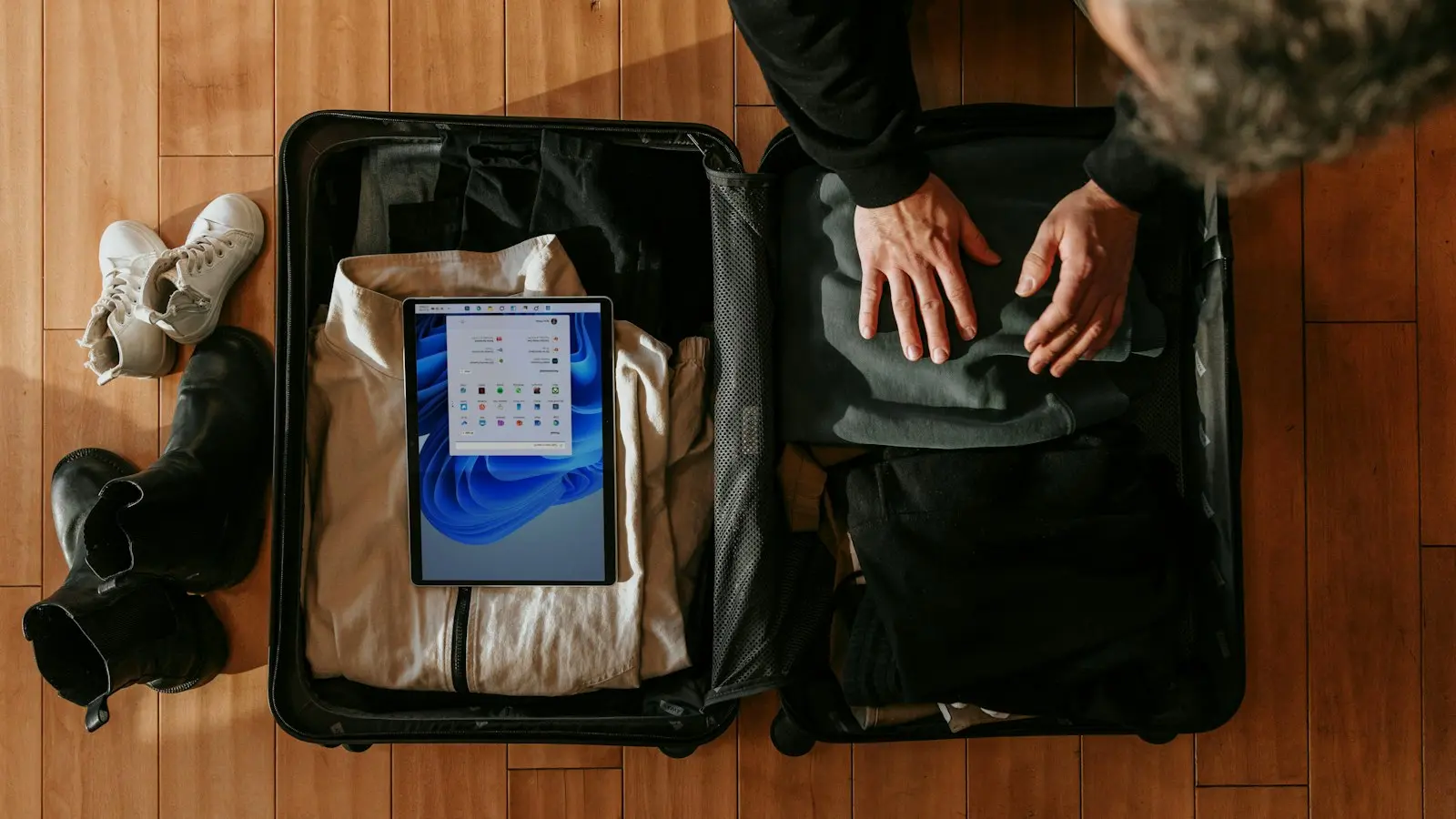
A practical three-week bus trip packing list does not mean carrying 21 days of clothing. For most routes, a compact clothing rotation, a reliable laundry strategy, one stored bag, and a small day-access pouch work better than an overfilled suitcase. Your final list should reflect the route, season, activities, medical needs, and each bus operator’s current baggage rules.
Think in functions rather than individual travel days: clothes that layer, toiletries that replace bulky duplicates, sleep items you can reach from your seat, and documents and medication that never leave you. This approach keeps transfers manageable while preserving flexibility for changing weather and overnight journeys.
Key Takeaways
- Pack a short rotation of mix-and-match clothing and plan to wash small loads during the trip.
- Keep your passport or identity document, medication, payment methods, electronics, and one spare clothing set in a day-access pouch.
- Prioritize compact overnight bus essentials such as an eye mask, earplugs, a light layer, water, hygiene items, and charging equipment.
- Check every operator’s current baggage rules, then adapt for weather, activities, border requirements, and drying time.
- Leave out bulky items that solve only hypothetical problems, including duplicate shoes, full-size toiletries, and rarely used gadgets.
1. Build a One-Bag Clothing System
Start with several outfits that mix together rather than packing a separate look for every day. A useful starting point for a three-week trip is roughly four to six everyday tops, two or three pairs of trousers or equivalent bottoms, one warm mid-layer, one lightweight rain or wind layer, sleepwear, and enough underwear and socks to reach your planned laundry interval.
That quantity is not a rule. If laundry will be easy every four or five days, you may need less. If you will be moving through remote areas, camping, or staying somewhere without dependable washing facilities, add a few basics. Personal comfort matters too: someone who dislikes rewearing shirts will need a different rotation from someone comfortable washing small loads frequently.
Build around layers. A breathable base layer, sweater or fleece, and packable outer layer can cover a wider temperature range than one bulky coat. Layering is especially useful when a route moves between warmer southern cities, cool inland evenings, wet coastal areas, or higher elevations.
Choose easy-care, reasonably quick-drying fabrics where they feel comfortable, but do not treat any material as universally superior. Some technical fabrics dry quickly but hold odors; natural fibers may feel better but take longer to dry. The practical test is whether a garment can be washed in a sink, dried within a reasonable window, and worn in more than one setting.
Keep one spare set of underwear and socks in the day-access pouch rather than in stored luggage. That backup is useful after a delayed connection, spilled drink, or night when the main bag is inaccessible. Pack enough regular underwear and socks for the interval between washes, not for the entire trip.
Footwear deserves strict limits because it is heavy and difficult to compress. Comfortable walking shoes should usually be the foundation. Add a second pair only if the itinerary clearly requires it, such as sandals for warm weather, hiking shoes for trails, or dress shoes for a specific event. Wear the heavier pair during transfers when practical.
Add route-specific items only when the itinerary justifies them. Swimwear, a hat, gloves, modest clothing for religious sites, hiking trousers, or a dressier outfit can be worthwhile. A foldable tote or small day bag also earns its place if you will use it for sightseeing, groceries, or separating items during a transfer.
2. Pack an Overnight Bus Sleep and Comfort Kit
Your overnight bus essentials should stay within reach, not in a bag placed under the seat or in the luggage hold. Use a small pouch that can sit beside you and hold a compact neck pillow, eye mask, earplugs or noise-reducing headphones, and a light layer.
The comfort trade-off is straightforward. Inflatable pillows and compressible blankets take less space but may feel less supportive. A larger pillow may be more comfortable but becomes awkward during station transfers. Choose the smallest option you can tolerate for several hours rather than the most elaborate sleep system.
Add a compact hygiene refresh kit: toothbrush, travel toothpaste, tissues or face wipes, hand sanitizer, and any permitted liquid toiletries you want before arrival. A spare pair of socks and clean shirt can make a morning arrival more comfortable without taking much room.
Carry water and simple, non-messy snacks such as crackers, nuts, or a bar if permitted by the operator and appropriate for your needs. Avoid foods with strong odors, loose crumbs, or complicated packaging. Bus policies and onboard facilities vary, so do not assume every route offers dependable food, drinks, charging, or a usable restroom.
The same pouch should hold your phone, passport or identity document, medication, payment card, and charging cable during the journey. Sleep accessories can be replaced; essential documents and medication should not be separated from you. A small zippered pouch also helps prevent items from disappearing into seat pockets or the bottom of a backpack.
These items can make a bus ride more manageable, but none guarantees good sleep. Seat position, road movement, noise, temperature, delays, and individual sleep needs remain decisive. Pack for improved comfort, not the certainty of arriving fully rested.
3. Use Laundry, Toiletries, and Organization to Control Bulk
A good travel laundry strategy is what makes a three-week rotation possible. Plan to wash small loads every few days rather than waiting until every garment is dirty. A compact supply of travel detergent or soap sheets, a lightweight bag for dirty clothing, and a way to separate damp items are usually more useful than extra outfits.
Sink washing works best when garments are light and quick to dry. Wash one small load, press out excess water without aggressively twisting delicate fabric, and hang items where airflow is possible. Do not assume that an item washed late at night will be dry by morning; allow a buffer or keep one clean backup outfit available.
Laundry facilities vary by accommodation, and some stops may not provide enough time to wash and dry clothes. If your route has several one-night stays, schedule washing around longer stays rather than relying on every lodging option. A small, breathable laundry bag is generally easier to manage than sealing damp clothing in an airtight pouch for long periods.
Organize by function: one pouch for clean clothing, one for dirty laundry, one for toiletries, and one for electronics. Packing cubes can help if they make transfers faster, but they are not automatically space-saving. Empty cubes add weight, and tightly compressed clothing can become harder to sort when repacking daily.
Pack travel-size toiletries where permitted and replace duplicate products with multipurpose options when sensible. A small bar of soap may serve more than one purpose, while large bottles, styling tools, full-size towels, and separate products for every grooming step can quickly overwhelm a bus-friendly bag. Saving space is not useful if it makes basic hygiene impractical.
Medication belongs in the accessible pouch, in its original packaging where appropriate, with prescriptions or relevant instructions. Carry only the basic first-aid supplies you are likely to use, such as a few plasters and familiar personal remedies. Medication transport rules can differ by country, especially for prescriptions or controlled substances, so check official requirements for every destination and your nationality before departure.
4. Keep Documents, Money, Electronics, and Daily Essentials Accessible
Your accessible document set should include the passport or identity document required for the route, tickets or booking details, accommodation information, insurance details if purchased, emergency contacts, and any required visas or permits. Entry, transit, border, and passport-validity requirements are traveler- and route-specific; verify them through the relevant official authorities rather than relying on a general European checklist.
Keep secure digital copies of important documents, but do not make one phone the only place where everything exists. A separate physical backup can improve resilience if stored apart from the original. Avoid putting the original documents and every backup in the same pouch.
Carry payment cards securely and keep only as much cash as is useful for the next part of the journey. A concealed or secure pouch can reduce exposure, but no storage method guarantees protection against theft. Keep passports, medication, payment methods, and essential electronics with you rather than in a luggage hold.
For electronics, the basic kit is usually a phone, wall charger, charging cable, and compact power bank if permitted. Add an e-reader, tablet, or laptop only when it serves a clear purpose. One device that handles reading, maps, tickets, and entertainment is often more practical than several single-use gadgets.
Check each operator’s current rules for power banks, batteries, liquids, aerosols, sharp objects, and other restricted items. Bus policies may not mirror airline rules, and charging access may be absent or unreliable. A power bank is useful for long connections, but it should not encourage you to store your phone away from you.
Do not assume one plug adapter covers every country on a multi-country route. Verify plug types, voltage, and adapter needs for each destination, particularly if the itinerary crosses regions with different electrical standards. Bring the smallest suitable adapter and avoid packing a bulky universal model unless its functions justify the extra weight.
The day-access pouch should also contain tissues, hand sanitizer, glasses or contact-lens supplies, one snack, a pen, and the spare underwear and socks mentioned earlier. Keep anything needed during a border crossing, delay, or overnight ride out of the stored bag.
5. Adapt the List to the Route, Season, and Baggage Rules
Check the current baggage allowance for every operator on your itinerary, even if the same company appears more than once. Confirm dimensions, weight limits, personal-item rules, storage procedures, excess-baggage fees, and whether a small bag must fit beneath the seat. Ticket types and carriers can differ.
If luggage will be stored in a hold, keep valuables, documents, medication, fragile items, and essential electronics with you. Before leaving home, test your packed bag in the clothing and shoes you actually plan to take. It should be comfortable to carry through stations, up stairs, across cobblestones, and between connections.
Use near-departure forecasts alongside seasonal climate information for the actual destinations. A generic idea of European weather is too broad to guide a route crossing several regions. For a cold itinerary, prioritize a warm mid-layer, insulating accessories, and weather-resistant outerwear. For warm weather, prioritize breathable clothing, sun protection, swimwear if needed, and fewer heavy layers.
A wet or mixed-season route may justify a compact rain layer and an extra pair of socks. An activity-heavy route may require hiking footwear, sports clothing, or clothing for formal and religious settings. These additions are worthwhile when tied to planned activities; they are unnecessary when packed merely for hypothetical possibilities.
Before adding a hard-sided organizer, full-size toiletry bottle, large towel, second jacket, extra shoes, heavy book, or specialized gadget, ask how many times it will be used. Compression bags can create space, but they may add weight and make daily repacking slower. They are most useful when the bag will be opened infrequently, not when you are changing destinations every day.
Leave room only if the transfer plan and baggage allowance can accommodate food purchases or souvenirs. An apparently manageable bag can become difficult after a few additions, particularly when every item must be lifted onto a bus or carried through a station.
Frequently Asked Questions
How many clothes should I pack for a three-week bus trip through Europe?
Pack for a short rotation, not 21 days: several mix-and-match tops, two or three bottoms, a warm layer, an outer layer, sleepwear, and enough underwear and socks for your laundry interval. Adjust for laundry access, weather, activities, and your comfort with rewearing clothes.
What are the most useful overnight bus essentials?
Prioritize a compact neck pillow, eye mask, earplugs or headphones, a light layer, water, a simple snack, a toothbrush, tissues, hand sanitizer, a spare clothing set, charging equipment, and documents and medication in a reachable pouch.
Should I take a backpack, rolling bag, or both?
A backpack is usually easier on stairs, cobblestones, and frequent transfers, while a rolling bag can be more comfortable on smooth station floors. The best choice depends on your strength, route, storage space, and each carrier’s current dimensions and weight limits. A small personal pouch or day bag can complement either option, but avoid adding a second bag without a clear daily use.