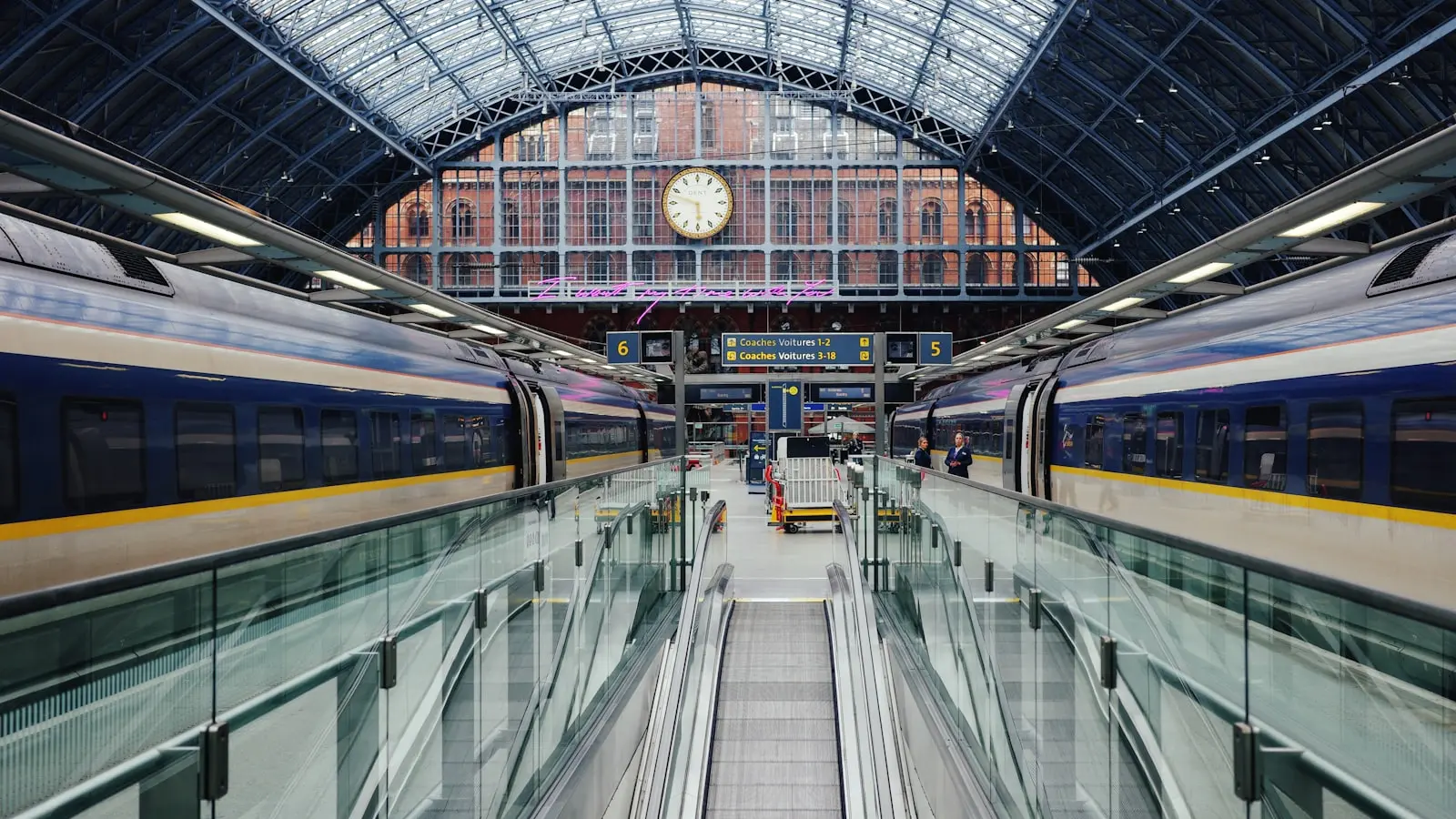
When a Reddit user broke down their multi-modal journey from Amsterdam to Belfast, the numbers sparked a debate far beyond simple arithmetic. The traveler booked an Eurostar from Amsterdam to London, then an overnight Stena Line ferry from Liverpool to Belfast. Total cost: roughly €180, including a private cabin. A comparable direct flight with a budget airline came in at around €120. On paper, the flight is €60 cheaper. But the user argued that once airport transfer costs, baggage fees, and the sheer misery of cramped seating are factored in, the gap nearly evaporates. The discussion that followed exposes a fundamental divide in how we value travel: is the cheapest ticket always the best choice, or does comfort and experience carry a price worth paying?
The Numbers That Started the Debate
The Reddit post laid out a detailed cost breakdown. The Eurostar from Amsterdam to London St Pancras cost €69. The overnight ferry Liverpool to Belfast, with a private cabin, cost €111. Total: €180. The flight from Amsterdam Schiphol to Belfast City Airport, with hand luggage only, was listed at €120. But the user added: Schiphol is farther from central Amsterdam than the Eurostar terminal, requiring a €12 train or taxi. Belfast City Airport to the city center adds another €8. Budget airlines charge €20–€30 for a checked bag and €10–€15 for seat selection. Suddenly the €120 flight becomes closer to €160–€170, and that is before valuing the physical toll of a two-hour flight crammed into a 28-inch seat pitch. The ferry cabin, by contrast, includes a bed, a private toilet, and the ability to stand up, walk around, and sleep. Commenters quickly latched onto this: the real price difference is not €60 but perhaps €10–€20 when everything is accounted for.
The Hidden Cost of Budget Air Travel
Budget airlines have perfected the art of unbundling. The base fare looks irresistible — €40 one-way from Amsterdam to Belfast. But the business model depends on passengers paying extra for every additional service. Check a bag? €25. Choose a seat with extra legroom? €15. Bring a sandwich for the flight? Not allowed if they catch you. The seat itself is a tightly packed row of thin foam and rigid plastic. For the low fare, you get a place to sit, and nothing more. The airport experience compounds the discomfort: hours of queuing, removing shoes and liquids, the sterile air of gate areas, and the constant announcement of boarding groups. By the time you settle into your seat, you have already spent physical and emotional energy. The true cost of the journey is not just the ticket price but the accumulated friction. One Reddit commenter put it bluntly: “I’d pay €60 not to deal with Ryanair.”
The Overnight Ferry as a Design Argument
The ferry cabin is a small room, roughly six feet by four, with a single bed, a desk, and a compact bathroom. It is not luxurious, but it is private. The design prioritizes rest: a curtain over the window, a door that locks, a thermostat you can adjust. Passengers can arrive at the port, walk on with their luggage, and within ten minutes be lying down. The ship offers multiple decks: a restaurant, a bar, a lounge with reclining seats, a deck to watch the sea. The journey from Liverpool to Belfast takes about eight hours overnight. You board around 10 p.m., eat dinner, watch the lights of the Irish Sea fade, then sleep. Wake up in Belfast. The ferry does not ask you to fold yourself into a seat or stay buckled for takeoff. The freedom of movement changes the entire psychological experience. Travel becomes a part of the journey, not an obstacle to endure. One ferry captain once told a reporter that passengers often say they feel more rested after a crossing than after a flight of the same duration.
The Psychological Value of a Slower Journey
The Eurostar leg reinforces the same principle. The train accelerates through the English countryside at 300 km/h, but the cabin is wide, quiet, and stable. Passengers can stand, walk to the buffet car, plug in a laptop, or simply watch the fields blur past. There is no boarding queue, no seat belt sign, no overhead bin scramble. You arrive at St Pancras, a cathedral of Victorian architecture, and step directly into the city. The transition from Amsterdam to London to Liverpool to Belfast is not broken into sterile corridors. It is a sequence of distinct places, each with its own texture. The traveler who chooses this route is not just moving from point A to point B. They are assembling a journey that reflects a slower, more deliberate rhythm. As one commentator noted: “The ferry cabin gave me back the night. I slept while the ship did the work.”
What the Commenters Said
The Reddit thread split into two camps. One argued that time is money: the flight takes about 5 hours door-to-door (including airport time), while the train and ferry take about 14 hours. The extra 9 hours are not worth a €60 saving, especially if the traveler’s hourly wage exceeds €6.66. The other camp countered that the journey itself is part of the experience. “I’d rather spend 14 hours feeling comfortable and relaxed than 5 hours stressed and cramped,” one user wrote. Several commenters pointed out that the ferry cabin effectively replaces a night of accommodation. If you would have paid €80 for a hotel, the €111 ferry fare becomes a net saving. Others focused on carbon footprint: a flight emits roughly 0.2 kg of CO2 per kilometer per passenger; the train and ferry combined emit around 0.03 kg. For the environmentally conscious traveler, the €60 premium might be better understood as a carbon offset you pay upfront.
The Carbon Question
The environmental angle is not just a moral one; it is increasingly a financial one. Several European countries are considering frequent flyer levies and higher taxes on aviation fuel. Business travelers face pressure to reduce corporate emissions. The passenger who chooses the ferry over the flight is aligning their wallet with their values. But the Reddit user did not emphasize this. They focused on comfort. The carbon savings were a bonus, not the driver. That pragmatism is telling: the decision to take the train and ferry rested on immediate, tangible benefits — a bed, a hot meal, a night of sleep — not abstract future gains.
Conclusion: The Real Cost of Your Journey
The Reddit post is not about a single trip. It is a microcosm of how we decide what travel is worth. The budget airline offers the promise of speed and low price, but extracts a cost in dignity and physical ease. The train and ferry offer slowness and integrity, but demand more time and upfront money. The final verdict depends on what you value most. If you measure travel by hours saved and cents spent, the flight wins. If you measure it by the quality of the hours themselves — the sleep you get, the space you occupy, the peace you feel — the multi-modal route is arguably the better deal. As the ferry pulls into Belfast harbour and you wake from an actual night’s rest, you might find that €60 was the smallest part of the equation.