The Ongoing Travel Forum Conflict
Online backpacker communities relentlessly urge travelers to bypass the Belgian capital entirely. Forum threads overflow with warnings labeling the city as a sterile, corporate layover plagued by bureaucratic monotony. Digital nomads complain about the looming glass architectures housing the European Union headquarters, arguing that this political infrastructure suffocates any lingering cultural authenticity. They advocate for tight schedules. They demand immediate dopamine hits from pristine medieval towns. Consequently, Brussels suffers a severe reputation deficit compared to neighboring cities like Amsterdam or Bruges.
Yet, data extracted from deeper travel discussions fractures this narrative completely. Visitors who commit to a deliberate three-day stay consistently report a high degree of satisfaction. They argue that rushing the capital guarantees a fundamental misunderstanding of its rhythm. A three-day timeline dismantles the superficial corporate facade. It allows travelers to absorb the complex layers of historic architecture, diverse culinary craftsmanship, and localized neighborhood cultures that remain entirely invisible to the frantic day-tripper. Time dictates perception. (If you only give a city three hours, it will only give you a postcard.)
The Geography of First Impressions
The negative reputation largely generates from transit-hub proximity. Travelers exit the Brussels-Midi or Brussels-North stations and confront a landscape built for mass transit logistics rather than human connection. Concrete overpasses and hurried commuters establish a cold baseline. Visitors looking for immediate romance retreat instantly.
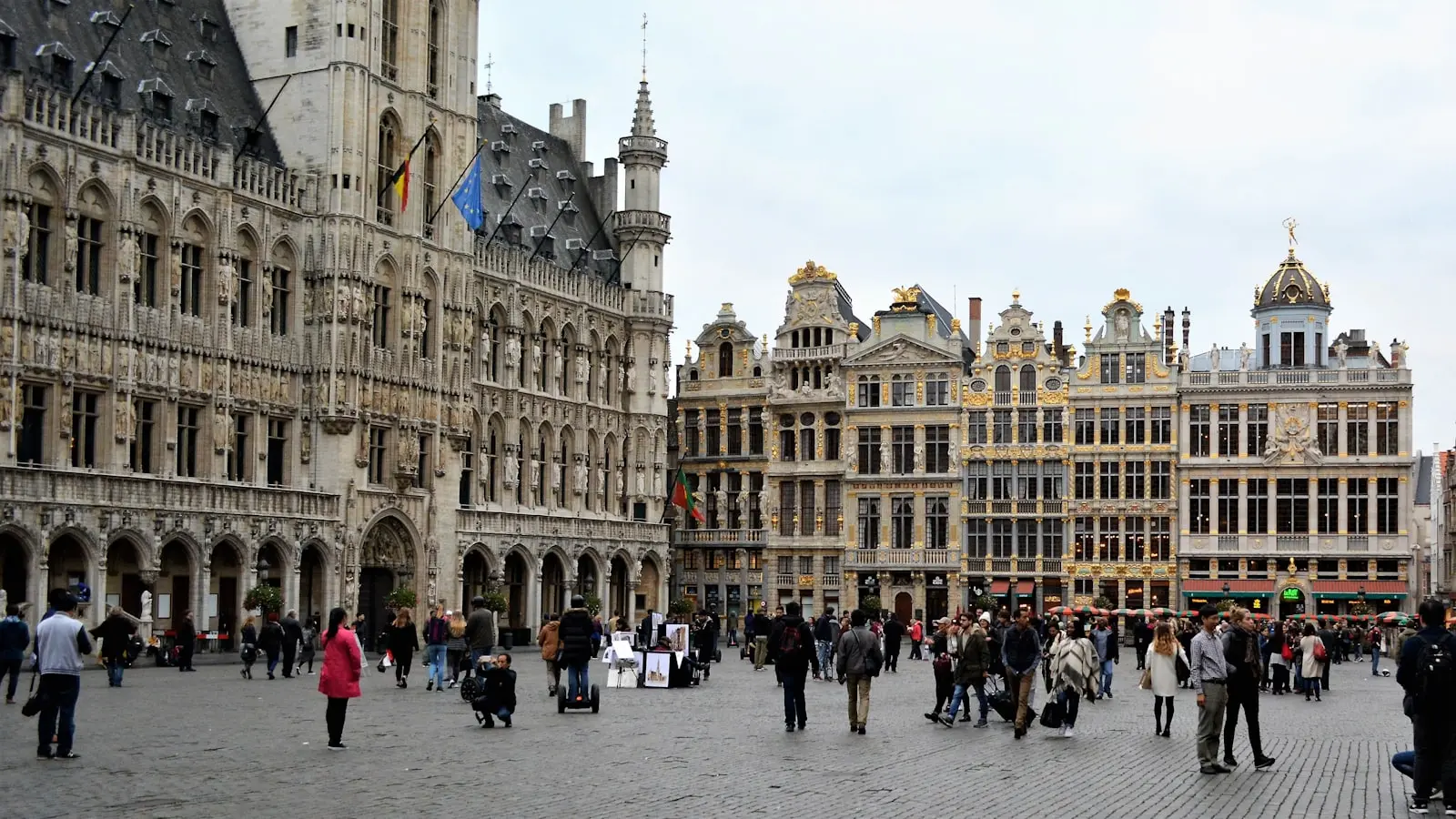
Move past the transit rings, and the urban design shifts radically. The Grand Place operates as the undeniable anchor of the city. The square commands attention not through size, but through concentrated opulence. Seventeenth-century guildhalls wrap the perimeter, their facades dripping with gold leaf that catches the shifting light. The towering spire of the Brussels Town Hall pierces the skyline, asserting the historical dominance of merchant wealth over royal decree. The architecture demands physical presence. You do not merely look at the Grand Place. You stand inside it.
Day-trippers arrive at peak afternoon hours. They battle massive crowds, snap identical photographs, and sprint back to their trains. A three-night itinerary alters this geometry. Staying within the city allows a traveler to walk onto the cobblestones at six in the morning. The square sits empty. Fog rolls off the surrounding rooftops. The sheer scale of the stonework breathes without the suffocating pressure of tour groups. This temporal luxury defines the difference between consuming a location and actually experiencing it.
Sequential Art as Urban Planning
Beyond the central historic district, Brussels weaponizes its artistic heritage against the gray realities of urban sprawl. The city acts as the undisputed global capital of comic strip culture, but it refuses to confine this legacy to museum archives. Instead, the local government integrates sequential art directly into the streetscape.
Over sixty massive murals dominate the exposed brick walls of residential buildings. Tintin, Spirou, and Corto Maltese stretch across three-story facades. This is not arbitrary vandalism. It represents a highly deliberate approach to urban design. The murals disrupt the visual monotony of traditional European side streets. They force pedestrians to alter their natural walking paths. Visitors hunting for a specific fresco inevitably wander away from the commercial corridors and into quiet, working-class neighborhoods. (It is a brilliant method to distribute foot traffic.)
This integration of pop culture into physical architecture changes how a traveler interacts with the environment. You stop relying strictly on digital maps. You look up. You trace the sightlines of painted characters to discover hidden alleys or local bakeries. The art dictates the physical journey.
The Economics and Craftsmanship of Taste
Culinary identity in the capital suffers from the aggressive commodification of its most famous exports. Stalls clustered around the Manneken Pis statue pump out artificial vanilla scents, selling mass-produced waffles overloaded with cheap chocolate syrup to exhausted tourists. This represents the fast-fashion equivalent of food.
True Belgian craftsmanship operates in quiet defiance of this spectacle. Independent chocolatiers approach their trade with the meticulous intensity of diamond cutters. They manipulate raw cacao sourced from specific equatorial regions, controlling temperature and humidity to produce pralines with a flawless structural snap. The fillings bypass heavy sugars in favor of subtle local botanicals, single-malt liquors, or perfectly roasted nuts. Tasting this level of execution requires deliberate attention. You cannot eat these while sprinting for a train.
The brewing culture mirrors this exact philosophy. Breweries functioning within the city limits refuse to standardize their methods for mass market consumption. They rely on spontaneous fermentation. They open their vats to the air, allowing wild yeast strains native specifically to the Senne river valley to inoculate the liquid. The surrounding environment literally ferments the beverage. A glass of authentic lambic or gueuze tastes tart, complex, and deeply rooted in the soil of Brussels. It challenges the palate. (Modern palates expect easy sweetness, which explains why so many tourists reject traditional lambic on the first sip.) Understanding these flavors takes time. Three days provides enough meals and evening sessions to adapt to this sophisticated culinary landscape.
Escaping the Center and Finding the Suburbs
The final justification for a seventy-two-hour stay lies in the neighborhoods operating beyond the immediate pull of the center. Brussels functions as a patchwork of distinct communes, each harboring its own architectural and cultural identity.
Consider the Ixelles district. Here, the rigid, imposing structures of the European Quarter vanish completely. Art Nouveau townhouses curve gracefully along tree-lined avenues. Architects like Victor Horta designed these homes in the late nineteenth century to reject industrial mass production. They utilized twisting wrought iron and sweeping glass to mimic organic forms, pulling natural light deep into the interiors. Walking through Ixelles feels like moving through a sculpted forest.
Further south, the daily markets at Place du Châtelain or Flagey offer a masterclass in local living. Vendors arrange seasonal produce, aged cheeses, and fresh seafood under canvas tents. Residents arrive not to sightsee, but to source ingredients for their evening meals. They gather at perimeter cafes, drinking small coffees or early glasses of wine. The atmosphere lacks the frantic energy of a tourist hub. It is simply life, playing out at a sustainable pace.
The Verdict on Travel Time
Backpackers chasing high-volume itineraries will continue to skip the Belgian capital. They prioritize quantity over depth, viewing travel as a checklist of easily digestible experiences. Their loss remains the patient traveler’s gain.
Spending three days in Brussels filters out the noise. It provides the necessary friction to slow down and observe the meticulous design, the layered history, and the genuine craftsmanship that define the city. The corporate facades of the European Union represent only a fraction of the reality. Beneath that administrative shell lies a vibrant, culturally dense metropolis that rewards those willing to stay long enough to actually see it. (Sometimes, the most rebellious act in modern travel is simply sitting still.)