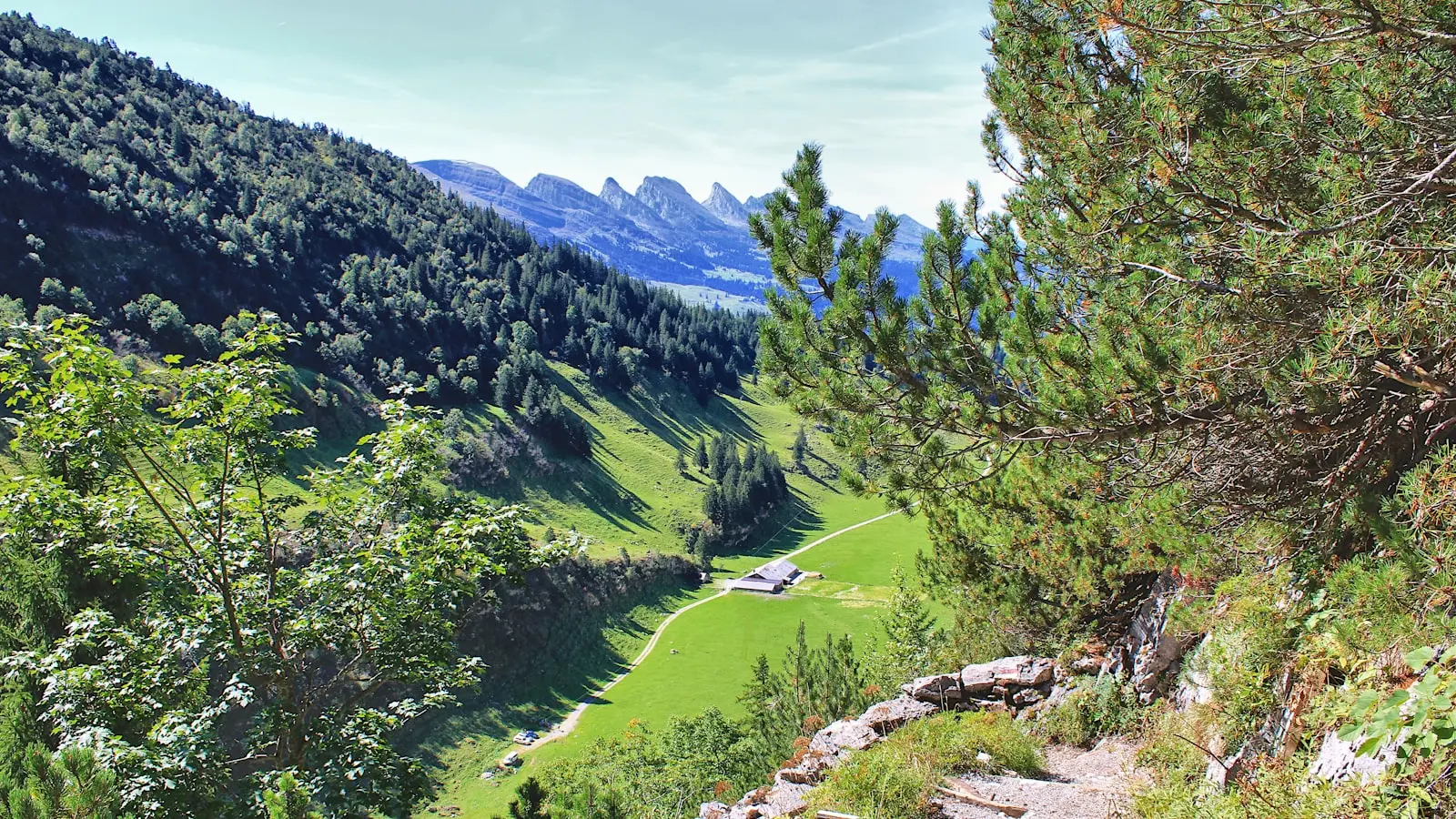
The engine labored as the sedan climbed toward the Furka Pass summit, each hairpin turn demanding a full rotation of the steering wheel. Outside, the air thinned, and the glacier-scoured rock faces closed in. Then, barely a thousand feet below the crest, the driver made a choice—not to push over the top, but to pull into the car train platform at Realp. Fifteen minutes later, the car emerged from the Lötschberg tunnel on the other side of the mountain, skipping the highest altitudes entirely. This is the duality of the Swiss Alpine road trip: the freedom to conquer the passes or the efficiency to bypass them. For anyone planning a journey through Switzerland, the question is not just which pass to drive, but when to trade asphalt for rail.
The Passes: A Hierarchy of Drama
Switzerland maintains over thirty mountain passes that cross the Alps, each with its own character and engineering quirks. The four most discussed by road trip enthusiasts—Furka, Grimsel, Susten, and Gotthard—form a quartet that encapsulates the spectrum of alpine driving.
Furka Pass (2,429 m) is the star of the group. Its switchbacks are so tightly stacked that experienced drivers report needing to correct the steering even on the straights, just to anticipate the next apex. The pass gained cinematic immortality as the location where James Bond’s Aston Martin DB5 performed the famous side-tilt sequence in Goldfinger. Today, the road retains that theatrical quality: narrow, exposed, and unrelenting. The view north toward the Rhône Glacier is a postcard made real, but the real show is the road itself—a ribbon of asphalt that seems to fold back on itself like origami.
Grimsel Pass (2,165 m) offers a different kind of tension. Less tightly coiled than Furka, it compensates with sheer scale. The road climbs alongside the Lake of the Dead (Totesee), a name that hints at its early history as a treacherous footpath for mule trains. Today, the pass is a favorite for cyclists who treat the gradient as a personal challenge. Drivers will note the dam walls that punctuate the landscape—concrete monuments to Switzerland’s hydropower ambitions. (The contrast between natural form and human intervention is jarring, but the views remain unfiltered.)
Susten Pass (2,224 m) sits between Furka and Grimsel in both elevation and temperament. Its curves are broader, the valleys wider, and the sense of isolation deeper. Unlike the celebrity status of Furka, Susten feels like a secret kept by locals. The pass is quieter, less trafficked, and offers a steady rhythm of ascending and descending that rewards drivers who prefer meditation over adrenaline.
Gotthard Pass (2,106 m) is the crown jewel of Swiss road history. Before the tunnel bored through the mountain in 1980, the pass was the only north-south link through the central Alps. Today, the old road remains open, and its panoramic highway—complete with cobblestone sections and a historic hospice at the summit—reminds drivers of an era when crossing the Alps was a full-day endeavor. (In winter, the pass is sealed; locals joke that Gotthard sleeps under a blanket of snow until May.)
The choice between these passes comes down to intent. If the goal is to test driving skill, Furka wins. If the goal is to photograph glaciers, Grimsel delivers. If the goal is solitude, Susten calls. If the goal is history, Gotthard answers.
The Car Train: Engineering as Shortcut
The car train through the Lötschberg tunnel is not a gimmick—it is a calculated response to the vertical limits of the Alps. The tunnel, completed in 1913 as a railway connection, was later adapted to carry vehicles on flatbed cars. From Kandersteg on the north side to Goppenstein on the south, the train ascends through a dark corridor at a steady 2.5 percent grade, eliminating the need to climb over the Bernese Alps. The journey lasts roughly 15 minutes, but its effect on travel logistics is transformative.
(Imagine this: you have just spent an hour negotiating the switchbacks of the Susten Pass. Your back aches. The brake pedal feels spongy. Then you roll onto a train car, kill the engine, and watch the mountain disappear as the tunnel swallows you. That shift—from active pilot to passive passenger—is the emotional architecture of the car train.)
The Lötschberg route specifically avoids the highest altitude passes, making it a reliable alternative when the weather turns. The Swiss federal roads office (OFROU) publishes real-time conditions, and seasoned travelers know that an unexpected September snowstorm can close the Furka Pass in hours. In those moments, the car train becomes not a luxury but a necessity. (The economics: a small fee per vehicle, but it saves hours of driving and eliminates the risk of being stuck above 2,000 meters overnight.)
Cultural Significance and Seasonal Rhythm
Mountain passes in Switzerland are more than roads—they are arteries of cultural memory. The Furka Pass has been a trade route since Roman times, and the stone bridge at the base of the pass dates to the 16th century. The Gotthard Pass was a key axis for the Swiss Confederation, and its hospice provided shelter for travelers for over 700 years. The car train, in contrast, is a 20th-century invention, but it slots into that same tradition of engineering to overcome nature.
Seasonality dictates everything. Most passes open from late May to October, though snow can linger into June at higher elevations. The Swiss road information site (www.roads.ch) updates status daily, and the combination of webcams and weather alerts means that a planned route can shift overnight. (This is not a suggestion; it is a rule. Check the site before every departure.) The car train runs year-round, making it the only consistent link through the Alps in winter.
Practical Rhythms for the Road
For a journey through the Swiss Alps, the optimal approach combines passes and car train in sequence. A common loop begins in Interlaken, drives the Susten Pass east to Andermatt, takes the car train south through the Lötschberg to Kandersteg, then heads west to the Grimsel Pass and back. This route avoids doubling back and maximizes exposure to different landscapes.
Fuel stations are sparse above the treeline; fill up at the base of each pass. Altitude affects engine performance; naturally aspirated engines lose roughly 10 percent power per 1,000 meters of elevation. Brake fade is a real risk on long descents; use engine braking (downshift) rather than riding the brake pedal. The Swiss police enforce speed limits strictly—80 km/h on most passes, 60 km/h in curves—and cameras are concealed in rock outcroppings. (Fines are steep, and they are issued by mail to rental car companies.)
The car train requires no reservation in off-peak months, but summer weekends can see queues of 45 minutes or more. The best time to use it is early morning or late afternoon, when the light angles through the valleys and the roads are emptier.
The Emotional Architecture of the Drive
What stays with a driver after such a trip is not the statistics of elevation or the list of passes. It is the feeling of compression and release: the tightness of a switchback, the sudden openness of a high plateau, the damp tunnel air that smells of rail grease and rock dust. The car train offers a rare pause—a moment to step out of the vehicle, stand on the flatbed, and watch the landscape slide by without the obligation of steering.
(One traveler described it as “the closest you can get to flying through a mountain.” The car train does not eliminate the Alps; it allows you to experience them from a different perspective—below them, inside them, rather than above them.)
The Swiss have mastered the art of making the difficult feel effortless. The road engineers who shaped the switchbacks, the surveyors who plotted the train tunnel, the drivers who choose between them—all participate in a system that treats the landscape not as an obstacle but as a collaborator. The question of which pass to drive, when to take the car train, resolves itself not through calculation but through attention to the moment. The best road is the one that matches the weather, the car, and the mood.
In the end, the Swiss Alps offer a rare luxury: the ability to choose between the heroic and the practical. The passes demand full engagement; the car train offers a quiet surrender. Both are valid. Both reveal something essential about the place and the driver.