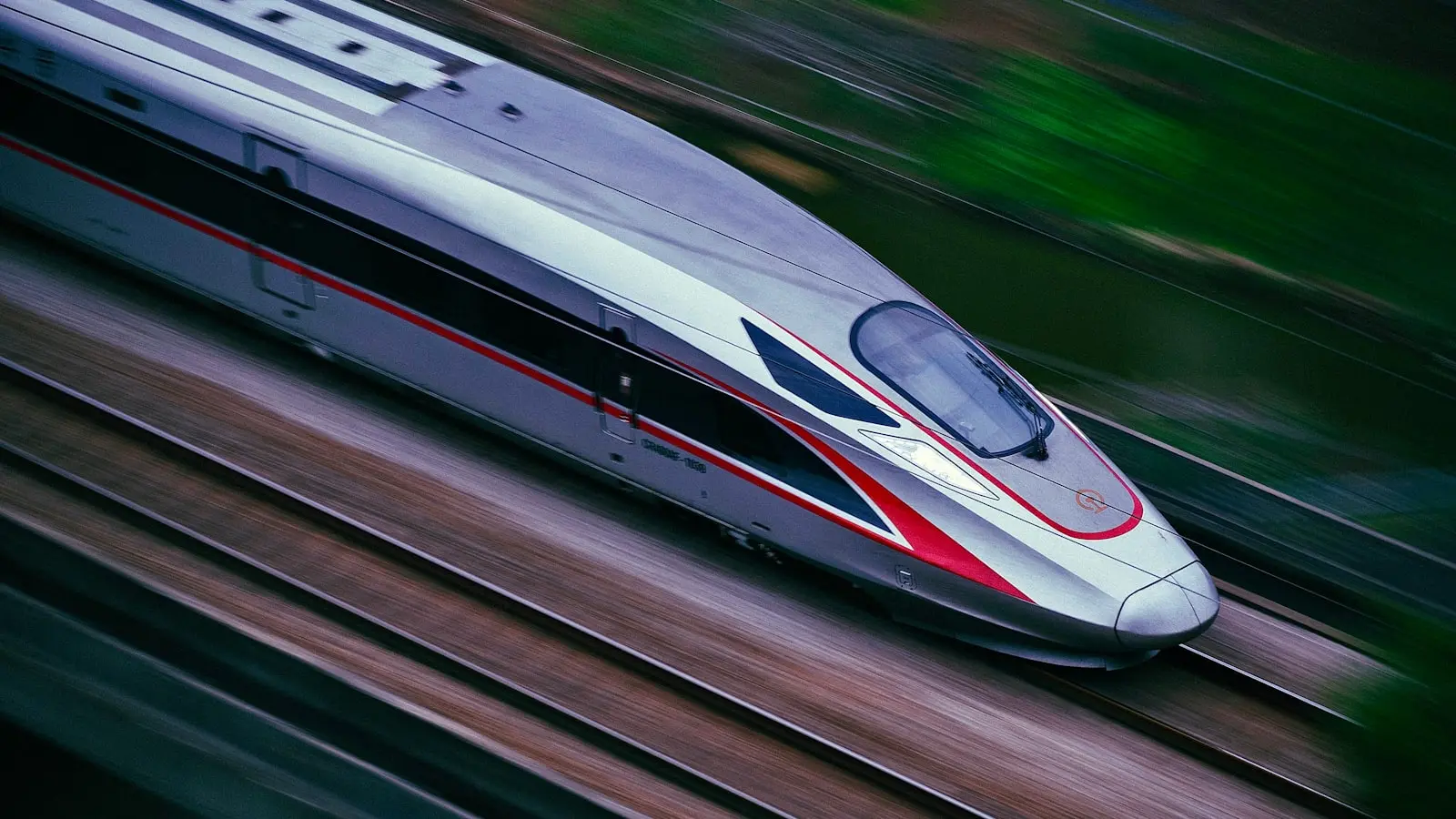
The AVE train clears the Madrid city limits at 310 km/h, and within minutes the urban fringe dissolves into a dust-brown plateau. Passengers who boarded with coffee cups still warm from a hotel lobby in Sol will be standing in the shadow of the Giralda tower in Seville before the morning loses its edge. This is not a city-hopping fantasy; it is a logistical reality that an increasing number of short-stay travelers are leveraging. The question is not whether the trains run fast enough, but whether the day-trip model can deliver the cultural immersion that a single-base itinerary promises.
The Geography of Speed
Spain’s AVE network stretches over 3,100 km, making it the second-largest high-speed rail system in the world behind China. Madrid sits at the hub. From Madrid’s Puerta de Atocha station, trains depart for Barcelona in 2 hours 30 minutes, for Seville in 2 hours 40 minutes, for Valencia in 1 hour 40 minutes, and for Malaga in 2 hours 50 minutes. (The math works: a round-trip to Seville leaves five hours on the ground — enough for a cathedral, a tapas crawl, and a stroll through Santa Cruz.) The network also reaches smaller cities like Toledo (30 minutes), Segovia (25 minutes), and Cuenca (50 minutes). These shorter lines turn medieval hill towns into viable morning excursions.
What makes the system effective for day trips is not just speed but frequency. The Madrid–Barcelona corridor runs more than 30 trains daily; Madrid–Seville sees hourly departures. A traveler who misses the 10:00 train can take the 11:00 without losing an entire day. The schedule behaves like a metro line stretched across a country, and that predictability reduces the anxiety of planning.
The Economics of a Base Camp
Accommodation costs in central Madrid are not cheap, but they become rational when spread over eight nights instead of splitting across three different cities. A single hotel room in a city like Seville or Barcelona often costs 30 to 50 percent more per night than a comparable room in Madrid, especially during peak seasons. By staying put, a traveler avoids the friction of packing, checking out, hauling luggage to a train station, checking in elsewhere, and adapting to a new neighborhood layout every two days. The mental energy saved is measurable: one less decision per day, one less negotiation with a foreign check-in desk, one less moment of disorientation upon arrival.
Yet the savings are not purely financial. Time lost to relocation logistics — researching neighborhoods, transit connections, locker storage — can exceed two hours per move. Over a week, that accumulates into half a day of dead time. Day trips from a single base eliminate that leak entirely. The trade-off is a longer train ride each morning, but that ride becomes productive space: a chance to sketch itinerary notes, read about the destination, or simply watch the landscape shift from dry plains to olive groves to Mediterranean coastline.
Cultural Immersion Without the Suitcase
Critics of the day-trip model argue that fast trains produce shallow travel — that checking off cities without sleeping in them reduces culture to a highlight reel. The counterargument, as reported by frequent users of the AVE system, is that the constraint forces focus. When a traveler has only six hours in a city, every café, every museum visit, every alleyway turn must be intentional. There is no room for the afternoon drift that often consumes a full day in a single location. The result is a compressed but intense experience, one that demands presence rather than passive wandering.
Furthermore, the train itself becomes a cultural artifact. Spain’s high-speed rail stations are not anonymous transit sheds. Atocha in Madrid houses a tropical garden inside its concourse; Sants in Barcelona connects directly to the city’s Art Nouveau grid. Sevilla Santa Justa was designed to mirror the tiled facades of the Alcázar. The trains are quiet, punctual, and equipped with power outlets and dining cars serving proper espresso — not plastic cups of instant. Travelers who board with a berinjena (eggplant) sandwich from a local bakery are eating like the Spanish do. The act of moving between cities becomes part of the cultural texture, not just infrastructure.
The Reddit community that dissected an earlier Andalucía photo set — criticized for over-edited images — largely endorsed the AVE day-trip method as a “practical hack” for solo travelers and short-timers. The discussion that followed centered on luggage storage: what to do with a carry-on during a day trip. The answer, repeated across multiple threads, was simple: leave it at the hotel. Most Madrid hotels allow guests to store bags at the front desk after checkout, and some hostels have lockers for a small fee. For travelers who need to move their base, the network’s major stations offer consigna (left luggage) services for about €5 per day per bag.
The Apps and the Algorithms
Booking AVE tickets has become frictionless since the launch of the Renfe app and competitive platforms like Trainline and Omio. The Renfe app allows ticket changes up to 15 minutes before departure for a small fee, which reduces risk for travelers who are uncertain about return times. Advance purchase — at least two weeks out — can cut ticket prices by 50 percent or more. The Madrid–Seville route can drop from €80 one-way to €35 if booked early. (The catch is that discount fares are non-refundable, but the change policy still offers flexibility.) Many travelers use the app to scan QR codes directly from their phones, bypassing ticket counters entirely.
Another tool gaining traction is the Spain Trains app, which aggregates schedules and platform numbers for all AVE and regional lines. It provides real-time updates on delays (rare on AVE, but not impossible) and platform changes. The interface is in English and supports Apple Wallet integration for ticket storage. These digital layers reduce the anxiety of navigating a foreign rail system, especially for first-time users.
Best Day-Trip Combinations
From Madrid, the most efficient combos fall into three categories: the short hop, the cultural heavyweight, and the coastal sprint.
Short hops (under 1 hour): Toledo (30 min) and Segovia (25 min) are the easiest. Toledo delivers a compact medieval core, the El Greco museum, and marzipan shops. Segovia offers the Roman aqueduct and a fairy-tale castle. Both can be visited in a single long day if the traveler is willing to start early and return late. (One Reddit user reported doing both in one day: Segovia in the morning, Toledo after lunch. Feasible but rushed.)
Cultural heavyweights (1.5–2.5 hours): Seville, Granada (via Antequera-Santa Ana, then bus), and Córdoba. Seville requires a full day; the Alcázar alone demands two hours. Córdoba can be combined with a short stop in the city of the Mezquita. The train to Córdoba takes 45 minutes, making it a viable morning-out, afternoon-back trip. Granada is trickier because the high-speed line stops at Antequera; a connecting bus adds 45 minutes each way. But the payoff — the Alhambra — justifies the extra logistics.
Coastal sprints (2–3 hours): Valencia (1h40) offers the City of Arts and Sciences, the Central Market, and paella. Barcelona (2h30) is a long day but doable; the train drops travelers at Sants, and the metro covers the rest. A day in Barcelona means the Gothic Quarter, La Boqueria, and a walk along Barceloneta. It is not enough time to see the Sagrada Familia’s interior (reservations are required days in advance), but the exterior and the park fill a solid day.
What these combos share is a common constraint: the traveler must book Alhambra tickets or Sagrada Familia entry slots weeks ahead. Day trips leave no margin for last-minute availability. The traveler who fails to reserve is left wandering outside.
The Limits of the Model
The AVE day-trip approach works best for travelers who are comfortable with a tight schedule, who do not mind returning to the same hotel every night, and who value efficiency over serendipity. It does not serve destinations off the high-speed corridor — the Basque Country, Galicia, the Balearic Islands — which require separate itineraries or sleeper trains. Nor does it allow for evening immersion in a city’s nightlife; the last train back to Madrid from Seville departs around 21:30, and from Barcelona around 20:45. The traveler who wants to watch flamenco past midnight will need to spend the night.
But for the traveler who has eight days and wants to see seven cities, the AVE network is not a compromise. It is an engine of density — a way to compress geography into a week without compressing experience. The trains themselves enforce a rhythm: arrive, explore, return. That rhythm, when embraced, becomes not a limitation but a structure. The day-tripper steps off the platform, sees the city in its condensed glory, and retreats to the comfort of a known bed. It is travel as editing — a version of Spain where every scene earns its place.
The Final Calculation
The AVE day-trip strategy reshapes the assumption that a short trip must mean a single city. It turns Madrid into a rotating hub, a base camp from which the traveler radiates outward each morning and returns each evening. The savings in time, money, and mental energy are real. The risk is that the traveler becomes a collector of postcards rather than a participant in place. But the travelers who use the system well — who book the morning express, who skip the tour bus, who eat where the train station workers eat — report something closer to immersion. The train becomes a daily ritual, and the cities become chapters of a single story. Whether that story satisfies depends on how the traveler reads it.