What “affordable” means when planning Poland travel costs
Yes, Poland can still be an affordable European destination, particularly for food, local transport, casual sightseeing, and travel outside the busiest neighborhoods. But it is no longer useful to describe the whole country as uniformly cheap. The cost of visiting Poland depends on the city, season, accommodation standard, booking timing, and exchange rate available to you.
- Accommodation usually has the greatest effect on the total budget, especially in central areas and during festivals, holidays, and summer weekends.
- Food and local transport can still offer strong value, but tourist-center prices may be considerably higher than neighborhood alternatives.
- Smaller cities and shoulder-season trips can reduce costs, although limited accommodation or transport may change the calculation.
- A fair comparison requires similar assumptions about lodging, meals, attractions, dates, and convenience—not a broad comparison with “Western Europe.”
A short weekend in central Krakow during a festival can cost much more than a longer trip through Lublin, Torun, or smaller regional destinations. A private apartment beside a historic square may also erase savings from inexpensive public transport and neighborhood restaurants.
The fairest comparison is like for like: compare a mid-range three-night stay in Krakow with a similar stay in Prague, Vienna, Berlin, or Amsterdam, using comparable accommodation, meals, attractions, and transport. On that basis, Poland often remains good value, although the gap narrows in peak periods and tourist-heavy districts.
Currency conversion adds another variable. Travelers spending in pounds, dollars, or euros may find that exchange-rate movements change the apparent bargain from one month to the next. Card providers, cash withdrawals, dynamic currency conversion, and foreign-transaction fees can also make the rate shown in a search result different from the rate applied to your account.
The main categories that shape a Poland trip budget
Accommodation usually has the greatest effect on Poland travel costs. Hostels and simple guesthouses can keep a trip inexpensive, while private rooms, design hotels, and centrally located apartments raise the total quickly. The difference between staying beside a main square and staying several tram stops away may be greater than the difference between eating at a casual local restaurant and preparing one meal yourself.
Weekends, public holidays, summer dates, major concerts, sporting events, and festivals can push prices upward. Booking early improves choice, but it does not guarantee a low rate. Flexible dates and a willingness to stay near reliable public transport can matter just as much.
Transport should be divided into several costs. International flights may be the largest single journey expense, but they do not measure everyday affordability. Once in Poland, travelers may pay for airport transfers, intercity trains or buses, city tickets, occasional taxis, and luggage or seat supplements.
Rail travel can be convenient between major cities, while buses may offer lower fares on some routes. The cheapest option is not always the best value if it takes substantially longer or arrives far from your accommodation. On a short trip, paying slightly more for a direct connection may protect a day of sightseeing.
Food is one area where Poland often feels comparatively accessible. A breakfast from a bakery, a casual lunch, a milk-bar-style meal, or a market snack can cost much less than a full-service meal in a central tourist district. Poland food prices vary widely, however, and historic-center restaurants may charge for foot traffic and convenience rather than local purchasing patterns.
Attractions create a smaller but still meaningful part of the budget. Museums, castles, guided tours, viewpoints, concerts, and special exhibitions can add up when several paid activities are scheduled each day. Free parks, public squares, churches where entry is permitted, riverside walks, markets, and self-guided neighborhood walks can provide balance.
Do not overlook extras such as travel insurance, baggage, booking charges, tips where customary, ATM fees, airport transfers, laundry, snacks, and itinerary changes. A trip that looks inexpensive at a headline daily rate can become less so once these smaller expenses are included.
Where Poland offers better value—and where costs rise
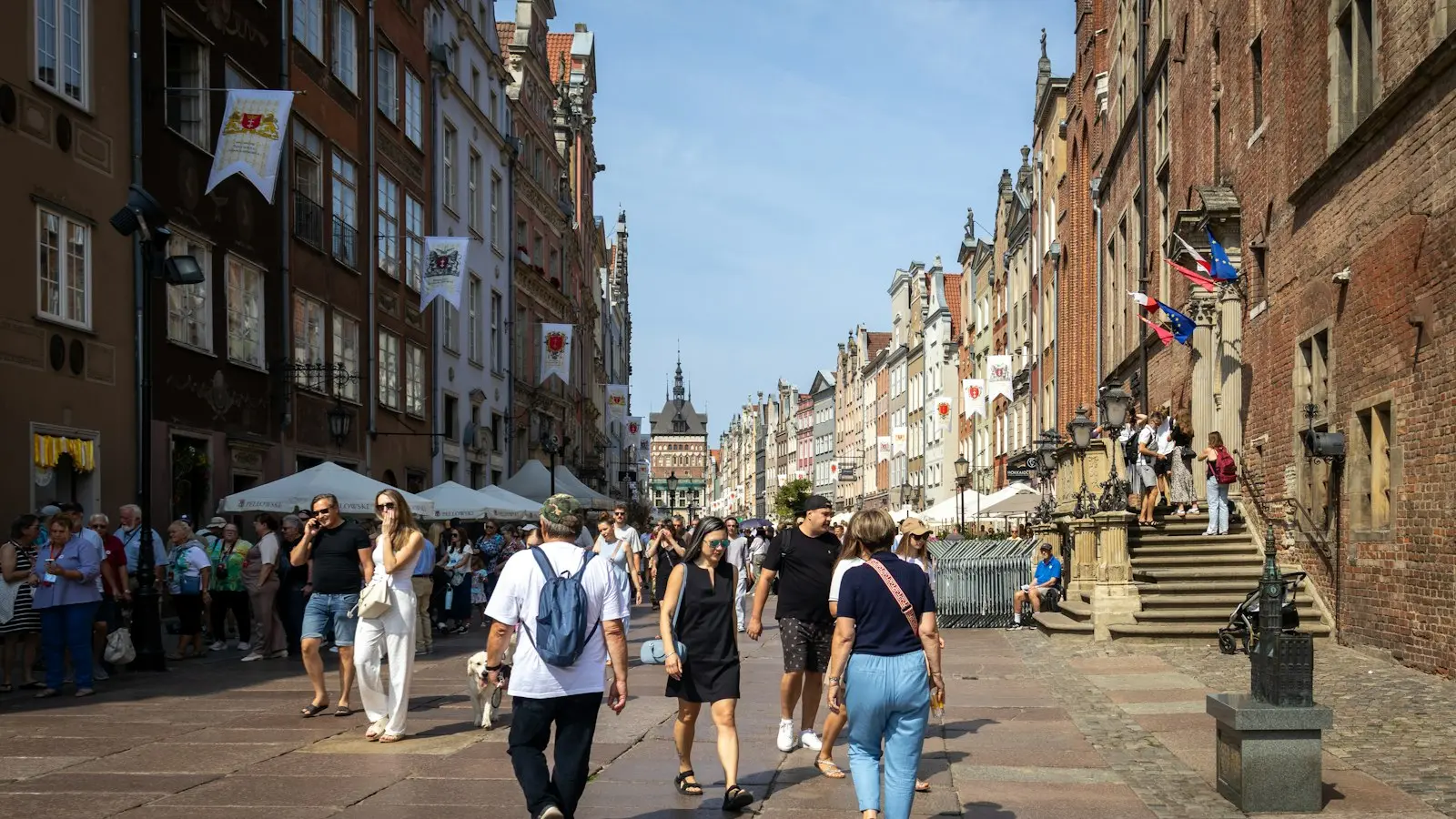
Warsaw, Krakow, Gdansk, Wroclaw, and other popular destinations do not have one single price level. Each contains expensive zones and better-value areas. Historic centers, nightlife streets, waterfronts, airport corridors, and locations beside major attractions commonly carry a convenience premium.
Krakow illustrates the trade-off clearly. Staying in or near the Old Town makes walking easy, but rooms and restaurants there may be priced for short-term visitors. A neighborhood with a dependable tram connection can offer more space and a quieter evening while keeping the main sights accessible.
Warsaw may reward travelers who use public transport and explore beyond the most central business and historic areas. Gdansk can become more expensive during summer, while nearby destinations may offer a different balance of accommodation and dining costs. Wroclaw, Poznan, Lublin, Torun, and regional towns can suit travelers willing to trade some international familiarity for a slower pace.
Smaller destinations are not automatically cheap. Limited accommodation can make rooms scarce during events, and rural transport may require a car or longer connections. The saving often comes from the overall pattern: fewer high-demand nights, shorter distances within town, less pressure to book premium locations, and more opportunities to eat where local residents do.
Season changes the calculation. Summer usually brings stronger demand in coastal and historic destinations, while winter can reduce prices but also shorten daylight and alter attraction hours. Shoulder seasons may offer the best compromise, although weather and event availability are less predictable. Check venue opening times and transport schedules rather than assuming every attraction operates on a summer timetable.
This is why “Poland versus Western Europe” is too broad to answer without assumptions. Poland may be substantially better value than an equivalent city break in a high-cost capital, but the difference can narrow when comparing a popular Polish weekend with a carefully booked off-season trip elsewhere.
How to control Poland food prices, transport, and attraction spending
The most reliable approach to Poland budget travel is to vary how you spend rather than making every purchase as cheap as possible. Have breakfast from a bakery or accommodation kitchen, choose a local lunch menu, and reserve one or two evenings for restaurants you genuinely want to try. This leaves room for regional specialties without turning every meal into a splurge.
Neighborhood restaurants, food halls, markets, bakeries, and casual counters can offer better value than restaurants beside a major sight. Check the full menu, portion size, service charges, and drinks before ordering. A low-priced main course may be less attractive once several add-ons are included.
Self-catering is useful for breakfast, snacks, and drinks, but it is not automatically worthwhile for a short stay. Grocery shopping takes time, and an apartment with a kitchen may cost more than a well-located room. The right choice depends on trip length and whether cooking is part of the experience you want.
For local transport, compare single tickets with day or multi-day passes based on your actual movements. A pass is valuable when you expect repeated tram, bus, or metro journeys; it is poor value if most sights are walkable. Buy and validate tickets through the local system, using official apps, machines, or operators.
Airport transfers deserve early attention. A train, public bus, or shared connection may be cheaper than a taxi, but the lowest fare can be inconvenient with late arrivals, heavy luggage, or an unfamiliar route. Licensed taxis and reputable ride-hailing services may cost more while reducing uncertainty. Check the airport’s official transport guidance and avoid unlicensed offers.
Attractions can be managed by alternating paid highlights with free experiences. A museum or city pass may help if it covers several places you already plan to visit, but it is not automatically economical. Check the included venues, reservation requirements, validity period, transport coverage, and seasonal opening hours before buying.
Nightlife is an optional category, not evidence that an entire destination is inexpensive. Alcohol prices vary by venue, and responsible consumption matters regardless of price. Follow local age, licensing, and public-conduct rules, and avoid building an itinerary around cheap drinks.
Sample Poland budget scenarios with dated assumptions
The following planning ranges use November 2026 assumptions, are stated in Polish zloty (PLN), and exclude international flights, travel insurance, passport costs, baggage fees, and major shopping. Convert the totals using the exchange rate available when booking, then allow for foreign-exchange fees.
For a budget-conscious traveler spending seven nights mainly in one large city, a reasonable planning range might be 1,750–3,150 PLN per person. This assumes hostel accommodation or a basic shared arrangement, bakery or grocery breakfasts, inexpensive lunches, occasional casual dinners, public transport, mostly free attractions, and one or two paid visits. A slower itinerary in a smaller city may fit toward the lower end; a peak-period stay in central Krakow may not.
A mid-range traveler might plan roughly 3,500–6,300 PLN for the same seven nights. This model assumes a private room or simple hotel, a mixture of casual and sit-down meals, regular public transport, several paid attractions, and one intercity journey. It allows for more convenience but not necessarily luxury. Accommodation location is likely to be the largest variable.
A higher-comfort traveler could spend approximately 6,500–11,500 PLN or more for a week. This may include a well-rated central hotel, more restaurant meals, private airport transfers, flexible intercity travel, guided tours, premium events, and greater tolerance for last-minute changes. The upper end can rise sharply during festivals, holidays, and summer weekends.
For a multi-city trip, add an intercity transport allowance and remember that changing hotels creates hidden costs: station transfers, luggage storage, earlier checkouts, and meals purchased in transit. A two-city itinerary may be better value than trying to cover five places in one week, even if individual train fares look modest.
The largest budget levers are accommodation, peak-period timing, city choice, and the number of paid experiences. Food and local transport are easier to control, but they rarely compensate for an expensive room or poorly timed travel. Poland is most likely to feel good value when travelers plan around those major decisions rather than focusing only on the price of a coffee or meal.
FAQ
Is Poland still cheap for travelers compared with Western Europe?
Poland can be cheaper for comparable food, public transport, casual accommodation, and some attractions, but the answer depends on the cities and dates. A central peak-season stay in a popular Polish destination may approach the cost of a carefully booked trip elsewhere. Compare the same accommodation standard and itinerary rather than relying on national stereotypes.
How much does it cost to visit Poland for a week?
Using the November 2026 planning assumptions above, a budget-conscious week might fall around 1,750–3,150 PLN per person, a mid-range week around 3,500–6,300 PLN, and a higher-comfort trip around 6,500–11,500 PLN or more. These figures exclude international flights, insurance, baggage, and shopping, and they are illustrative ranges rather than guaranteed current prices.
What is the cheapest way to travel around Poland?
Use public transport within cities, compare official rail and bus fares for intercity journeys, and avoid unnecessary backtracking. A slower itinerary focused on two or three connected destinations can cost less than constant city changes. Walking is often practical in historic centers, but do not sacrifice safety or reliability merely to avoid a modest fare.