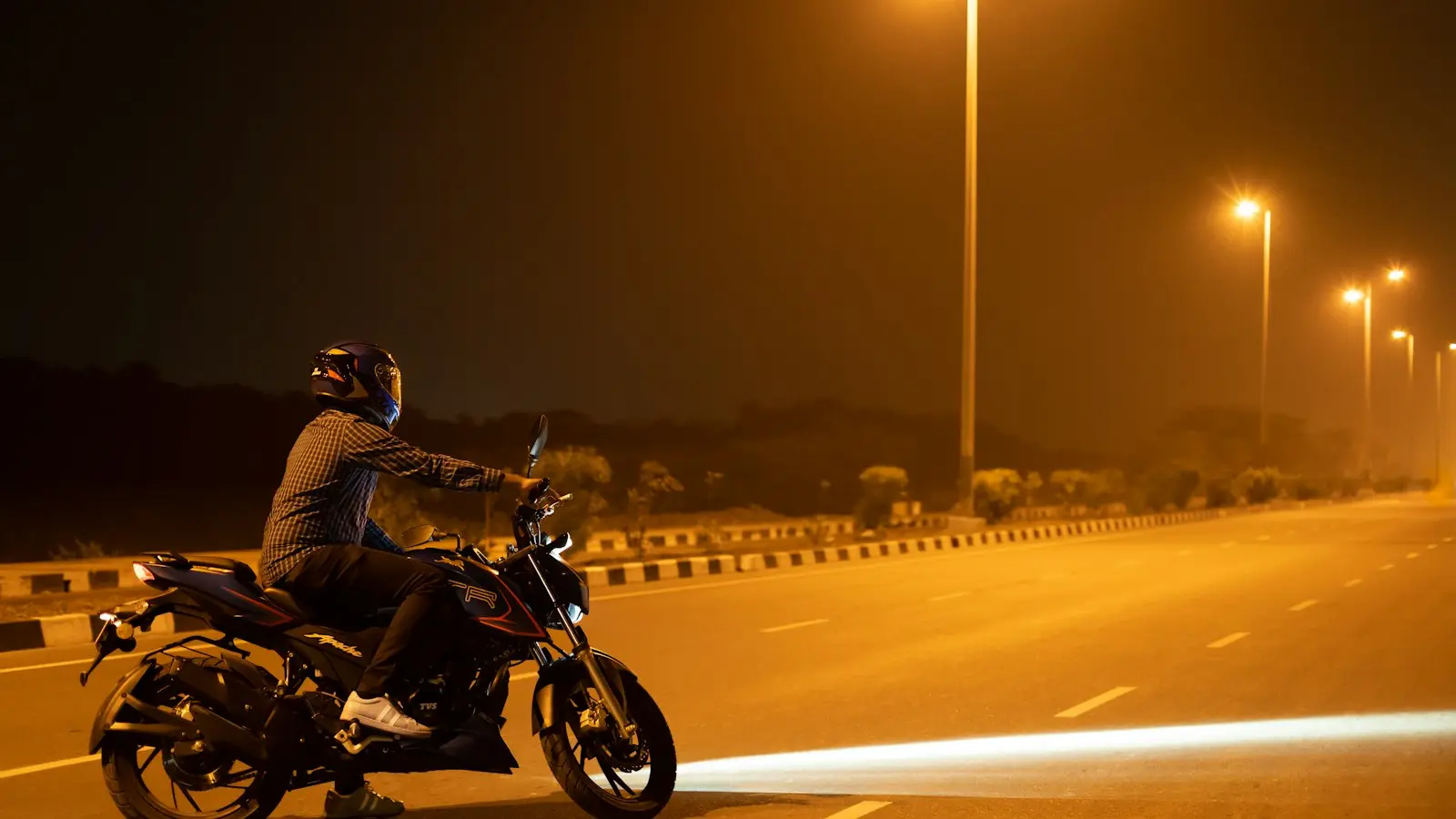
A successful solo motorcycle trip in India begins with restraint: choose one manageable region, verify current documentation and insurance requirements, and plan for delays instead of trying to cover the country. India’s varied terrain, traffic, weather, and road conditions make a single nationwide itinerary an unrealistic starting point for most first-time visitors.
Good India road trip planning is less about drawing an impressive line across a map and more about building a trip that still works when a motorcycle needs attention, a mountain road closes, or a short-looking journey takes most of the day.
Key Takeaways
- Choose one region based on season, terrain, traffic, support access, and your riding experience.
- Estimate travel time from realistic riding hours, not map distance alone, and include rest and buffer days.
- Confirm visa, license, permit, rental, and insurance requirements before booking or collecting a motorcycle.
- Plan conservatively for fuel, daylight, navigation gaps, mechanical problems, and changing weather.
- Give a trusted contact your route and create clear rules for stopping, changing transport, or ending the trip.
1. Choose a Manageable Region and Set a Realistic Riding Pace
Start with the kind of riding you want, then choose a region that supports it. A compact loop near a major city may provide easier access to rental companies, mechanics, accommodation, and backup transport. A mountain route can offer dramatic scenery but also introduce altitude, steep roads, changing weather, limited fuel access, and longer recovery after a tiring day. Coastal or southern routes may be easier in some seasons, but heat, congestion, traffic, and monsoon conditions still matter.
Do not treat India as one motorcycle destination. The more useful question is not “How much of India can I see?” but “Which area can I ride without making every day a logistical gamble?” Compare possible regions by season, terrain, road quality, traffic density, altitude, remoteness, fuel access, repair support, and the number of practical ways to leave the route.
A short regional loop is often the simplest option for a first solo motorcycle trip in India. It lets you return to the starting city, reduces the consequences of a breakdown, and keeps luggage and accommodation decisions manageable. A point-to-point route can be rewarding, but it requires more coordination: confirming that the rental company permits the route, arranging motorcycle return or transport, and planning what happens if the bike fails far from the pickup location.
A guided or supported trip may be more appropriate if you have limited motorcycle experience, are uncomfortable with dense traffic, or are considering remote or high-altitude roads. Support does not remove every risk, but it can reduce the number of decisions you must make alone.
Estimate riding time rather than relying on map distance. City exits, construction, animals, roadside activity, slow vehicles, steep sections, weather, and navigation mistakes can turn a modest distance into a full day. Build the itinerary around conservative riding hours, regular stops, at least one rest day, arrival buffers, and a flexible day for delays. If the plan only works when every day goes perfectly, it is not ready.
Set stop points before you leave. Worsening weather, poor visibility, fatigue, mechanical symptoms, or unreliable navigation should be reasons to stop or shorten the day. Conditions and enjoyment vary by region, season, rider experience, and local events, so no route should be presented as universally safe or suitable.
2. Verify Entry, Driving, Rental, and Insurance Requirements Before Booking
Before paying for flights or a motorcycle, check passport validity, entry permission, visa conditions, and requirements connected to your nationality and travel purpose. Use current official Indian government or consular information rather than relying on an old itinerary or a traveler’s experience from a previous year.
Driving documentation needs the same care. Confirm whether you need a valid home-country motorcycle license, an International Driving Permit, local authorization, or another document for the specific motorcycle category you intend to ride. A license that permits you to drive a car may not establish that you are licensed for a motorcycle. Requirements may also depend on the rental arrangement, state or region, and current rules.
Ask the rental provider for written confirmation of the motorcycle’s registration, insurance, permitted travel areas, breakdown procedure, deposit terms, and restrictions on crossing state or national borders. Do not assume that a motorcycle available for rent is automatically suitable for a foreign visitor or permitted on every road in your proposed route.
Review insurance separately. Check whether your travel or medical policy covers motorcycle use, the engine size, riding as the driver rather than a passenger, medical treatment, evacuation, and third-party liability. Look for exclusions involving protective equipment, passengers, alcohol, riding violations, unlicensed driving, or specific roads and activities. Vehicle damage coverage and personal medical coverage address different risks; one may not replace the other.
Save copies of your passport, visa or entry document, driving license, International Driving Permit if applicable, insurance policy, rental agreement, emergency contacts, and medical information. Keep them in a secure online location and in an offline format that remains accessible without a signal.
3. Plan Each Day Around Road Reality, Safety, and Recovery
Design a motorcycle itinerary around the difficult parts of a day, not only the destination at the end. Leaving a large city may be slow. Mountain roads can demand concentration for hours. Roadworks, rain, dust, animals, mixed traffic, and poor visibility can change a route’s character with little warning.
Plan to finish unfamiliar stretches in daylight whenever possible. Avoid a schedule that depends on riding after dark, particularly when you do not know the road, the motorcycle’s condition, or the location of your accommodation. This is risk-reduction guidance rather than a universal legal rule, but it is a sensible boundary for solo travel.
Pack for practical interruptions: a properly fitting helmet, protective clothing, gloves, closed footwear, weather layers, drinking water, a small first-aid kit, phone power, copies of documents, and enough cash for places where electronic payment or connectivity may be unreliable. Protective equipment should suit the motorcycle and conditions rather than be collected at the last minute.
Check current weather, road closures, regional advisories, and access restrictions before setting out each morning. A route that was available when you planned the trip may no longer be sensible after heavy rain, a local disruption, or a change in road conditions. Keep a backup transport option in mind, such as a taxi, bus, train, or arranged vehicle transfer where available. The aim is not to predict every problem; it is to avoid making the motorcycle your only way out.
Use clear stop criteria. Pull over or seek help if you are too tired to make good decisions, visibility deteriorates, the motorcycle develops a new sound or handling problem, traffic becomes unmanageable, or you can no longer navigate reliably. Missing a destination is inconvenient. Continuing after conditions exceed your ability is a different calculation.
4. Build the Logistics System Around Fuel, Navigation, Accommodation, and Repairs
Fuel planning matters most on remote or mountainous stretches. Do not rely only on the distance shown by a map or assume that a fuel station will be open. Ask locally about the next dependable fuel point, refuel earlier than you might at home, and allow for detours or slow travel. The useful question is not the motorcycle’s advertised range but how much reserve you want when the next reliable supply is uncertain.
Carry offline maps and more than one way to understand the route. A phone with downloaded maps, a power bank, a written list of planned stops, and saved accommodation details can be more useful than a single navigation app. Before leaving a town, identify the next dependable stopping point, an alternative route, and somewhere safe to wait if connectivity disappears.
Choose accommodation for function as well as atmosphere. Secure motorcycle parking, a host who can handle a late arrival, food or basic services nearby, and reliable communication may matter more than a scenic view. Contact the property before committing to a remote overnight stop if arrival timing, access, or parking is unclear.
Inspect the rental motorcycle before accepting it. Photograph existing scratches, dents, mirrors, lights, controls, luggage, tires, brakes, chain, visible leaks, and the fuel level. Ask for significant damage to be recorded on the agreement. Confirm that the horn, indicators, brake lights, starter, stand, locks, and basic tools work, and ask what to do if the bike breaks down. The inspection is not an accusation; it prevents confusion later.
Learn a few basic checks, including tire condition, chain appearance, fluid leaks, brake feel, and unusual sounds. Locate reputable repair support when possible, but do not assume every region has the same workshop standards, parts supply, or recovery service. A daily check of fuel, weather, route changes, motorcycle condition, and the next stopping point takes only a few minutes and can prevent small oversights from becoming larger problems.
5. Create a Solo Communication, Emergency, and Flexibility Plan
Solo travel changes the consequences of a missed turn or mechanical failure. Give a trusted contact your motorcycle details, planned route, accommodation, and expected arrival windows. Agree on a check-in schedule that is realistic rather than so frequent that you will ignore it after a long day.
Before leaving, verify current local emergency numbers and identify which services are reachable along your route. Store contacts for the rental provider, insurer, accommodation, and a trusted person at home. If you crash, become ill, lose documents, experience theft, or miss a check-in, use a simple escalation plan: stop somewhere safe, contact local assistance, notify your trusted contact, and involve the rental provider or insurer as appropriate.
Decide in advance when you will change transport or end the trip. A motorcycle that cannot be made reliable, a route that loses access, persistent exhaustion, worsening health, or conditions beyond your experience are sufficient reasons to stop. Ending a ride is not a failure of solo travel; it is one of the decisions the trip requires.
Flexibility also means respectful behavior. Ask before photographing people, follow local rules, dress appropriately for the setting, avoid trespassing, and allow extra time for unfamiliar procedures and conversations. Do not treat local patience as a resource you are entitled to consume. A slower, more observant trip is often easier on both the rider and the places along the route.
FAQ: Solo Motorcycle Trip in India
Is India suitable for a first solo motorcycle trip?
It can be suitable for some riders, but there is no universal answer. Consider your motorcycle and traffic experience, tolerance for uncertainty, chosen region, season, access to support, licensing position, and willingness to change plans. A compact route with straightforward backup options is more forgiving than a remote, high-altitude, or tightly scheduled journey.
What documents do I need to ride a motorcycle in India as a foreign visitor?
Verify the current requirements for your nationality, motorcycle category, rental arrangement, and intended region. Check passport and entry rules, the validity and category of your home-country license, whether an International Driving Permit or other authorization is required, any regional permits, and the rental company’s documentation and insurance. Confirm these details with current government, consular, insurer, and rental-provider information before departure.
How many days should I plan for a solo motorcycle trip in India?
Calculate the duration from the region you choose, realistic riding hours, arrival and departure transfers, rest days, weather and mechanical buffers, and a backup plan. There is no standard number of days for every India motorcycle itinerary. A shorter trip with room to stop is generally more robust than a longer route that depends on completing every planned leg.
The strongest India travel route planning is deliberately unglamorous: fewer places, more daylight, documented paperwork, conservative fuel decisions, and enough spare time to change your mind. That structure leaves room for the parts of a solo journey that cannot be scheduled—and keeps them from becoming emergencies.