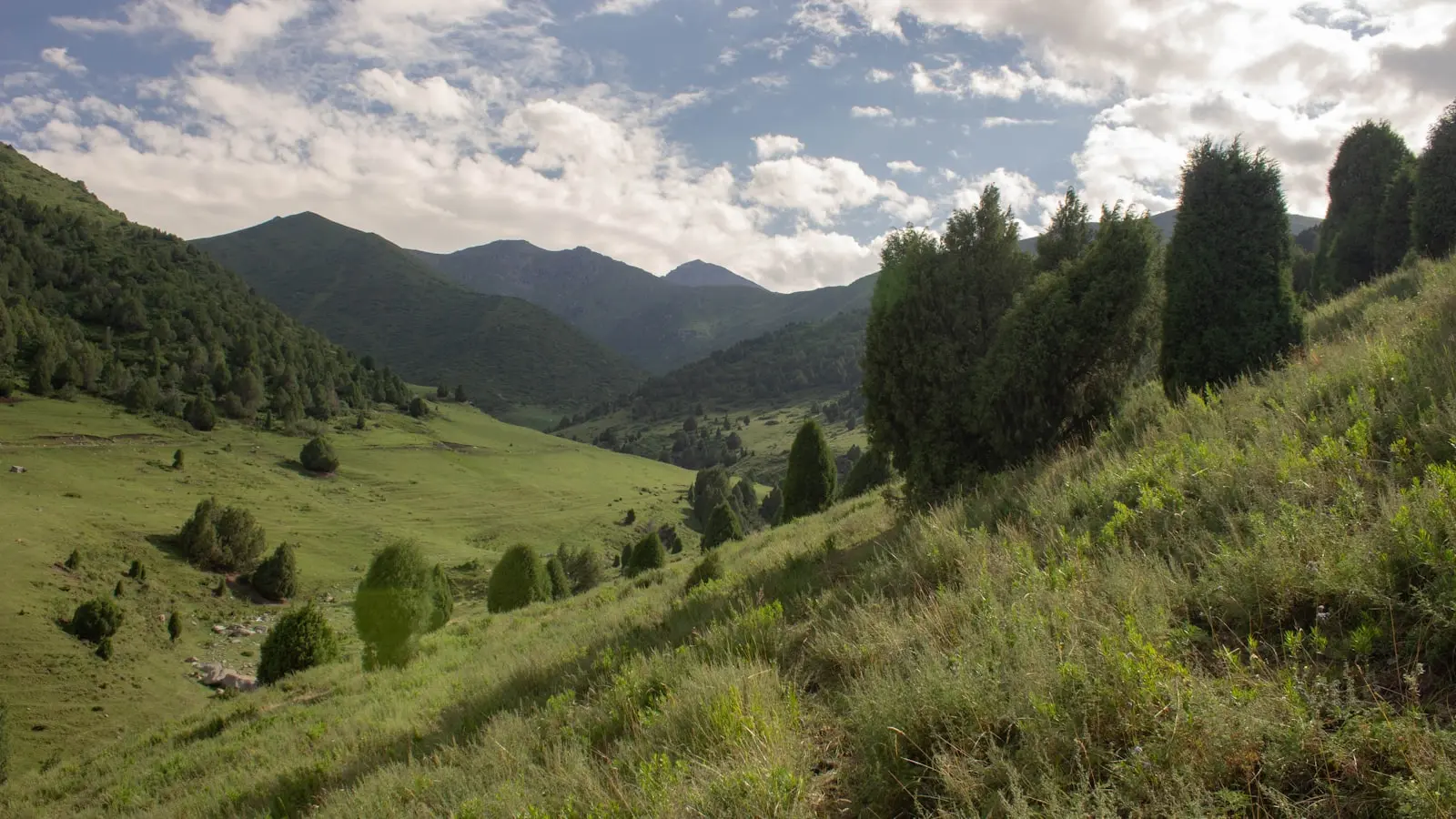
A Kazakhstan Kyrgyzstan itinerary works best when you treat it as a corridor with moving parts, not a race to collect mountain lakes. Arriving in Almaty and departing from Bishkek can reduce backtracking and create a satisfying two-country route, but only when your flight options, border eligibility, season, and available time align.
For a shorter trip, a deeper single-country plan is usually the stronger choice. Every additional stop takes time from weather flexibility, recovery after long road days, and the ability to handle a delayed transfer without threatening your flight home.
Key Takeaways
- Choose the number of countries after deciding how many full days you have between international flights.
- For fewer than about 10 usable days, focus on Almaty and southeastern Kazakhstan or Bishkek and one Kyrgyzstan region.
- Treat mountain destinations as optional modules, not mandatory stops; road conditions, elevation, and transport frequency can change what is realistic.
- Reserve a full day for an overland Kazakhstan–Kyrgyzstan border transfer and keep a final buffer day before an international flight.
- Build solo safety around communication, daytime arrivals, offline navigation, backup funds, and a clear fallback plan.
Choose the Trip Shape Before Choosing Stops
Start with the number of full days between your international flights. Do not assume arrival day is a normal sightseeing day unless you land early, are well rested, and have straightforward first-night logistics. Cash, connectivity, a local address, navigation, and simple orientation can take more time than expected.
For a short trip, use one city base and one surrounding region. Almaty plus a carefully chosen southeastern Kazakhstan excursion can combine city life with dramatic landscapes without adding a border day. Bishkek plus one Kyrgyzstan mountain or lake region can offer the same advantage while leaving more room to settle into independent travel.
A combined Central Asia travel route becomes more compelling on a medium-length trip. One practical shape is Almaty, one or two southeastern Kazakhstan landscape modules, an overland move to Bishkek, and an optional continuation toward Issyk-Kul if conditions and transport support it. An open-jaw Almaty Bishkek itinerary can save time, but only if border arrangements and flight prices make it worthwhile.
With a longer trip, you may add eastern Issyk-Kul, Karakol, or a deeper Kazakhstan road segment. That does not mean every well-known stop belongs in the plan. The best itineraries leave room for a second night near a lake, a rest day in a city, or a weather delay without putting an international departure at risk.
A useful rule is to remove a stop before removing buffer time. Missing a canyon or lake is disappointing; missing a flight after a delayed border crossing is far more costly and stressful.
Match the Route to Season, Arrival Point, and Mountain Access
Choose your travel month before building a landmark list. Mountain access depends on elevation, snow, rain, road surface, daylight, and the operating season of local lodging and transport. A route that works well in one period may be slow, inaccessible, or uncomfortable in another.
Almaty can be a useful starting point for travelers flying into southeastern Kazakhstan. It provides a city landing pad before you commit to an excursion toward Charyn Canyon or the Kolsai and Kaindy area. These are not interchangeable day trips: their approach roads, transport arrangements, and overnight needs can differ.
Bishkek is similarly useful as a starting or finishing point for Kyrgyzstan travel planning. Issyk-Kul, Karakol, and more remote highland areas should be treated as modules rather than compulsory stages. Song-Kul, for example, is a higher-commitment addition because access, accommodation, and road conditions may be more seasonal and less forgiving than a city-based journey.
Use this checklist for every mountain stop:
- What is the elevation, and what conditions are likely during your travel month?
- Is the final approach paved, rough, or dependent on a particular type of vehicle?
- Does the journey require a private driver, a limited shared ride, or several connections?
- Where can you sleep if weather changes or onward transport is unavailable?
- What happens to the rest of the trip if you lose one day?
An Almaty-to-Bishkek route is efficient when it follows your flight pattern and the geography. It becomes less efficient when it turns into a zigzag: returning to Almaty after a distant detour, reaching a border late in the day, then attempting to continue immediately to a remote Kyrgyzstan destination. In that situation, a single-country itinerary is often the more rewarding choice.
Build a Day-by-Day Framework Instead of Racing Between Landmarks
Build the trip around functions rather than fixed drive-time promises. Traffic, roadwork, weather, shared-transport departure patterns, and stops along the way can all alter a travel day. A flexible structure protects the parts of the trip that matter most.
For a combined Kazakhstan Kyrgyzstan itinerary, reserve an arrival day and first night in Almaty or Bishkek. Follow it with a city-orientation day to arrange mobile data, obtain some local currency, test navigation, locate your next transport departure point, and confirm remote accommodation or transport.
Then choose one or two landscape modules. A module may work as a day trip when the route is direct and returning before dark is realistic. An overnight is usually better when the journey itself is substantial, the scenery deserves unhurried time, or changing weather could make a same-day return unpleasant.
Set aside a dedicated border-transfer day for a two-country route. The Almaty-to-Bishkek move is not simply one departure on a timetable. It is a sequence: reaching the departure point, traveling to the border, exiting one country, entering the next, arranging onward transport, and reaching your lodging.
Keep one final buffer day before an international flight. Use it for an unhurried city day, a delayed return from the mountains, laundry, repacking, or a proper rest after several long road days. It is not wasted time; it is what makes the route resilient.
A two-week plan can combine Almaty, southeastern Kazakhstan nature stops, the border, Issyk-Kul, Karakol, and Bishkek, but it will be fast and leave limited slack. If that pace sounds like work, reduce the number of regions rather than trying to optimize every hour.
Before departure, make a cut list: identify the first place you will drop if weather, illness, a missed connection, or a border delay changes the plan. Making that decision in advance prevents the temptation to push onward when a rest day or safer overnight would be wiser.
Make Kazakhstan Kyrgyzstan Transport and Border Days Resilient
Kazakhstan Kyrgyzstan transport should be chosen leg by leg. Scheduled buses and minibuses may suit straightforward routes when you can confirm current departure points and schedules locally. They can be lower cost, but usually give you less control over timing and luggage.
Shared taxis can be practical where they are customary, especially when direct public transport is limited. Before leaving, clarify the total price, whether it is per person or for the vehicle, when the car is expected to depart, where luggage will go, and the intended drop-off point. Plan for a daylight arrival in an unfamiliar town whenever possible.
A private driver can make sense for a remote or multi-stop day, a difficult connection, or a route where control over timing matters. The higher cost buys flexibility, not certainty. Confirm the route, waiting time, overnight expectations, payment method, and what happens if weather or a road closure changes the plan.
Tours can simplify a remote segment for solo travelers who do not want to negotiate vehicle logistics alone. Check whether the departure is confirmed, whether solo participants are accepted, what is included, and how much schedule flexibility exists. A tour is most useful when it solves a genuine transport problem rather than merely adding another stop.
For an overland border crossing, verify shortly before travel that the crossing is operating, that it can be used by your nationality, and that your entry documents are suitable. Hours, procedures, queues, and onward transport arrangements can change. Confirm current requirements through relevant government, embassy, and official border-information channels rather than relying on older itineraries.
Avoid booking a same-day onward flight or a nonrefundable remote stay immediately after crossing. Carry enough local cash for an unplanned meal, taxi, or overnight, and save your next accommodation address offline. The calmest border day is one with nowhere urgent to be.
Set Up for Independent Solo Travel
Your first task after landing is to make the next 24 hours manageable. If suitable for your phone and plans, arrange local connectivity; withdraw or exchange a modest amount of local currency; download offline maps; and save your accommodation address in a form you can show a driver. Screenshot booking details and transport information in case data service is weak.
Cash and cards work best as complements. Cards may be convenient in larger cities and established businesses, while cash can be more useful in smaller towns, markets, and transport situations. ATM access, card acceptance, exchange practices, and mobile-payment options vary, so confirm the current situation in the areas you intend to visit and carry a backup payment method.
Offline navigation is more than a convenience. Save hotel locations, bus stations, border points, and meeting places before leaving Wi-Fi. Keep destination names in locally useful spelling or transliteration, and download an offline translation tool for short practical exchanges.
Learn a compact working vocabulary instead of aiming for fluency: numbers, place names, food restrictions, accommodation, “Where does this leave from?”, “How much?”, and help-related phrases. A written address and a clear gesture are often more useful than a complicated sentence.
Solo travel Kyrgyzstan and Kazakhstan is easier when safety is treated as a communication and timing system. Share itinerary changes, expected arrival times, and driver details when available with a trusted contact. Prefer daytime arrivals, avoid remote transfers without a fallback overnight plan, and choose lodging with clear contact information and a location you can reach without guesswork.
Carry backup power, insurance details, emergency contacts, and enough accessible money to change plans. Travel advisories, local laws, registration obligations, emergency numbers, and entry requirements are time-sensitive and nationality-specific, so verify them through official sources immediately before travel.
FAQ
How many days do I need for an Almaty Bishkek itinerary?
A combined route is most comfortable when you have time for two city bases, at least one or two landscape modules, a dedicated overland transfer day, and a final flight buffer. With fewer than about 10 usable days, southeastern Kazakhstan or one Kyrgyzstan region will usually feel less rushed.
Is it better to travel Kazakhstan and Kyrgyzstan by shared taxi, private driver, or tour?
Choose shared transport for straightforward routes when you can tolerate flexible timing. Use a private driver for remote, multi-stop, or time-sensitive days after agreeing on terms. Consider a tour when it removes a genuine logistical obstacle, especially in a mountain area, but confirm departure and solo-participant arrangements first.
Can solo travelers cross from Kazakhstan to Kyrgyzstan independently?
Independent crossing may be possible for eligible travelers, but border status, operating hours, entry rules, and nationality-specific requirements can change. Verify visa or visa-free eligibility, required documents, and the intended crossing’s current arrangements through official sources before committing to the route.