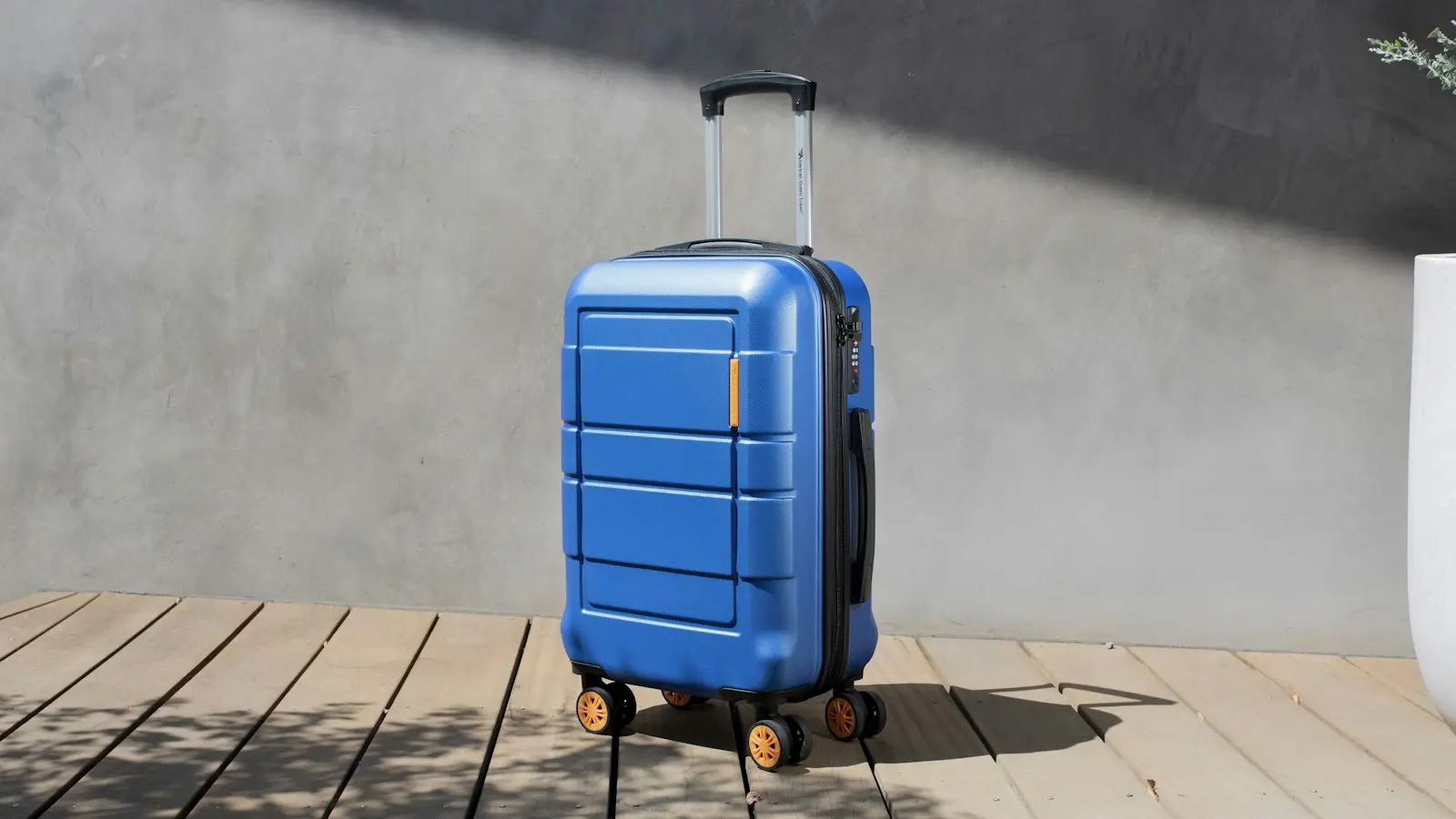
You can pack a carry-on for two weeks by packing for a repeatable week, not 14 separate outfits. The practical formula is an interchangeable capsule wardrobe, a planned laundry reset, limited footwear, and enough capacity for the medications, electronics, toiletries, and weather layers that take up more space than expected.
The trade-off is straightforward: carry-on-only travel means repeating clothes and making decisions before departure. In return, you have less to manage through airports, stations, hotel lobbies, and transfers.
Key Takeaways
- Pack for your itinerary, climate, dress code, and laundry access—not for every possible scenario.
- Build outfits from interchangeable layers and plan to rewear suitable items instead of bringing 14 fresh looks.
- Schedule laundry before you leave; it is what makes a two-week carry-on plan realistic for most trips.
- Give shoes, outerwear, toiletries, medications, and electronics a strict space budget.
- Verify baggage, liquid, and battery rules for the exact operating airline and departure airports on your itinerary.
Start With the Constraints That Determine Whether Carry-On-Only Will Work
Before choosing a shirt, map the trip. List every destination, travel day, likely temperature range, rain risk, planned activity, and dress requirement. A two-week city break with casual dinners is a very different packing problem from an itinerary with a wedding, beach days, work meetings, and a cold-weather stop.
Laundry access is the main dividing line. Confirm whether your accommodation has a washer, offers laundry service, sits near a laundromat, or at least provides a sink and a place where clothes can dry. A humid room with little airflow is not a dependable laundry station simply because it has a sink.
Then check the allowance attached to your booking. Carry-on dimensions, weight limits, personal-item rules, and gate-check practices can vary by airline, route, fare type, aircraft, and flight segment. On a connecting itinerary, check the operating carrier for every flight rather than assuming the first airline’s policy applies throughout.
Make a separate list of non-negotiables before adding everyday clothing. Medications, medical or mobility equipment, work devices, camera gear, baby supplies, glasses, contact lenses, and event-specific clothing can take a meaningful share of the bag. Keep essential medication, documents, and other critical items in the cabin with you.
There is no benefit in forcing an unsuitable trip into one small bag. Consider checking luggage if you need specialized equipment, multiple formal outfits, bulky winter gear, or have no workable laundry option. Carry-on-only travel should reduce friction, not create a daily logistical problem.
Build a Two-Week Carry-On Capsule Wardrobe Around Outfit Repeats
A capsule wardrobe for travel is not a uniform. It is a small group of clothes that can rotate through the trip without requiring a different outfit for every day. Begin with two or three compatible base colors, then add an accent color if you like. When most pieces work together, a delayed laundry day is less likely to leave you without options.
Build from high-use categories rather than a rigid garment count. Most travelers need several everyday tops, two or three climate-appropriate bottoms, a versatile mid-layer, sleepwear, underwear, socks, and perhaps one dressier item. The right mix depends on your itinerary, not a universal packing list.
For a warm-weather trip with regular laundry, the capsule might favor light tops, a pair of trousers, shorts or a skirt, swimwear, and a thin layer for air-conditioned transport or evenings. A cool urban trip may call for more long sleeves, adaptable trousers, and layers that combine instead of one oversized coat. For mixed weather, a breathable base layer, insulating layer, and rain shell can be more useful than several single-purpose jackets.
Choose fabrics and cuts that suit ordinary travel conditions. Prioritize clothes that can be aired out, reworn when still clean, and washed without complicated care. This does not require specialized clothing; it means avoiding a bag full of delicate items that need lengthy drying times, ironing, or special treatment.
Plan by activity category: travel days, sightseeing, exercise or beach time, dressier occasions, and sleep. The most efficient capsule lets these categories overlap. A polished knit top may work for walking and dinner, while a simple dark bottom can cover travel days, museums, and casual restaurants.
Test the capsule before packing. Lay it out and check that each top works with more than one bottom and that each layer fits over likely outfit combinations. If an item works in only one carefully planned outfit, it needs a strong reason to take up limited space.
Fewer clothes do mean more reliance on rewearing and laundry. That can work well for ordinary sightseeing, but less well in high heat, heavy rain, strenuous activity, or formal settings. Add only for the conditions that your actual trip requires.
Choose Shoes, Outerwear, and Toiletries by Their Space Cost and Frequency of Use
Shoes take up substantial space and do not compress. Start with one pair that you can walk in comfortably for hours. Add a second pair only when it covers a genuine gap, such as sandals for hot weather, smarter footwear for a required event, or sport-specific shoes for a planned activity.
A third pair can be reasonable, but it should answer a specific need rather than a vague preference. If you need a bulky pair, wearing it in transit can save room. The same approach can work for a coat, boots, or thick sweater, provided you will be comfortable during the journey.
Choose outerwear for the most demanding realistic condition, not the average forecast. If rain is likely, a shell may be more useful than a heavier jacket that performs poorly when wet. In cool, variable weather, an insulating layer under a shell usually offers more flexibility than one large outer layer.
Give toiletries a defined space budget. Bring what you need for the first day or two, items that are difficult to replace, and personal-care essentials you would rather not search for after a long journey. If convenient local availability is likely, bulky and inexpensive basics may be easier to buy after arrival.
Carry-on liquid rules are not universal. Limits on liquids, aerosols, gels, and screening procedures may differ by airport and country. Check the relevant airport-security guidance for each departure point, particularly on international and multi-airport itineraries.
Reserve space for medications, glasses or contact lenses, chargers, adapters, documents, and a power bank. Spare lithium batteries and power banks are often subject to cabin-only and capacity-related restrictions, so confirm the current requirements with the airline and applicable aviation-security authority. Keep these items accessible instead of burying them under clothing.
Use a Laundry Strategy Instead of Packing for Fourteen Fresh Outfits
Your travel laundry strategy should be set before the final packing list. If you plan to use a laundromat or accommodation laundry service around the middle of the trip, you can pack fewer clothes and wash a larger load once. If sink washing is your only option, prioritize smaller basics that dry quickly and allow extra drying time.
Schedule a laundry reset instead of treating it as an emergency. A midpoint wash creates a second clean cycle and makes underwear, socks, and tops much easier to manage. Do not wait until every wearable item is dirty, especially if weather, excursions, or a busy laundry room could interrupt the plan.
A compact laundry setup can help when it matches your method. A small detergent format that complies with applicable security rules, a sink stopper where useful, and a lightweight hanging solution may be enough. A separate bag for worn clothing also protects clean items and makes it easier to see when laundry is becoming urgent.
Humidity is a common complication. Clothing that dries quickly in a dry room may remain damp overnight in a tropical climate or poorly ventilated bathroom. In those conditions, bring a little more of the smallest essentials, avoid depending on thick cotton items, or use a laundromat with dryers if available.
Rewearing is a practical judgment, not a rule to follow at all costs. Weather, exertion, spills, and the garment itself all matter. Airing out a clean outer layer or pair of trousers may be sensible; wearing a damp or sweaty top for another full day usually is not.
Pack the Bag Efficiently, Then Do a Real-World Test
Packing cubes can make a one bag packing list easier to manage, but they are organizers, not extra luggage allowance. Use them to group categories, separate clean and worn items, and simplify unpacking. Do not use compression as a reason to exceed the bag’s usable space, airline dimensions, or weight limit.
Place dense items near the wheels of a rolling case or close to the back panel of a backpack. Protect electronics, and keep screening-sensitive items easy to reach. Liquids, documents, medication, chargers, and larger electronics should not require you to unpack the entire bag at security.
Leave a modest buffer for snacks, a layer removed during transit, wet-weather changes, or a small return-trip purchase. A bag packed to its absolute limit at departure has no flexibility once clothes shift or need to be repacked differently.
Finally, weigh and measure the fully packed bag. Include anything that may need to fit inside it at boarding, such as a jacket or shopping bag. Carry it for a short walk, lift it to overhead-bin height if possible, and remove low-value “just in case” items that do not support the trip.
FAQ
Can you pack a carry-on for two weeks without doing laundry?
Sometimes, especially for a warm, casual trip with minimal gear and a generous allowance. But it usually requires more underwear and tops, leaving less space for weather layers and personal items. For most travelers, one planned laundry reset makes two-week carry-on packing more comfortable and realistic.
How many pairs of shoes should you take for a two-week carry-on trip?
Start with one dependable walking pair and add a second only for a distinct need, such as beach time, formalwear, or a planned sport. A third pair can work when the itinerary truly requires it, but footwear should justify its bulk.
What are the carry-on liquid rules for international travel?
They vary by airport and destination, and screening procedures can change. Check security guidance for every airport where you begin a flight, along with any airline restrictions that apply to your route. Pack liquids so they can be removed quickly if requested.