The Slow Escape
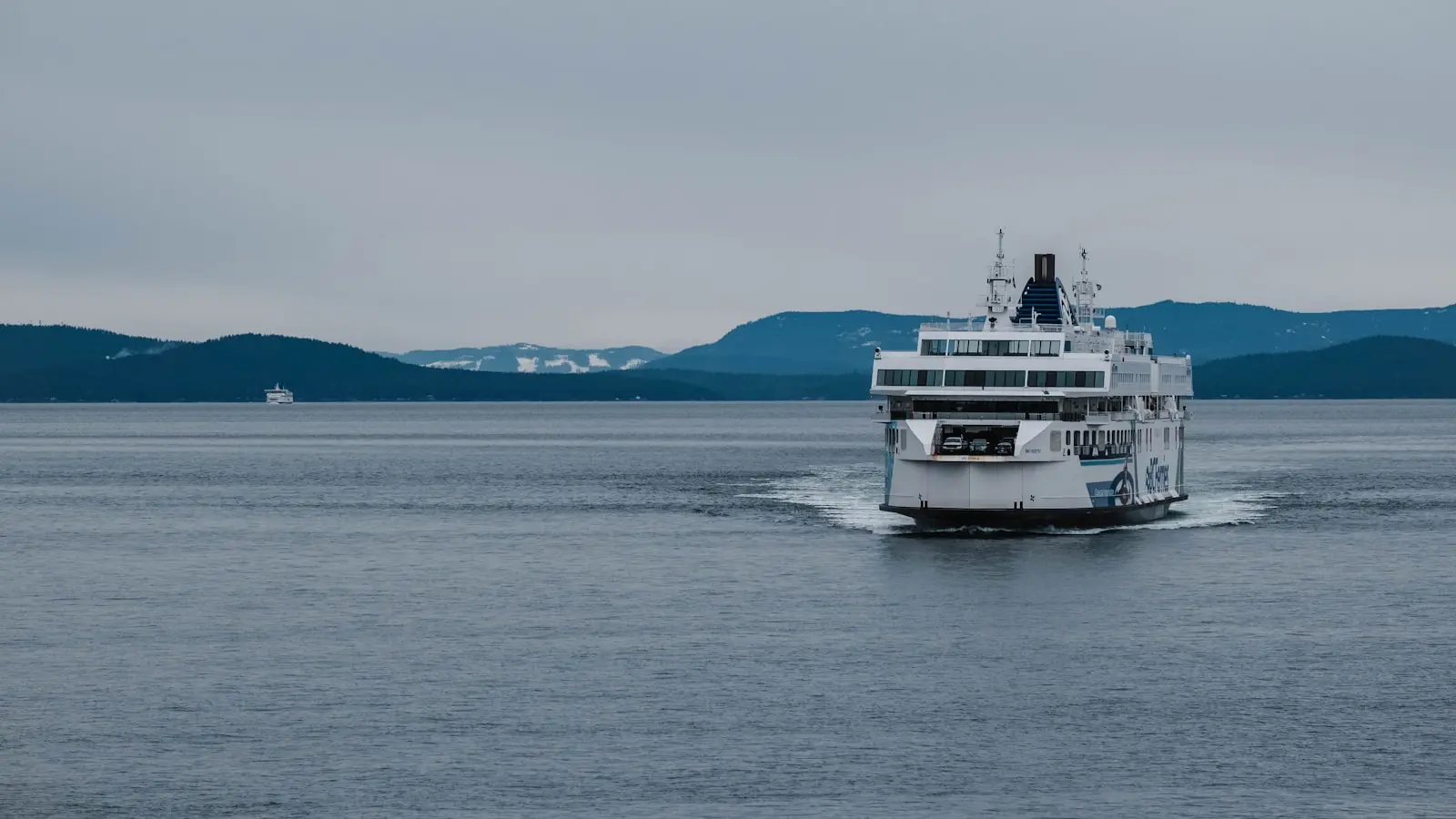
The Mersey terminal at Liverpool is not an airport. There is no security queue, no duty-free maze, no gate announcements every ninety seconds. Instead, a low-slung terminal building with a canteen serving overpriced tea, its windows streaked with sea salt. The ferry itself—a twelve-deck behemoth painted Stena Line white—looms above the car deck ramp. For the travelers boarding this evening, the destination is Belfast, but the journey itself has already become the point.
This is the reality of multi-modal travel, a concept that has been simmering on travel forums and Reddit threads as a growing number of travelers look for ways to reduce their carbon footprint without staying grounded. One recent post detailed a trip from Amsterdam to Belfast: Eurostar from Amsterdam to Brussels, then a connection to London, followed by a cab to Liverpool and the overnight ferry to Northern Ireland. The user emphasized the scenic quality of the train ride, the novelty of sleeping on a ferry, and the satisfaction of a journey that emitted far less CO₂ than the equivalent flight.
The Anatomy of a Multi-Modal Route
Multi-modal travel is not new—ferries and trains have existed for centuries—but it is being rediscovered by a generation tired of airport delays, baggage fees, and the surreal compression of air travel that turns a landscape into a thumbnail. The Amsterdam-to-Belfast route is instructive. Eurostar from Amsterdam Centraal to Brussels Midi takes about 1 hour 50 minutes. Then another high-speed leg to London St Pancras, roughly 2 hours. From London Euston to Liverpool Lime Street, a 2-hour-and-15-minute train. Then a taxi or bus to the Liverpool ferry terminal, and finally the 8-hour overnight crossing to Belfast. Total journey time: roughly 14 hours door-to-door, compared to a 1-hour-and-45-minute flight. (The time penalty is undeniable.)
But the trade-off is not purely temporal. The traveler acquires a different texture of travel: the ability to stand up, walk to a buffet car, watch farmland roll past at 300 km/h. On the ferry, there is a cabin with a real bed, a restaurant serving full meals, and the strange comfort of being lulled to sleep by engine vibration and the sound of the Irish Sea. The ferry interior is a study in functionalism: linoleum floors, plastic plants, a bar that serves Guinness and microwaved pies. The decor is not elegant, but it is honest. There is no pretense of luxury. The passengers are a mix of lorry drivers, families with cars, and budget travelers. The common area has flickering fluorescent lights and a faint smell of fried food. It is, in its own way, authentic.
The Community Weighs In
The Reddit community responded with a mix of admiration and pragmatism. Many asked about luggage limits—can you bring a full suitcase on the Eurostar? (Yes, up to 85 cm length, but no oversized items.) What about the ferry cabin quality? (Basic but clean, typically two-berth or four-berth with ensuite shower.) And crucially, is the total cost competitive with budget airlines? The user claimed the total was comparable to a flight when factoring in baggage fees and airport transfers. But others pointed out that Ryanair or Easyjet can offer fares as low as €30 one-way, though with hidden costs for seat selection and luggage.
The conversation highlighted a key tension: the adventure element is real, but the convenience barrier remains high. Coordinating train and ferry schedules requires precision; missing a connection can mean a full day delay. Booking a cabin on the ferry is essential—the reclining seats in the lounge are grim at best, and the deck is exposed to wind and salt spray. One user shared a tip: book a cabin with a window. Another warned about motion sickness on rough crossings. (The Irish Sea is not a millpond.)
Design and Culture of the Overnight Ferry
The overnight ferry is a peculiar artifact of transport design. It is part ship, part hotel, part amusement park. The cabins are engineered for space efficiency: fold-down bunks, a tiny desk, a porthole that frames the sea. The corridors are narrow and carpeted, with that faint smell of diesel and disinfectant. There is a television mounted on the wall, but the real entertainment is the deck, where passengers huddle in jackets watching the lights of the coast recede. The ship’s bar is a low-ceilinged room with sticky tables and a slot machine. The restaurant serves a set menu: lasagna or fish and chips, with a salad bar that tastes of industrial mayonnaise.
Culturally, the ferry belongs to a slower era of travel, one where the journey was a liminal space between departures and arrivals. On a plane, time is compressed into a featureless bubble. On a ferry, time is marked by the ship’s movement, by the progression of meals, by the opportunity to read a book or have a conversation. The absence of Wi-Fi on some crossings is a feature, not a bug. Passengers are forced to engage with the physical space—the vibration underfoot, the tilt of the horizon, the sound of the foghorn. (The ferry is a theater of the senses.)
Sustainability and Carbon Accounting
The carbon argument is straightforward: a flight from Amsterdam to Belfast emits roughly 0.3 tonnes of CO₂ per passenger, while the combination of train and ferry emits perhaps a third of that, depending on the energy mix of the train and the fuel used by the ferry. Ferries still burn heavy fuel oil, but the per-passenger emissions are lower because the ship carries hundreds of people and cargo. And the train segments are increasingly powered by renewable energy.
But the real sustainability story is behavioral. The multi-modal route forces a psychological shift: the traveler accepts that time is not a resource to be minimized but an experience to be lived. This is not efficiency; it is immersion. The carbon saved is measurable, but the psychological dividend—the recalibration of expectations—is harder to quantify. (And perhaps more valuable.)
The Practical Checklist
For those considering a similar journey, the logistics require attention. Eurostar tickets must be booked in advance for the best fares. Cabins on the ferry need to be reserved, especially in summer. Luggage should be divided into one manageable suitcase and a daypack. The ferry line’s luggage limit is typically two suitcases per person plus hand luggage, but check the specific operator. The ferry crossing often includes a meal, but it is worth packing snacks for the train legs.
One Reddit user noted that a delayed Eurostar caused them to miss the last train from London to Liverpool, forcing an expensive taxi ride. The margin for error is thin. It is essential to build buffer time into the schedule. Consider booking a later ferry crossing if possible. And always check the ferry operator’s policy on foot passengers—some ports require a shuttle bus from the terminal to the ship.
The Future of Slow Travel
Multi-modal routes are unlikely to replace budget airlines for mass tourism. They require time, flexibility, and a tolerance for uncertainty. But for a growing niche of travelers, they offer something the airlines cannot: a journey that feels like an expedition. The Reddit post is a small piece of a larger conversation about how we move through the world. It suggests that the future of travel might not be faster, but richer.
(And if you doubt the appeal, stand on the deck of a ferry at 3 a.m., looking at the distant lights of a coast, and ask yourself when an airport last made you feel anything at all.)