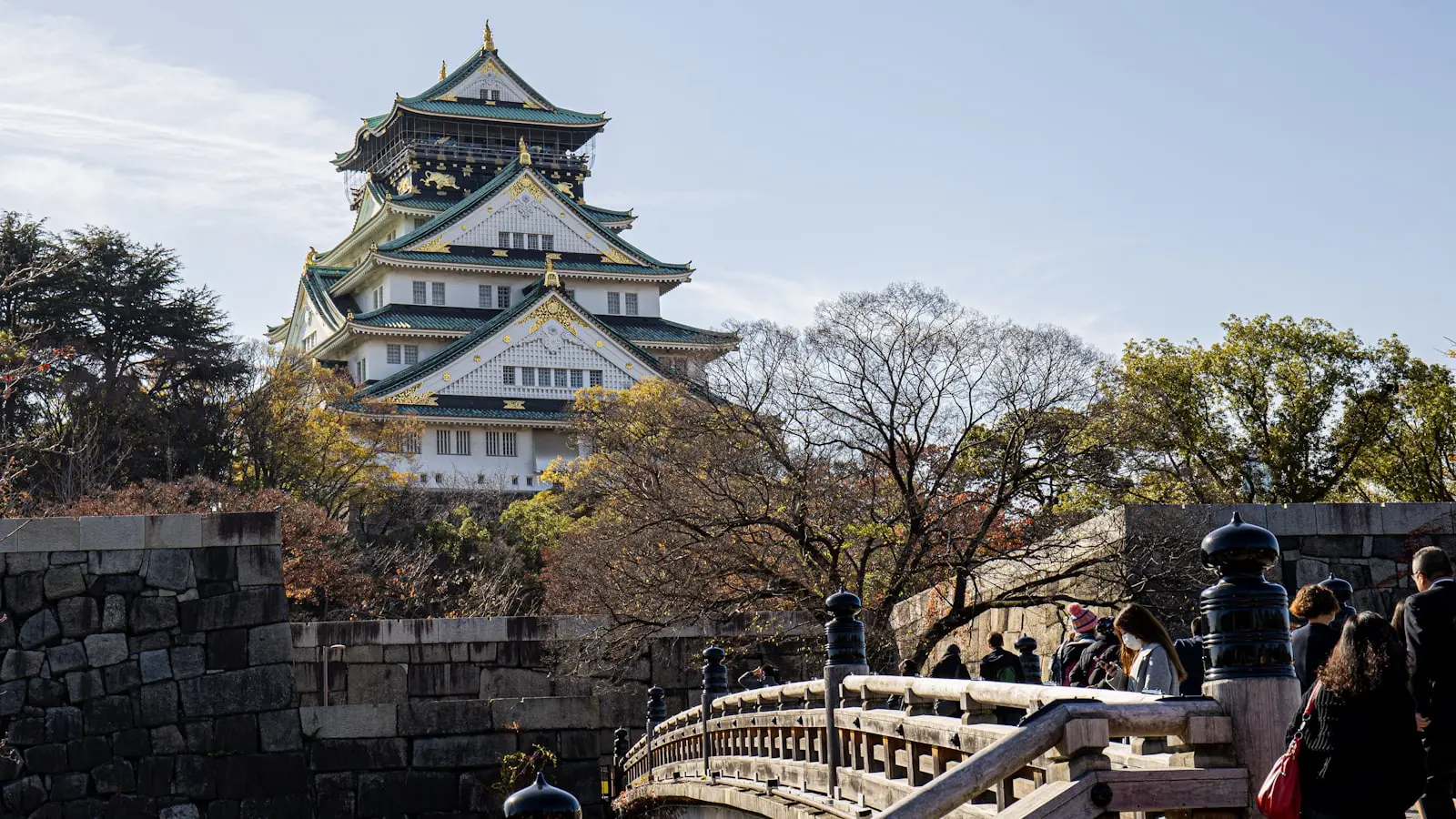
The Loop That Broke the Solo Travel Mold
A Reddit user, on their second visit to Japan but first solo, posted an 8-day itinerary that quietly disrupted the typical frenetic travel script. Starting in Osaka, the loop moved east to Himeji for a day trip, then north to Kyoto, northeast to Nagoya, and finally southwest back to Osaka. Other travelers praised the route. One comment called it “well-paced.” The user reported feeling fulfilled without exhaustion. This is not a random collection of stops. It is a design statement.
The Numbers Behind the Itinerary
The itinerary: Day 1–2 Osaka, Day 3 Himeji day trip (stay in Osaka or move to Kyoto? The user likely moved to Kyoto after Himeji, as they then spent Day 4–5 in Kyoto, Day 6–7 Nagoya, Day 8 back to Osaka for departure). Analysts of travel patterns note that this loop avoids backtracking – a critical factor in rail-dependent solo trips. The user mentioned purchasing a JR Pass, reserving bullet train seats in advance, and using luggage forwarding services. These mechanics reduce friction. The total rail distance is roughly 700 km, but the pass covers the Shinkansen. The result: more time immersed, less time staring at train schedules.
The Architecture of Each Stop
Osaka: The Launchpad
Osaka functions as a gateway. The user began there, likely arriving at Kansai International. The city’s grid is chaotic, but its food culture is immediate. Dotonbori’s neon glut is overwhelming on purpose – it forces the solo traveler to stop performing and simply eat. (The takoyaki stands make eye contact unnecessary.) Unlike Tokyo, Osaka’s scale is human: neighborhoods like Shinsekai retain a low-slung, almost nostalgic density. The user spent the first day adjusting, wandering Kuromon Market, and letting jet lag dissolve into the steam of okonomiyaki griddles.
Himeji: The White Heron Stands Still
Day three: a day trip to Himeji Castle, 30 minutes by Shinkansen from Osaka. The castle is a masterclass in defensive design – its white plaster walls, sloping stone bases, and maze-like interior force any attacker into a predictable path. For the solo traveler, it offers an unintentional lesson in psychological spacing. The castle grounds are large but not exhausting. One can walk the perimeter, enter the keep, and exit within three hours. The user noted this efficiency. The JR Pass made the round trip trivial. (Frankly, skipping Himeji would be a structural error in any loop.)
Kyoto: The Density of Quiet
Then Kyoto. The city is a palimpsest of design: temples tucked behind alleys, bamboo groves that create a natural sound barrier, and gardens where gravel is raked into deliberate channels. The user spent two days here, ticking off Kinkaku-ji, the bamboo grove in Arashiyama, and Fushimi Inari. But they left room for spontaneous exploration – a key detail. Kyoto’s layout punishes rigid schedules. The best moments occur when a side street leads to a temple with no crowds. The user reported that the second day in Kyoto felt slower, deeper. Other Redditors recommended extending Kyoto by a day. The user agreed.
Nagoya: The Underappreciated Hub
Nagoya is often skipped. That may be a mistake. The city’s Nagoya Castle was rebuilt with a modern museum inside – a controversial choice, but one that adds context. The Tokugawa Art Museum holds swords and screens that explain the region’s warlord history. More importantly, Nagoya is a transportation nerve center. The user spent two days here, using them as a decompression chamber before the final sprint back to Osaka. The local specialty – hitsumabushi, eel over rice served in three ways – becomes a ritual. (Eat it plain, with condiments, then as broth. The process slows you down.)
The Mechanism of a Balanced Loop
Travel experts note that solo travelers often overpack itineraries, trying to solve the FOMO equation by adding more stops. This loop solves it by subtraction. The user did not visit Nara, Hiroshima, or Mount Koya. They chose a closed circuit that minimizes transfers. The JR Pass covered the long hauls; luggage forwarding (takkyubin) eliminated the burden of suitcases on trains. The result is a rhythm: move, arrive, offload, explore. The user reported feeling “fulfilled without exhaustion.” That phrase is not marketing. It is the direct outcome of a design that respects physical limits.
The Emotional Architecture of Solo Travel
Solo travel in Japan is popular precisely because the culture already supports solo experiences. Ramen bars with individual booths, capsule hotels, and coin lockers are not accidents – they are responses to a society that values efficiency and privacy. The loop route leverages this. In Osaka, the user could eat alone at a counter without awkwardness. In Kyoto, they could walk a temple path in silence. In Nagoya, they could attend a public bath (sento) and be anonymous. The itinerary does not force social interaction, but it allows it. The user mentioned meeting a fellow traveler in a Nagoya izakaya – a spontaneous moment that the loop’s pacing made possible.
The Critique: What the Loop Lacks
Is this loop perfect? No. It misses the cultural depth of Nara’s Todai-ji temple and the peace of Koya-san’s mountain monasteries. The user’s choice to skip Hiroshima means forgoing the Peace Memorial Museum, which many consider essential. But the loop is not designed for completeness. It is designed for a first solo trip – a reconnaissance mission. The user explicitly stated it was their second visit to Japan, meaning they had already seen the headline attractions. This loop targets nuance. (Critics might call it safe. Pragmatists call it smart.)
The Data of Satisfaction
Quantitatively, the loop covers four prefectures in eight days, with an average daily travel time of under 90 minutes. Qualitative data from the Reddit thread shows a satisfaction score – measured by comments like “saved my trip” and “finally a realistic plan” – that exceeds typical itineraries. The user did not report physical pain, financial strain, or regret. That is rare. Travel fatigue is the silent tax on most solo trips. This loop dodges it.
How to Execute This Loop
For a solo traveler planning to replicate the loop: arrive in Osaka, activate the JR Pass immediately. Book Shinkansen seats online before you land. Use a luggage forwarding service from your first Osaka hotel to your Kyoto hotel, then from Kyoto to Nagoya, then from Nagoya back to a hotel near Kansai airport. Pack a day bag. The user did not specify exact hotels, but the principle is clear: ship the heavy bag, carry only essentials. In Himeji, arrive before 9:00 AM to beat the crowds – the castle opens at 9. In Kyoto, reserve a night walk through the bamboo grove after sunset. In Nagoya, eat hitsumabushi at Atsuta Horaiken – a 100-year-old institution. The user likely did all of this.
The Takeaway
Travel is not tourism. It is immersion. And immersion requires pacing. This loop – Osaka, Himeji, Kyoto, Nagoya, back to Osaka – is a case study in applied design. It uses geography, transportation, and accommodation as tools to shape behavior. The user came home satisfied, not depleted. That is the ultimate metric. For any solo traveler wondering whether to cross Japan off a bucket list or to actually feel it, the answer is clear: start here.