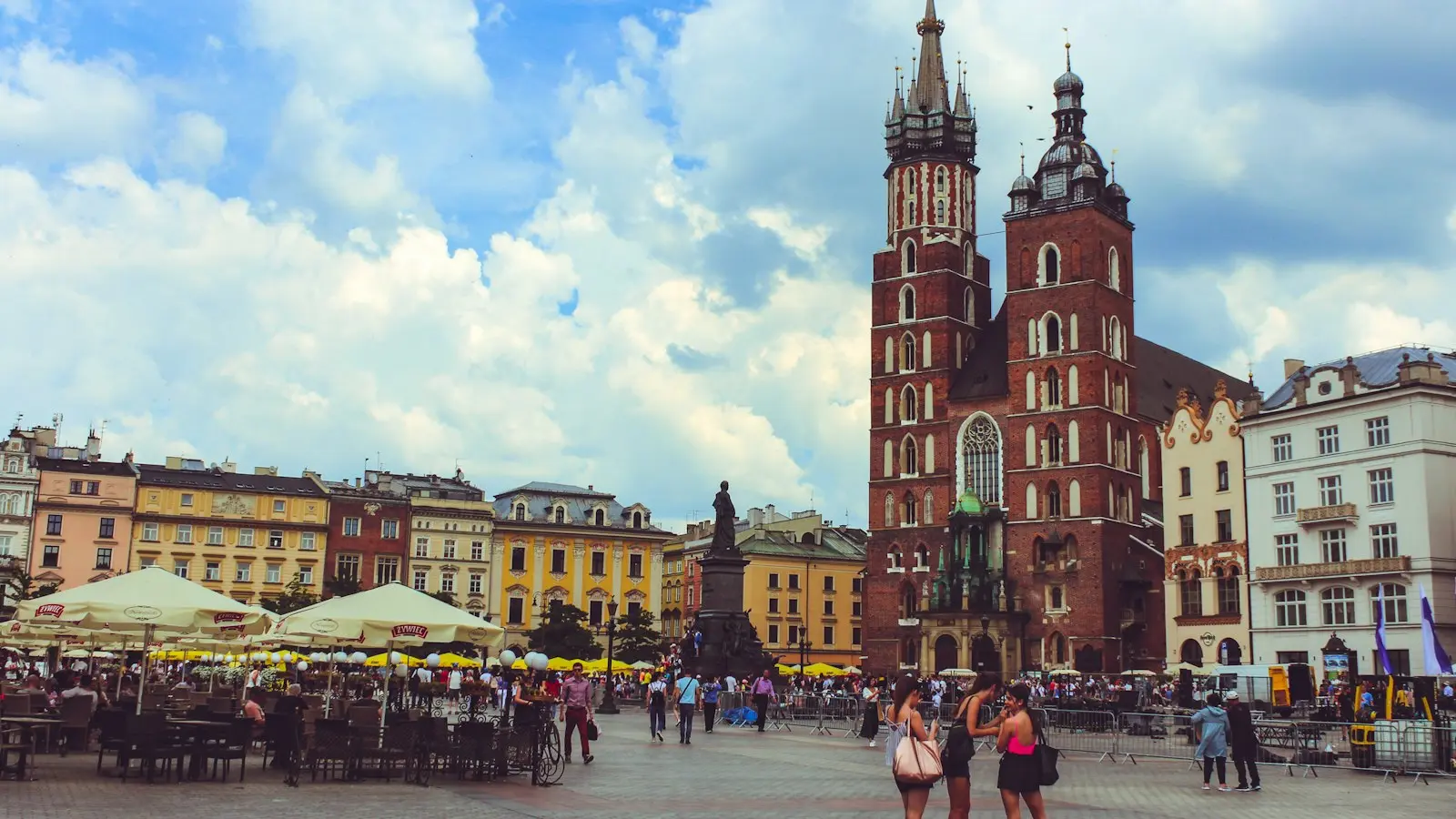
Krakow can still offer good value for a European city break, but it is not automatically cheap. Your total Krakow trip cost depends mainly on travel dates, accommodation standard, dining habits, paid attractions, and whether you walk or rely on taxis.
For planning purposes, allow roughly PLN 1,400–2,400 per person for a budget four-day visit, PLN 3,000–5,000 for a mid-range trip, or PLN 6,000–10,000 for a comfortable break, excluding airfare. These are planning ranges, not guaranteed live prices. They assume three nights, with accommodation shared in the mid-range and comfortable examples. A fourth night can add anything from a modest hostel-bed cost to a substantial hotel charge.
The useful formula is: accommodation for the required nights + daily food and drinks + airport and local transport + planned attractions and tours + a contingency reserve. Keeping those categories separate is more helpful than calling Krakow simply “cheap” or “expensive.”
Key Takeaways
- A realistic three-night Krakow budget is about PLN 1,400–2,400 per person on a budget, PLN 3,000–5,000 at mid-range, or PLN 6,000–10,000 for a comfortable trip.
- Four calendar days often mean three nights. A fourth night adds accommodation and another day of food, transport, and sightseeing.
- Accommodation dates, location, and room type usually affect the total more than small savings on individual meals.
- Central Krakow is walkable, but airport transfers, taxis, guided tours, alcohol, and day trips can push the budget up quickly.
Four-day Krakow trip cost by travel style
The table below provides a practical starting point in Polish złoty (PLN). It excludes flights, travel insurance, shopping, extensive nightlife, and major day trips. Exchange rates change, so use PLN when comparing accommodation and tickets rather than relying on a fixed conversion to pounds, euros, or dollars.
| Travel style | Accommodation | Food, coffee and drinks | Transport | Attractions and tours | Contingency | Estimated total per person |
|---|---|---|---|---|---|---|
| Budget | PLN 300–750 | PLN 500–800 | PLN 80–180 | PLN 150–350 | PLN 150–250 | PLN 1,400–2,400 |
| Mid-range | PLN 900–1,800 | PLN 900–1,400 | PLN 150–350 | PLN 400–900 | PLN 300–550 | PLN 3,000–5,000 |
| Comfortable | PLN 2,400–4,500 | PLN 1,500–2,500 | PLN 400–900 | PLN 900–1,800 | PLN 700–1,300 | PLN 6,000–10,000 |
The budget scenario assumes a hostel bed or basic private room, bakery or inexpensive breakfasts, casual lunches, limited alcohol, substantial walking, and a carefully chosen set of paid sights. The mid-range version assumes a well-located hotel or apartment shared by two people, a mixture of casual and sit-down meals, regular coffees or drinks, public transport, occasional taxis, and several major attractions.
The comfortable figure allows for a higher-standard central hotel, restaurant meals, guided experiences, taxis, more drinks, and less concern about small extras. It can rise quickly if the room is booked for one person, the visit coincides with a popular event, or the itinerary includes several full-day tours.
A “four-day trip” also needs a nights check. Four calendar days commonly mean three nights, particularly on a Thursday-to-Sunday break. If you arrive early on day one and leave late on day four, you may still need only three nights. Adding a fourth night means another night of accommodation and another day of food, drinks, transport, and sightseeing.
Accommodation budget depends on location and timing
Accommodation is usually the largest variable in a Krakow travel budget. The same city can feel inexpensive when a room is booked well ahead for quiet weekdays and surprisingly costly when a central hotel is reserved at short notice for a summer weekend or major event.
The Old Town offers easy walking access to the Main Market Square, Wawel area, restaurants, and many museums. That convenience has a price: rooms on the most tourist-focused streets often command a premium, and noise can be an issue. A hostel bed or basic room may suit a budget traveller, while private rooms and polished hotels become much more expensive during busy periods.
Kazimierz can offer a useful compromise. It has a strong evening atmosphere, plenty of cafés and restaurants, and remains walkable to the Old Town. Prices vary widely, however, and a lively location may not suit travellers who want early nights or a quiet room.
Areas just outside the busiest tourist streets can reduce the Krakow accommodation budget without making the city inconvenient. Look for a property near a tram route or within a reasonable walk of the centre. The saving is worthwhile when the room is materially better or when you are staying four nights, but less so if every outing requires a taxi.
When comparing listings, check the total rather than the headline nightly rate. Breakfast, cleaning charges, city taxes, apartment service fees, cancellation terms, and booking charges may be listed separately. Also compare a hostel bed with a private room fairly: a private room can look expensive beside a dormitory but may be good value for two people sharing.
Weekends, summer dates, Christmas markets, festivals, conferences, and large sporting or cultural events can all narrow availability. If your dates are fixed, booking the room first is often more important than trying to save a small amount on individual meals later.
Daily Krakow food prices and flexible spending
A realistic food allowance should include more than three meals. Coffee, bottled water, snacks, an afternoon beer, and an unplanned dessert are small individually but can become a meaningful part of the Krakow food prices you experience.
A budget day might consist of a bakery or supermarket breakfast, an inexpensive lunch, a casual local dinner, one coffee, and little or no alcohol. Plan on roughly PLN 120–200 per person per day for this pattern, depending on appetite and how often you sit down in restaurants.
A mid-range day is more likely to include breakfast or brunch, a casual lunch, a proper dinner, two coffees, and a beer or glass of wine. A practical allowance is PLN 220–350 per person per day. A comfortable restaurant-led itinerary can reach PLN 400–650 or more per day, especially when drinks, service charges, tasting menus, or late-night meals enter the picture.
Supermarkets and bakeries are useful for breakfast and travel snacks. Milk bars and casual local restaurants can provide a filling meal without the setting or price of a destination restaurant. The Old Town and the busiest squares offer plenty of choice but require more care when comparing menus. Two restaurants a few streets apart may charge noticeably different prices for similar dishes.
Delivery is not always the bargain it appears to be once service, delivery, and small-order fees are added. Set menus can be good value, but check whether drinks and extras are included. A practical approach is to mix inexpensive meals with one or two memorable dinners rather than making every meal the cheapest available.
Card acceptance is common in many established venues, but payment practices can differ at smaller businesses, markets, or temporary stalls. Carrying a modest amount of złoty is sensible, while avoiding large cash withdrawals or assuming that every displayed price includes every possible charge.
Attractions, airport transfers, and getting around
Central Krakow is compact enough that walking can cover many headline sights. That makes local transport a relatively small part of the Krakow four-day cost for travellers staying centrally. You still need to budget for the airport journey, poor weather, luggage, and excursions beyond the centre.
Plan attraction spending by category rather than by a single assumed itinerary. Wawel-related visits, major museums, church interiors, exhibitions, viewpoints, guided walks, food tours, and temporary displays may all have separate charges. A standard admission ticket may not include a guide, timed reservation, special exhibition, or transport.
For a typical city-focused itinerary, PLN 150–350 per person can cover a modest selection of paid sights. A fuller programme with several museums, a guided experience, and a specialist tour is more likely to need PLN 400–900. Day trips outside Krakow should be treated as a separate budget line because transport, admission, and tour costs can dominate the day.
Airport transfers vary according to arrival time, luggage, group size, and convenience. The train, public bus, taxi, and app-based vehicle options do not serve the same purpose. Public transport is worth investigating first for a daytime arrival with light luggage, while a taxi or booked vehicle may justify the premium for a late arrival, a group, or a hotel that is awkward to reach.
Local trams and buses use ticket types based on validity and travel conditions, so check the current fare, route, and any airport-specific rules before departure. Do not assume an airport ticket and a city ticket are interchangeable. A small transport reserve of PLN 80–180 for a budget visit is reasonable for planning, while regular taxis, airport rides, or excursions call for more.
Attraction tickets and airport arrangements are among the fixed costs worth checking before travel. Food, coffees, and ordinary walking routes can remain flexible. If an attraction has timed entry or limited availability, booking early may protect the itinerary even when it does not reduce the price.
Where a Krakow budget can rise
The most common pressure points are central accommodation, late booking, peak weekends, alcohol, taxis, guided tours, restaurant-heavy schedules, and repeated small purchases. Exchange-rate movement can also alter the final cost for travellers whose income is in another currency.
A useful control strategy is to decide what convenience is worth. Paying more to stay centrally may save taxi fares and an hour of travel each day. Conversely, a slightly less central room near reliable public transport can be better value than a cheaper property that requires frequent rides.
Mix paid highlights with free streets, squares, parks, river walks, viewpoints, and self-guided neighbourhood time. Set a daily food-and-drinks ceiling, but leave room for one or two special meals. Compare airport options according to luggage and group size rather than choosing the lowest advertised fare automatically.
For a fair comparison with another European city break, use the same categories: equivalent accommodation, the same number of nights, similar meal patterns, comparable attraction choices, airport transfers, local transport, and a matching contingency. Airfare should remain a separate line because it can reverse the apparent advantage of either destination.
FAQ about Krakow trip cost
How much money do I need for four days in Krakow?
For three nights, plan on about PLN 1,400–2,400 per person for a budget trip, PLN 3,000–5,000 for mid-range travel, or PLN 6,000–10,000 for a comfortable visit. These figures exclude airfare and assume different accommodation standards. Add a fourth night separately, particularly if you are travelling during a busy period.
Is Krakow cheaper than other European city-break destinations?
It can be good value for accommodation, casual food, and walkable sightseeing, but it is not uniformly cheaper. A central hotel during a busy weekend, several guided tours, or frequent taxis can make Krakow costlier than a supposedly more expensive city booked at a quieter time.
What is the best way to reduce a Krakow travel budget without missing the highlights?
Book accommodation early, choose a walkable or well-connected area, combine inexpensive meals with one or two special dinners, and select paid attractions deliberately. Walking the central districts and limiting taxis usually helps, but saving a little money is not worthwhile if it creates long daily journeys or removes the experiences that brought you to Krakow.