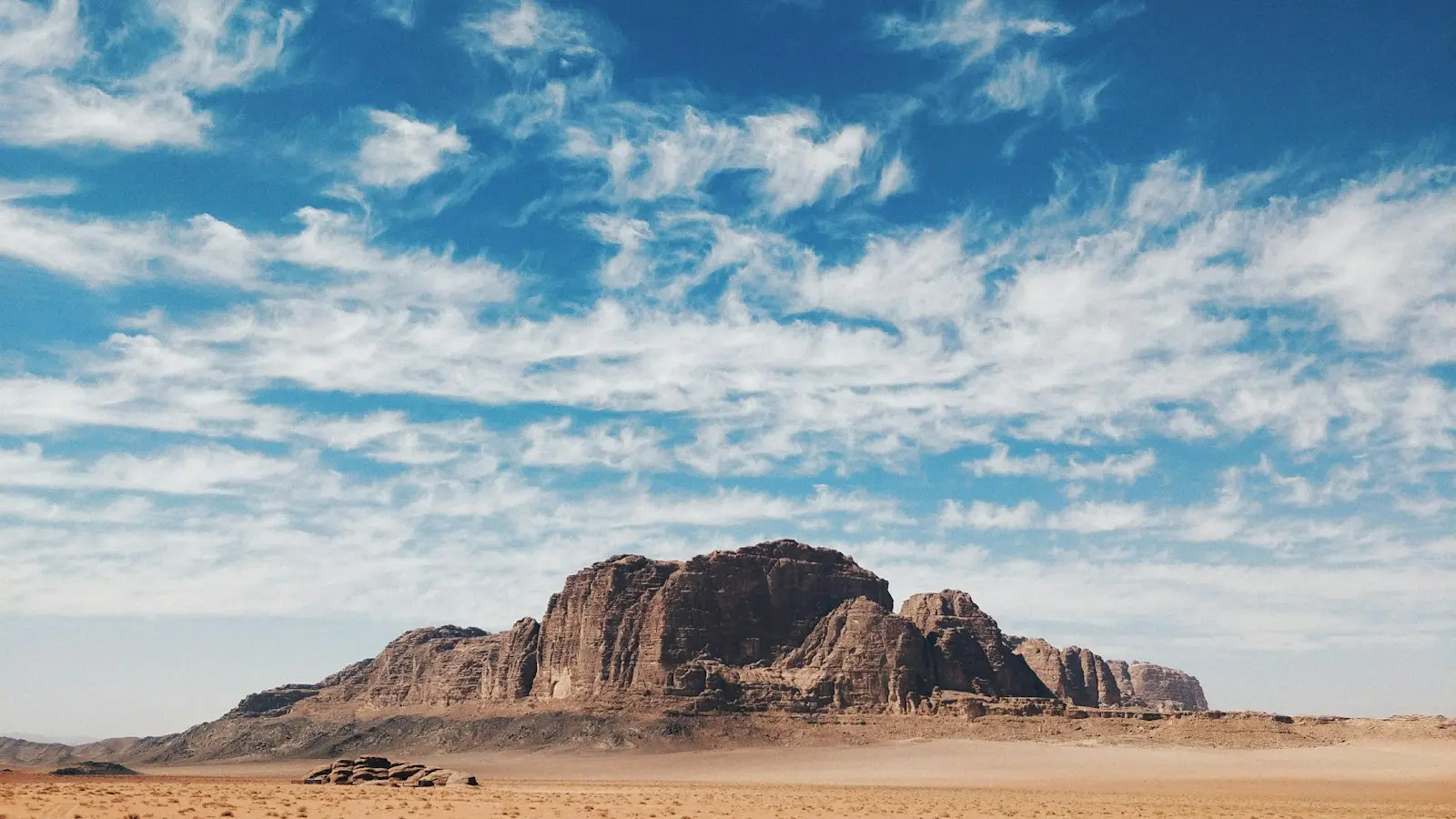
A Jordan seven-day itinerary can include Petra, Wadi Rum, the Dead Sea and one canyon experience, but only if you treat travel time as part of the trip. The most practical plan moves generally south from Amman or Queen Alia International Airport, uses the Dead Sea and Wadi Mujib as one regional stop, gives Petra a full day, and treats Wadi Rum as an overnight base rather than a quick photo stop.
The route is achievable, not effortless. Arrival and departure times, road conditions, heat, seasonal closures and the fitness of your group may require you to shorten Wadi Mujib, remove scenic detours or dedicate one day mainly to transport. The basic rule is simple: do not combine a demanding canyon activity, a long road transfer and a major archaeological site on the same day.
Key Takeaways
- Follow a generally north-to-south route from Amman or the airport to the Dead Sea, Petra and Wadi Rum.
- Allow two nights near Wadi Musa so Petra gets a full sightseeing day without a rushed arrival or departure.
- Treat Wadi Mujib as a conditional activity: check access, weather, requirements and group fitness before committing.
- Book Wadi Rum transfers, camp arrangements and desert activities in advance.
- Protect the final transfer with a buffer, especially if departing from Amman or Queen Alia International Airport.
1. Choose the Right Direction for a Jordan Itinerary One Week
A north-to-south Jordan trip route reduces backtracking. From the airport or Amman, travel toward the Dead Sea, continue to Petra, then move on to Wadi Rum. From the desert, you can either begin the return toward Amman or continue toward Aqaba if your departure arrangements make that practical.
A workable seven-day framework looks like this:
- Day 1: Arrive in Jordan and stay in Amman, or continue to the Dead Sea if arrival time, traffic and transport arrangements allow.
- Day 2: Spend time at the Dead Sea and attempt Wadi Mujib or a lower-intensity alternative.
- Day 3: Transfer to Petra, adding a scenic detour only if it does not compromise arrival and rest.
- Day 4: Take a full sightseeing day at Petra and spend a second night near Wadi Musa.
- Day 5: Travel to Wadi Rum and join a pre-arranged desert tour or camp transfer.
- Day 6: See Wadi Rum at sunrise, complete any remaining activities and begin the journey toward your departure base if appropriate.
- Day 7: Return to the airport or Amman, allowing substantial time for the final transfer.
This is a planning framework, not a promise that every day will unfold neatly. If your flight arrives late, Day 1 may consist only of an airport transfer and hotel check-in. If your departure is early, sleeping in or near Amman on the final night may be wiser than traveling from the far south that morning.
A rental car offers flexibility for travelers comfortable navigating unfamiliar roads and arranging their own parking and accommodation. A private driver reduces navigation and fatigue while allowing some customization. An organized tour simplifies logistics but may leave less room to adjust the pace. Pre-arranged transfers can work well when you want independent sightseeing without driving the entire route.
Whichever option you choose, avoid relying on optimistic journey estimates. Traffic near Amman, road works, stops, weather and slower progress on unfamiliar roads can all affect the day. Where possible, plan to arrive before dark rather than making a long unfamiliar drive late at night.
2. Build the Middle of the Route Around Petra and the Dead Sea
Petra usually deserves one full sightseeing day and two nights near Wadi Musa. The second night protects the visit from a delayed arrival and prevents you from exploring the site with luggage, fatigue or an immediate long transfer waiting afterward.
Petra is more physically demanding than photographs suggest. The approach includes considerable walking, uneven ground, exposed sections and stairs, while optional viewpoints and side trails add distance and elevation. Travelers who want to see the main route at a measured pace should not assume they will also have time for every viewpoint, monument and neighboring site.
An early start can help with heat, crowds and energy, but check current opening hours, admission options, ticket requirements and official access rules before setting your schedule. Those details can change, and an entry arrangement suitable for one traveler may not suit another.
Plan the day around the core route first. Add an optional viewpoint or longer trail only after considering the group’s walking ability and current conditions. Carry water, use sun protection and schedule pauses before everyone is exhausted. After Petra, a quiet meal and an early night are generally more useful than another ambitious excursion.
The Dead Sea can be handled in two ways. An overnight stay gives you a slower arrival, time to use the water or hotel facilities and a comfortable break before Petra. A brief stop preserves more time for archaeological sightseeing and Wadi Rum, but it makes the day more dependent on transport timing.
If the Dead Sea is a priority rather than merely a box to tick, spend the night in the area. If your group is more interested in Petra and desert landscapes, a shorter visit may be the better trade-off. In either case, follow current local guidance for swimming and skin protection. Salt water can sting cuts and eyes, while slippery access points and strong sun can make a short visit surprisingly tiring.
3. Fit Wadi Mujib Into the Schedule Without Making the Trip Too Demanding
Wadi Mujib is attractive in a Petra, Wadi Rum and Dead Sea itinerary because it adds a canyon or water-based experience without requiring a long detour. It is also the activity most likely to disrupt a rigid schedule.
A canyon route is not the same as a scenic walk. Depending on the route and current conditions, it may involve water, scrambling, narrow passages, swimming, fixed ropes or assistance from staff. Fitness, confidence in water, secure footwear and comfort with changing terrain all matter. Seasonal access and weather can also determine whether a route is operating.
Before committing, verify current route availability, operating dates, reservation procedures, age or swimming requirements, equipment guidance, weather closures and safety instructions through official or authorized sources. Do not assume a route is open because it was available during a previous visit or appears in an older itinerary.
The decision rule is straightforward:
- Choose Wadi Mujib when the route is open, the group meets the current requirements and everyone has enough time and energy to recover afterward.
- Choose a lower-intensity nature activity, viewpoint, cultural stop or additional Dead Sea time when conditions are uncertain or the group cannot comfortably manage water, scrambling or uneven ground.
The second option is not a failed itinerary. A quiet morning by the Dead Sea may improve the rest of the week more than forcing a demanding activity into a narrow weather window.
Pack or arrange secure footwear, dry clothes and sun protection. Hydrate before and after the activity, and leave flexibility for changing weather or fatigue. Whether a guide is required or advisable depends on the specific route and current operating rules, so confirm that detail rather than assuming it is always optional.
4. Plan Wadi Rum Around Transfers, Camp Logistics and Heat
Wadi Rum works best as an overnight base because its appeal develops across changing light: the drive into the desert, rock formations, sunset, evening stillness and sunrise are distinct experiences. A rushed daytime visit can show the scenery while losing much of the reason to go.
Arrange the camp transfer, meeting point, arrival window, desert excursion and meal plan before you arrive. Access procedures vary by camp and operator, and a vehicle may take you only to a designated meeting area rather than directly to your accommodation. Confirm where luggage will be left and how late arrivals are handled.
Choose a camp by practical criteria rather than photographs alone. Consider its location, transfer arrangements, bathroom facilities, heating or cooling, meal inclusions, privacy, accessibility and tolerance for basic conditions. A highly isolated camp may offer atmosphere but be less convenient for a group with mobility concerns or an early onward transfer.
A comfortable Wadi Rum day might combine a 4x4 tour with short walks, a sunset stop and rest. Avoid adding several strenuous hikes after a long transfer from Petra. Desert conditions can make ordinary walking more tiring, and a group often enjoys the experience more when it has time to sit, eat and look around without watching the clock.
Confirm current road information, transfer estimates, camp operating details and weather considerations before departure. If you are returning toward Amman, the journey after Wadi Rum can make the final day long. Adding Aqaba may appeal to travelers who want Red Sea time, but in a seven-day Jordan itinerary it can compress the desert and departure schedule. Treat it as a substitution, not a free extra stop.
5. Make the Jordan Trip Route Work for Different Travelers
A mixed-fitness group does not need to split up for the entire trip. It does need permission to choose different versions of the same day.
At Petra, some travelers can follow the core route while others take a longer viewpoint trail, rest at a shaded stop or return earlier. At Wadi Mujib, participants can do the canyon activity while others choose a Dead Sea rest period or a gentler nearby outing. In Wadi Rum, everyone can share the vehicle tour while only the more energetic members add longer walks.
This approach also helps with age, heat tolerance and differing interests. A person who does not want a canyon may still enjoy the Dead Sea, while someone who finds Petra’s walking difficult may prefer a shorter visit followed by time at the hotel. Agreeing on alternatives before the trip prevents one person’s limits from becoming a group argument during the hottest part of the day.
Build buffers into the route rather than filling every available hour. A practical buffer protects against delayed flights, traffic, road works, weather, entry formalities and attraction closures. It also creates room for the ordinary pleasures of travel: a longer lunch, a conversation with a host or an unplanned stop.
Seasonal planning requires similar flexibility. Heat can increase the effort required for Petra and desert walks, while cooler or wetter periods may affect canyon access, road conditions and opening schedules. Do not make blanket assumptions; check current conditions close to travel and retain a fallback for each activity.
If Wadi Mujib is closed or unsuitable, extend the Dead Sea stay, choose a lower-intensity nature or cultural stop, spend more time at Petra or preserve the schedule for Wadi Rum. If weather affects Wadi Rum, the value of having a pre-arranged but adaptable plan becomes clear.
Frequently Asked Questions About a Jordan Seven-Day Itinerary
Can you visit Petra, Wadi Rum, the Dead Sea and Wadi Mujib in seven days without rushing?
Yes, for travelers who accept early starts, several transfers and a conditional canyon activity. The itinerary becomes rushed when it also includes multiple northern stops, Aqaba, long scenic detours or every optional Petra trail. Prioritize Petra, Wadi Rum and the Dead Sea, then add Wadi Mujib only if conditions and energy allow.
How many nights should you spend near Petra on a one-week Jordan itinerary?
Two nights near Wadi Musa is a practical choice: arrive on one day, explore Petra on the next and leave afterward. One night can work if your arrival is early and your schedule is reliable, but it leaves little protection against delays or fatigue.
What should you do if Wadi Mujib is closed or the canyon conditions are unsuitable?
Do not force the activity. Use the time for the Dead Sea, a gentler nature or cultural stop, additional rest or a longer Petra visit. The route is stronger when Wadi Mujib is treated as an optional experience rather than its structural centerpiece.
The best Jordan trip route for seven days is selective rather than maximal. Give Petra a full day and two nights, use the Dead Sea as a genuine pause, arrange Wadi Rum logistics in advance and protect the final transfer with a buffer. Wadi Mujib can make the journey more memorable, but only when current conditions, fitness and timing make it a sensible addition.