The Transit Core Fallacy
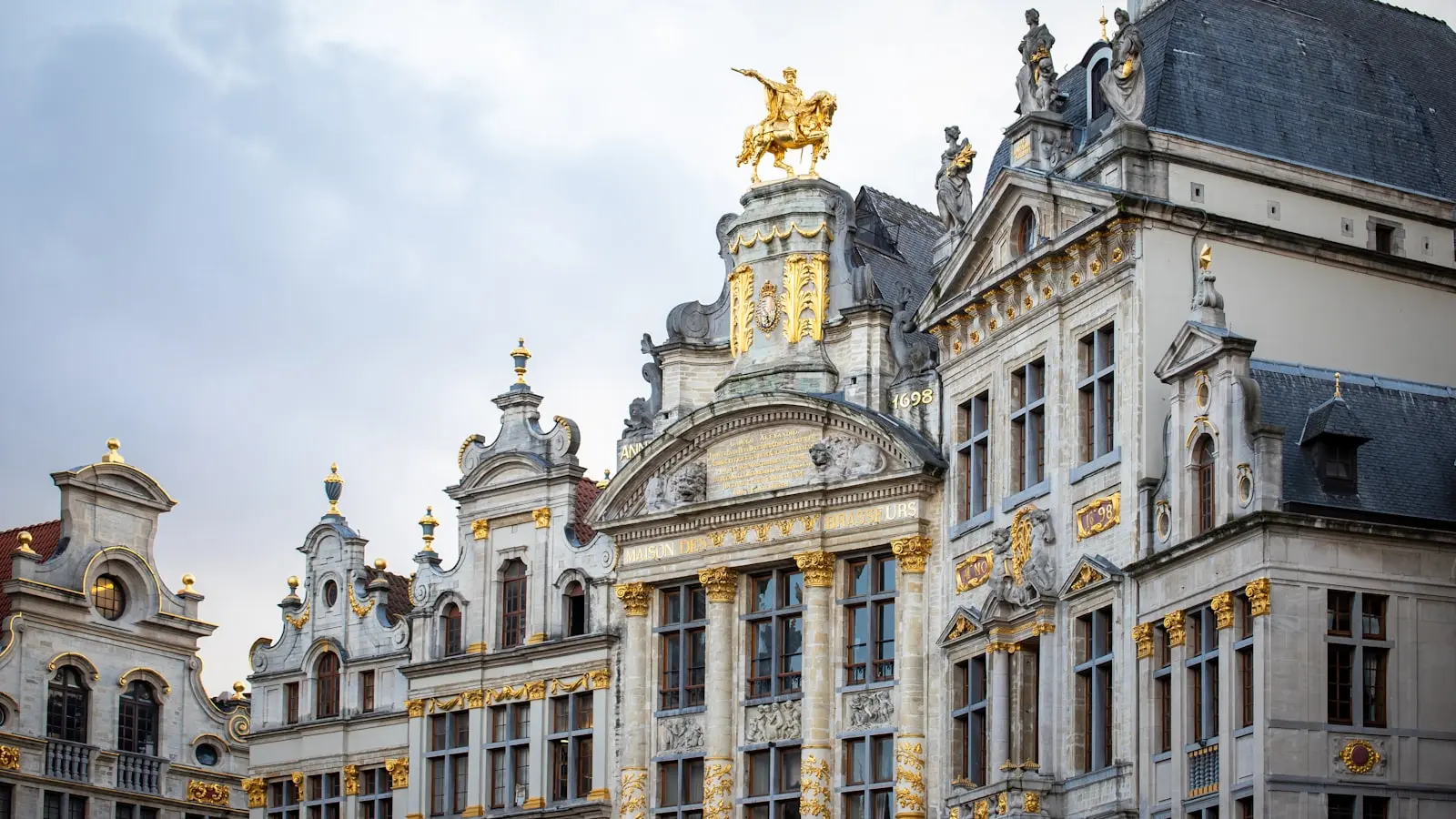
European travel circuits routinely weaponize efficiency against immersion. Backpackers and luxury tourists alike treat Brussels as a logistical necessity rather than a final destination, dedicating a meager afternoon to the Grand-Place before boarding an outbound train. Tourism boards continuously observe this transit mentality, tracking millions of visitors who funnel through the Brussels-Midi station without ever breaching the deeper municipal perimeter. This hyper-compressed schedule yields predictable outcomes. Visitors photograph a bronze statue, consume a standardized waffle, and depart with their biases solidified. They miss the actual city entirely. (A severe miscalculation in travel logic.) The modern itinerary prioritizes movement over comprehension.
The Online Travel Rebellion
The case for a three-day residency directly challenges the bureaucratic stereotype attached to the administrative capital of the European Union. Digital travel communities actively dissect this negative consensus, dismantling the argument that travelers must bypass the capital for the sanitized canals of Bruges or Ghent. Analysts of modern tourism trends note a distinct pushback emerging from younger demographics who seek cultural density over manufactured historic perfection. Three days introduce necessary friction into a rigid travel schedule. Friction demands engagement. When the artificial pressure of the day trip evaporates, the authentic topography of Brussels asserts itself. The cobblestones slow the pace.
Neighborhood Geographies and Spatial Shifts
Urban space dictates human behavior. Leaving the concentrated medieval core forces visitors into neighborhoods that refuse to cater to transient crowds. The Marolles district operates on its own frequency, housing daily flea markets where generations of working-class residents filter through discarded European history. Walk uphill toward the Palais de Justice, and the architectural scale fractures. The massive stone structure dominates the skyline, constantly enveloped in a permanent cage of construction scaffolding that has ironically become part of its identity.
Contrast this with the Matonge neighborhood, where the legacy of Belgian colonialism collides with vibrant Congolese diaspora culture. The scent of grilled plantains cuts through the damp European cold. The neighborhood pulses with a distinct audio frequency. (History leaves deep scars, but it also seeds new life.) The geography forces acknowledgment of a complex global past.
Imperial Ambition and Mid-Century Optimism
Time allocation permits structural exploration. The Atomium anchors the Heysel Plateau, imposing nine massive, reflective steel spheres against the shifting Belgian sky. Engineers designed the monument for the 1958 World’s Fair, intending to capture the optimism of atomic energy. It remains an alien disruption in the landscape, pulling travelers out of their historical comfort zones into sheer retro-futurist architecture. Navigating its internal escalators violently reorients spatial perception. The metal tubes swallow the natural light.
Directly opposing this metallic austerity, the Royal Greenhouses of Laeken demonstrate botanical hoarding on an unprecedented imperial scale. Glass and iron curve into monumental domes, housing exotic flora that King Leopold II demanded over a century ago. Access remains heavily restricted, forcing visitors to time their arrivals to a brief spring window. Planning an itinerary around this architectural anomaly shifts a traveler from a passive consumer to an intentional participant. The heavy humidity presses violently against the skin. The sharp scent of blooming geraniums cuts through the damp earth. The complex attempts to domesticate untamed nature through rigid industrial geometry. It fails beautifully.
Spontaneous Fermentation and Craftsmanship
Gastronomy requires patience. Attempting to decode Belgian brewing culture within a two-hour transit window inevitably reduces an ancient craft to a chaotic binge-drinking exercise. A dedicated three-day timeline permits deliberate navigation through specialized, localized beer tours that explain the mechanics of the craft. True lambic breweries exist on the industrial margins of the city limits, relying entirely on wild, airborne yeast specific to the Senne river valley. The fermentation process resists modern mechanical acceleration. Brewers leave wort in shallow, open vats directly under the roof rafters. The night air cools the copper pans. Spontaneous fermentation triggers.
To consume a traditional geuze in a dim, wood-paneled estaminet in Schaerbeek is to ingest the immediate environment. Heavy dust coats the cellar bottles. (Interfering with this dust disrupts the delicate cellar ecosystem.) The liquid hits the palate with acute, acidic sharpness, devoid of any commercial sweetness, pulling raw flavors from the wooden barrels and the ambient microorganisms of the city itself. This transcends simple beverage consumption. This acts as geographic assimilation. The hurried day-tripper who drinks an industrially carbonated blonde ale near the central square assumes they understand the brewing culture. They know nothing.
The Concrete Canvas and Bureaucratic Canyons
Cities communicate directly through their surfaces. Brussels utilizes bare brick and mortar as narrative panels. The famous comic strip murals do not exist merely to entertain tourists; they integrate directly into the urban decay and the rapid regeneration of working-class districts. Tracking these massive murals across the pentagon forces travelers to walk streets they would otherwise intentionally ignore. Tintin scales iron fire escapes. Asterix charges across exposed brick directly above a corner grocery store. The visual medium softens the harsh, unforgiving nature of the urban grid. The art reclaims the concrete.
Contrast this deeply localized street canvas with the monolithic European Parliament district. The Leopold Quarter replaces brick with sheer, unyielding glass facades. Thousands of diplomats, corporate lobbyists, and legal translators flood the concrete plazas each morning, engineering an artificial, high-stakes political ecosystem. The architecture here deliberately projects transparency through massive glass walls, yet the sheer, crushing scale alienates the individual pedestrian. Walking from the intimate, mural-covered alleys of Saint-Géry directly into the wind-swept canyons of the EU quarter delivers severe architectural whiplash. This precise tension defines modern Brussels. The city holds hyper-local craftsmanship and transnational bureaucracy within the exact same municipal boundaries. (Neither side willingly concedes an inch of ground.)
Recalibrating the European Circuit
Travelers seeking sanitized, flawless medieval aesthetics will continually gravitate toward the northern canal cities. Those locations execute historic preservation with ruthless, almost clinical efficiency. However, strict preservation often suffocates daily vitality. Brussels refuses to hide its glaring contradictions. Bureaucrats in tailored wool suits elbow past weary art students outside Lebanese bakeries. The transit hub reputation completely disintegrates upon close inspection, exposing a massive, breathing city that operates entirely for its permanent residents rather than its fleeting visitors.
Allocating seventy-two hours to this capital recalibrates the entire European travel itinerary. It violently abandons the checklist mentality. It allows a traveler to sit at an obscure corner cafe in Ixelles, watch the heavy rain darken the uneven pavement, and recognize that the true value of a destination lies in its rough texture, not just its polished monuments. The itinerary expands. The city finally opens up.