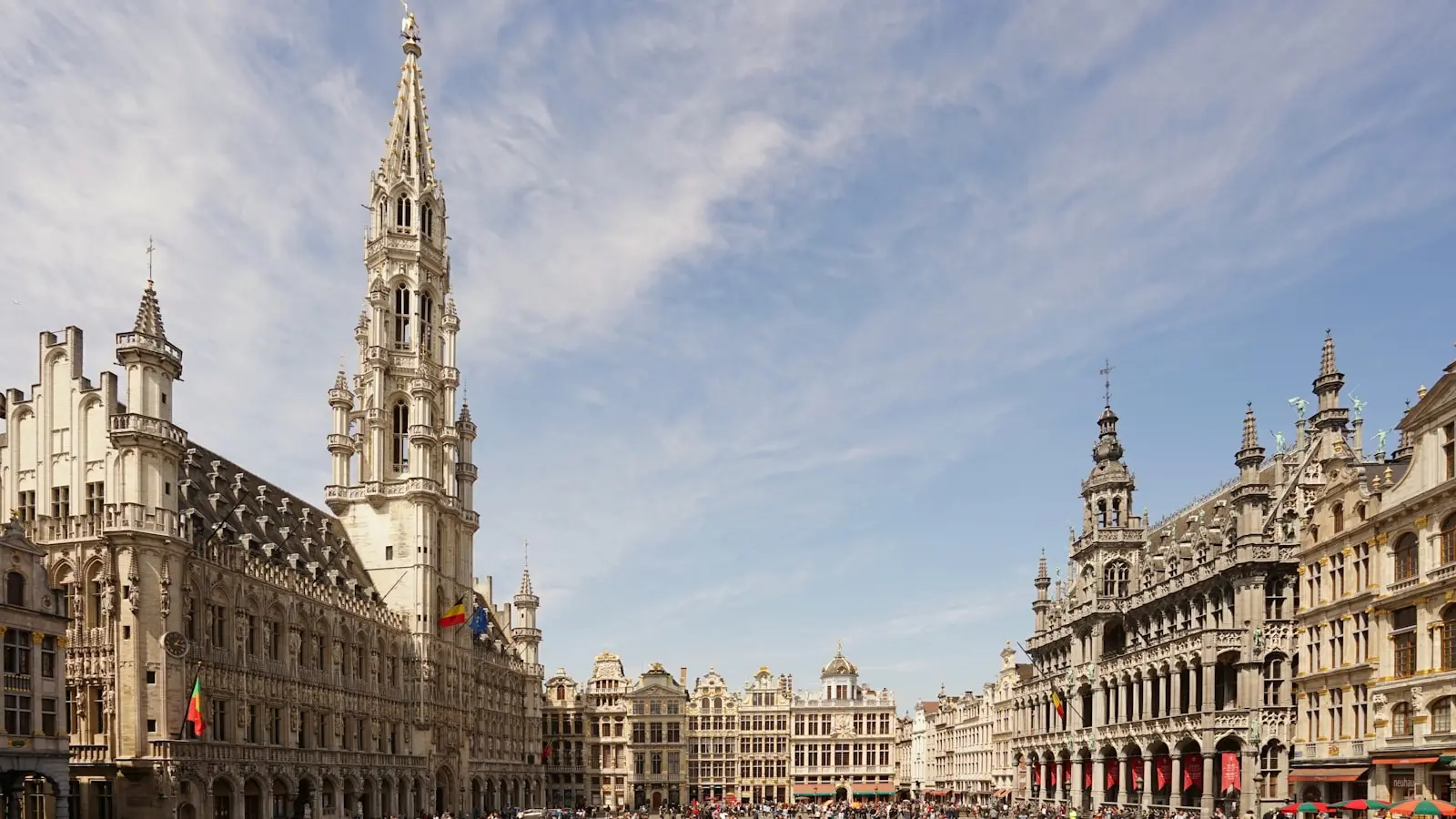
Travel forum algorithms dictate a rigid protocol for traversing Belgium. Arrive at the transport hub, immediately board a northbound train, and allocate no more than four hours to the capital. The digital consensus frames Brussels as a sterile administrative terminal, a place to photograph a central square before fleeing to the preserved medieval canals of Bruges or Ghent. Lonely Planet analysts dismantled this narrative in early 2024, issuing a clear mandate for a minimum three-night stay. The mathematical reality of modern tourism favors frictionless transit, but genuine cultural immersion requires friction. (Friction takes time.)
When a city serves as the de facto capital of the European Union, its international identity inevitably skews bureaucratic. The European Quarter casts a heavy, gray shadow over the municipality. Glass and steel structures house thousands of civil servants, creating an imposing administrative perimeter that frequently repels the casual observer. Tourists stepping out of the Brussels-Central railway station encounter an environment heavily shaped by mid-century urban planning miscalculations—a phenomenon architects literally coined as “Brusselization,” where historic blocks were bulldozed to accommodate corporate high-rises. They project this rigid, concrete atmosphere onto the entire city. They leave.
This immediate departure constitutes a massive miscalculation.
The Iron Vines of Ixelles
Cross the invisible neighborhood boundaries into Ixelles or Saint-Gilles, and the administrative concrete dissolves. During the late 1890s, architects Victor Horta and Paul Hankar utilized these specific streets as a testing ground for the Art Nouveau movement. They rejected the straight line. Wrought-iron balconies mimic twisting vines, and asymmetrical window frames fracture the pale Belgian daylight into distinct geometric shadows. Hundreds of these structures remain integrated into the daily routines of local residents.
Design shapes behavior. Walking these residential streets forces an upward gaze. You cannot rush past a townhouse where the mahogany doorframe appears to grow organically from the pavement, curling into the brickwork like a living organism. When rain slicks the cobblestones and condensation drips from the rusted iron beams of a neighborhood transit stop, the physical texture of the city reveals itself. (Bruges packages history. Brussels wears it.)
The aesthetic climax of this architectural era sits entirely removed from the tourist center. The Horta Museum, housed in the architect’s former studio, demonstrates how space manipulation alters human perception. Staircases twist around central light wells, pulling illumination down through four floors of wood and glass. It requires deliberate pacing to absorb. Rushing through it yields nothing.
Fermentation and the Economics of Slow Flavor
The culinary ecosystem surrounding the Grand-Place survives on high turnover and low expectations. Sugar-heavy waffle stands and overpriced mussels cater exclusively to the four-hour transit crowd. These establishments operate on the mechanics of extraction, serving visitors who will never return. Shift the focus outward into the working-class districts, and the authentic food matrix materializes.
Traditional brasseries operate in rooms paneled with century-old dark wood, illuminated by low-hanging brass fixtures. The air smells heavily of malt and slow-cooked meat. Here, the defining ingredient is time.
The region’s lambic brewing industry entirely ignores modern production efficiency. At facilities like Cantillon, brewers do not rely on engineered, laboratory-grown yeast strains. Instead, they open their warehouse roofs to the night air during the colder months. Wild, airborne microbes blowing in from the Senne valley settle onto wide copper coolships, naturally inoculating the cooling wort. The liquid then ferments in heavy oak barrels for up to three years.
Blending one-, two-, and three-year-old batches creates gueuze, a bone-dry, complex liquid that strips the palate clean. It carries tasting notes of wet hay, sharp grapefruit, and damp cellar floors. (You do not chug a three-year-old gueuze.) Understanding this beverage requires sitting in a drafty tasting room, watching dust motes catch the afternoon light while the acidity develops on the tongue. It demands a biological connection to the specific environment. You cannot export the ambient air of the Senne valley.
Sequential Art as Urban Architecture
Visual culture in the capital frequently bypasses the traditional gallery format entirely. Instead of confining art to white-walled, climate-controlled institutions, Brussels bolts it directly to the sides of apartment buildings. The city claims a profound historical ownership over the Franco-Belgian comic strip, or “bande dessinée.”
Rather than merely housing original plates in the Belgian Comic Strip Center—itself located in an imposing former textile department store designed by Horta—the municipality commissioned dozens of massive murals across the urban grid. Narrative arcs sequence across fifty-foot brick gables. Characters like Tintin, Spirou, and Corto Maltese stare down from towering intersections above busy traffic arteries.
This structural integration forces pedestrians to interact with the medium simply by navigating the streets. It transforms an ordinary commute into a rolling exhibition. Following the comic book route requires traversing diverse neighborhoods, pulling visitors out of the commercial center and pushing them deep into immigrant enclaves, antique districts, and residential squares. The art serves as a navigational tether. It drags the observer through the actual city.
The Reward of the Lived-In City
Why do the search engines and travel forums relentlessly push travelers toward Bruges? Medieval preservation offers immediate, frictionless visual gratification. A walled city with intact canals presents a flawless, easily digestible aesthetic loop. It operates perfectly as a tourist mechanism. You arrive, you consume the scenery, you depart.
Brussels actively resists this easy consumption. The capital is a functioning, complex organism. It bears the scars of political compromises and is perpetually complicated by the linguistic divide between French and Dutch speakers. Its beauty is sporadic and requires active hunting.
Travelers who ignore the forum consensus and anchor themselves in the capital report a highly specific sociological reward. The city layers 15th-century guildhalls against brutalist office blocks, softened by neighborhood squares where locals cluster around folding tables to drink unfiltered beer. The energy remains unpretentious because the city does not solely exist to serve the visitor. The multi-day stay strips away the bureaucratic facade. What remains is a dense, culturally layered environment that heavily rewards those willing to simply sit still and observe.