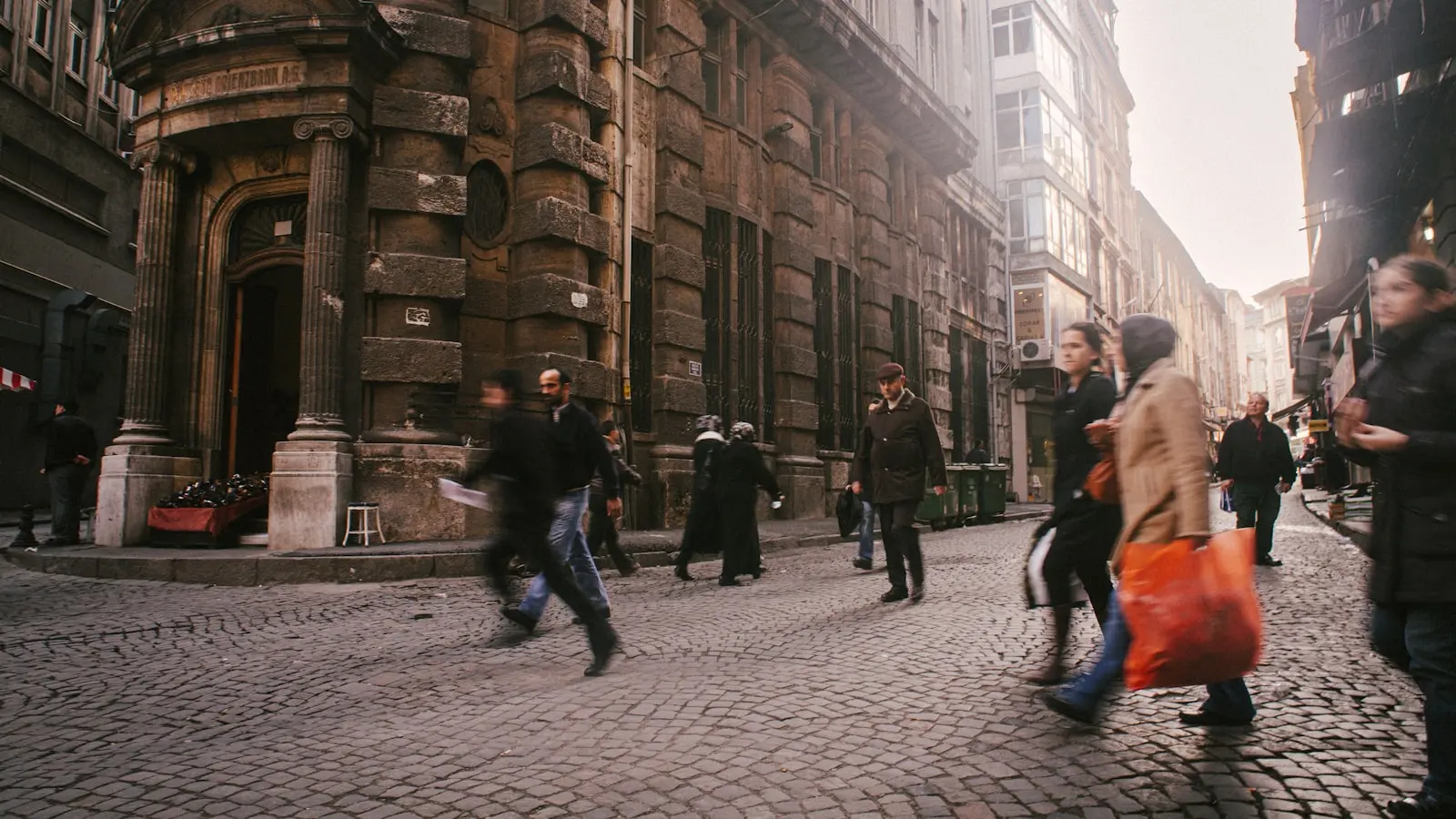
High-speed rail schedules actively manufacture the illusion of a superficial city. Millions of passengers funnel through the Brussels-South railway station annually, utilizing the platforms merely to pivot between Paris, Amsterdam, and London. Travel itineraries designate the Belgian capital as a four-hour window. Tourists drag hard-shell luggage across the cobblestones of the Grand Place, consume a standardized waffle under a plastic awning, photograph the Manneken Pis, and retreat to the trains. This transit-hub mentality strips the urban environment of its actual texture. Committing a minimum of three full days to the city dismantles the stubborn myth of an administrative wasteland. Time introduces friction. (And friction demands attention.)
Historically, prominent travel publications reinforced this bypass behavior. Guides painted the city as an enclave of European Union bureaucrats and corporate lobbyists. They highlighted the geopolitical function over the lived reality. This editorial laziness created a void. Contemporary travel networks now actively challenge the narrative, pointing toward a fractured, deeply layered cultural capital that hides its best assets behind unassuming brick facades.
Architectural Schizophrenia and Spatial Behavior
Navigating Brussels demands physical and mental effort. The topography actively resists the engineered predictability found in Dutch grid systems. The city fractures into an upper and lower town, forcing pedestrians to ascend glass-encased public elevators or navigate winding, damp staircases. This geography segregates the atmosphere.
The European Quarter projects bureaucratic rigidity. Glass monoliths reflect gray skies, and security barriers dictate movement. The spatial design isolates human behavior into structured pathways. However, moving away from the legislative center toward the Marolles district alters the visual vocabulary entirely. Here, the architecture feels organic and slightly decaying. Independent craftspeople operate out of narrow, uneven storefronts. Morning light hits wet pavement while antique dealers arrange mid-century furniture on the sidewalks of the Place du Jeu de Balle. The contrast is jarring. (It proves the city refuses to sanitize its edges.)
Travelers who allocate 72 hours find themselves naturally pulled toward the Sablon neighborhood. The exhaust fumes of idling tour buses vanish, replaced by the sharp scent of roasted cocoa butter and espresso.
The Mechanics of Craft and Cacao
Standardized tourism reduces Belgian chocolate to duty-free souvenirs. Extended observation reveals a completely different mechanical reality. Inside the independent ateliers dotting the streets of Ixelles and Sablon, master chocolatiers treat cacao with the same ruthless precision that vintners apply to Grand Cru grapes.
The process relies on strict environmental control. Marble slabs absorb the heat of melted cocoa. Knives scrape against the stone, tempering the liquid until it reaches the exact molecular structure required for a sharp, audible snap. Workshops experiment with oxidation and ethical sourcing, bypassing mass-market supply chains. Visitors who step into these spaces observe the physical labor behind the luxury. The artisans focus on raw material extraction, balancing acidity and fat content without masking the underlying flavors with excess sugar. This focus on craftsmanship anchors the local identity.
Rewriting the Cultural Itinerary
Guidebooks consistently compress the cultural offerings into an aggressive checklist. A sustained visit allows travelers to step inside the Magritte Museum not as a scheduled obligation, but as an immersion into Belgian surrealism. The architecture of the museum curates the psychological descent into René Magritte’s mind. The artwork demands slow, methodical observation. Racing past canvases depicting pipes that are not pipes defeats the underlying philosophy of the collection. Surrealism requires a pause to process the subversion of reality.
The Atomium operates on a similar principle of scale and time. Built for the 1958 Brussels World’s Fair, the massive stainless steel spheres dominate the northern skyline. Day-trippers photograph the exterior from the park and immediately board a tram back to the center. Those who invest the time ride the steep escalators through the connecting tubes, absorbing the mid-century optimism regarding atomic energy. The physical scale of the structure alters human perspective. Looking down at the miniature city through retro-fitted windows forces a realization of the era’s ambition. (It feels aggressively, unapologetically retro-futurist.)
Economic Arbitrage and the Solo Traveler
Travel forums continuously track a distinct shift in European travel economics. Paris and Amsterdam increasingly extract maximum capital from visitors, pricing out solo travelers and independent creatives. Brussels absorbs these displaced demographics. Analysts point directly to the cost arbitrage available within the city limits. Securing temporary accommodation in areas like Saint-Gilles or Schaerbeek costs significantly less than equivalent neighborhoods in neighboring capitals.
This economic reality sustains a thriving, underground cultural apparatus. The affordability allows independent venues to take risks. A vibrant local music scene thrives in converted warehouses and basement cellars. Sound engineers push experimental electronic and jazz frequencies, drawing heavily on the city’s dense multicultural demographic. Congolese rhythms bleed into European synth-pop. The venues lack the polished veneer of London clubs, relying instead on raw acoustic energy and community engagement. The music commands the space.
Culinary Deconstruction and Spontaneous Fermentation
The culinary infrastructure extends far beyond the tired cliché of mussels and fries. Modern European culinary culture converges in Brussels, driven by chefs who actively reject traditional fine dining constraints. Restaurants strip away the linen tablecloths and focus entirely on aggressive ingredient sourcing.
Fermentation labs operate in the basements of unassuming bistros. Chefs cross-pollinate North African spice profiles with traditional Flemish cooking techniques. Diners experience the resulting collision on small, unglazed ceramic plates, served without theatrical presentation. The food speaks through chemical reaction, heat, and precise timing. Waitstaff do not deliver monologues about the chef’s inspiration; they deliver the plate and retreat. The environment respects the diner’s intelligence. (Exactly as it should be.)
The mechanics of local brewing further illustrate this demand for patience. The Zenne valley, intersecting the city, harbors wild yeast strains found nowhere else on the planet. Traditional brewers harness these airborne microorganisms to create Lambic beer through spontaneous fermentation. The process cannot be rushed. Wooden barrels sit in drafty warehouses for years, accumulating cobwebs and dust while the liquid inside slowly turns complex and tart. Visitors touring the Cantillon brewery step into a living, breathing ecosystem. The smell of damp wood and sour grain saturates the air. Consuming a geuze is not a casual drinking experience. It forces the palate to reckon with acidity and time. (Mass production could never replicate this decay.)
In neighborhoods like Flagey, the intersection of food and social behavior becomes starkly visible. Produce markets transition into open-air social clubs as the sun sets. Locals consume oysters and natural wine while leaning against damp stone walls. The atmosphere lacks any pretension.
The Verdict on Time
A brief layover reduces Brussels to a caricature of European stereotypes. A three-day residency reconstructs it as a complex, highly functioning organism. The city rewards patience and penalizes urgency. Travelers who bypass the superficial transit-center experience discover a capital that refuses to perform for outsiders. It demands participation.
Understanding the city requires walking until the cobblestones vibrate through the soles of leather boots. It requires tasting the bitter edge of properly tempered dark chocolate and listening to the bass frequencies vibrating out of a Saint-Gilles basement. Brussels holds a mirror up to modern travel habits. Those rushing through see only a reflection of their own impatience. Those who stop, sit, and watch finally see the city.