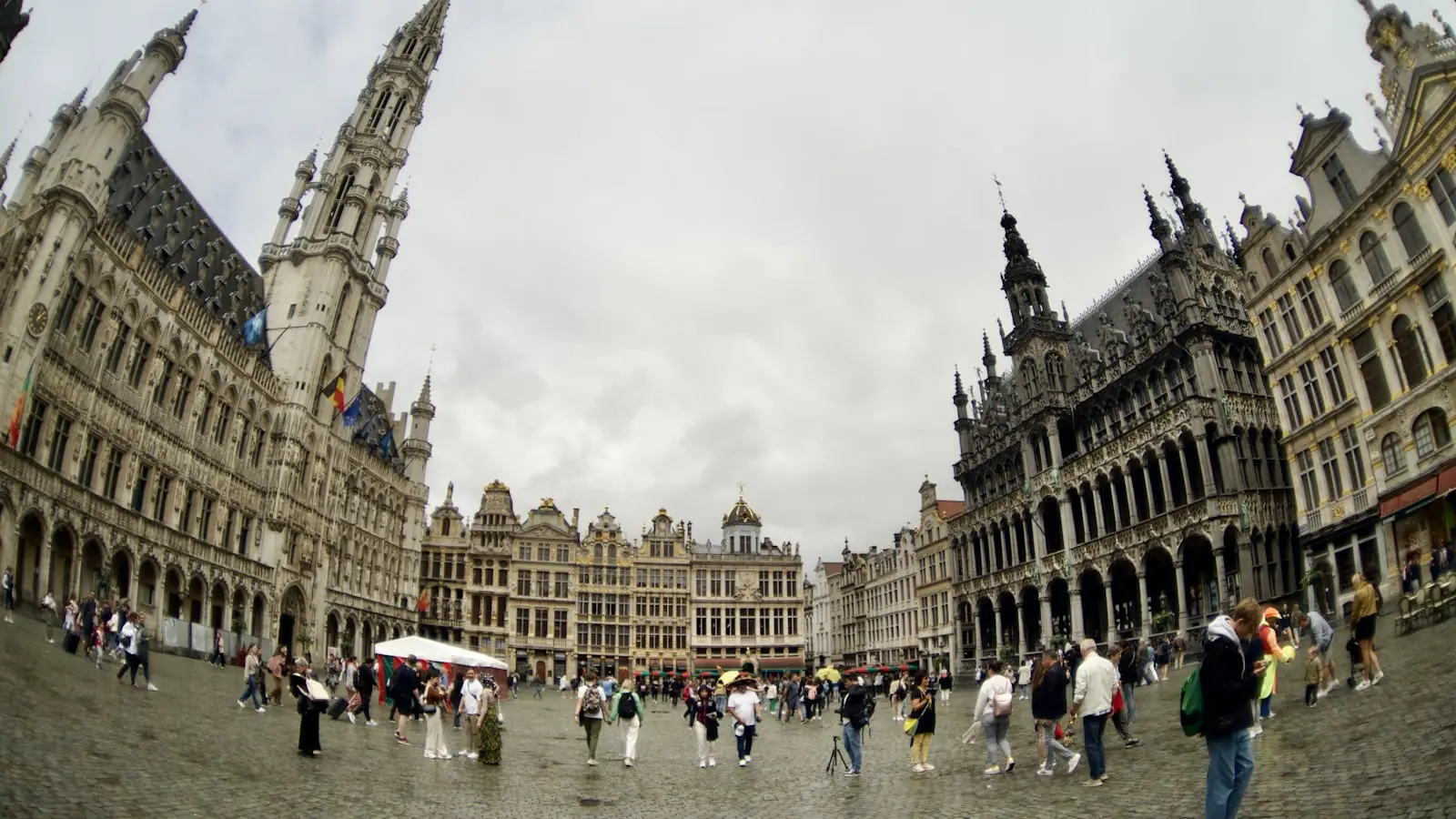
The digital travel consensus operates on rigid binaries. Online forums churn out repetitive itineraries, consistently instructing first-time transatlantic travelers to bypass the Belgian capital. They classify Brussels as a sterile administrative zone, a holding pen for European Union bureaucrats and lobbyists. The reality contradicts this flat assessment. Analysts tracking shifting tourist satisfaction metrics note a rising counter-narrative. Travelers ignoring the prevailing algorithm find a profoundly manageable, low-stress entry point. A three-night stay calibrates the body to a new time zone while delivering immediate architectural and culinary density. The city functions.
The Architecture of Arrival
Navigating an unfamiliar continent induces acute sensory fatigue. Jet lag disrupts circadian rhythms, degrading cognitive function and physical endurance. Dropping an unacclimated traveler directly into the sprawling, relentless machinery of Paris or London frequently triggers overwhelm. Mega-cities demand instant adaptation. Brussels provides a crucial airlock. The transit infrastructure prioritizes frictionless movement over sprawling complexity.
Direct trains connect Brussels Airport to the central stations in under twenty-five minutes. The urban footprint remains relatively compact. Visitors maneuver through historical districts without requiring a dense understanding of overlapping subway zones. Walking from the central station to the historical core takes mere minutes. The immediate visual feedback anchors the disoriented traveler. Cobblestone streets dictate a slower physical pace. (A functional transit grid prevents immediate despair).
Dismantling the Bureaucratic Mirage
Historical context clarifies the misperception regarding the city’s atmosphere. The post-war expansion of European institutions undeniably reshaped the eastern edge of the city. Glass-and-steel monoliths dominate the Leopold Quarter. Digital commenters routinely conflate this isolated administrative sector with the entire metropolitan area. They urge detours to the preserved medieval centers of Bruges or Ghent. This bypass strategy discards the layered complexity of the capital.
The historical center surrounding the Grand-Place operates on an entirely different scale. Opulent guildhalls frame the expanse. Gold-leaf facades catch the shifting daylight, while Gothic spires puncture the skyline. Design shapes behavior. The enclosed, asymmetrical nature of the central square forces visitors to stop, look upward, and absorb the craftsmanship of the late 17th century. It lacks the overwhelming, sweeping boulevards of Haussmann’s Paris, offering instead a dense, walkable labyrinth that rewards proximity.
Beyond the medieval core, Brussels holds the foundational architecture of the Art Nouveau movement. Iron and glass warp into organic forms across the facades of townhouses designed by Victor Horta. These structures integrate light and nature into the urban environment. They require close inspection. The details reveal themselves only to those who slow their pace.
Culinary Infrastructure and Cultural Identity
Food reflects the structural soul of a city. Brussels refuses to compromise its culinary output. Chocolate and beer exist here not as mere tourist commodities, but as structural pillars of daily life. The production methods require intense discipline.
Praline production demands precise temperature control and generational knowledge. Master chocolatiers manipulate cocoa fat to achieve a specific snap and melt. They balance ganache, praline, and nougatine with mathematical precision. Visitors walking through the Galeries Royales Saint-Hubert encounter window displays that resemble high-end jewelry boutiques more than confectioneries. The aesthetic precision translates directly into the sensory experience. (Craftsmanship rarely survives mass optimization).
The brewing culture mirrors this rigid dedication to local environment. Spontaneous fermentation creates Lambic beers entirely unique to the Zenne valley. The process relies on airborne wild yeasts that cannot be replicated outside this specific microclimate. Brewers leave the wort exposed to the open air, inviting the local environment to dictate the fermentation.
Travelers consume this history directly.
- Geuze: A blend of young and old lambics, undergoing secondary fermentation in the bottle. It delivers a sharp, complex acidity.
- Kriek: Lambic macerated with whole sour cherries, absorbing the fruit’s tartness and vibrant color without artificial sweetening.
- Trappist Ales: Brewed under strict monastic supervision, offering heavy, dark malt profiles that warm the palate.
Drinking a complex Geuze in a wood-paneled estaminet connects the traveler directly to the soil and air of the region. It forces an appreciation of time. The liquid in the glass often took three years to mature in oak barrels.
The Strategic Logistics of the Basecamp
Geopolitical positioning matters deeply in travel planning. Brussels occupies the literal crossroads of Western Europe. High-speed rail networks converge heavily within its borders. Travelers treat the city as a logistical anchor, reducing friction for broader itineraries.
The connectivity metrics remain unmatched for the region:
- Paris: 1 hour 22 minutes via Eurostar.
- Amsterdam: 1 hour 50 minutes via Eurostar.
- London: 2 hours via Eurostar.
- Cologne: 1 hour 50 minutes via ICE.
Using Brussels as a primary basecamp allows a traveler to absorb the shock of transatlantic travel, establish a routine, and launch into the wider continent without dragging heavy luggage through endless transfers. A three-day acclimatization period allows the mind and body to synchronize with European rhythms. It bridges the gap between the familiar and the foreign. (Strategy consistently outweighs sheer ambition).
Reclaiming the Narrative from the Echo Chamber
Why does the internet actively suppress Brussels? The dynamic stems from modern optimization culture. Digital platforms reward extremes. A destination must either be a hyper-romanticized fairytale setting or an edgy underground haven to secure algorithmic traction. Brussels exists as a functional, complex, living city. It resists easy categorization. It holds diplomatic rigidness alongside surrealist art and fiercely independent local communes.
Travelers who ignore the algorithm discover a layered urban environment. They find quiet squares in Ixelles, antique markets sprawling across the Marolles district, and local cafes where linguistic boundaries blur between French, Dutch, and English. Culture shapes taste, but algorithms flatten culture. First-time visitors seeking a genuine, manageable introduction to Europe find their ideal starting line here. The advice to skip Brussels remains the single most flawed directive in modern travel discourse.