When transient visitors drag polyurethane suitcase wheels across the uneven medieval cobblestones outside Brussels-Midi station, the prevailing instinct dictates an immediate departure. They seek connecting platforms heading toward the easily digestible romance of Bruges or the manicured canals of Amsterdam. Brussels, encumbered by its bureaucratic reputation, suffers under the weight of this transit hub fallacy. Yet, data released by the European Travel Commission in Autumn 2024 exposes the glaring deficit of this haste. A structured 72-hour commitment to the Belgian capital overrides the superficial day-tripper narrative. It forces a necessary deceleration.
Independent travelers committing to three-night stays are driving a quiet behavioral shift. Tourism boards track a distinct divergence in spatial engagement. Visitors anchored by a hotel room spend forty percent more time examining the intricate curvature of local art nouveau museums rather than elbowing through the crowded, sugar-scented corridors of central waffle dispensaries. (Patience yields structural dividends). The city reveals its actual texture only when the pressure of a departing evening train evaporates.
Day One And The Spatial Authority Of The Gilded Core
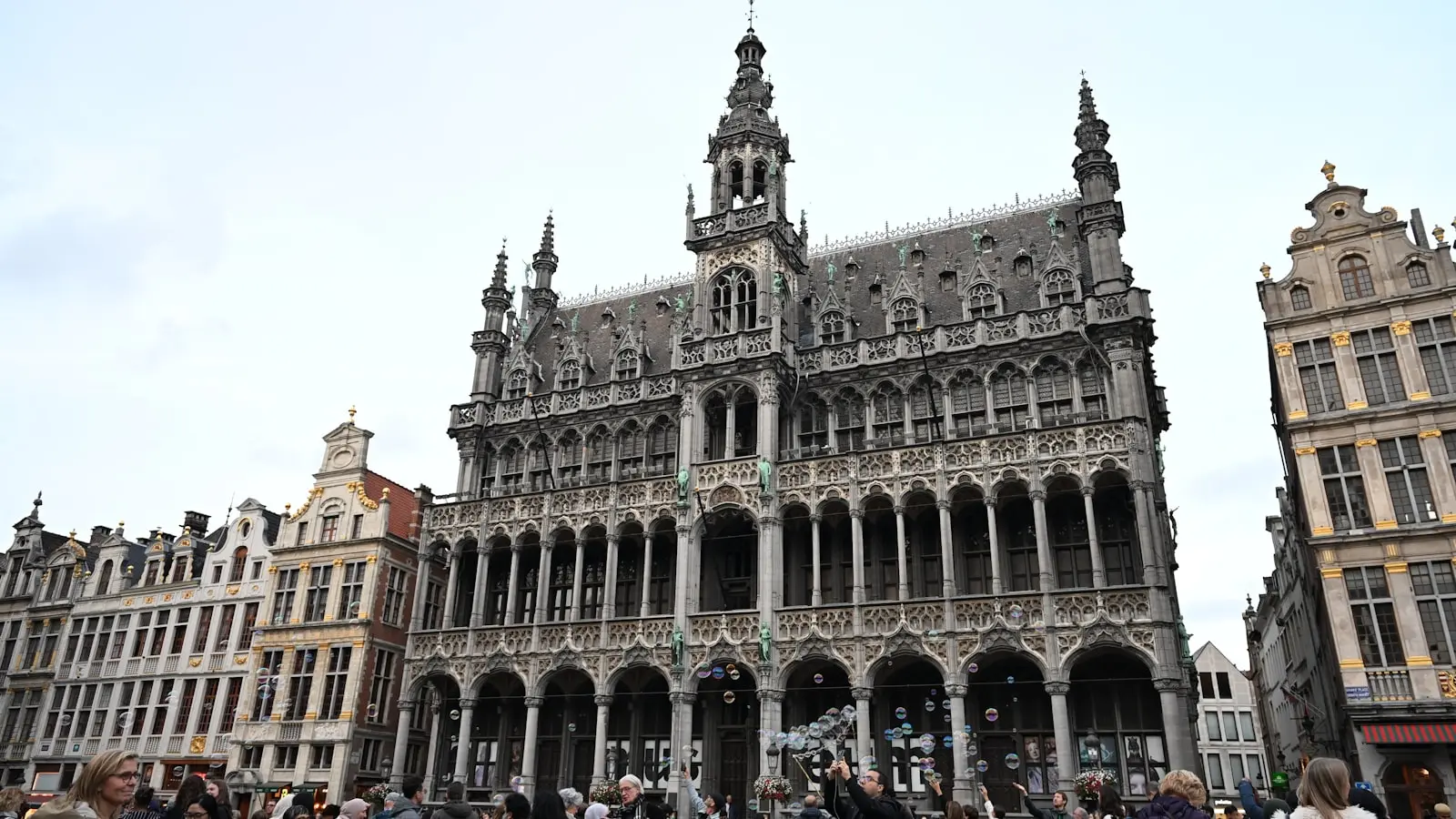
The Grand-Place functions as the gravitational center of the historical district, acting simultaneously as a masterpiece of mercantile architecture and a notorious tourist trap. Day-trippers flood the square precisely at noon, capture their digital proof of attendance, and immediately retreat toward the commercial arteries. This rapid consumption ignores the fundamental spatial dynamics of the plaza. The ornate guildhalls, reconstructed with aggressive opulence following late-seventeenth-century bombardments, demand sustained observation. The gold leaf detailing shifts in tone as the autumn sun drops below the gothic spire of the Town Hall.
Those operating on a 72-hour timeline possess the luxury of twilight. When the dense afternoon crowds finally dissipate, the architectural hierarchy of the square becomes legible. The cobblestones absorb the evening dampness. The illumination of the facades highlights the deliberate asymmetry of the historical power structures. (Internet forums routinely fail to understand urban texture, preferring the flat aesthetic of a quick photograph). The stone begins to breathe.
Stepping away from the immediate perimeter of the Grand-Place allows for an engagement with the complex topography of the capital. Brussels is not flat. The elevation changes dictate historical class divides, separating the lower working-class mercantile zones from the aristocratic upper city. Walking these gradients forces an understanding of how geography dictated historical wealth distribution. The physical exertion required to navigate between the historical center and the Mont des Arts serves as a tactile lesson in European urban planning.
The Art Nouveau Dividend And Structural Fluidity
The statistical reality of the forty percent increase in museum dwell time points directly to the dominant, yet understated, cultural export of the city. At the turn of the twentieth century, architect Victor Horta fundamentally shattered the rigid constraints of classical building design. He utilized industrial materials—wrought iron and glass—to mimic the organic, unrestrained growth of vines and stems.
Day-trippers rarely possess the schedule elasticity required to navigate toward the residential districts where these architectural interventions reside. Municipalities like St. Gilles and Ixelles harbor these structural anomalies behind unassuming street fronts. Entering the Horta Museum or the Hôtel Solvay requires a shift in visual processing. Iron is bent into whiplash curves. Light penetrates the core of the residences through expansive, structural glass ceilings.
The design shapes the behavior of the inhabitants, forcing a seamless integration between the private domestic sphere and the influx of natural illumination. Design shapes behavior. Culture shapes taste. Visitors anchored by a multi-day itinerary can spend hours decoding the obsessive craftsmanship where door handles, radiator covers, and staircases operate as singular, cohesive works of art. The aesthetic demands attention. It punishes the rushed observer.
Day Two Confronts Institutional Steel And Atomic Age Dreams
If the first day explores the historical and the organic, the second day must confront the rigid extremes of twentieth-century optimism and modern bureaucracy. The Atomium anchors the northern plateau of the city. Constructed for the 1958 World’s Fair, the structure magnifies an iron crystal 165 billion times. It is an unapologetic monument to the atomic age, standing as a stark counterpoint to the delicate stonework of the central city.
Beneath the massive stainless steel spheres, the sheer scale of the engineering generates a physical intimidation. Elevators rush through the structural tubes connecting the nodes. The panoramic vantage point from the uppermost sphere provides a geographical orientation that the narrow medieval streets actively deny. It is retro-futurism materialized in cold metal. It demands respect.
Returning toward the city center requires confronting the European Quarter. This district operates as the administrative engine of the continent. Glass facades dominate the skyline. The architecture prioritizes transparency and scale over human comfort, creating vast, wind-swept plazas surrounded by legislative monoliths. It is a landscape defined by power, procedure, and geopolitical negotiation. (The aesthetic friction between Horta’s organic ironwork and the sterile glass corridors of the EU is jarring). Yet, understanding Brussels necessitates walking through these corridors of power. The suits move with urgent velocity. The cafes hum with hushed, multi-lingual negotiations. It is the invisible infrastructure of European governance rendered in concrete and reinforced glass.
Day Three Demands Sensory Immersion In The Marolles
By the third day, the architectural and administrative weight of the city requires an organic release. The Marolles neighborhood provides this exact grounding. Historically the working-class heart of Brussels, the district maintains a defiant, gritty authenticity that resists rapid, sanitized gentrification. The daily flea market at Place du Jeu de Balle functions as a chaotic archive of European domestic history. Brass fixtures, discarded oil paintings, and shattered porcelain rest on the damp pavement.
This neighborhood serves as the ideal staging ground for a comprehensive exploration of Belgian craftsmanship. The focus shifts from the visual to the sensory. True Belgian chocolate operates far outside the realm of industrial souvenirs sold near the central train stations. In the hands of master chocolatiers, cacao becomes a canvas for botanical and chemical experimentation. Ganache infused with yuzu, Earl Grey tea, or rare distilled spirits challenges the palate. The sharp snap of properly tempered chocolate indicates structural integrity. It is an edible discipline.
Similarly, the brewing of traditional lambic beer represents a hyper-local mastery of environmental variables. Unlike conventional ales engineered with isolated commercial yeast strains, authentic Brussels lambic relies entirely on spontaneous fermentation. Brewers at facilities like Cantillon pump boiling wort into shallow, open-air cooling copper vats stationed beneath the wooden rafters. They open the louvers. The damp, microflora-rich autumn air of the Senne valley sweeps over the liquid, inoculating it with wild airborne yeast.
The resulting beverage ferments in oak barrels for years. The liquid that emerges is bone-dry, aggressively acidic, and entirely disconnected from the global standardization of commercial lagers. It tastes of the cellar, of the wood, and of the specific atmospheric pressure of the city itself. (Frankly, sanitizing this process would destroy the soul of the beverage). Drinking a Gueuze in a dimly lit Marolles café, surrounded by peeling wallpaper and the sharp scent of roasted malt, solidifies the logic of the three-day thesis.
The Economics Of Urban Deceleration
The independent travelers occupying solo travel subcultures understand a fundamental economic and experiential truth. Compressing a capital city into a four-hour window yields nothing but a collection of superficial aesthetic markers. It is rapid consumption without digestion.
Extending a stay to a full 72 hours alters the fundamental geometry of the trip. The urgency to capture the obvious landmarks fades, replaced by the bandwidth to observe the daily rhythms of the residents. The city transitions from a static backdrop into a living organism. When the structural nuances of the Grand-Place, the aggressive optimism of the Atomium, and the wild fermentation of a lambic beer are given the necessary space to breathe, Brussels ceases to be a transit hub. It reclaims its position as a heavy, complex, and deeply rewarding European anchor. The detour becomes the destination.