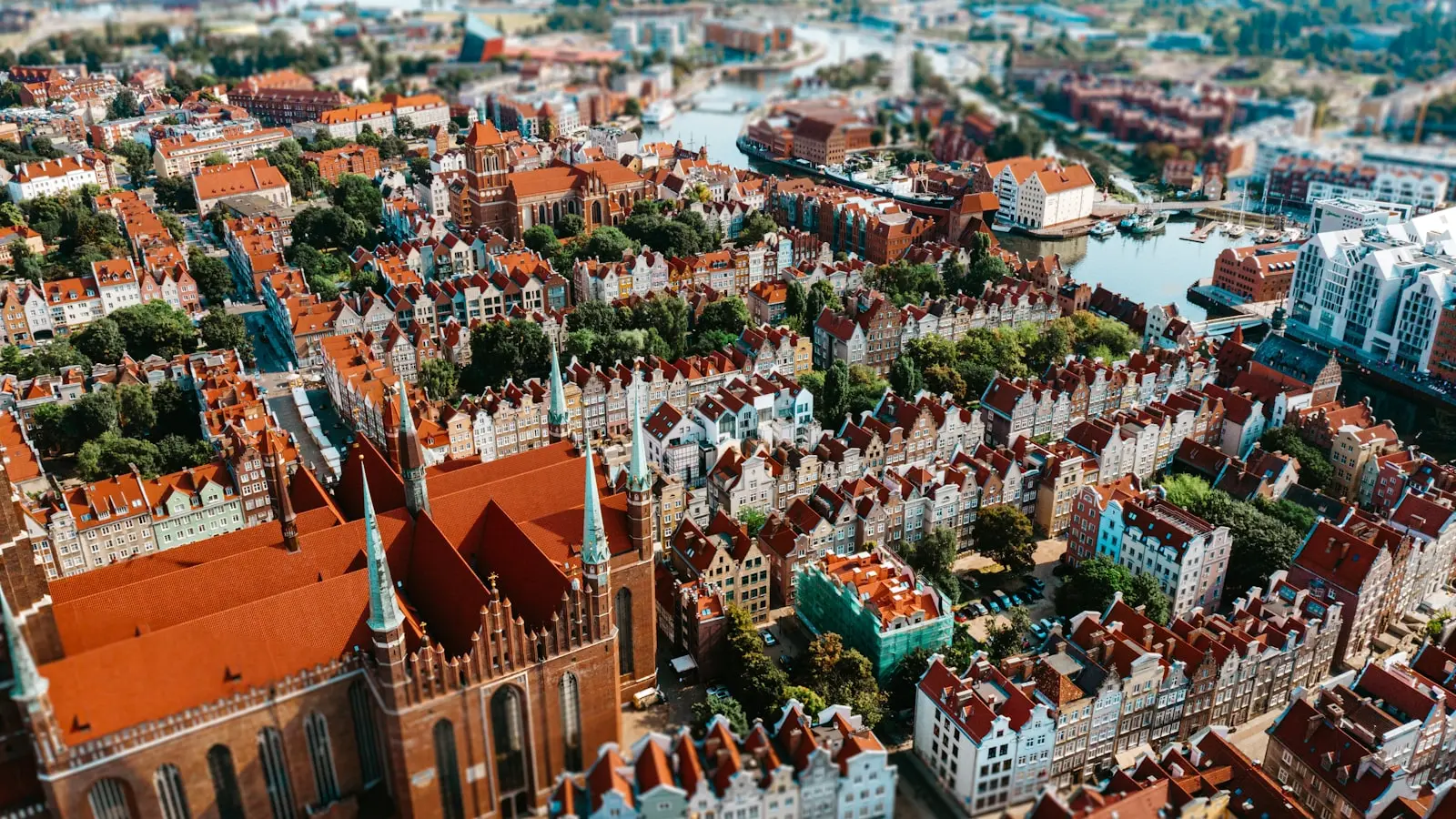
Why This Route: Krakow → Zakopane → Warsaw → Gdansk
Key Takeaways
- Start in Krakow, head south to Zakopane for mountains, then north to Warsaw and finish in Gdansk on the Baltic coast.
- Allocate 3–4 nights per destination and keep travel days light to avoid burnout.
- Trains are the fastest between major cities; buses are better for the Zakopane leg.
- Budget around 250–350 PLN per person per day for mid-range travel.
- Book Auschwitz, Wieliczka, and Malbork tickets in advance, especially in summer.
If you ask how to spend two weeks in Poland, the most logical answer is a south-to-north route that balances historic cities, mountain nature, and Baltic coast. Start in Krakow for medieval charm, head south to Zakopane for Tatra hiking, then go north to Warsaw for modern history, and finish in Gdansk for seaside relaxation. This flow minimizes backtracking and gives you a distinct experience at each stop.
The trade-off is that you will cover a lot of ground, but Poland’s compact size and efficient public transport make it manageable. The key is not to overstuff each day. Plan for 3–4 nights per destination and include travel days that are not packed with sightseeing.
Day-by-Day Breakdown: 14 Days in Poland
Days 1–4: Krakow (south)
Arrive in Krakow and settle into the Kazimierz or Old Town neighborhood. Spend Day 1 exploring the Main Market Square, St. Mary’s Basilica, and Cloth Hall. On Day 2, visit Wawel Castle and its cathedral. Reserve Day 3 for the Jewish Quarter (Kazimierz) and Schindler’s Factory Museum. On Day 4, choose between a day trip to Auschwitz-Birkenau (about 1.5 hours by bus) or the Wieliczka Salt Mine (30 minutes by train or bus). Both are half-day excursions; doing both in one day is rushed.
Days 5–7: Zakopane (Tatra Mountains)
From Krakow, take a bus to Zakopane (about 2 hours). Spend Day 5 walking the Krupówki promenade and riding the Gubałówka funicular for panoramic views. Day 6 is for hiking in Tatra National Park. The most popular trail leads to Morskie Oko Lake (2–3 hours one way, moderate difficulty). If you want a shorter walk, try the trail to Dolina Kościeliska. Day 7 can be a relaxed day: sample local smoked cheese (oscypek) and sour soup (kwaśnica), or explore nearby villages.
Days 8–10: Warsaw (central)
Travel from Zakopane to Warsaw by bus or train (4–5 hours). Day 8: walk the Royal Way from the Royal Castle to Łazienki Park, stopping at the Old Town and the Warsaw Uprising Monument. Day 9: visit the POLIN Museum of the History of Polish Jews (allow half a day) and the Warsaw Uprising Museum. Day 10: explore the Praga district on the east bank for a different vibe, or visit the Copernicus Science Centre if traveling with kids.
Days 11–14: Gdansk (north coast)
Take a fast train from Warsaw to Gdansk (about 3 hours). Day 11: wander Long Market, see the Neptune Fountain, and climb the Town Hall tower for a view. Day 12: visit the Museum of the Second World War and the Amber Museum. Day 13: take a day trip to Malbork Castle (30 minutes by train) – allow 3–4 hours to tour the massive Teutonic fortress. On Day 14, enjoy the seaside in Sopot (20 minutes by local train) – walk the pier and the beach before departing.
Transportation Between Cities: Train vs. Bus vs. Car
Train is the best option for the long legs between cities. PKP Intercity trains connect Warsaw–Krakow in about 2.5 hours and Warsaw–Gdansk in about 3 hours. Buy tickets online in advance for the best prices (from around 50 PLN). On the day of travel, expect to pay more. Trains are comfortable and have power outlets.
Bus works well for Krakow–Zakopane (2 hours, frequent departures, about 20–30 PLN) and Zakopane–Warsaw (4–5 hours, about 50–70 PLN). FlixBus and Polskibus are common. Buses are often cheaper than trains for these routes but can be slower.
Car is not necessary for this itinerary. Parking in city centers is expensive and traffic can be heavy. Renting a car makes sense only if you plan to visit remote villages or want flexibility in the mountains. For the standard route, public transport is efficient and cheaper.
Overnight trains exist (e.g., Krakow–Gdansk) and can save a night’s accommodation. Check schedules in advance, as not all routes have daily overnight services.
Food Specialties Not to Miss in Each Region
Krakow: Try pierogi (dumplings) at a milk bar (bar mleczny) for a budget meal. Zapiekanka, a long open-faced baguette with melted cheese and toppings, is a classic street food from Plac Nowy. Obwarzanek, a ring-shaped bread, is sold at street stalls.
Zakopane: The region is famous for oscypek – smoked sheep’s milk cheese often served with cranberry sauce. Kwaśnica, a hearty sauerkraut and pork soup, will warm you after a hike. Grilled sausage from mountain huts is a quick lunch option.
Warsaw: Pączki (Polish doughnuts) are a must – look for them at a traditional bakery. Pyzy (potato dumplings) can be stuffed with meat or cheese. Rose-flavored ice cream is a local specialty you will find in summer.
Gdansk: Fresh Baltic fish – try fried cod or herring. Amber-infused chocolates make good gifts. Goldwasser, a herbal liqueur with tiny gold flakes, is a historic drink from the city.
Packing Tips for City Walking and Mountain Hiking
This trip mixes cobblestone streets with mountain trails, so footwear matters. Bring comfortable walking shoes for cities and sturdy hiking boots for Zakopane. The Tatra trails can be muddy or rocky; trail runners with good grip can work for Morskie Oko if conditions are dry.
Dress in layers. Mountain weather can change quickly – a rain jacket and a fleece are useful even in summer. Sunscreen and a reusable water bottle are essential for hikes. A daypack allows you to carry snacks and a rain cover. In cities, a crossbody bag or money belt helps deter pickpockets in crowded areas.
Budget Estimates for Two Weeks
Poland is generally affordable compared to Western Europe. Use these ranges as a guideline; actual costs depend on your travel style.
- Transportation: Between cities, expect to spend 200–300 PLN per person (€45–70) for trains and buses. Local transport within cities is cheap (single tickets 3–5 PLN).
- Accommodation: Budget hostels cost €20–40 per night. Mid-range hotels or private apartments range €50–100. Stay in Kazimierz or Old Town in Krakow, near Krupówki in Zakopane, Śródmieście in Warsaw, and Główne Miasto in Gdansk.
- Meals: Street food 15–25 PLN per item. A sit-down dinner with drink is 40–80 PLN. Beer 8–12 PLN. To save money, eat at milk bars and buy snacks from supermarkets.
- Attractions: Major museums charge 15–25 PLN. Free walking tours (tip-based, around 20–30 PLN) operate in Krakow and Gdansk – they give a good overview without set fees.
Frequently Asked Questions
Is two weeks enough to see both cities and the mountains? Yes, if you move at a moderate pace and use efficient transport. The route described gives three to four days per destination, which allows for a mix of sightseeing and relaxing. You will not see every corner, but you will cover the main highlights.
What is the best order to visit cities? Starting in Krakow and ending in Gdansk is the most practical. If your flight arrives in Warsaw, reverse the route: Warsaw → Gdansk → Zakopane → Krakow. The key is to avoid backtracking by moving in one direction.
Should I rent a car or rely on public transport? For this itinerary, public transport is sufficient and often faster between cities. Rent a car only if you plan to explore the countryside or want to hike at less accessible trailheads in the Tatras.
How much time should I spend in each city? Krakow deserves at least 3 days (plus a day trip). Zakopane works well with 2–3 days depending on how many hikes you want. Warsaw needs 2 full days, and Gdansk 3 days including a Malbork day trip. Adjust based on your interests.
What is the best time to go? Late spring (May–June) and early autumn (September) offer mild weather and fewer crowds. July and August are peak tourist months, especially in Zakopane and Gdansk. Winter brings snow to the Tatras, ideal for skiing but some trails close.
How much should I budget per day? A mid-range budget is around 250–350 PLN (€55–80) per person per day, covering accommodation, meals, transport, and a few admissions. Budget travelers can do closer to 150–200 PLN by staying in hostels and eating at milk bars.
Do I need to book attractions in advance? For Auschwitz and the Wieliczka Salt Mine, yes – book tickets online at least a few days ahead, especially in summer. For Malbork Castle, same-day tickets are usually available, but booking ahead avoids queues.
What should I pack for the Tatra Mountains? Sturdy hiking shoes, a waterproof jacket, warm layer, hat, sunscreen, and at least 1 liter of water per person. Even in summer, the high altitude can be cold and windy.
This two-week Poland itinerary gives you a solid foundation to plan your trip. Adjust the pace to your energy and interests, and leave some free time for spontaneous discoveries.