The airport departure lounge hums with a familiar ritual. Passengers snap photos of their boarding passes, craft captions about wanderlust, and upload stories before the plane doors close. The act of traveling has become inextricably linked to the act of sharing. Yet a growing chorus of travelers argues that this constant documentation erodes the very experience it seeks to capture. The solution, they claim, is not moderation but excision.
The Cognitive Cost of Constant Connection
The smartphone is a slot machine for attention. Each notification, each like, each comment delivers a small dopamine hit that fragments focus. When applied to travel, this fragmentation prevents the mind from settling into a new environment. Neuroscientists describe a phenomenon called “attention residue” — the mental trace left by an interrupted task. A traveler who pauses to post a photo never fully leaves the digital world, and thus never fully enters the physical one.
Frequent travelers report that the urge to document actually diminishes memory formation. A 2018 study published in Psychological Science found that taking photos of an experience reduced participants’ ability to recall details about that experience, compared to those who simply observed. (The camera becomes a crutch, outsourcing memory to storage.) The solution is not to take fewer photos, but to sever the immediate connection to a sharing platform.
Delete the Apps, Not the Phone
Reddit threads on digital detox during travel converge on one non-negotiable tactic: delete social media applications before departure. This is not a temporary mute or a notification toggle. It is an uninstall. Travelers who do this report that the first 24 hours produce phantom limb sensations — the thumb reaching for an icon that no longer exists. By day three, the urge vanishes.
The phone remains useful for essential functions: maps, translation, booking confirmations, emergency contact. Keep those. Remove Instagram, TikTok, Facebook, Twitter, and any other feed-based service. (The browser version is too clunky to be a habit, so it acts as a natural barrier.) The phone becomes a tool, not a slot machine.
Offline Maps as a Liberation Device
Navigation apps are the most common reason travelers reach for their phones while exploring. But that dependence can be weaponized for disconnection. Download offline maps of the entire region before departure using Google Maps or Maps.me. Then turn off cellular data entirely. The phone becomes a GPS without the constant pull of notifications.
One traveler described this shift as “navigating by dead reckoning” — using the map only when lost, and otherwise trusting intuition and street signs. The result is a deeper engagement with the environment. Street names stick. Landmarks imprint. (The brain builds a cognitive map of the city rather than outsourcing it to a blue dot.)
The Auto-Reply That Sets You Free
Work anxiety is a major barrier to disconnection. The fear of missing an urgent email or a client crisis keeps many travelers tethered. The fix is an honest auto-reply. Set up an email autoresponder stating that you are on a digital detox trip, with no internet access, and that messages will be ignored until after a specific date. For true emergencies, provide a phone number for voice calls only. (No one will call unless it is life-or-death. This is a feature, not a bug.)
Similarly, set a WhatsApp status and Instagram bio that indicates you are offline. The moment the expectation of immediate reply is removed, the pressure to check dissipates.
Carry a Camera With No Sharing Capability
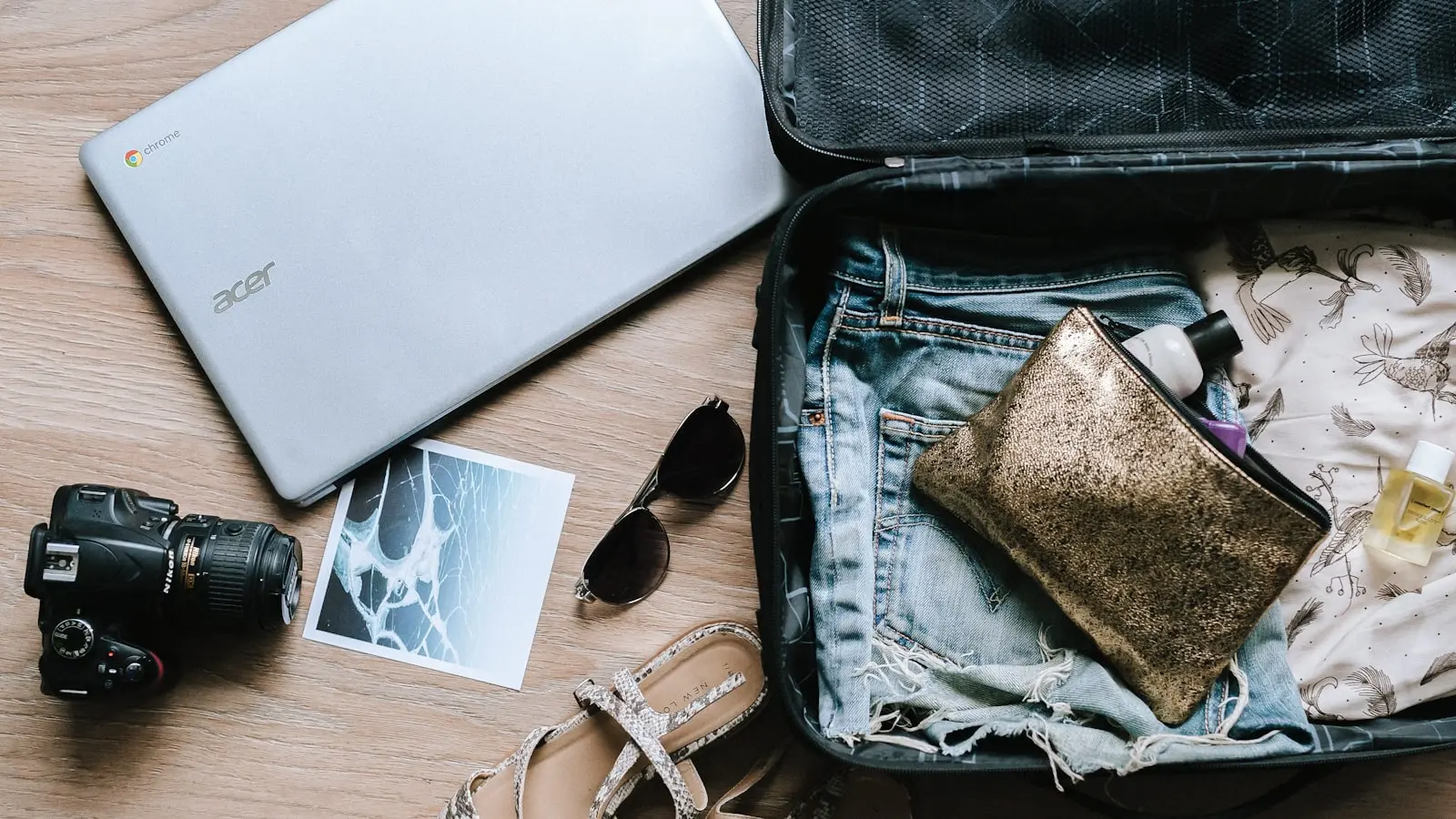
The urge to photograph is not inherently bad. The problem is the pipeline from lens to feed. A dedicated camera — a point-and-shoot or a film body — breaks that pipeline. The photos exist on the device, not in the cloud. They cannot be uploaded mid-walk. They cannot be liked or commented on. They exist only for the photographer to review later.
Travelers who adopt this method report that they take fewer photos but better ones. They think more about composition because they cannot take a dozen shots and pick the best later. (Film cameras impose a hard cost per frame, which sharpens intention.) The memory of the scene is stored in the brain, not just on a memory card.
Journaling and Drawing as Analog Alternatives
The compulsion to post often stems from a desire to process an intense experience. Writing and drawing are analog methods that serve the same psychological need without the digital overhead. A pocket notebook and a pen fit in any bag. No battery. No signal. No distractions.
Reddit users describe morning journaling sessions in cafes, sketching street scenes, or writing lists of sensory impressions (smells, sounds, textures). These practices force slower observation. The act of translating a scene into words or lines requires a level of attention that a quick photo does not. Travelers who journal report that their memories of the trip feel more vivid and more accessible months later. (The notebook becomes a time machine, not a feed.)
The Social Contract of the Digital Detox
For group travel or couples, disconnection requires negotiation. One traveler who wants to post every meal can ruin the atmosphere for another who wants to sit silently with the view. The solution, practiced by many experienced travelers, is to set shared rules before the trip. Decide on specific times of day for checking messages (e.g., five minutes at breakfast and dinner). Or declare a single “photo stop” per outing, after which no phones emerge.
This agreement eliminates the friction of one person pulling out a phone every few minutes. It also builds a shared experience. (The group that stares at a sunset together without documenting it forms a bond that the group that each captures it from a slightly different angle cannot.)
The Unexpected Joy of Boredom
One of the least discussed benefits of disconnection is boredom. On a long train ride or a slow afternoon, without a feed to scroll, the mind wanders. It observes. It processes. It connects random thoughts. Travelers report that these empty moments often produce the most lasting memories: the conversation with a stranger in a park, the sudden recognition of a pattern in the architecture, the simple pleasure of watching people move through a square.
Boredom is the soil in which creativity grows. A phone that fills every second of downtime prevents that growth. The disciplined traveler learns to sit with the silence, and discovers that the silence is rich.
Data Point: The Digital Detox Industry
The travel industry has noticed this shift. Resorts and tour operators now advertise “digital detox” packages that include phone safes, no-WiFi zones, and guided unplugging workshops. A 2024 survey by the travel analytics firm Tourism Economics found that 38% of leisure travelers cited “reducing screen time” as a primary motivation for their next trip. (The market is responding to a felt need, not a fad.)
Yet the most effective strategies remain the simplest ones, invented by travelers themselves and shared on forums like Reddit. They require no purchase, no app, no subscription. They require only a decision.
The Mechanics of Re-Entry
Returning home after a digital detox trip presents its own challenge. The apps are still uninstalled. The habit of checking is broken. Many travelers report that they choose not to reinstall all of them. They limit themselves to one platform, or create a strict schedule (e.g., only on Sundays). The experience of travel without social media often reshapes the relationship permanently. (The trip was meant to change you, and it does.)
The temptation to document every moment during travel is a symptom of a deeper anxiety: the fear that an experience is not real unless it is witnessed by others. But the opposite is true. The experience is most real when it is entirely yours. The photograph you take but never upload is a private artifact, not a public performance. The journal entry you write for no one is a conversation with yourself.
Travelers who disconnect do not return with fewer memories. They return with different memories — richer, stranger, more textured. The digital detox is not a denial of technology. It is an assertion of presence. And presence, in the end, is what travel is supposed to deliver.