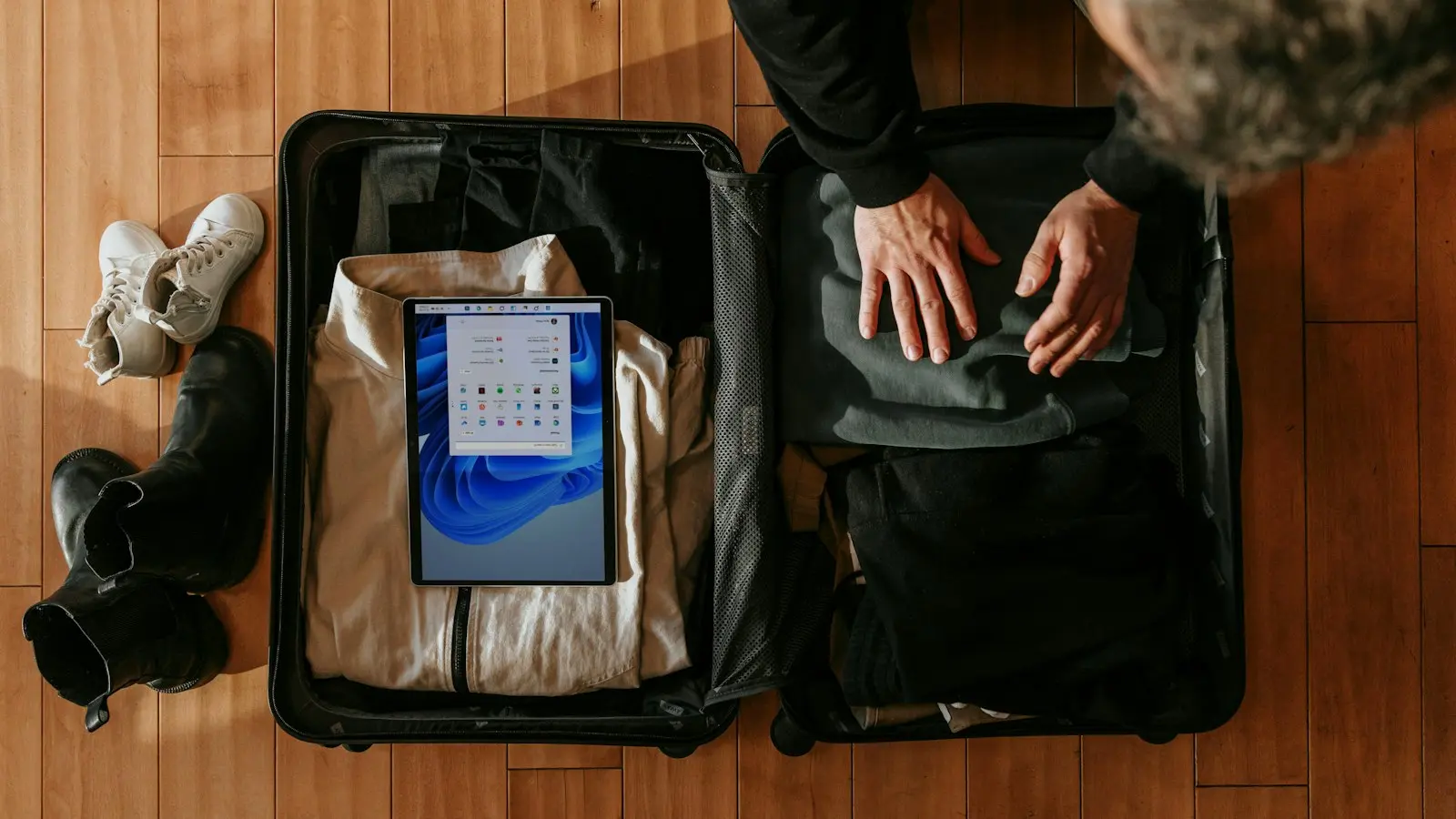
The most reliable way to avoid overpacking is to plan for the trip you are actually taking, not every problem that might occur. Start with your itinerary, climate, activities, laundry access, and baggage rules. Then build interchangeable outfits, give each pair of shoes a clear purpose, and remove anything that does not solve a realistic need.
Packing light is not a competition to own the smallest bag. The right amount depends on your body, comfort, health, accessibility needs, cultural expectations, destination, and tolerance for laundry or rewearing clothes. The goal is a manageable, useful bag that can handle ordinary changes in weather and plans.
Key Takeaways
- Let your itinerary, climate, activities, laundry access, and transport determine what you pack.
- Sort belongings into essential, useful, and contingency categories before filling your bag.
- Build interchangeable outfits with layers instead of packing one complete outfit for every day.
- Give every pair of shoes a specific job and keep essential documents, medication, and valuables accessible.
- Check current airline and destination rules, then remove duplicates and low-probability items during a final edit.
1. Start with the Trip You Are Actually Taking
Before making a minimalist packing list, write down the shape of the journey. Note the number of travel days, overnight stops, expected temperatures, planned activities, formal or cultural requirements, laundry options, and how often you will carry the bag between destinations.
A four-day city break with hotel laundry nearby has different needs from four days of hiking, a work conference, or a family trip involving formal meals. Trip length matters, but it does not automatically determine the number of clothing items. With washing access and repeatable combinations, a longer trip may require only a modest increase in supplies.
Divide the itinerary into real clothing situations. You might need walking clothes, transit clothes, sleepwear, a swimming item, rain protection, workwear, or one outfit for a formal event. If an activity is only hypothetical, do not pack specialized equipment until you know it is needed or cannot be rented, borrowed, or purchased locally.
Check the forecast close to departure, but do not treat it as a guarantee. Pack for the expected conditions plus a reasonable change, such as a light layer for a cool evening or compact rain protection where showers are plausible. Packing several complete wardrobes for every possible temperature adds weight without providing much practical security.
Transportation should influence your choices. A bulky suitcase may be manageable when you are using one car and staying in one place, but less so when you will use trains, stairs, ferries, or public transit. If you will lift the bag repeatedly, comfort and manageable weight are part of the packing plan, not an afterthought.
Your needs may also differ from a standard travel checklist. A garment that works for one person may not fit another body comfortably, and some travelers need specific shoes, mobility equipment, sensory items, modest clothing, medical supplies, or accessible toiletries. Fewer unnecessary items is the goal; forcing every traveler into the same inventory is not.
2. Sort Items into Three Packing Categories
Once the itinerary is clear, create three lists: essential, useful, and contingency. Keep a separate high-priority group for documents, essential medication, valuables, and time-sensitive belongings.
Essential items are those you must have or would find difficult, expensive, or time-consuming to replace. This usually includes travel documents, payment methods, necessary medication, required clothing, glasses, accessibility equipment, and equipment needed for a booked activity. These items deserve space even when they are not compact.
Useful items improve comfort or convenience but have alternatives. Examples might include a preferred toiletry, an extra casual layer, a familiar snack, or a small organizational pouch. Ask whether the item can be borrowed, rented, shared, replaced locally, or simply skipped without affecting the trip.
Contingency items are for low-probability situations. Some are worth carrying: realistic weather protection, a small first-aid supply appropriate to your needs, or a backup charging solution when you will be away from reliable power. Others are imagined emergencies that add weight while solving no likely problem.
For each item, ask: “What planned situation does this solve?” Then ask whether a lighter, shared, rentable, or locally available alternative exists. This test is especially useful for duplicate electronics, extra shoes, full-size toiletries, specialized cooking equipment, and clothing intended for an event that is not on the itinerary.
Do not confuse contingency planning with careless minimalism. Essential medication, documents, prescribed equipment, accessibility items, and required protective gear should not be removed merely to reach a smaller bag. For prescription or controlled medication, battery-powered equipment, and destination-specific restrictions, check current official requirements before departure.
3. Build a Repeatable Travel Capsule Wardrobe
A travel capsule wardrobe works because its pieces combine, not because every item is unusually versatile. Choose a small color-coordinated base so most tops work with most bottoms and layers. Neutral colors can make this easy, but the best palette is one you will actually enjoy wearing.
Begin with the activities on your itinerary. Select comfortable travel clothing, a practical number of everyday outfits, sleepwear, underwear, and any genuinely required specialized or formal piece. Then add layers that can be used across several situations rather than packing separate outfits for warm, cool, and in-between conditions.
For example, a simple base might include two bottoms, three tops, one warm layer, one weather layer, sleepwear, and undergarments. That is not a universal formula and may be unsuitable for a wet climate, a formal trip, limited laundry, or particular personal needs. The point is to construct combinations deliberately rather than pack one complete outfit per day.
Try the combinations before packing. Lay each bottom beside the tops and layers, and identify which pieces create genuinely different, comfortable outfits. If a garment works with only one item, is uncomfortable after an hour, or duplicates another piece without adding a useful function, it is a strong candidate for removal.
Layers are usually more adaptable than multiple complete weather-specific wardrobes. A breathable base, warm mid-layer, and weather-resistant outer layer can cover changing conditions more efficiently than several heavy sweaters and separate outfits for every temperature. Still, fabric care, drying time, modesty, cultural expectations, and personal comfort matter more than a theoretical packing ratio.
Rewearing also needs to be realistic. A traveler who dislikes wearing a shirt twice should not build a plan that depends on doing so. Instead, use laundry access, comfortable pieces, or a larger clothing allowance. Packing light should reduce friction, not turn every morning into a negotiation with clothes you do not want to wear.
4. Plan Laundry, Footwear, and Personal Items Carefully
Laundry access is one of the biggest variables in how much clothing you need. Check whether your accommodation has machines, whether a laundromat is nearby, whether hand-washing is practical, and how long clothes are likely to take to dry. A sink wash may be inexpensive but inconvenient, and humid conditions can make drying slow.
Plan the first laundry point before you leave. If you will wash on the third day, pack enough to reach that point comfortably, allowing for delays or clothing that cannot be washed quickly. If laundry is expensive or unavailable, carry more clothing rather than relying on an unrealistic schedule.
Footwear deserves particular scrutiny. Shoes are heavy, occupy awkward space, and are difficult to compress. Each pair should have a clear role, such as daily walking, formal use, weather protection, or a required sport. If two pairs serve the same role and one is not meaningfully more comfortable or suitable, take one.
For many ordinary trips, one comfortable everyday pair plus one specialized or formal pair is a useful starting point, but it is not a rule. A hiking trip, wet destination, medical need, or formal work schedule may justify more. Wear the bulkiest practical shoes and outer layer during transit when doing so is comfortable, appropriate, and consistent with your plans.
Use the personal item strategically. Keep travel documents, essential medication, glasses, valuables, electronics, chargers, and items needed during a delay accessible rather than burying them in checked luggage. A change of essential clothing may also be sensible when checked baggage is involved, provided it does not displace more important items.
A personal item should not become a second overloaded suitcase. Organize it around access and risk: what must be available during transit, what is difficult to replace, and what you would need if your main bag were delayed. Keep batteries, medication, and other regulated or restricted items according to current airline, airport, and destination guidance.
5. Apply Carry-On and Baggage Rules Before the Final Edit
Carry-on packing tips are only useful when matched to the actual journey. Check the airline, ticket type, route, destination, and aircraft information before assuming a cabin bag or personal item is included. Allowances, dimensions, fees, and enforcement can vary, so generic limits should not be treated as universal.
Also verify current rules for liquids, power banks and other batteries, medication, sporting equipment, and restricted goods when relevant. Airport security requirements and destination rules may differ from airline policies. If your trip involves prescription medication, controlled substances, medical equipment, or unusual gear, consult the relevant official authorities rather than relying on a general packing list.
Separate items by where they need to travel. Documents, essential medication, valuables, and time-sensitive belongings generally need to remain accessible. Items that are replaceable and not needed during transit may be suitable for checked luggage, subject to current rules and your tolerance for delay or loss.
Before closing the bag, leave some space for souvenirs. A suitcase filled to capacity is difficult to repack and may become overweight after even a few small purchases. A foldable extra bag can help with organization, but it does not remove airline limits or guarantee that an additional piece will be accepted.
Run a final edit in stages. First, remove duplicates. Next, remove items that solve only imaginary problems. Then test whether the remaining clothes form several comfortable combinations. Finally, weigh or lift the packed bag and walk with it for a few minutes if possible. A bag that technically closes but is uncomfortable to carry is not a successful packing plan.
6. FAQ Practical Questions About Avoiding Overpacking
How many outfits should I pack to avoid overpacking?
There is no universal number. Base the count on your activities, climate, laundry access, personal comfort, and whether garments can be combined or reworn. Pack for the time until your first realistic laundry opportunity, plus a modest buffer for delays, spills, or weather.
What should I leave off a minimalist packing list?
Start with duplicate clothing, unplanned specialty gear, excessive toiletries, multiple pairs of shoes with the same purpose, and low-probability contingency items. Do not remove essential medication, documents, accessibility equipment, required activity gear, or clothing needed for cultural or formal expectations simply to reduce weight.
How can I pack light when the weather may change?
Check the forecast near departure and use adaptable layers rather than several complete wardrobes. Choose clothing that works across a reasonable temperature range, add realistic rain or cold protection, and select footwear that can handle the conditions you are genuinely likely to encounter. If the forecast is highly uncertain, prioritize one useful outer layer over multiple bulky alternatives.