The Calculus of Arrival
The damp pavement of a London morning carries a specific economic weight in the post-pandemic era. When travelers land at Heathrow, the immediate friction of European inflation presses against the desire for cultural immersion. Analysts report a sharp upward trajectory in daily capital requirements for visitors, forcing a rigid reevaluation of the standard vacation. Tourists now scour digital forums, demanding exact daily budget breakdowns before committing capital to a five-day itinerary. The underlying tension is obvious. London possesses an unmatched historical energy, a density of ancient stone and modern glass, but it demands a premium. Yet, navigating this metropolitan expanse over five days does not require liquidating assets. It requires spatial and behavioral optimization. The city bends to those who understand its structural rhythms.
Spatial Geography and the Zone Defense
Accommodation strategies dictate the foundational cost of any London stay. The gravitational pull of Zone 1—the geographic and historical center—carries monopoly pricing. Hotels surrounding Piccadilly or Westminster exploit the premium of proximity. The disciplined traveler avoids this trap entirely, shifting focus outward to the residential rings of Zone 2 or Zone 3. (The center is for commerce; the perimeter is for living.) Booking rooms in neighborhoods like Islington, Camden, or Brixton drops the nightly overhead by steep margins. More importantly, this geographic displacement forces a distinct behavioral shift. Waking up in a Zone 2 terrace places the visitor amidst the actual pulse of the city. The mornings smell of roasted espresso from independent cafes rather than hotel buffet warmers. The architecture softens from imposing state buildings to weathered Victorian brickwork. This spatial strategy stabilizes the budget while dramatically improving the cultural texture of the stay.
Frictionless Movement
Connecting these outer rings to the historical core requires mastering the subterranean artery of the city. The London Underground—the Tube—operates as both an engineering marvel and a strict financial boundary. Mobility generates cost. However, the transport authority enforces a daily price cap on contactless payments, creating a predictable ceiling for transit expenditures. Once a traveler hits the cap, the city unlocks. The physical experience of the Tube provides its own sensory narrative. The rush of displaced air preceding a train, the distinct mechanical screech of metal on curves, the silent choreographies of commuters avoiding eye contact. Understanding the daily cap allows visitors to traverse across distinct postal codes without the anxiety of a draining ledger. They ride from the brutalist concrete of the Barbican to the polished facades of Kensington, paying only the fixed daily limit.
The Subsidized Intellect
The true economic arbitrage of a London itinerary lies within its state-sponsored cultural institutions. In a city where breathing feels expensive, the preservation of free public entry to world-class museums operates as an anomaly. The British Museum, the Tate Modern, the Victoria and Albert Museum—these are not mere rainy-day alternatives. They form the architectural and intellectual core of the visit. Stepping into the Great Court of the British Museum, sunlight fracturing through the geometric glass roof onto pale stone, costs nothing. The visitor accesses millennia of human history without opening a wallet. Similarly, the cavernous Turbine Hall of the Tate Modern imposes a massive industrial scale upon the viewer. (Contemporary art demands space, and London provides it freely.) These massive public squares of intellect absorb entire afternoons. They allow the five-day budget to remain flat while the cultural intake peaks. Visitors who prioritize these free institutions over aggressively marketed, ticketed tourist traps bypass the most significant drain on their capital.
The Sustenance Equation
Sustenance, however, remains the great variable. Dining out in London accelerates capital depletion faster than any other activity. The traditional pub experience, while culturally vital, carries a heavy premium. A casual evening consisting of a meat pie and a succession of pints rapidly diminishes daily reserves. (Pints dictate their own aggressive economy.) The countermeasure, heavily endorsed by local office workers and seasoned travelers, is the tactical grocery lunch. Supermarkets like Tesco, Sainsbury’s, and Waitrose offer the ubiquitous meal deal—a packaged triad of sandwich, snack, and beverage at a aggressively discounted flat rate. This is not merely a budget hack; it is a cultural ritual. Taking a cardboard-encased prawn mayonnaise sandwich and a packet of crisps to a bench in St. James’s Park shifts the dining environment from a crowded interior to a sprawling, manicured royal landscape. The visitor trades table service for a view of pelicans and ancient willows, preserving capital for a more substantial evening meal.
Micro-Transactions and The Architecture of Entertainment
To survive the modern economic climate of the United Kingdom, visitors must understand the micro-transactions that quietly bleed a daily allowance. Coffee serves as a prime indicator. The shift from a standard drip brew to a complex flat white at an artisanal roaster in Shoreditch introduces a hidden premium. The budget traveler learns to calibrate these desires. The morning caffeine ritual shifts from a sit-down cafe experience—where service charges automatically attach to the bill—to a takeaway cup consumed while walking through the brutalist concrete mazes of the Southbank Centre. This physical movement negates the service tax.
Evening entertainment requires similar strategic evasion. The West End theater district broadcasts an undeniable allure, projecting neon reflections across the wet asphalt of Shaftesbury Avenue. Yet, securing a stall seat for a premier production devastates a conservative daily budget. The alternative lies in the architectural fringe. Pub theaters in Islington or standing-room tickets at Shakespeare’s Globe offer visceral, immediate performances for a fraction of the cost. Standing in the wooden O of the Globe, exposed to the open London sky as actors project without amplification, delivers a historical resonance that plush velvet theater seats cannot replicate. (Comfort is often the enemy of memory.) The physical toll of standing for three hours becomes part of the cultural transaction, trading bodily comfort for financial preservation and authentic engagement.
The Pedestrian Museum
The architecture of the city itself frequently steps in to replace paid entertainment. The skyline provides its own free theater. Instead of purchasing an expensive ticket to the viewing platform of the Shard, the disciplined traveler ascends to the Sky Garden—a glass-domed public space that requires advance booking but demands no entrance fee. Here, surrounded by curated tropical ferns suspended hundreds of feet above the Thames, the entire geography of the capital lays exposed. The silver ribbon of the river winds past the Tower of London, stretching toward the distant arches of Wembley. The economic victory of securing this view without a financial transaction heightens the aesthetic experience.
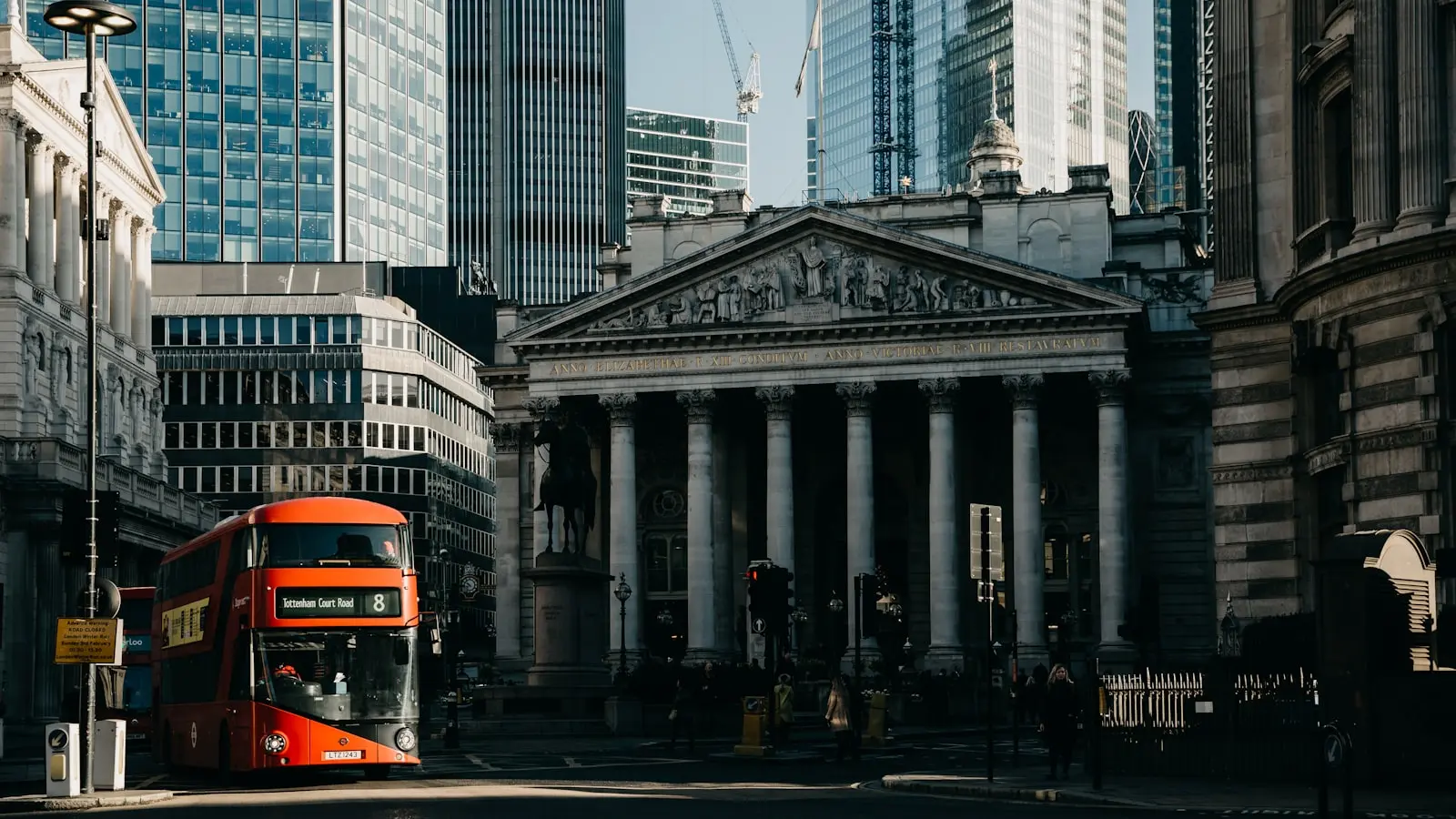
Ultimately, the most effective tool for budget optimization over five days is pedestrian motion. London operates as a massive, open-air architectural gallery. The juxtaposition of eras creates a jarring, brilliant visual landscape. Walking from the financial district of the City of London, where the ancient Roman wall sits fractured against towering skyscrapers of glass and steel, down toward the Thames River, provides immense sensory value. The damp chill of the air along the riverbank, the rusted chains of old moorings, the chaotic energy of the South Bank—these elements require zero capital to consume. The traveler who walks ten miles a day absorbs the genuine friction and rhythm of the capital.
Even the passage between neighborhoods holds architectural weight. The transition from the chaotic, neon-drenched intersections of Soho into the quiet, gas-lit alleys of Covent Garden requires nothing but time. London’s street grid defies logic, a medieval sprawl paved over and rebuilt across centuries. Getting lost within it is a primary function of the visit. The budget traveler, unburdened by a rigid schedule of expensive reservations, possesses the ultimate luxury. They possess the freedom to wander. They notice the fading ghost signs painted on Victorian brick, advertising long-bankrupt purveyors of boot polish. They feel the distinct shift in pavement texture when crossing into the jurisdiction of the City of London.
The Final Ledger
A five-day itinerary under strict financial constraints forces a sharper, more observant form of travel. It strips away the insulated, transactional nature of standard tourism. When visitors rely on public transit, eat supermarket lunches in royal parks, and spend hours wandering through state-funded halls of antiquities, they align their behavior with the actual residents of the city. Post-pandemic inflation may have raised the barrier to entry, but the structural design of London—its transport caps, its free museums, its sprawling pedestrian pathways—ensures that the city remains accessible to those willing to learn its operational mechanics.
Calculating the exact cost of a five-day stay involves balancing fixed costs against behavioral choices. Inflation provides the baseline pressure, but human action dictates the final ledger. By anchoring the trip in Zone 2 accommodations, maximizing the capped efficiency of the Tube network, leaning heavily on the subsidized intellect of free museums, and embracing the pedestrian reality of the streets, the economic equation stabilizes. London ceases to be an unmanageable financial burden. It transforms into a puzzle of urban navigation, rewarding those who approach its streets with discipline and sharp observation. The budget does not ruin the trip. It focuses the lens.