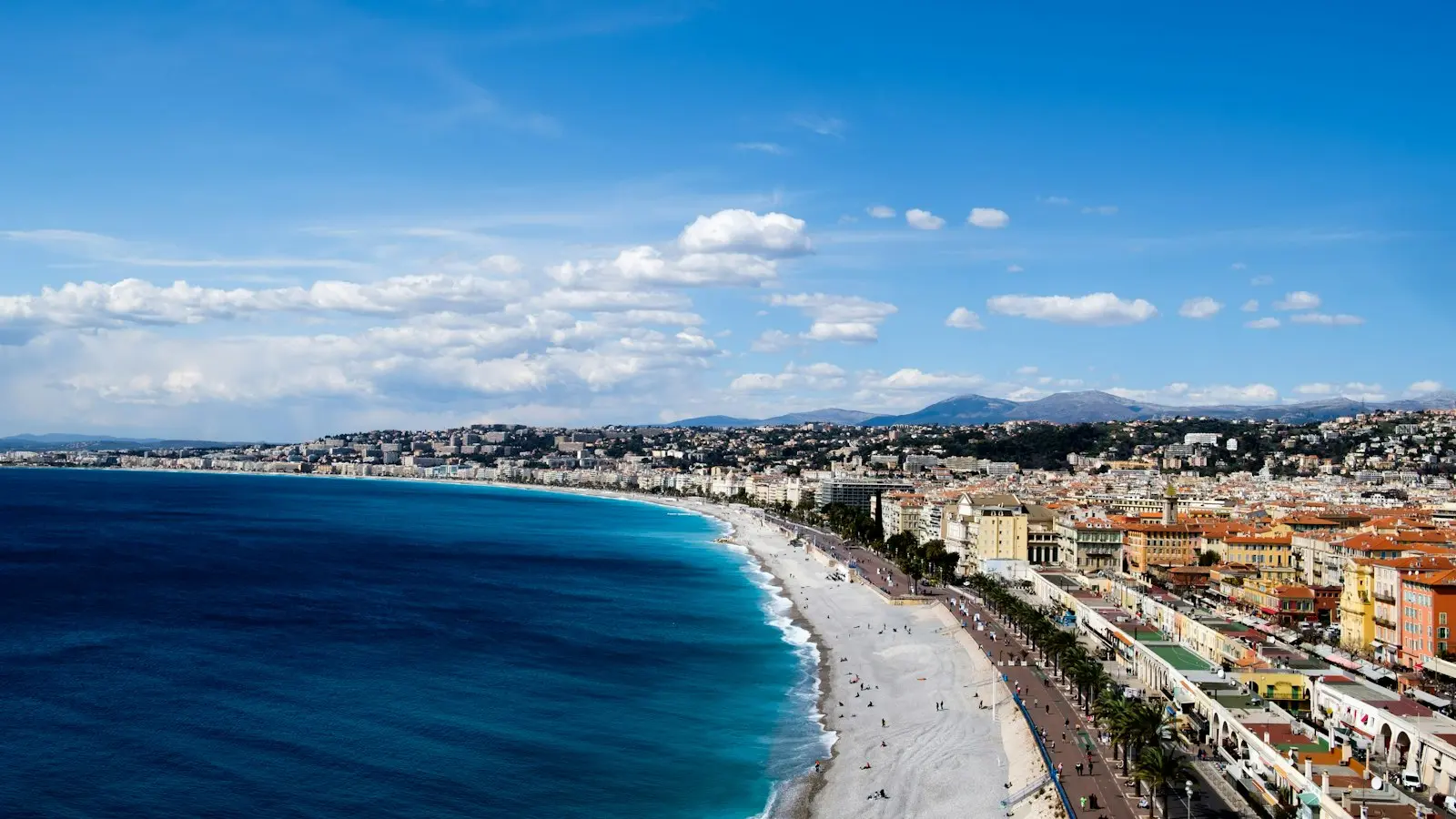
September can be an excellent time for a French Riviera beach holiday if you want swimming, coastal scenery, good food, and easy day trips without the full intensity of August. The trade-off is reliability: the sea often retains summer warmth, while air temperatures, rain, wind, and seasonal service levels become less predictable.
Early September is generally the stronger choice for a beach-first break. Later in the month can still deliver beautiful swimming days and comfortable sightseeing, but it is wiser to treat the beach as a central part of the trip rather than its only purpose. Historical weather patterns help set expectations; they cannot forecast a particular week.
Key Takeaways
- September often combines warm-water swimming with less punishing daytime heat than peak summer.
- Choose early September for the most summer-like beach conditions and the broadest choice of seasonal services.
- Nice, Monaco, and popular coastal towns are rarely empty, but crowds and reservations can be more manageable after August.
- Wind and short, heavy rain spells can disrupt beach or boat plans even on an otherwise warm day.
- September suits flexible travelers better than those who need guaranteed heat and uninterrupted beach weather.
What September Feels Like on the French Riviera
The defining feature of the French Riviera in September is that the air and sea cool at different speeds. Daytime heat often eases after August, making old-town walks, terrace lunches, and rail trips along the coast more comfortable. The Mediterranean, however, usually gives up its summer warmth more gradually, so the water can remain inviting well into the month.
That distinction matters when planning beach time. A sunny day with moderate air temperatures can still be excellent for swimming if the sea is calm. On the other hand, a warm afternoon may feel disappointing if wind roughens the water, clouds gather, or conditions turn choppy.
Nice weather in September is best thought of as late summer with an autumn edge. There can still be plenty of sun, but waterfront evenings may call for an extra layer. A warm afternoon can shift quickly into a breezy dinner by the sea.
The coast is compact, but it is not uniform. Nice has a dense urban waterfront where buildings and pavement can hold heat. Monaco’s built-up harbor areas can feel sheltered, while Menton often has a gentler, more garden-like atmosphere near the Italian border. Smaller villages may feel quieter, though a beach’s exposure and orientation can make a noticeable difference when the wind picks up.
Early September tends to feel more convincingly summer-like. Long beach afternoons are easier to plan, evenings are often warmer, and beach facilities are more likely to be operating normally. By late September, fine days remain entirely possible, but cooler spells and unsettled weather become a larger part of the calculation.
Is September Good for Swimming and Beach Time?
For many visitors, the French Riviera sea temperature is September’s strongest selling point. The water has absorbed heat throughout the summer, so swimmers comfortable in July or August will often find early September appealing as well. Later in the month can still work well for confident swimmers, particularly when sunshine and calm water align.
Swimming comfort is personal. Adults who enjoy open-water swimming and can adjust their beach hours to the conditions may find September close to ideal. Families with young children, or travelers who want reliably hot sand and long, effortless days in shallow water, may prefer peak summer or a destination with more dependable late-season heat.
Nice’s public beaches show another practical side of the Riviera experience. Much of the shoreline is pebbly rather than sandy, which contributes to the clear water but can make entering and leaving the sea uncomfortable. Lightweight water shoes are useful, especially for children and anyone sensitive to uneven footing.
Public beaches also offer fewer built-in comforts than a resort beach. Shade, changing facilities, showers, and attendants vary by location. Private beach clubs can provide loungers, food, shade, and a more settled base for the day, but their September schedules are not standardized.
Some beach clubs continue through much of September, while others reduce hours, limit their setup, or close according to their own timetable. A sunny weekend can also remain busy in desirable areas of Nice, Cannes, Antibes, or near Monaco. Check a venue’s current opening dates and reservation policy before making it the centerpiece of your itinerary.
Treat beach safety as a same-day decision. Check posted notices, flags, lifeguard coverage, wind, and sea conditions before swimming. A warm sea is not automatically calm or safe, and a still morning can become rougher later in the day.
The practical verdict is straightforward: September is very good for flexible beach time. It is less suitable for travelers who need a guaranteed run of all-day sun-and-swim weather.
The French Riviera Shoulder-Season Trade-Off
The French Riviera shoulder season often feels more spacious after August. Restaurant reservations, promenades, museums, and regional trains may be easier to manage, and the slightly softer heat makes it simpler to combine beach time with sightseeing.
Shoulder season does not mean deserted. Nice is a working city as well as a resort destination, while Monaco attracts visitors year-round. Popular old towns, waterfronts, markets, and restaurants can still be busy, especially at weekends or during local events. Smaller towns may feel calmer, but good weather quickly draws visitors to their most scenic corners.
September beach crowds in Nice are often less intense once the main summer holiday period ends. The gain is usually one of comfort rather than solitude: more breathing room on promenades, less pressure around meal times, and a less crowded feel on local trains. A beautiful Saturday on the Côte d’Azur can still be lively.
Hotel pricing deserves a cautious approach. Rates may ease compared with the peak summer period, but there is no universal September bargain. Waterfront rooms, boutique hotels, Monaco stays, major events, and short weekend breaks can remain expensive. Compare a few date combinations, look at the full stay cost rather than the headline nightly rate, and check cancellation terms.
For many travelers, the trade is worthwhile. September works especially well for a holiday with several rhythms: a morning swim, a market lunch, a museum or town visit in the afternoon, then dinner without an exhausting walk through peak heat. In return, you need to accept that rain or wind may occasionally interrupt the beach plan.
Plan for Rain, Wind, and Reduced Seasonal Services
September rain on the Riviera is not always a sequence of gray days. Mediterranean conditions can arrive in short, heavy bursts, followed by clear light and warm weather. Monthly patterns can explain the season, but they cannot tell you whether a particular day will be a washout or simply include a dramatic shower.
Wind can matter as much as rain. It can make a beach feel cooler, roughen the water, affect boat trips, and turn a sunny terrace lunch into a less pleasant experience. Exposed sections of coast often feel these shifts more strongly than protected bays and harbor areas.
Build a backup day into a Côte d’Azur September travel plan. Nice offers museums, food markets, old-town streets, and an easy urban waterfront. Monaco can work well for architecture, gardens, dining, and harbor views. Menton rewards slower wandering, while Cannes, Antibes, and nearby villages offer straightforward changes of scene.
The coastal rail line can make a multi-town itinerary practical without renting a car. It is useful for moving between Nice, Monaco, Menton, Antibes, and Cannes when conditions differ along the shore. Check current timetables, planned works, and disruption notices close to departure, particularly if a train connection is essential to your plans.
Apply the same caution to ferries, excursion boats, attractions, beach clubs, and seasonal restaurants. September is often active, but operating dates vary by operator, municipality, weather, and year. Confirm details directly before booking nonrefundable accommodation around a particular boat trip or beach venue.
Who Should Book September and How to Make It Work
Book the French Riviera in September if swimming is part of a wider coastal holiday. It suits travelers who enjoy clear-water dips, scenic lunches, evening walks, local food, and the freedom to switch towns when the weather changes. For this kind of trip, September can feel more relaxed and more liveable than the hottest weeks of summer.
Choose early September if the beach is your main priority. It usually offers the best chance of a summer-like routine while the sea is still carrying late-season warmth. Choose later September if walking, museums, dining, and potentially calmer crowds matter at least as much as long beach sessions.
Consider peak summer or a hotter destination if every day needs to provide resort-style heat, reliably warm evenings, and extended swimming. September rewards flexibility rather than rigid expectations. If the beach is the main reason for the trip, refundable bookings can be a sensible compromise.
Pack for two versions of the coast: swimwear, high-SPF sun protection, sunglasses, a light cover-up, water shoes for pebble beaches, and a reusable water bottle for sunny days. Add a light rain layer and an extra layer for evening, when the temperature can feel markedly different from the afternoon.
Use this decision framework:
- Book September if warm-water swimming, easier exploration, and potentially lighter crowds matter more than guaranteed heat.
- Favor early September if beach time is the holiday’s main purpose.
- Consider late September if you would happily exchange a beach day for food, museums, old towns, or scenic rail trips.
- Choose peak summer or a hotter destination if every day must support long, hot beach sessions.
- Keep important bookings flexible when weather has real value to your trip.
FAQ
Is the French Riviera sea warm enough to swim in September?
Often, yes. The Mediterranean usually retains warmth after summer, which makes September attractive to many swimmers. Comfort still depends on the specific week, sunshine, wind, sea state, and personal tolerance for cooler water.
Does it rain a lot in Nice in September?
September can bring rain, including brief heavy episodes, but monthly conditions do not predict a specific holiday. Plan for beach weather while keeping one or two city-based alternatives ready.
Are beach clubs and ferries open on the Côte d’Azur in September?
Many may still operate, especially earlier in the month, but dates and hours vary widely. Confirm directly with the specific beach club, ferry, excursion operator, or attraction before building your itinerary around it.