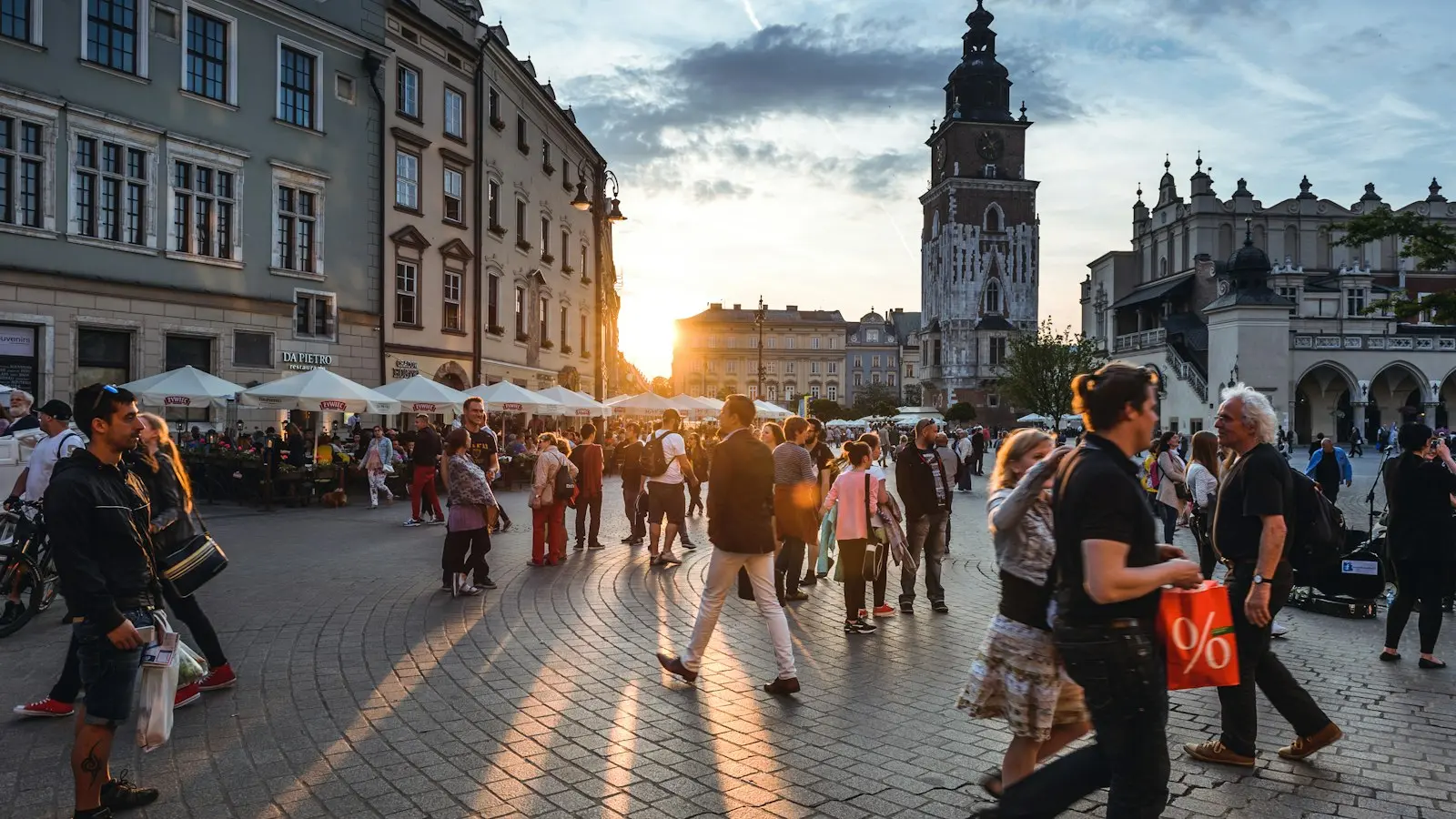
For first time Poland travel, begin by choosing one main city rather than trying to cover the country at once. Kraków suits historic streets and cultural depth, Warsaw offers museums and modern city life, Gdańsk combines architecture with the Baltic coast, Wrocław works well for a lively compact break, and Zakopane or another southern mountain base adds outdoor scenery. Then match your route to the time available, check transport connections, budget in Polish złoty, and verify current entry and attraction rules before departure.
Poland is manageable for an independent trip, but it is not one uniform city break. Distances, weather, local transport, accommodation costs, and the character of each destination vary. The best visiting Poland guide is less about collecting landmarks and more about making a few sound choices early.
Key Takeaways
- Choose one base for a short trip; add a second city only when the contrast is worth the transfer time.
- Compare trains and buses by total journey, stations, luggage, flexibility, and reliability—not just price.
- Build your budget around accommodation, food, transport, admissions, transfers, and a contingency allowance.
- Poland uses the złoty (PLN); cards are useful, but a modest cash and payment backup remains practical.
- Check entry requirements, public holidays, transport schedules, and attraction booking rules close to departure.
Choose the right Polish destination for your trip
Kraków is a strong first base for travelers who want a concentrated historic center, museums, traditional food, evening atmosphere, and access to excursions. Its central areas reward walking, although popular attractions and nearby trips may require advance planning. Staying just outside the busiest streets can provide a calmer evening without sacrificing convenience.
Warsaw is a better fit if you enjoy museums, contemporary restaurants, urban neighborhoods, and the contrast between reconstructed historic areas and modern architecture. It is more spread out than Kraków, making location and public transport more important. A central hotel can save time, while a quieter neighborhood may offer a more residential experience at the cost of extra daily travel.
Gdańsk suits travelers who want a handsome historic core with access to the coast. It works as a city break, but its appeal also depends on whether you want to explore beyond the center and account for seasonal conditions by the sea. Wrocław is a good choice for a sociable, walkable break with attractive squares, bridges, museums, cafés, and restaurants.
For mountains and outdoor activities, consider Zakopane or another base in the southern mountain region. This is a regional trip rather than simply another urban stop. Weather can change quickly, walking routes require suitable footwear, and a scenic area may be less convenient if your itinerary centers on museums and nightlife.
A useful Poland trip planning rule is simple: choose one base for two or three nights. Add a second city when you have enough time to absorb the transfer, check-in, and orientation involved. A three-city route can work on a longer visit, but only if the destinations line up sensibly; a long travel day is not automatically a sightseeing day.
Consider a single-city break if you have limited time, arrive late, travel with children or substantial luggage, or prefer depth over a checklist. A multi-city itinerary makes more sense when the contrast between destinations is part of the appeal, such as pairing historic Kraków with urban Warsaw or a northern city with a mountain region.
Plan trains, buses, airports, and local transport
Poland public transport includes intercity trains, long-distance buses, city buses and trams, and metro systems where available. For travel between major destinations, compare more than the headline fare. Check the total journey, departure and arrival stations, luggage arrangements, seat reservations, flexibility, and what happens if a connection is delayed.
A cheap ticket departing from an inconvenient station may cost more in time and local transport. Conversely, a slightly less convenient service can be worthwhile if it arrives near your accommodation or offers more flexible booking conditions. Operators, timetables, ticket rules, and service patterns can change, so confirm details through the relevant operator before setting out.
Airport planning deserves the same attention. Look up the airport’s actual location rather than relying on the city name alone. Then check your arrival time, available rail or bus connections, walking distance from the stop, and a late-night backup. If you land after regular services have thinned out, decide in advance how you will reach your accommodation and identify the correct pickup point for any reputable taxi or ride service.
Within cities, identify the ticket zone and whether a ticket must be validated or activated before travel. Some systems use time-based tickets, while others offer different products for routes or zones. Keep the ticket available for inspection, and do not assume that a ticket bought in one city is valid in another.
Public holidays, engineering works, major events, and seasonal schedules can reduce service or increase demand. Check the calendar before booking a tightly timed connection. If your itinerary depends on a particular train, airport link, or attraction entry, leave room for an alternative rather than building the entire day around one departure.
Budget realistically with currency and payment backups
Poland uses the Polish złoty, abbreviated PLN or zł. A price displayed in euros or another currency is only a conversion for comparison; it does not change the local payment currency. Exchange rates move, and the amount shown by your bank, card network, ATM, or payment terminal may differ from a quick estimate.
Cards and contactless payments are useful, especially in cities, but visitors should still carry a modest cash backup. Smaller purchases, market stalls, transport problems, or a temporarily unavailable terminal can make cash helpful. When a terminal or ATM offers to convert the charge into your home currency, compare the displayed currency and exchange rate before accepting. Also check what your own bank will charge.
Instead of promising a universal daily cost, build a Poland budget in categories: accommodation, breakfast, one main meal, snacks and drinks, local transport, admissions, intercity travel, luggage or airport transfers, and a contingency allowance. Your total will depend heavily on season, city, neighborhood, room type, restaurant style, and how far ahead you book.
A traveler staying in a dormitory or simple room and using bakeries, casual canteens, and public transport has a different budget from someone choosing a central hotel, formal restaurants, taxis, and several paid museums. Add the cost of reaching your accommodation, taking day trips, booking popular experiences, and replacing a missed or unusable ticket.
Advance reservations are useful for popular museums, timed-entry attractions, major cultural events, intercity trains, and limited-capacity experiences. Do not assume every venue requires a reservation or that every ticket is refundable. Check the attraction or operator for opening days, public-holiday changes, reduced fares, free-entry policies, photography rules, and booking conditions.
Travel insurance and a second payment method are sensible parts of preparation. Keep backup details separate from your wallet, and make sure the coverage you choose matches your trip rather than treating insurance as a universal solution.
Know what to eat and how to order
Polish food is broader than pierogi, although dumplings are certainly worth trying. Look for regional variation, seasonal dishes, bakeries, soups, pickled and fermented foods, cakes, and drinks. The same category can feel different depending on whether you encounter it at a traditional restaurant, casual canteen, market, or contemporary kitchen.
Useful foods to explore include pierogi with different fillings, żurek, a tangy soup often associated with fermented rye, and barszcz, a beet-based soup whose preparation and serving style can vary. Try bakery breakfasts, rye breads, filled pastries, local cakes, and desserts such as sernik. Pickled vegetables, smoked products, and regional specialties can add more variety than ordering the same familiar dish repeatedly.
Vary the setting. A bakery is practical for an early breakfast, a milk bar or casual canteen can provide an inexpensive informal meal, a food hall lets groups choose different dishes, and a traditional restaurant gives you time to explore a fuller menu. Contemporary restaurants may reinterpret familiar ingredients but can have different booking and pricing expectations.
On your first day, try a bakery breakfast, a soup or dumpling lunch, and a dessert or regional drink later in the day. Ask about fillings, allergens, portion size, and whether a dish is seasonal. Menus, service charges, opening hours, and payment methods vary, so check locally rather than assuming every venue operates the same way.
Handle everyday etiquette, language, weather, and safety
A few Polish phrases are useful even when staff speak English. “Dzień dobry” means good day, “proszę” can mean please or you are welcome, “dziękuję” means thank you, “przepraszam” means excuse me or sorry, and “rachunek, proszę” is a way to ask for the bill. Pointing to a phrase written on your phone can be more practical than worrying about perfect pronunciation.
Queueing, keeping your voice down on public transport, and following instructions in museums or religious sites are reliable basics. Ask before photographing people, observe clothing expectations in churches and other religious spaces, and check whether a service charge is already included before deciding on a tip. These habits make interactions smoother without requiring elaborate cultural knowledge.
Pack for changing conditions. Warmer months can be busier, while colder months bring shorter daylight and different outdoor conditions. Shoulder seasons may offer a useful balance but can be variable. Comfortable shoes matter on cobblestones and during long museum days; a light waterproof layer and adaptable clothing are useful even when the forecast looks favorable.
Keep safety advice concrete rather than dramatic. Protect valuables in crowded areas, use official or reputable transport providers, confirm emergency procedures, and follow current government and local guidance. Entry requirements depend on nationality, passport, visa status, permitted stay, and travel date, so verify them through official government or consular sources before departure. Do the same for current destination-specific safety advice.
Common first-trip mistakes to avoid
The most common mistake is trying to visit too many cities. Treating a long transfer as sightseeing time leaves little energy for the places you came to see. Another is booking the wrong airport, station, or accommodation because its name appears close to the destination; check the map and full address before paying.
Do not assume every attraction is open daily or that same-day entry is guaranteed. Public holidays, temporary closures, timed entry, and major events can change a carefully planned day. Check venue information shortly before travel.
Avoid accepting dynamic currency conversion without reviewing the displayed currency and exchange rate. Also budget for admissions, transfers, intercity travel, luggage, and contingency costs rather than counting only hotels and meals. Finally, keep a backup payment card, save essential booking details offline, and do not rely on one unverified timetable or transport app.
FAQ
Is Poland a good destination for a first trip to Europe?
It can be a strong choice for travelers who want historic cities, museums, varied food, and a route that can be adapted to different budgets and interests. It is not uniformly cheap or effortless, however. Your experience will depend on the city, season, accommodation, transport choices, and how carefully you check current rules.
How many days do you need for a first trip to Poland?
Two or three nights are enough for a focused single-city break. With more time, add a second city and account honestly for the transfer and check-in day. A longer trip allows a third destination or regional excursion, but avoid adding distant places merely to make the itinerary look fuller.
Should you use trains or buses when traveling around Poland?
Compare both for each route. Trains may be convenient for certain city pairs, while buses can serve different stations, times, or destinations. Look at duration, departure and arrival locations, luggage, reservations, flexibility, and disruption risk rather than choosing only by price. Confirm the current timetable and ticket conditions with the relevant operator before departure.