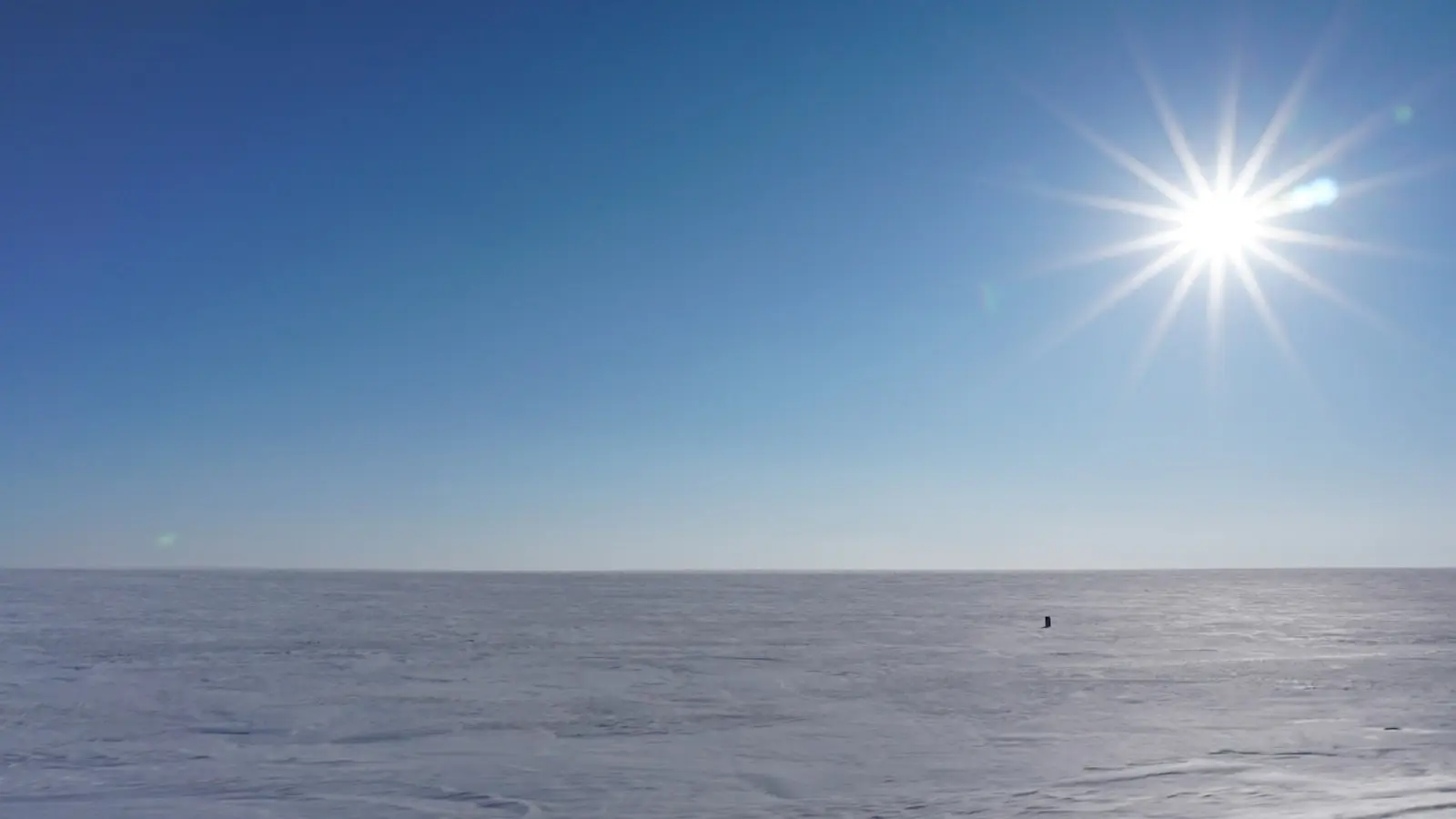
The landscape unspools in a monotone beige and green, broken only by the occasional ger and the distant silhouette of a horse herd. The paved road ended hours ago, replaced by tire tracks that fan out across the steppe like capillaries. The fuel gauge sits just above a quarter tank, and the nearest confirmed gas station is 400 kilometers away. This is the reality of a self-driving trip through rural Mongolia — a 3,400-kilometer journey across 13 days where the absence of infrastructure becomes the defining variable of the journey.
The Great Emptiness
Mongolia is the least densely populated sovereign country in the world, with roughly two people per square kilometer. Outside Ulaanbaatar, the road network is sparse. According to the Asian Development Bank, only 5 percent of Mongolia’s roads are paved. The rest are dirt tracks, seasonal riverbeds, and open plains. This geography creates a fuel economy that operates on a logic of its own. Gas stations are not spaced at regular intervals like in North America or Europe. Instead, they cluster around provincial towns and vanish in the vast stretches between. A station may be closed when you arrive. It may have run out of diesel. It may only accept cash in Mongolian tugriks, and the nearest ATM is two days away.
One Reddit user described pulling up to a station in the Gobi Desert after 600 kilometers of driving, only to find an empty pump and a handwritten sign in Cyrillic: “No fuel until Friday.” The traveler had to wait two days in a nearby ger camp, sharing meals with a herder family and learning the local method of extracting water from a well. (Is this really a breakdown, or a form of cultural immersion that no hotel can offer?)
The Fuel Calculus
Experienced overlanders treat fuel management as a discipline closer to sailing than driving. The rule is simple: fill up at every opportunity, even if the tank is half full. A 60-liter tank may seem adequate, but rural Mongolia’s fuel stations are often unmarked, and their hours are dictated by the owner’s schedule — if the owner is away tending sheep, the station is closed. The distance between stations can be 300 kilometers or more, and the terrain can reduce fuel efficiency by 20 percent when driving on sand or rocky slopes.
Diesel vehicles are the preferred choice for long-range travel in Mongolia due to their lower fuel consumption and the availability of diesel in even the smallest settlements. But diesel quality is inconsistent. Some stations sell fuel that has been stored in drums for months, contaminated with water and sediment. Travelers report carrying extra fuel filters for this reason. (Frankly, a spare filter is cheaper than an engine rebuild.)
Digital Cartography and Its Limits
Two apps dominate the conversation in overlander forums: iOverlander and Maps.Me. iOverlander is a crowd-sourced database of camping spots, water sources, and fuel stations. Users can check recent check-ins and photos to confirm whether a station is open and has fuel. Maps.Me offers offline maps based on OpenStreetMap data, which includes detailed tracks and points of interest even in remote areas. Both apps are essential, but neither is foolproof. Cell service is nonexistent for days at a time. The apps require a downloaded map set beforehand, and even then, a reported fuel station may be a single pump at a herder’s ger, not a commercial operation.
One forum participant warned: “Don’t rely on GPS alone. The tracks on Maps.Me are sometimes just cattle trails. I spent three hours following a line that turned into a dead end by a river.” The solution is to cross-reference with satellite imagery and to print physical maps as backup. Several travelers recommended the “Mongolia Road Atlas” published by Mapa, which shows approximate fuel stops and distances — though the data is often several years old.
The Human Network
When digital tools fail, the oldest navigational system takes over: asking local herders. Mongolian herders, who live in gers scattered across the steppe, know the location of every diesel drum within a day’s ride. They often sell fuel themselves in one-liter bottles or will direct a traveler to a neighbor who has a small stock. Payment is informal — cash, whiskey, or a spare battery. One Reddit user recounted: “I flagged down a herder on a motorcycle. He didn’t speak English. I pointed at my fuel tank and made a drinking gesture. He laughed, gestured me to follow, and led me to a ger where a woman filled a five-liter can from a barrel. Cost me a pack of cigarettes and $10.”
This informal fuel network is a direct consequence of the lack of formal infrastructure. It is also a profound example of how design — or its absence — shapes social interaction. In a landscape where a gas station is a rarity, the act of refueling becomes a transaction of trust and hospitality. (What does it say about a culture when fuel is shared by strangers on the steppe, while in cities we swipe a card at a self-service pump?)
The Errant Tank
Carrying extra fuel is not optional for serious overlanders. Approved jerry cans (preferably metal, with proper seals) provide a safety margin of 20 to 40 liters. But storage is a design challenge. Fuel cans emit fumes, expand in heat, and must be secured to prevent shifting during off-road travel. Many travelers mount them on roof racks or rear bumpers, but the added weight affects handling and fuel economy. Some use auxiliary fuel tanks that feed directly into the engine, bypassing the need to stop and pour. But these require professional installation and can void warranties.
The act of transferring fuel from a jerry can to a tank is surprisingly tactile. The can is heavy, the nozzle is unpredictable, and a spill can ruin the day — literally, since diesel stains and smells persist for weeks. One overlander described the process as “a ritual of patience. You wipe the nozzle, you listen for the glug, you feel the weight change. It is not a transaction; it is an act of survival.”
The Emotional Architecture of a Road Trip
Mongolia’s fuel scarcity does more than force logistical planning. It restructures the emotional experience of a road trip. In a world where convenience is assumed, the constant vigilance around fuel creates a state of heightened awareness. The driver is no longer a passive consumer of scenery but an active participant in the landscape’s rhythms. The decision to push another 50 kilometers or to stop early is informed by the wind, the grade of the road, the weight of the vehicle, and the memory of a station that was closed.
This is not tourism. It is immersion. The traveler becomes attuned to the subtle signs: a distant plume of dust that might be a truck headed to a town with fuel; the smell of diesel from a ger that indicates a small stock; the presence of empty fuel drums outside a hut. The journey is measured not in kilometers but in fuel stops, each one a negotiation with the environment and the people who inhabit it.
Practical Takeaways
For those planning a self-driving trip through rural Mongolia, the collective wisdom of the overlander community can be distilled into a few actionable principles:
- Fill up at every station, even if the tank is half full. The next one may be closed or out.
- Carry at least 20 liters of extra fuel in approved containers. Metal jerry cans are preferred for durability.
- Download iOverlander and Maps.Me with full offline maps before departure. Print a physical map as backup.
- Bring a satellite phone or two-way radio for emergencies. Cell coverage is limited to population centers.
- Learn a few Mongolian phrases for asking about fuel: “Shatah gui?” (Is there gasoline?) and “Diesel baigaa yuu?” (Is there diesel?).
- Carry cash in small denominations (10,000 and 5,000 tugrik notes). Many informal stations cannot make change.
- Be prepared to wait. A broken pump or a herder’s absence can stall the trip by a day or two. Pack extra food and water.
- Ask permission before photographing herders or their gers. A small gift (cigarettes, candy, a spare lighter) is customary.
The Road Ahead
The experience of driving through rural Mongolia is a reminder that infrastructure is not just concrete and steel — it is a cultural artifact. The absence of fuel stations does not mean the absence of fuel. It means a different system of distribution, one based on word of mouth, trust, and the generosity of strangers. For the traveler willing to adapt, this system offers more than a way to keep the engine running. It offers a lesson in how to move through a landscape without assuming it owes you anything.
As the sun sets over the Khentii Mountains, the last light catches the dust hanging in the air. The fuel tank is full — just filled from a drum in a herder’s ger, the transaction sealed with a handshake and a shared cup of milk tea. The engine starts without hesitation. The next station is 350 kilometers away. The driver knows the route, knows the signs, knows the people. The road is empty, but the journey is not.