The Warning That Spread Across Reddit
When the train glides into Brussels-Midi, the shift is almost imperceptible. A slight deceleration, a hiss of hydraulics, a flicker of platform lights. For most passengers, it is a routine stop. But for those who stow backpacks in the overhead compartments, it is a moment of exposed vulnerability. A Reddit user recently detailed how a thief nearly lifted their bag during a brief Brussels stop on a Eurostar journey from Amsterdam to France. Only a last-second glance and a misplaced foot prevented the loss. The post ignited a thread of corroborating stories, each more alarming than the last.
The Data Behind the Threat
Brussels-Midi station is not just a transit hub; it is a known nexus for luggage theft on international rail routes. Analysts who track theft patterns across European train networks note that the station’s layout facilitates quick escapes. Thieves board during the stop, target overhead bins where bags are out of direct line of sight, and exit before the doors close. Eurostar does not publicly release theft statistics per station, but anecdotal evidence from frequent travelers and travel security forums suggests the risk is significantly higher at Brussels-Midi than at Paris Gare du Nord or London St Pancras. The Reddit thread alone contains dozens of firsthand accounts, each describing a similar script: a backpack disappears in the 90-second window between arrival and departure.
The Architecture of Vulnerability
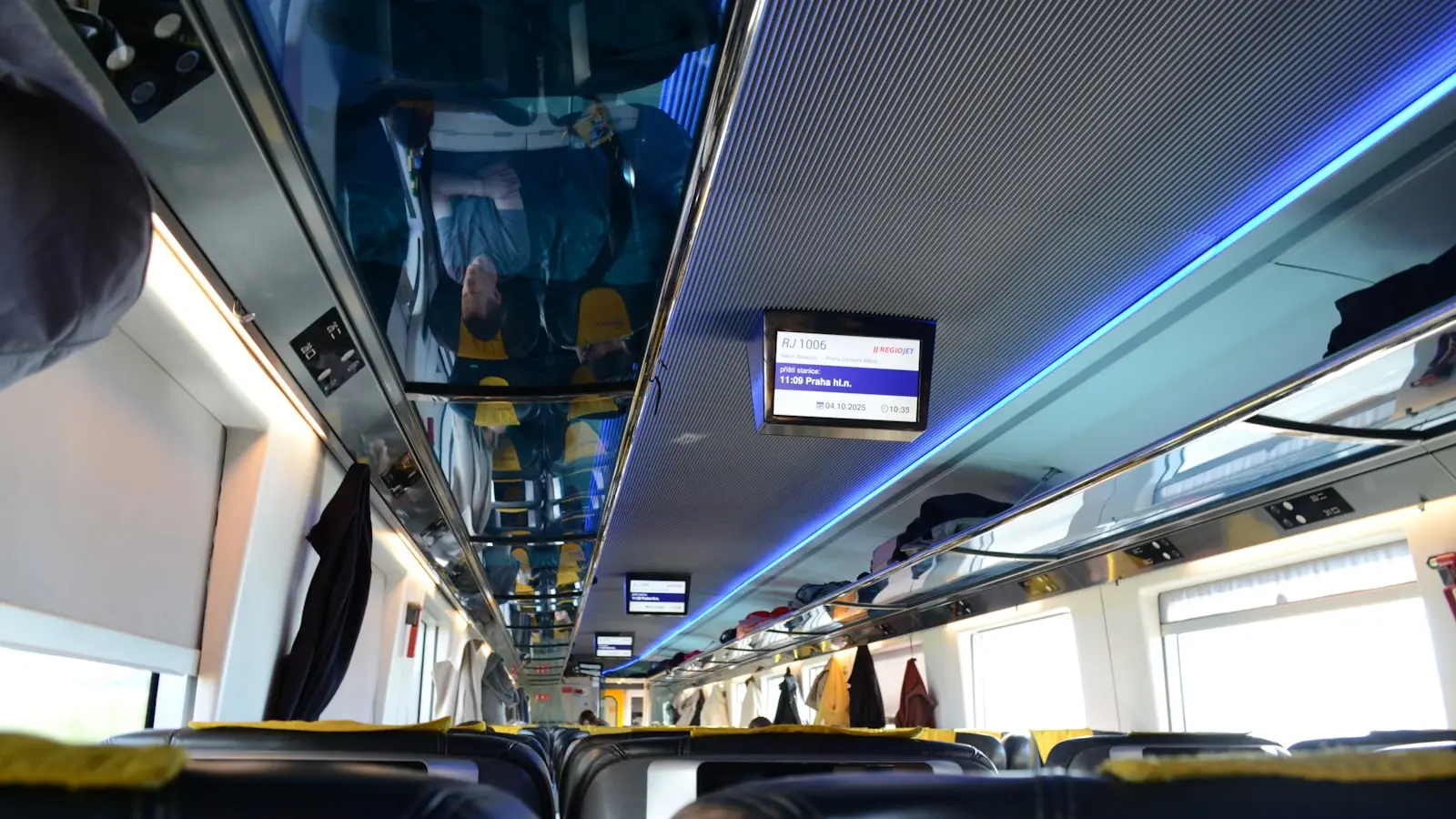
Most Eurostar trains feature longitudinal overhead storage bins positioned above the aisle seats. These bins are deep and wide, designed to accommodate soft-sided luggage. But their geometry creates a blind spot. A passenger seated against the window cannot see the bin directly above them. The thief exploits this optical gap. They stand up, unzip the bag, extract valuables, or simply lift the entire sack. The design of the compartment — smooth, plastic-lined, with no locking mechanism — makes removal soundless. (Why would a train builder prioritize aero-smooth lines over security? The answer is cost arbitrage: lighter materials reduce fuel consumption, and theft is an externality.)
What Frequent Travelers Know
Experienced Eurostar riders have developed a set of countermeasures. The most common, repeated across the Reddit thread, is to keep bags on your lap or between your feet. This eliminates the overhead bin altogether. Another is to use a small padlock on zippers — not to prevent someone from cutting the bag, but to add a moment of friction that might deter a quick snatch. Some travelers specifically book seats near the luggage racks at the ends of the car, where bags are stored vertically and remain in view from the seat. The thread also advises staying completely off your phone during station stops. “Vigilance is a simple act of attention,” one commenter wrote. “You can scroll Instagram when the train moves again.”
The Psychology of the Overhead Bin
Why do passengers consistently place bags overhead despite the risk? The answer lies in a design assumption that comfort trumps security. Overhead bins are marketed as convenience features — freeing up legroom, allowing movement. But the trade-off is invisible until a theft occurs. Behavioral economists call this the “optimism bias” — most people believe they will not be the victim. The train industry reinforces this by not posting theft warnings in the bins themselves. (Placing a sticker that reads “Watch your bag — thieves operate here” would cost pennies, but would imply responsibility. Silence shifts the burden to the passenger.)
Beyond Brussels: The Broader Rail Ecosystem
This is not a Eurostar-specific problem. High-speed rail networks across Europe face similar challenges. The Thalys (now part of Eurostar) has long battled theft on the Paris-Brussels-Amsterdam corridor. Deutsche Bahn’s ICE trains have overhead bins that are nearly identical in design. But the convergence of multiple routes at Brussels-Midi creates a perfect storm. The station is a crossroads for travelers from three countries, many carrying cameras, laptops, and passports. The thieves know the timetables. They know which trains have the longest dwell times. And they know that overhead compartments are the easiest targets.
How Design Shapes Behavior
If you look closely at the train’s interior, you see the fingerprints of an industrial design philosophy that prioritizes speed over security. The bins are placed at a height that forces most users to stand on tiptoes to access them. This creates a moment of physical imbalance, making it harder to maintain awareness of surroundings. The lighting is dim in the bin cavity; the carpet muffles footsteps. Every design choice that makes the journey smoother — quieter, softer, faster — also makes theft easier. (Is this malice? No. It is the unintended consequence of a system built for throughput, not resistance.)
The Practical Response
For the traveler, the solution is low-tech and human-scale. Book a seat in a car that has luggage racks at the end, and face your bag. Use a small combination lock to secure zippers. Keep a hand on your bag during stops. If you must use an overhead bin, place the bag sideways with the zipper opening facing the aisle — anyone who tries to open it must reach across the compartment, increasing visibility. And when the train announces “Brussels-Midi,” stand up. Not to leave, but to guard. The stop is brief, but the window of opportunity is exactly that.
The Emotional Architecture of a Train Ride
Travel is not just movement through space; it is an emotional negotiation with trust. The overhead bin represents a surrender of control. We place our valuables above our heads, out of sight, and we trust that the system will protect them. That trust is a fragile currency. When it is broken — by a thief, by a design flaw, by a 90-second stop — the loss is not just material. It is a small corrosion of the belief that travel is safe. The Reddit thread is a collective attempt to repair that corrosion, one advice post at a time.
The Unspoken Rule
There is another lesson hidden in the discussion. The thread’s most upvoted comment does not mention locks or vigilance. It says: “Never put your bag where you cannot see it. This is the rule. Everything else is commentary.” That rule, simple as it is, cuts through the noise of product recommendations and travel hacks. It is a piece of embodied knowledge, passed between travelers who understand that the overhead bin is not a neutral space. It is a terrain of risk, shaped by design, culture, and the split-second decisions of thieves. The next time you board a Eurostar, ask yourself: Where is my bag? And can I see it? The answer should determine whether it stays on your shoulder or goes above your head.