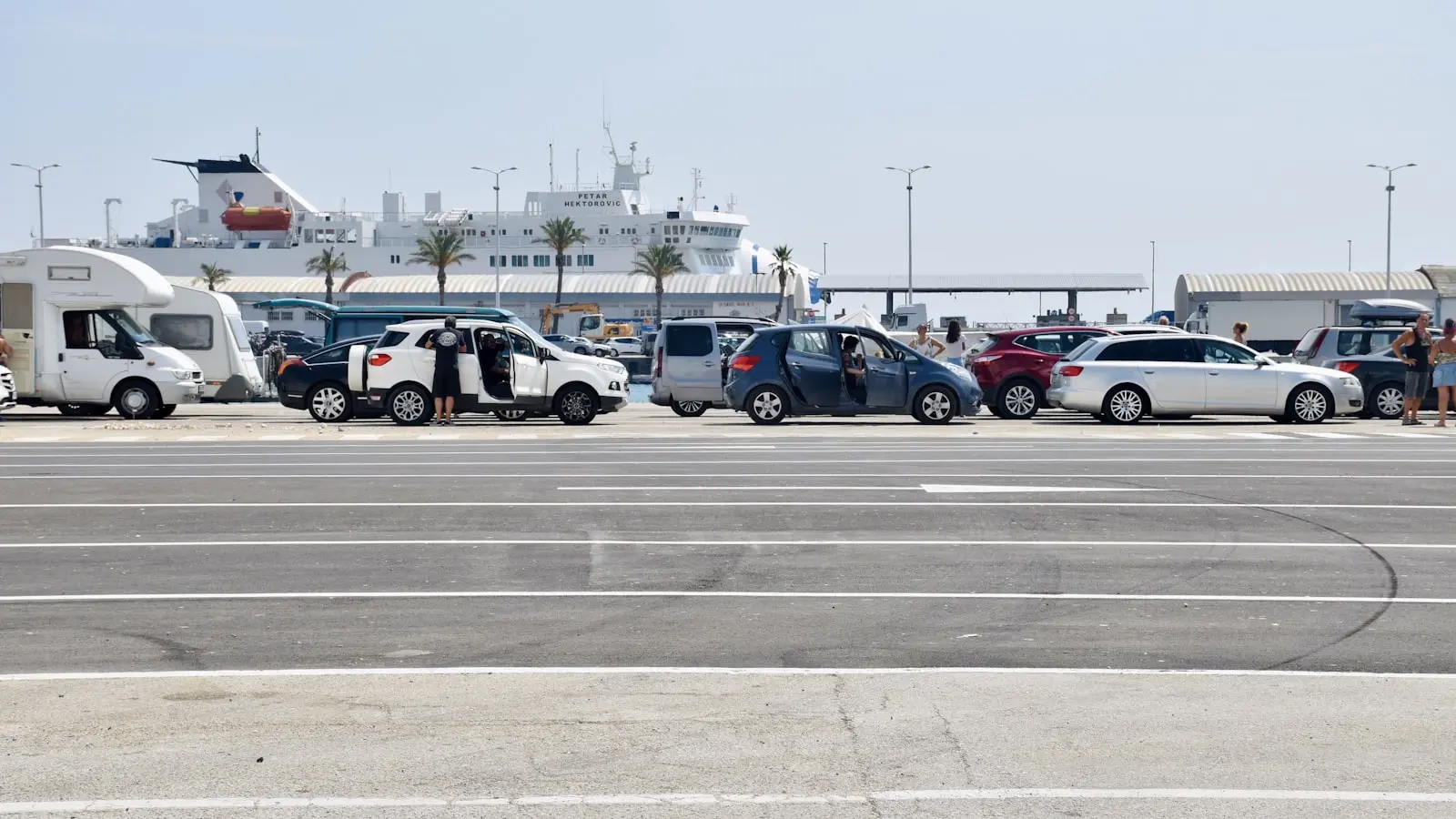
You can drive a car to Hvar by taking a vehicle ferry, most commonly on the Split–Stari Grad or Drvenik–Sućuraj routes. A car can make a multi-day island stay far easier, especially when you are changing accommodation, traveling with family or beach gear, or exploring beyond Hvar Town.
The trade-off is logistical. Ferry capacity, vehicle classification, accommodation access, and parking can matter more than the drive itself. The least stressful approach is to plan the crossing, first parking stop, and return ferry as one connected journey.
Key Takeaways
- A car is most useful for multi-day stays, multi-base itineraries, and drives beyond Hvar Town; it is less useful for a short, town-based break.
- Compare Split–Stari Grad and Drvenik–Sućuraj based on your mainland approach, accommodation location, current sailing options, and the drive after arrival.
- Confirm your vehicle category, reservation terms, rental permission, insurance details, and current carrier check-in guidance before leaving for the port.
- Secure exact accommodation parking before arrival, especially in Hvar Town and other pedestrian-heavy areas.
- Check current ferry status close to departure and keep a backup sailing or mainland overnight plan in case of delays or disruption.
Decide Whether Bringing a Car to Hvar Is Worth It
A car gives a Hvar road trip more flexibility. It simplifies moves between Stari Grad, Hvar Town, Jelsa, smaller settlements, beach areas, and separate accommodation bases without requiring you to coordinate every transfer or carry luggage through the heat.
It is particularly useful for stays of several days, families, travelers with bulky beach equipment, and itineraries spanning the island’s western and eastern sides. It also works best when your accommodation is outside a dense center and has a genuinely usable parking space.
That freedom comes with friction. You need space on a Hvar car ferry, patience at the terminal, confidence on narrower roads, and a legal place to leave the vehicle once you arrive. In Hvar Town, a car is generally more useful for leaving town than for getting around after you have checked in.
Consider arriving as a foot passenger if you are staying mainly in Hvar Town, do not have confirmed parking, or expect to use excursions and local transport most days. A mainland rental may suit a wider Croatia itinerary if the provider permits ferry and island use. A local rental, taxi, or prearranged transfer can be the lower-stress option for a short stay or a one-town break.
Look for deal-breakers before buying a vehicle ticket: an oversized vehicle, a trailer or roof box that changes the booking category, a late mainland arrival, limited confidence on winding roads, or accommodation reached by a tight lane with no turnaround space.
Choose the Right Hvar Car Ferry Route Before Driving to the Port
The two vehicle-ferry routes most drivers should compare are Split–Stari Grad and Drvenik–Sućuraj. They lead to very different first hours on the island, so choose according to the whole journey rather than the sea crossing alone.
Split–Stari Grad is usually the first route to assess for drivers arriving through Split or from the northern A1 and coastal corridor. It is commonly more convenient for stays in Stari Grad, Hvar Town, and central or western Hvar.
Drvenik–Sućuraj can be a better fit for drivers approaching from the south along the coast or focusing on eastern Hvar. However, Sućuraj sits at the island’s eastern end, so anyone continuing to Hvar Town or western destinations should include the onward island drive in the decision.
Use this simple comparison:
- Arriving through Split or from northern Croatia: Start by comparing vehicle sailings from Split to Stari Grad.
- Arriving from the Makarska coast or the Dubrovnik direction: Compare Drvenik to Sućuraj with the complete drive after disembarkation.
- Staying in Hvar Town: Do not assume a fast passenger service to Hvar Town carries cars. Confirm that the specific sailing accepts vehicles.
Timetables, operating periods, vehicle capacity, ticket conditions, and service status can change by season, weather, and carrier operations. Check the operating carrier shortly before travel and again on departure day. If your return connects to a flight, hotel, or long drive, verify the outbound sailing early in your stay as well.
Book, Pack, and Arrive at the Ferry Terminal With a Vehicle Plan
Vehicle boarding is manageable when the preparation happens before you reach the port. Select the correct vehicle category, keep ticket or booking details available, follow terminal lane signs, and board only when staff direct you to move.
Do not assume every sailing accepts every vehicle type or that a reservation removes all disruption risk. Confirm whether advance vehicle reservations are offered for the route, what the booking secures, and what applies if you arrive late, miss a sailing, or need to change plans. Peak summer periods, weekends, and holiday changeover days can put more pressure on vehicle-deck space.
Avoid relying on an old generic arrival cutoff. Follow the carrier’s current check-in instructions and allow a substantial buffer for mainland traffic, port navigation, queues, and the slower process of lining up a vehicle for boarding.
Verify your vehicle’s dimensions and classification before purchase. Height, length, roof boxes, trailers, motorcycles, vans, and campers may be treated differently. If you are renting, get written confirmation that the agreement permits ferry transport and use on Croatian islands.
Keep essential documents accessible rather than buried under luggage. Carry your driving licence, vehicle registration or rental agreement, insurance details, booking confirmation, breakdown contacts, and any paperwork required by your insurer, rental provider, or border rules.
Fuel before joining a long port queue, particularly after a long mainland drive. Bring water, medication, chargers, sunglasses, and valuables in a bag you can access during the crossing, since returning to the car may be inconvenient once the ferry is underway.
Make a disruption plan before you need it. Identify the next workable sailing, save the carrier’s service-update channel, and know where you could stay or park on the mainland if plans change. Flexible accommodation and clear ticket-change terms can be more valuable than a tightly timed itinerary.
Drive on Hvar With More Time Than Your Map Suggests
Croatia island driving is less about distance than pace. Expect winding sections, blind bends, cyclists, pedestrians, scooters, local traffic, and slower-moving vehicles. Treat map estimates as a starting point, not a guarantee.
Stay within signed limits, keep a calm pace on narrow stretches, and avoid stopping where another vehicle cannot pass. On blind bends, assume a larger vehicle may be coming the other way. Roads that feel straightforward in daylight can be more demanding after dark or during busy arrival periods.
Do not assume every lane toward a beach or viewpoint suits every car. Some access roads may be narrow, steep, rough, busy, or difficult to reverse out of. If a legal parking place is not clear, leave the car in an appropriate area and continue on foot where practical.
Stari Grad is a useful starting point for many central and western itineraries. Hvar Town and western destinations require more planning around traffic and parking, particularly in busier periods. Sućuraj can suit eastern-Hvar plans, but drivers using the Drvenik route should treat the later island drive as a meaningful part of the day.
Fuel is a small detail that can become a major inconvenience. Before a day focused on remote coves or less-serviced areas, use an up-to-date map or local directory to identify fuel options along your route. Refill proactively rather than assuming every village has a station, convenient opening hours, or the fuel you need.
If alcohol is part of lunch, a winery visit, or dinner, assign a sober driver before the day begins. Verify Croatia’s current alcohol-driving rules and any requirements relevant to your licence status through an official source before travel.
Make Parking and Accommodation Access Part of the Booking
The most useful Hvar parking tip is simple: ask exactly where the car will go before arrival. “Parking available” may mean a reserved bay, a nearby public street, a paid lot, a steep approach, or a space too tight for your vehicle.
Ask your host or manager for:
- The exact address and recommended vehicle approach route.
- Whether parking is reserved, public, paid, shared, or subject to availability.
- Bay dimensions, clearance limits, gates, access codes, and advance-notice requirements.
- Whether you can drop luggage before parking.
- The walking distance from the space to the property and the late-arrival procedure.
- Whether the approach has enough room to turn around safely.
This matters most in historic and pedestrian-heavy areas. Hvar Town can involve restricted access, narrow streets, steep approaches, limited spaces, and lanes where an unloading stop quickly blocks traffic. A hotel confirmation is not permission to enter a restricted street; follow signs and the property’s specific directions.
Use marked legal spaces, read posted zone and payment instructions, and check current municipal or destination guidance for seasonal restrictions. Do not improvise on sidewalks, beaches, private drives, unmarked verges, or narrow streets that need to remain passable.
In Hvar Town, the best routine is often car-light: park once at confirmed accommodation or a legal parking area, then walk or use suitable local transport in the compact center. Save the car for a planned beach day, a move between towns, or a drive beyond the busiest streets.
Use This Stress-Free Hvar Road Trip Checklist
Before leaving the mainland:
- Confirm the vehicle ferry route, sailing status, ticket terms, vehicle category, and current check-in guidance.
- Verify rental restrictions, licence validity, insurance coverage, required vehicle equipment, and Croatian road rules with official sources or your provider.
- Save offline maps, accommodation directions, carrier details, and a backup-sailing plan.
- Fuel up, charge devices, and keep documents, water, medication, and valuables accessible.
On arrival in Hvar:
- Drive first to confirmed accommodation parking or a legal parking area.
- Avoid circling a historic center in search of an unplanned space.
- Recheck the return ferry early if your mainland schedule matters.
- Plan one geographic area per driving day to reduce backtracking and parking pressure.
Before leaving Hvar:
- Verify the departure port, sailing status, check-in guidance, and route to the terminal.
- Leave margin for island-road delays and vehicle queues.
- Keep essential documents and boarding details within reach before joining the port line.
FAQ
Can you drive a car to Hvar island?
Yes. Vehicle ferries provide access to Hvar, including routes commonly used between Split and Stari Grad and between Drvenik and Sućuraj. Confirm the current carrier timetable, vehicle eligibility, and booking rules before setting out.
Which Hvar car ferry should drivers choose: Split–Stari Grad or Drvenik–Sućuraj?
Choose based on your mainland direction, accommodation location, current sailing availability, and the drive after arrival. Split–Stari Grad is often more practical for Hvar Town and western Hvar, while Drvenik–Sućuraj can suit southern mainland approaches and eastern-island stays.
Is it worth having a car in Hvar Town?
A car can be worthwhile for a longer itinerary that includes beaches, villages, and other parts of the island, but it is rarely useful within the compact historic center. Bring one only if you have confirmed parking and expect to drive beyond town; otherwise, arriving on foot may be easier.