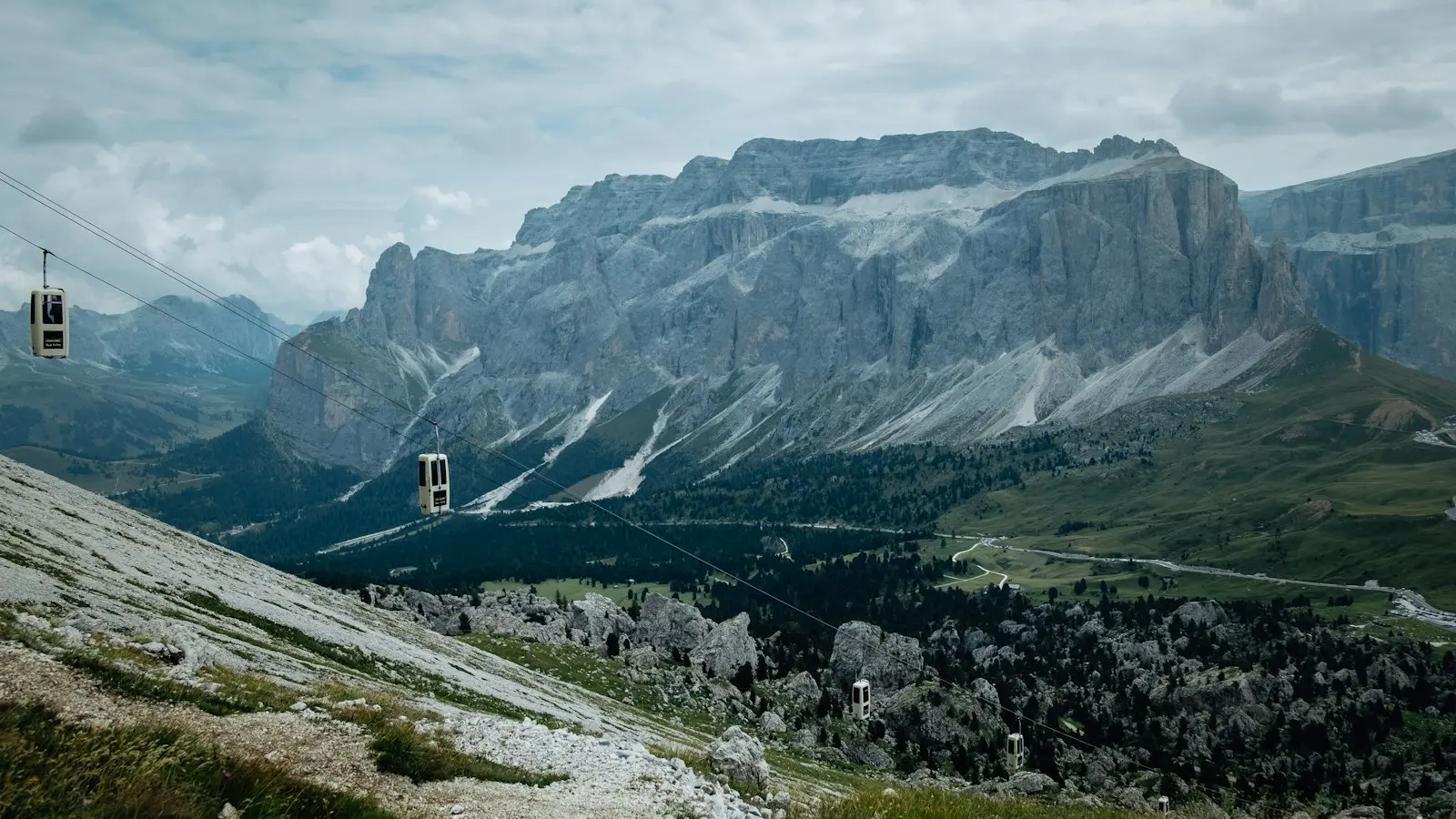
A worthwhile Dolomites trip can be as short as three full days, but five to seven days is a better target for most visitors. Three days provides a selective introduction from one base. Five days allows a more balanced visit, while seven days can support two contrasting areas without turning every day into a transfer. Ten days or more becomes worthwhile when you want several hikes, multiple valleys, slower village time, or flexibility for poor weather.
The right Dolomites trip length depends less on a checklist of landmarks than on how you want to travel. Scenic drives, cable cars, serious hikes, photography, family breaks, and car-free travel each require a different rhythm. The region is geographically spread out, so hotel nights are not the same as full sightseeing days.
Key Takeaways
- Choose three days for a focused introduction based in one compact area.
- Five days suits a balanced single-area trip or a carefully planned visit to two nearby areas.
- Seven days is a practical target for two contrasting bases, hiking recovery, and some weather flexibility.
- Ten or more days are most valuable for multiple valleys, slower travel, and backup plans when conditions change.
- Fewer geographic clusters usually produce a better trip than trying to collect every famous viewpoint.
Choose your Dolomites trip length by travel style
Start by deciding what “seeing the Dolomites” means to you. A visitor interested in dramatic viewpoints and short walks can cover a satisfying amount in less time than someone planning long mountain routes. A photographer may need several mornings and evenings in the same area, while a family may move more slowly but value flexibility over distance.
For scenic travel, three to five days can work well if you concentrate on one compact area. You might combine panoramic stops, a cable-car outing if operating, short walks, and meals in nearby villages. The experience will be selective, but it need not feel incomplete if you resist crossing the entire region each day.
Hikers generally need more time. A demanding route may occupy most of a day, and the next day may be better suited to a shorter walk, a viewpoint, or a slower morning. Several major hikes may also require different trailheads, turning an ambitious itinerary into a sequence of early starts and long transfers.
Photography and slower travel are another reason to extend the stay. Sunrise and sunset are not interchangeable with a midday viewpoint, and mountain weather can obscure the landscape you traveled to see. More nights provide additional chances rather than forcing one particular morning or afternoon to deliver perfect conditions.
The central trade-off is simple: adding more places usually reduces your margin for weather, recovery, parking, meals, and unplanned stops. The Dolomites are not one compact park in which every famous landscape sits a short drive from the next. A good Dolomites itinerary length is therefore measured by the quality of your days, not by the number of viewpoints collected.
What 3, 5, 7, and 10 days can realistically cover
Three days: Treat this as a focused introduction, not a complete tour. Choose one base and one geographic cluster, then select a small number of priority experiences. A practical three-day plan might include one scenic day, one moderate walk or lift-accessed outing, and one flexible day for another walk, a village, or a change in weather.
Three days usually means three usable sightseeing days only when you arrive before the first day begins and leave after the last day ends. A three-night booking may provide only two substantial days if arrival and departure involve long transfers. For a short visit, staying near the area you most want to explore is more valuable than choosing a supposedly central location.
Five days: Five full days can support a balanced single-area trip, with time for several outings and a less hurried pace. It can also support two nearby bases, but only if the move is geographically sensible and planned around your activities rather than added for variety alone.
With five days, you have room for a demanding hike, a couple of shorter walks or scenic excursions, and some flexibility. A one-base plan is often the efficient choice for families, first-time visitors, or anyone without a car. A two-base plan becomes more attractive when the areas offer genuinely different landscapes and moving accommodation prevents repeated long drives.
Distinguish five nights from five full days. Five nights commonly produces four meaningful sightseeing days, depending on arrival and departure logistics. That can still be an excellent trip, but it is different from a full five-day itinerary.
Seven days: Seven days is the most useful middle ground for many travelers. A one-week itinerary can combine two contrasting mountain areas, provided you treat the transfer as part of the trip rather than pretending it is a normal sightseeing day.
A comfortable structure might be three or four nights in one base and the remaining nights in another. The first area could serve a scenic or cable-car focus, while the second provides access to longer walks or a different valley. This approach gives you variety without asking one base to serve the entire region.
Seven days also creates room for one flexible period. If rain, low cloud, a trail closure, a lift interruption, or poor visibility affects an important outing, you have a better chance of rearranging the plan. For hikers, the extra days can separate demanding routes and make the trip feel like a mountain holiday rather than an endurance test.
Ten days or more: A longer stay is worthwhile when you want breadth and resilience, not simply more items on a list. Ten days can support additional valleys, several substantial hikes, photography at different times of day, village and food experiences, and days deliberately left open.
The main benefit is optionality. You can abandon a high viewpoint when the weather turns, postpone a long route, or spend an afternoon doing very little without feeling that the whole trip has been lost. Longer stays are particularly valuable in changeable seasons, when lift operations, trail access, road conditions, and local facilities may vary by area and date.
Even with ten days, do not assume you will experience every major corner of the Dolomites. The region rewards depth. Two or three well-chosen clusters will usually produce a more enjoyable trip than constant movement between headline locations.
One base or two? Match accommodation changes to the map
One base is usually best for a short trip. It eliminates packing, check-in, parking, and orientation time, and it makes it easier to adapt when the weather changes. Families and mixed-ability groups often benefit from this simplicity because a slow morning or an early return does not disrupt the entire itinerary.
A single base also makes sense for public-transport travelers. Without a car, concentrate on a town with reliable connections and build your days around routes that can be reached without complicated changes. A theoretically central base is not automatically practical if journeys to your chosen trailheads require multiple connections or limited seasonal services.
Two bases make more sense on a seven-night trip or longer, particularly when the areas serve different purposes. Moving can reduce repeated driving and let you wake up closer to the next cluster of walks. It is most useful when the two locations are chosen geographically, rather than because they happen to be famous names on a map.
The cost of a base change is more than the road distance. You must pack, check out, travel, find parking or a connection, check in, and re-establish your plans. A transfer may include sightseeing, but it should not be overloaded with a demanding hike and several fixed reservations. If the move consumes most of a day, count it honestly.
A useful planning rule is to choose areas first and viewpoints second. Decide whether your trip centers on one hiking district, two contrasting valleys, or a scenic loop. Then choose accommodation that supports that structure. This prevents the common mistake of booking one “central” town and spending every day driving outward.
Build in travel time, weather buffers, and hiking recovery
Mountain roads can make relatively short map distances feel slow. Curves, elevation changes, traffic, parking at popular access points, seasonal restrictions, and road conditions all affect the day. Public transport adds its own constraints, including schedules, connections, and services that may operate differently outside the busiest season.
Before traveling, check current road information, parking rules, public-transport schedules, lift operating periods, trail access, and facility opening dates for your exact dates. Conditions can differ between valleys, and an opening period published for one lift or facility should not be treated as a guarantee for the whole region.
Build at least one flexible period into a trip long enough to support it. This does not have to be an entirely empty day. You can keep a short walk, a village visit, or a scenic drive as a backup while reserving the option to move your most weather-sensitive activity.
Hiking intensity needs similar planning. After a long or steep route, the following day may be better spent on a shorter walk, a viewpoint, or a relaxed meal rather than another major ascent. Route difficulty depends on terrain, weather, fitness, equipment, navigation, and current access, so do not assume that a popular route suits every traveler.
Families should allow extra time for meals, breaks, slower walking, and sudden changes of plan. Mixed-ability groups may do better with bases that offer several nearby options, allowing some people to hike while others choose a shorter outing or village activity. A flexible itinerary is not wasted time; it is what keeps different travelers enjoying the same trip.
Shoulder-season visitors need especially cautious planning. Snow, storms, low visibility, temporary closures, and reduced services can affect what is practical. A shorter trip may work if you have a specific low-level plan, but a longer stay provides more opportunities to use the conditions well.
Decide when a longer Dolomites trip is worth it
Choose three days for a focused preview, a single-area goal, or a stop within a longer Italy itinerary. It is enough to discover whether the mountain scenery suits you, provided you accept that the visit will be selective.
Choose five days for a balanced trip based in one area or split between two nearby areas. This is often the best compromise for travelers who want more than viewpoints but do not have the time or desire for a broad regional tour.
Choose seven days for a comfortable two-base itinerary, especially if you want both scenic outings and serious walking. A week gives you room to absorb a transfer, separate strenuous days, and respond to weather without rebuilding the entire plan.
Choose ten days or more when you want several valleys, multiple major hikes, photography opportunities at different times, or a slower schedule. The extra time is most valuable as flexibility: it lets you wait for conditions, rest properly, and explore beyond the first headline landscape.
The practical answer to how long in the Dolomites is therefore not a single number. For most travelers, five to seven full sightseeing days is the most useful target; three days is a worthwhile introduction, and ten or more days rewards people who want breadth and breathing room. Pick fewer areas, stay long enough to understand each one, and judge success by the days you enjoyed rather than the viewpoints you managed to tick off.
FAQ
Is seven days enough for a Dolomites trip?
Yes, seven full days can support a comfortable trip across two contrasting areas, especially with three or four nights in each base. It will not cover the entire region, and you should allow time for the transfer, weather changes, and recovery after demanding hikes.
Can you see the Dolomites in three days?
Yes, but think of three days as a selective introduction. Use one base, stay within one compact area, and choose a few viewpoints or walks rather than trying to cross several valleys.
How many days should hikers spend in the Dolomites?
Hikers should usually allow at least five days for a useful visit and seven or more for several demanding routes. Include easier days between strenuous hikes, and confirm trail access and conditions before setting out. A longer stay is particularly helpful when weather may disrupt a planned route.