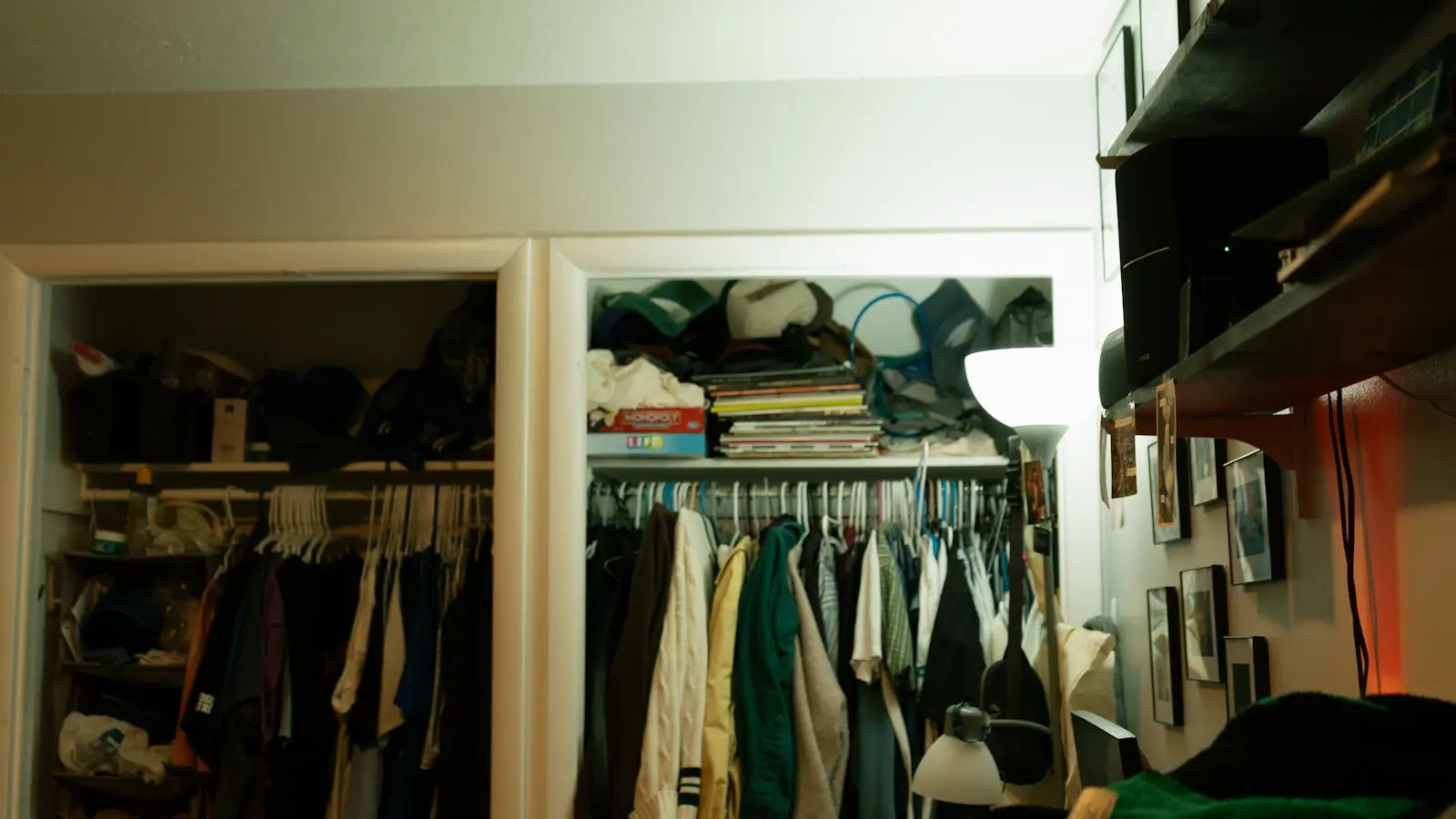
You can declutter your home without feeling overwhelmed by starting with very small, low-pressure actions and understanding why clutter triggers anxiety. The key is to break the process into tiny, repeatable steps that build momentum and reduce decision fatigue. This article explains the psychology behind the paralysis and gives you concrete methods to make progress at your own pace.
Key Takeaways
- Understand the psychology: decision fatigue, emotional attachment, and the sunk cost fallacy are normal barriers you can overcome.
- Start with the five-minute rule: declutter one drawer or shelf for just five minutes to build momentum without burnout.
- Use the KonMari method: sort by category (clothes, books, papers, misc, sentimental) and keep only what sparks joy.
- Apply the four-box system: Keep, Discard, Donate, Sell to make decisions clear and reduce guilt.
- Establish habits: the one-in-one-out rule and a daily ten-second tidy prevent clutter from returning.
Why Decluttering Feels Overwhelming: The Psychology Behind the Paralysis
Decluttering feels overwhelming because it activates several psychological mechanisms at once. The first is decision fatigue. Sorting through a pile of possessions forces you to make hundreds of small choices: keep or toss? Where does this go? Will I need it later? Research into decision fatigue indicates that the brain’s ability to make sound decisions depletes over time. After a few dozen choices, you start to feel drained, and the easiest decision is to stop.
Emotional attachment is another major barrier. Objects carry memories, identities, and even guilt. Letting go can feel like losing a part of your past. The sunk cost fallacy also plays a role: you spent money on an item, so throwing it away feels wasteful, even if you never use it. These forces combine to create a sense of paralysis. Recognizing these factors is the first step to overcoming them.
Start Small: The Five-Minute Rule and Low-Pressure Techniques
The most effective way to avoid overwhelm is to start smaller than you think possible. Instead of tackling a whole room, set a timer for five minutes and work on one drawer, one shelf, or a single type of item such as old magazines or expired pantry goods. This technique is often called the five-minute rule. It keeps the commitment low and the pressure off. When the timer rings, you can stop without guilt.
A low-pressure mindset is essential. You are not trying to achieve a perfect home in one session. You are building a skill. Another helpful technique is body doubling: invite a friend over to declutter together via video call, or play a familiar TV show in the background. This is sometimes called dopamine pairing because it shifts your focus from the anxiety of the task to the enjoyment of the media. The result is that you stay engaged longer without feeling emotionally taxed.
Focus on low-emotion categories first. Start with obvious trash, recyclables, or items that are clearly broken. These require almost no emotional decision-making. Success with these items builds momentum and confidence for harder categories.
The KonMari Method and Category-Based Decluttering
Marie Kondo’s KonMari method offers a structured, category-based approach that can reduce overwhelm. Instead of decluttering room by room, you declutter by category in this order: clothes, books, papers, miscellaneous items (komono), and finally sentimental items. The logic is that you see all similar items at once, which helps you make consistent decisions. The brain is good at comparing like with like, so you avoid the confusion of mixing categories.
The central question in the KonMari method is whether an item sparks joy. This is a subjective feeling of delight or usefulness. It is not about guilt or obligation. If an item does not spark joy, you thank it for its service and let it go. This framing can soften the emotional blow of discarding.
A complementary perspective is Swedish death cleaning, a practice popularized by Margareta Magnusson. The idea is to declutter so that your loved ones are not burdened with your possessions after you pass. This can provide practical motivation to prioritize what matters most. For sentimental items, several strategies help: take a photograph of the item to preserve the memory, limit yourself to a small memory box (one box per person or category), or pass the item to a family member who will actually use it. These steps reduce the feeling of loss while allowing you to move forward.
The Four-Box System: Keep, Discard, Donate, Sell
As you sort, use four containers labeled Keep, Discard (trash), Donate, and Sell. This system prevents the common trap of a “maybe” pile that never gets resolved. For each item, ask yourself three questions: Have I used this in the past year? Does it serve a clear purpose in my life now? Does it bring me genuine joy or practical value? If the answer is no to all three, the item likely belongs in Discard, Donate, or Sell.
Donating can ease the guilt of waste because you know the item will benefit someone else. Choose a cause you care about for extra motivation. Selling can also help offset the sunk cost, but it has a trade-off: it takes significant time and effort to list, price, ship, and handle negotiations. Only sell items that are worth at least $20 or that you are confident will move quickly. For low-value items, donating or discarding is usually more efficient and less stressful.
Building Habits to Prevent Clutter from Returning
Once you have cleared space, you need systems to keep it that way. The one-in, one-out rule is simple: for every new item you bring into your home, remove one existing item. This keeps the volume stable. Create a designated home for every category of item. When every item has a place, tidying up becomes automatic rather than a decision.
Incorporate a daily ten-second tidy into your routine. Spend a brief moment each evening putting away stray items. This small habit prevents surfaces from accumulating clutter. Also schedule regular mini-sessions, such as ten minutes every Saturday morning. Treat these as maintenance rather than a big project. Over time, these habits make clutter less likely to accumulate and reduce the anxiety of future decluttering.
FAQ
How do I let go of sentimental items without regret? Photograph the item so you still have a visual memory. Then limit yourself to a single memory box or a small number of keepsakes. If a family member would appreciate the item, pass it on. Knowing it is being used can ease the emotional sting.
What if I’m worried I’ll need something later? Ask yourself honestly: how often have you needed this item in the past year? Most things can be replaced affordably or borrowed. Keep only what you use regularly or truly love. The space and peace of mind are usually worth more than the item’s potential future use.
How long does it take to declutter a whole house? Expect the process to take weeks or months, depending on the size of your home and how much stuff you have. Focus on progress, not perfection. Even small steps add up. You are not racing against a deadline; you are creating a skill that will serve you for life.