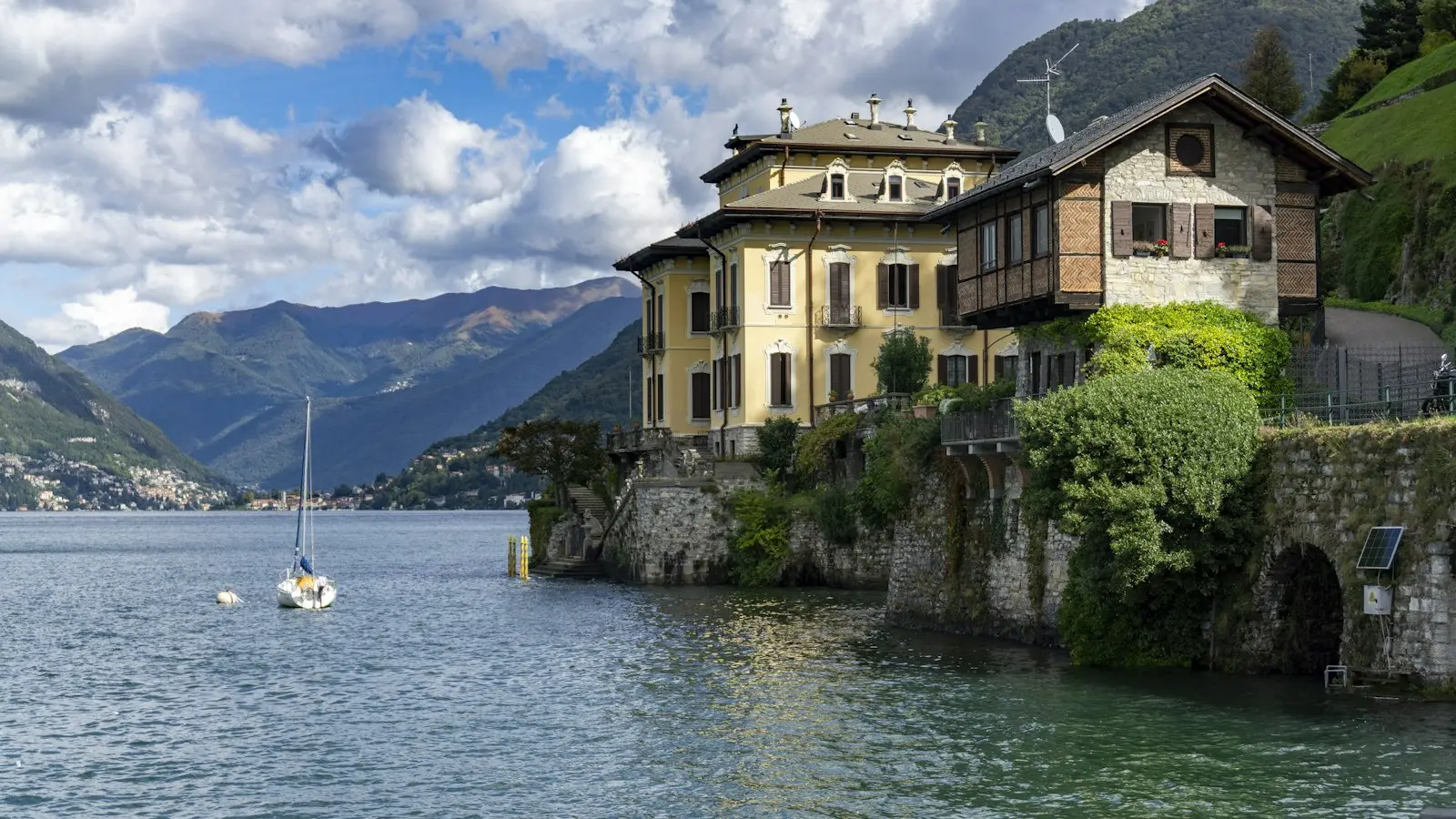
If your five-day trip gives Lake Como more than one full day, Como Town is usually the more practical base. It puts you beside the water, near rail and ferry connections, and within easy reach of restaurants and an evening stroll. Milan is the stronger choice when the trip is primarily about the Duomo, museums, shopping, nightlife, or a convenient onward connection.
The decision is less about which place is more attractive than whether you want a lake-first or city-first trip—and how much time you are willing to spend moving between the two.
Key Takeaways
- Choose Como Town when Lake Como is the main focus and you want several lake days with fewer repeated transfers.
- Choose Milan when museums, shopping, nightlife, dining variety, or onward travel matter more than immediate lake access.
- Como is a practical town rather than a small resort village, with restaurants, shops, services, and a walkable center.
- Staying in Como does not put every famous village within easy reach; Bellagio, Varenna, and Menaggio require different combinations of rail, ferry, or bus services.
- A split stay can work, but only when both destinations deserve meaningful time after accounting for packing, check-out, luggage storage, and check-in.
Como Town Versus Milan at a Glance
| Consideration | Como Town | Milan |
|---|---|---|
| Lake access | A stronger starting point for lake days, with ferry and rail options | Lake Como is generally a day trip, adding a longer round trip |
| Milan attractions | Reachable by train for a planned day | Immediate access to museums, shopping, landmarks, and neighborhoods |
| Evening atmosphere | Compact, calm, and easy to navigate on foot | Broader restaurant, cultural, and nightlife choice |
| Accommodation | Hotels, apartments, and guesthouses around the center, station, and waterfront | A wider range across neighborhoods and near major stations |
| Cost | Can be competitive, but waterfront and peak-season rooms may be expensive | Prices vary sharply by district, dates, and demand |
| Luggage | One base can simplify lake-focused travel | Convenient for arrival, departure, and onward rail connections |
| Best fit | Several lake days and a relaxed pace | One lake excursion combined with substantial Milan time |
Como Town is not one of the small resort villages often pictured in Lake Como photographs. It is a functioning city at the southern end of the lake, with a historic center, shops, cafés, restaurants, a waterfront, and everyday services. That makes it a useful Como Town base: you get lake scenery without relying on a small resort for every meal or late arrival.
Milan offers the opposite advantage. It gives you a deeper pool of museums, design, fashion, shopping, dining, and evening entertainment. Staying there and visiting the lake for a day can work well, especially if Lake Como is only one part of a broader northern Italy trip.
Schedules, prices, ferry routes, and seasonal services change. Check the relevant rail and lake transport operators for your travel dates rather than treating any journey time or connection as guaranteed.
Transport, Day Trips, and Location Trade-Offs
The main rail choice from Milan to Como depends partly on which Milan station and Como station suit your plans. Direct services commonly connect Milan with Como San Giovanni, while Milan’s Nord lines can serve Como Nord Lago. The journey can fall within roughly the half-hour-to-one-hour range, depending on the route, stopping pattern, and departure station.
That distinction matters. Como San Giovanni is useful for travelers arriving from or continuing on the mainline network, while Como Nord Lago is particularly convenient for the lakefront and ferry area. Neither station is automatically best for every hotel. Check the walking route with luggage before booking, especially if you are carrying large bags or arriving after dark.
From Milan, the lake is straightforward to visit, but the day has a built-in cost. You must get from your hotel to the correct station, take the train to Como or another rail-connected town, and then organize the lake portion of the day. A late return can also leave you watching the clock rather than lingering over dinner.
Como reduces that repeated city-to-lake transfer. You can start with a slow breakfast, walk to the waterfront, and choose a boat or train according to the weather and your priorities. It does not, however, make every famous village immediately accessible. Bellagio, Varenna, and Menaggio sit in different parts of the lake, and reaching them may involve a ferry, train connection, bus, or combination of services.
Varenna is commonly approached by rail from the Milan side, while Bellagio and Menaggio often require lake transport or a connecting route. From Como Town, a boat journey can be scenic but may take much of the day, particularly when services stop at several places. Faster services, seasonal schedules, and reduced timetables can change the calculation. A route that looks simple on a map may involve a wait between connections.
Ferries are more than a timetable issue. Services may be less frequent outside the main season, and weather or operational changes can disrupt plans. Build a buffer into any itinerary that depends on a final ferry or timed train back to Milan. For a relaxed trip, choose two or three lake stops rather than trying to collect every well-known village in one day.
Como is also practical for visitors who want a flexible lake day. If the forecast turns poor, you can remain in town, visit a local attraction, take a shorter excursion, or use the restaurants and cafés. From Milan, a canceled or unattractive lake day may require replacing a substantial travel plan.
Airport logistics complicate the comparison. Milan’s airports are not interchangeable, and Malpensa, Linate, and Bergamo require different transfer plans. Milan can be more convenient for an early departure when your hotel is near the appropriate airport or rail connection. Como can work well after arrival, but a very early flight may make a final night in Milan worth the hotel change.
Daily Experience: Walkability, Food, and Evenings
Como’s strongest daily advantage is its scale. Much of the historic center, shopping streets, lakeside promenade, and restaurant area can be covered on foot. You can return from a boat trip, drop off a bag, and find dinner without committing to another long transfer.
The town is not a miniature Milan. Travelers seeking major nightlife, a large concert calendar, or a wide choice of late-night neighborhoods may find it quiet. For many visitors, that is precisely the appeal. After a day of changing boats and climbing village streets, a manageable dinner followed by a waterfront walk can feel like a reward rather than a lack of activity.
Food choice in Como is broad enough for a short stay, with cafés, casual meals, traditional restaurants, aperitivo spots, and more polished dining. Milan offers greater range across price points and cuisines. It is also easier to plan an evening around a museum, shopping district, theater, cocktail bar, or late reservation in another neighborhood.
Ask yourself what “convenient evening” means. If it means walking from a central hotel to dinner and being back within minutes, Como has the edge. If it means choosing among several districts after an exhibition or staying out late without worrying about the last return train, Milan is the better fit.
Crowds do not disappear in Como. Popular dates can make the waterfront, ferry terminals, and central streets busy, especially when day visitors arrive. The difference is that Como still functions as a place to live and shop, rather than feeling only like a scenic stop. That everyday texture is a meaningful benefit for a five-day stay.
Cost, Accommodation, and Convenience
It is risky to assume that Como is always cheaper than Milan. Accommodation prices depend on season, demand, room size, booking lead time, and whether you want a lake view, historic-center address, or proximity to a station. A modest room in Como during a busy weekend can cost more than a comparable room in a less central Milan neighborhood.
The same is true of dining. Como may offer plenty of straightforward local meals, but prominent waterfront restaurants and high-demand dates can carry a premium. Milan’s larger market creates more choice, including inexpensive meals away from the center, while central locations and fashionable districts can be costly.
Compare like with like before booking: the same dates, cancellation terms, room capacity, breakfast arrangement, and walking distance to transport. A cheaper room that requires taxis or complicated transfers may not be cheaper in practice.
Luggage is where a single base often wins. Staying in Como for the lake portion means unpacking once and returning to the same room after each excursion. Staying in Milan does the same for a city-focused trip. A split stay introduces check-out, storage, a train journey with bags, and another check-in. The change is worthwhile only when both destinations receive enough time to justify it.
In Como, compare hotels near Como San Giovanni, Como Nord Lago, the historic center, and the lakefront rather than searching only for “Lake Como.” These areas offer different balances of station access, waterfront proximity, noise, stairs, and price. In Milan, neighborhood choice should reflect your main rail station, airport route, and evening plans rather than relying on a city-center label alone.
Who Should Choose Como Town or Milan?
Choose Como Town if you want two or more meaningful lake days, prefer walking over repeated transfers, and like ending the day in a compact town. It is especially suitable for couples, families, and travelers who want scenery without staying in an isolated resort. It also suits visitors who would rather have a flexible base than follow a tightly timed route every day.
Choose Milan if the Duomo, museums, shopping, design, nightlife, or major dining choice are central to the trip. Milan is usually the cleaner choice for a single Lake Como day trip, a short city break with one scenic excursion, or an itinerary that continues by high-speed train to another Italian city.
Choose a split stay only when both places matter enough to earn their own time. One practical pattern is two nights in Milan followed by three in Como, allowing city sightseeing first and lake exploration second. The reverse can work when you arrive through the lake area and need Milan for a final night before an early flight.
A useful decision rule is simple: choose Como for a lake-first trip, Milan for a city-first trip, and split the stay only when the transfer will not consume time you would rather spend sightseeing.
Sample Five-Day Lake Como and Milan Itineraries
Como Town base
Day 1: Arrive, settle in, and explore Como’s historic center, cathedral area, shops, and waterfront. Keep the first evening unstructured in case arrival takes longer than expected.
Day 2: Take a lake excursion using the most practical combination of ferry and rail for your dates. Concentrate on a small group of destinations rather than forcing Bellagio, Varenna, and Menaggio into one timetable.
Day 3: Keep a flexible Como day. Consider a local attraction, a shorter boat outing, or time for a long lunch and a slower walk through town.
Day 4: Travel to Milan for selected attractions, such as the Duomo area, a museum, shopping, or a planned neighborhood. Return to Como only if the final train and your energy make that sensible.
Day 5: Have a final breakfast and waterfront walk, then allow generous time for your airport or onward connection.
Milan base
Day 1: Arrive and explore the neighborhood around your hotel, keeping the first day light.
Day 2: Focus on Milan’s major landmarks, museums, shopping, or design districts. Reserve timed attractions where required and avoid overloading the day.
Day 3: Make Lake Como the main excursion. Choose a realistic route, check the return options, and leave a buffer for waits or disrupted connections.
Day 4: Spend more time in Milan, or attempt a second lake visit only if the weather and transport schedules are favorable.
Day 5: Complete a final city activity near your departure route and allow time for airport or onward rail travel.
Optional split stay: Spend the first two nights in Milan and the final three in Como, or reverse the order according to your arrival and departure airports. This gives each destination focused time, but remember that the hotel change costs more than the train fare alone: packing, check-out, luggage storage, and check-in all use part of a travel day.
These are planning frameworks, not fixed guarantees. For most travelers combining both destinations in five days, Como Town offers the better balance when the lake is the main event. Milan wins when the city is the reason for the trip and Lake Como is the carefully chosen day out.
FAQ
Is Como Town a better base than Milan for a first Lake Como trip?
Usually, yes, if you plan several lake days and want easy access to the waterfront, ferries, and a walkable evening base. Milan is better when you want only one lake excursion or are prioritizing museums, shopping, nightlife, and onward travel.
How long does it take to travel from Milan to Como and the main Lake Como towns?
Direct Milan-to-Como trains can take roughly from the half-hour range to about an hour, depending on the departure and arrival stations. The main villages require different routes: Varenna may be approached by rail, while Bellagio and Menaggio often involve lake transport or connections. Check current schedules for your dates.
Is it worth staying in both Milan and Como on a five-day itinerary?
It can be worthwhile when you want substantial time in both places, such as two nights in Milan and three in Como. If one destination is receiving only a rushed day, staying in one base is usually simpler and protects more sightseeing time.