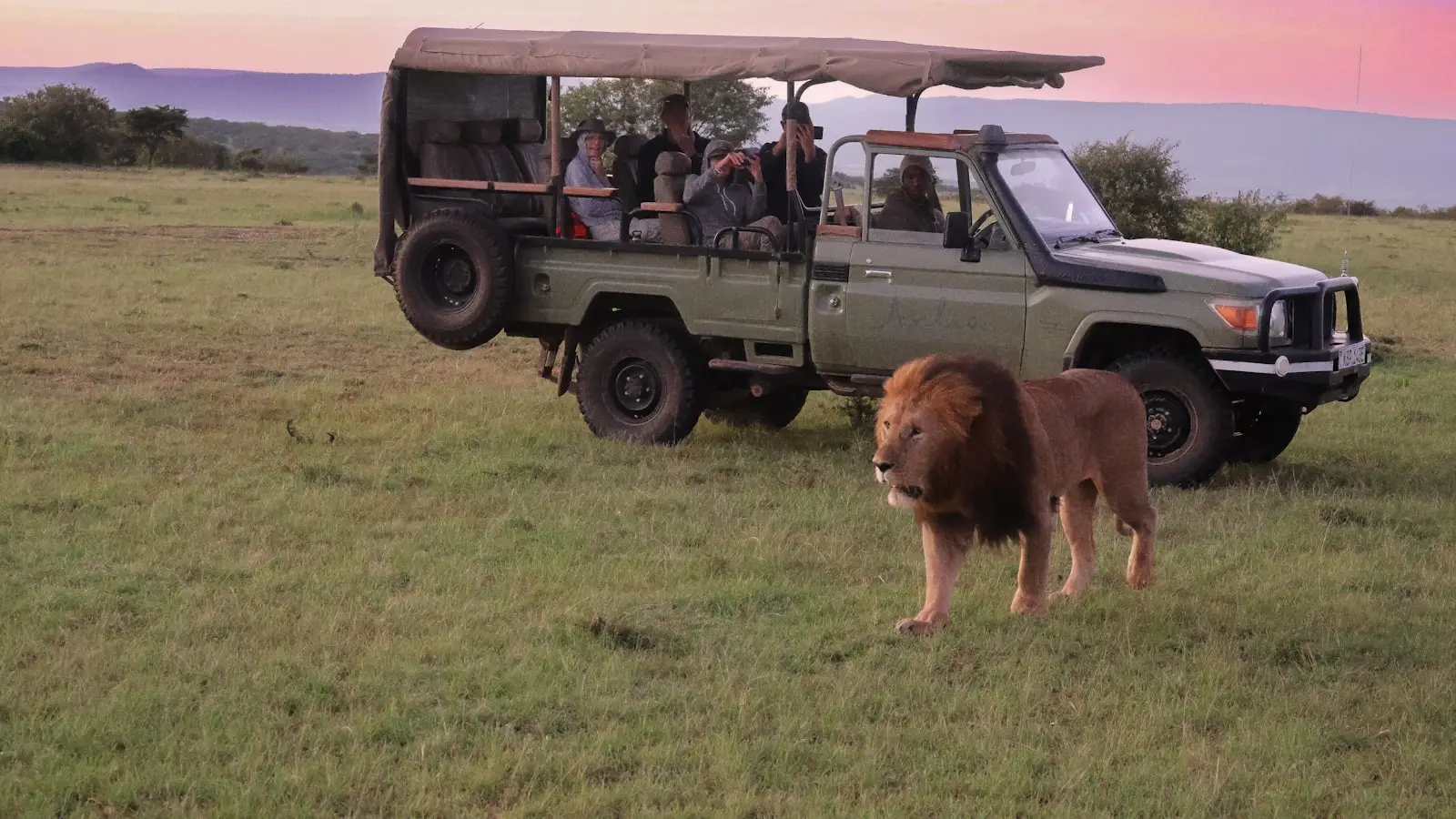
The Five-Day Gamble
When a first-time safari-goer posted photos from a five-day Kenya trip that included all Big Five sightings and a hot air balloon ride over Amboseli, the reaction was a mix of celebration and caution. The images—a lioness dragging a wildebeest carcass, a leopard draped over a fig branch, a rhino calf nudging its mother—were remarkable. Not because the animals were rare, but because the timeframe was ludicrously tight. Five days. Four nights. Two parks. One dawn balloon ride. And the checklist ticked off.
The Reddit post, shared in a travel community, sparked a flood of questions. How? Where? Was it luck or planning? The user admitted to booking through a mid-range operator, flying into Nairobi, then driving straight to Amboseli for two days, then a short flight to Masai Mara for two more. The balloon ride happened on the final morning, just before the return flight. The cost? Roughly $2,500 per person, including park fees and guide tips. (That number alone sparked another debate.)
The Architecture of a Tight Itinerary
A five-day safari is not a vacation. It is a logistical puzzle. The design of the schedule—what you sacrifice, what you prioritize—reveals the underlying philosophy of wildlife travel. Amboseli is flat, open, and dominated by the silhouette of Kilimanjaro. Elephants move in slow herds, their dust clouds visible from miles away. Masai Mara is rolling grassland, broken by acacia thickets and riverine forests. Predators hide in the tall grass. The contrast between the two parks creates a sensory rhythm: openness, then enclosure; vastness, then intimacy.
To compress both into five days, the traveler must accept trade-offs. The drive from Amboseli to Masai Mara is six hours, so the user opted for a forty-minute flight. That cost $200 extra. The balloon ride added $450. The guide doubled as a driver, tracker, and emergency negotiator. (Frankly, the margin for error was razor-thin.) Experienced safari-goers on the thread pointed out that the user visited in late September, the end of the dry season. Grass was short. Waterholes were shrinking. Animals concentrated around remaining water sources. The timing was not luck—it was deliberate.
Why the Big Five Still Matter
The term “Big Five” is a relic of colonial hunting culture, but it persists because the animals themselves embody different challenges for a photographer’s lens. The lion requires patience. The leopard demands luck. The elephant demands distance. The rhino demands silence. The buffalo demands respect. Each sighting imposes a different kind of attention. (Is it ethical to pursue a list? The debate is old, but the emotional payoff is real.)
In Amboseli, the user saw elephants within the first hour. The guide stopped the vehicle near a swamp where a matriarch had led her herd to drink. The user described “baby elephants running in circles.” The rhino appeared at dusk, a black silhouette against the orange dust. The guide whispered “stay still.” The user did not move for ten minutes. The rhino stared, then turned and vanished into the scrub. The leopard was the hardest. It was spotted on the second day in Masai Mara, asleep on a branch. The guide recognized the tree from previous visits. Local knowledge, not GPS.
The Balloon Ride: A Vertical Shift
The hot air balloon experience, according to the user, was the highlight. Not because of the wildlife from above—though they saw herds of zebra and wildebeest—but because of the perspective change. The balloon lifts at dawn, before the wind picks up. The basket carries twelve people, standing shoulder to shoulder. The silence is broken only by the occasional blast of the burner. The shadow of the balloon slides over the ground, and the animals below ignore it. (The user said they cried. Many do.)
From the basket, the landscape becomes a map. The Mara River is a brown ribbon. The trees are dots. The herds are movements of dust. This vertical view reshapes the understanding of space. The traveler realizes how small the vehicle is, how narrow the roads, how limited the ground-level vision. The balloon ride is not a luxury add-on; it is a cognitive recalibration.
The Economics of Speed
Five days in Kenya means the cost per hour of wildlife viewing is high. A typical week-long safari costs $1,500 to $3,000 per person. The five-day version is only slightly cheaper because fixed costs—flights, guides, park entry fees—do not scale down linearly. The user paid $2,500. That translates to $500 per day, or roughly $62 per hour of active game drive. (Compare that to a Netflix subscription. The value proposition is different.)
The real cost is fatigue. The user admitted to waking at 5:30 AM every day, driving for six hours, and sleeping in tents with basic amenities. The reward was sensory overload. By the third day, the user stopped photographing every zebra. By the fourth, they started noticing the texture of the grass, the way the light changed the color of the acacia bark. Immersion happens not when you see the most animals, but when you stop counting.
Expert Reddit Advice: Design Your Own Five-Day Safari
The thread accumulated hundreds of comments. The most upvoted came from a guide who has been leading trips for twelve years. His advice, distilled:
- Choose two parks maximum. Amboseli and Masai Mara or Amboseli and Tsavo. Three parks is a mistake.
- Book a private vehicle if possible. Group tours waste time picking up and dropping off other guests.
- Visit in the dry season (June to October or January to February). Visibility is higher, roads are passable, and animals gather at water sources.
- Pre-book the balloon ride. Waitlists fill up weeks in advance.
- Hire a guide with specific knowledge of leopard dens and rhino hides. Generalists miss the details.
Another commenter argued that five days is enough only if the traveler accepts the risk of failure. The Big Five are not guaranteed. The leopard might stay hidden. The rhino might be absent. The traveler must redefine success: not a checklist, but a single moment of connection. The user’s post succeeded because it included a photo of a lion cub yawning, not because it had a rhino.
The Emotional Architecture of a Safari
Safari is not a passive activity. It is a series of decisions—where to stop, when to wait, when to move. The vehicle becomes a mobile observation deck. The guide becomes a translator of signs: tracks, scat, alarm calls. The traveler becomes a student of patience. The design of the day mirrors the design of the landscape: long stretches of emptiness punctuated by bursts of intensity.
The user’s post included a line that stuck: “I saw more in five days than I expected in a lifetime.” That is the paradox of compressed travel. When time is scarce, attention sharpens. The traveler does not scroll through a phone. The traveler stares at the horizon. The balloon ride forces a different kind of looking—not scanning, but absorbing. The shape of the experience is shaped by the constraints.
The Verdict: Is Five Days Enough?
Yes, if the itinerary is designed with precision. No, if the goal is relaxation. The user’s trip was a sprint. It required early mornings, long drives, and a willingness to pay for speed (flights, private guides, balloon). The safari delivered exactly what the traveler wanted: the Big Five, the balloon, the baby animals. But the thread also included a counter-story: a traveler who spent ten days in the Mara and saw only three of the Big Five. Luck matters. Season matters. The quality of the guide matters more.
For those planning a first-time safari, the advice from the Reddit community is clear: do not compress excessively unless you have a specific list. If you want the Big Five in five days, book Amboseli-Mara, go in late September, and allocate $2,500 to $3,000. Accept that you will be tired. Accept that you might miss something. The balloon ride is worth it. (Yes, even at $450.)
The real takeaway is not the checklist. It is the memory of the silence at dawn, the smell of dust and grass, the weight of the binoculars in your hand. The five-day safari is a design problem. The solution is a balance of speed and stillness. The user solved it. The next traveler will solve it differently.
The Unspoken Rule: Leave Room for the Unexpected
The final image in the user’s post was not an animal. It was a photograph of the empty plains at midday, the heat shimmering above the grass. No animals. No action. Just the land. That image, the user wrote, was their favorite. Because it forced them to see the stage before the actors arrived.
That is the emotional architecture of a safari. The anticipation, the waiting, the sudden movement. The five-day traveler experiences this in high-speed mode. The reward is not just a list of species. It is a reshaped sense of time. The balloon ride, the early mornings, the frantic game drives—they all conspire to compress experience into memory. Whether that is worth the cost is a question only the traveler can answer. But from the outside, watching the photos, the answer seems to be a quiet, unequivocal yes.