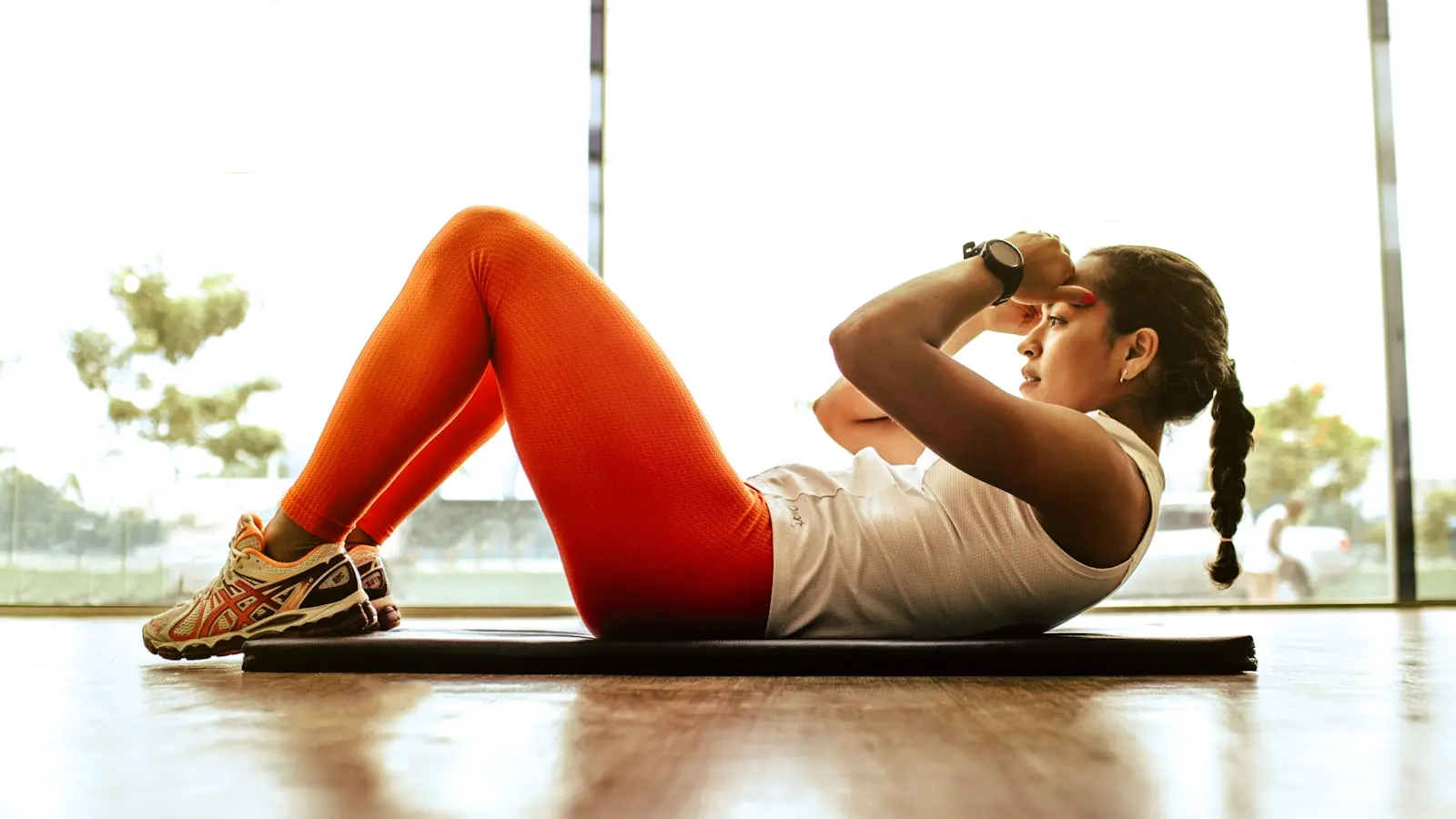
On a thread that started with a simple confession — “I’m too unfit for the sex I want to have” — the fitness corner of Reddit delivered a surprisingly concise prescription. Four bodyweight exercises. No equipment. Three rounds. Rest days included. The post, which gained traction across multiple subreddits, tapped into a quiet but widespread frustration: the gap between desire and physical capability. The answer, according to dozens of responders, was not a gym membership or a complex program. It was a circuit of planks, glute bridges, bird-dogs, and squats.
The thread’s top recommendations target the exact muscle groups engaged during common sex positions: core stabilizers, hip extensors, spinal erectors, and leg endurance. Each exercise serves a specific mechanical function. Planks build isometric core strength, which supports sustained positions without lower back fatigue. Glute bridges activate the glutes and hamstrings, improving thrusting power and hip mobility. Bird-dogs challenge balance and coordination while strengthening the posterior chain. Squats develop leg endurance for prolonged weight-bearing postures.
Lack of equipment is a persistent barrier to starting any fitness routine. Data from the Physical Activity Council shows that roughly 50 million Americans do not exercise at all, with cost and access cited as primary reasons. This Reddit post demonstrated high demand for accessible, home-based solutions. The original poster explicitly mentioned feeling “too unfit,” which signals a need for low-impact, progressive exercises that do not intimidate. The responders understood this. They did not recommend pull-ups or burpees. They recommended movements that could be performed on a carpeted bedroom floor, in regular clothes, with zero preparation.
Fitness enthusiasts on the thread created a simple circuit: 30 seconds of each exercise, repeated 3 times, with a 60-second rest between rounds. They emphasized proper form over speed. Several users reported noticeable improvements in stamina and reduced cramping after two weeks of consistent practice. A certified personal trainer chimed in, warning against rushing the repetitions. “Form is the only thing that matters in the beginning,” the trainer wrote. “Speed will come later. If your lower back arches during a plank, you’re not doing a plank — you’re just holding a bad position.”
The circuit takes roughly 12 minutes to complete. That brevity is deliberate. The human attention span for uncomfortable exertion is short. By keeping the session short, the barrier to starting is lowered. And by requiring no equipment, the excuse of not having gear is removed. This is design thinking applied to behavior change. The ethos mirrors the concept of “minimum viable dose” — the smallest effective amount of effort that produces a meaningful result. (Frankly, most people do not need an hour in the gym. They need ten minutes of honest work.)
Mechanically, each exercise addresses a specific vulnerability. The plank trains the transverse abdominis, a deep core muscle that stabilizes the spine during movement. Weakness here leads to arching, cramping, and early fatigue during sex. The glute bridge strengthens the gluteus maximus, the largest muscle in the body. Strong glutes allow for sustained rhythmic movement without relying solely on the lower back, which is prone to strain. Bird-dogs require the simultaneous extension of one arm and the opposite leg while keeping the spine neutral. This movement pattern mimics the coordination needed for positions where one partner supports their weight on hands and knees. Squats build eccentric strength in the quadriceps and glutes, improving the ability to lower and rise steadily without shaking.
No single exercise acts as a magic bullet. Together, they form a functional chain: core stability allows the torso to remain rigid while limbs move; hip strength generates power; balance prevents collapse; leg endurance delays muscle failure. The body treats these movements as a unit, not discrete parts. (This is why isolation exercises like bicep curls do not appear in the circuit.)
The Reddit thread is not a scientific study. It is an anecdotal cluster of self-reports. But the pattern of results is consistent enough to warrant attention. Multiple users described “more control” and “less breathlessness” after two weeks. One user wrote that they no longer needed to stop mid-encounter to catch their breath. Another said they could “last longer without shifting positions to relieve pressure on the knees.” These reports align with basic exercise physiology: improving cardiovascular efficiency and muscular endurance reduces the perception of effort during physical activity.
Critics might argue that the sample is self-selected (people who already browse fitness subreddits) and that the placebo effect is strong. Both points have merit. Yet the core claim — that bodyweight exercises can improve sexual performance — is supported by broader research. A 2015 study in the Journal of Sexual Medicine found that women who performed pelvic floor and core exercises reported increased sexual satisfaction. A 2018 review in Sports Medicine noted that general strength training improved sexual function in men by reducing erectile dysfunction risk factors like obesity and inflammation. The Reddit circuit is simply a targeted, minimalist version of this principle.
What the thread lacks in scientific rigor, it makes up for in practical urgency. The original poster was not asking about the theoretical benefits of exercise. They were asking for something they could do tonight, in their own home, without buying anything. The responses delivered exactly that. This is the kind of actionable advice that resonates because it removes friction. The circuit does not require motivation to get to a gym. It requires only the willingness to lie on the floor for twelve minutes.
Execution matters. During a plank, the body must form a straight line from shoulders to ankles. Elbows directly under shoulders, head neutral, core braced as if expecting a punch. Many people let their hips drop or rise too high. Either mistake reduces tension on the core and transfers load to the shoulders or lower back. A correct plank burns in the abdomen, not the spine.
Glute bridges require squeezing the glutes at the top of the movement. The hips should rise until the thighs and torso form a straight line. Lower down slowly, resisting gravity. The common error is using momentum or hyperextending the lower back. Slow and controlled wins the race.
Bird-dogs start on hands and knees, hands under shoulders, knees under hips. Extend the right arm and left leg simultaneously, keeping the spine neutral. Pause at full extension, then return to start. The key is stability — the hips should not rotate. If they do, reduce the range of motion.
Squats can be done as air squats, feet hip-width apart, chest up, hips lowering until thighs are parallel to the floor. Keep weight in the heels. If the knees cave inward, widen the stance or reduce depth. (For true beginners, start with quarter squats and progress.)
The circuit is designed to be performed three times per week, with at least one rest day between sessions. That rest day is not optional. Muscles need time to repair and adapt. The two-week timeline for noticeable improvements matches the typical neural adaptation phase: the body learns to recruit muscle fibers more efficiently before any visible growth occurs.
Should the routine be expanded after two weeks? Yes. The responders suggested adding more sets, increasing hold times to 45 seconds, or incorporating dynamic versions like mountain climbers or side planks. But the base circuit remains the foundation. It is a starting point, not a destination.
(Travel is not tourism; fitness is not gym membership.) The thread underscores a deeper truth about movement culture: the most effective interventions are often the simplest. The four exercises are not new. Physical therapists have used them for decades. What is new is the context — a direct, blunt connection between movement and a universal human experience. That connection is what makes the circuit stick.
The article could end with a call to action. Instead, consider this: the circuit exists. It is free. It can be done in a hotel room, at home, or in a backyard. The only barrier is the decision to start. And that, as the Reddit thread proved, is the one barrier worth breaking.