Post-pandemic hospitality inflation reshaped the map of accessibility in the British capital. When travelers examine central London hotel listings today, the numbers enforce an immediate geographic compromise. The West End premium swallows accommodation budgets whole, forcing a necessary migration outward. Visitors now anchor their five-day itineraries in Zone 2 or Zone 3 neighborhoods. Financial planners and travel economists establish a daily baseline of 150 to 200 British pounds for sustenance and entry fees, excluding the pre-paid flight and hotel. That figure operates as a constraint. Navigating London under this threshold requires deliberate behavioral adjustments. The city extracts wealth rapidly from the passive wanderer. Cash burns fast.
This spatial shift dictates the rhythm of the journey. Rather than stepping directly into the manicured squares of Mayfair, the modern traveler begins their day walking past independent greengrocers in Peckham or navigating the brick-lined residential streets of Islington. It forces immersion. The architectural landscape shifts from the imposing limestone facades of global hospitality brands to the repetitive geometry of Victorian terraced housing. Living temporarily in these transitional rings replaces manufactured tourist proximity with actual residential friction. (Tourists romanticize the absolute center, but genuine culture brews in the margins).
The morning commute becomes the first act of the day. Travelers walk to local Overground stations, waiting on exposed concrete platforms as the damp London air settles over the tracks. This daily transit routine grounds the visitor in the working mechanics of the metropolis. They move alongside residents heading toward commercial centers, integrating into the systemic flow of the city rather than observing it from a sterile tour bus.
The Architecture of Public Subsidy
London offsets its crushing hospitality costs through a sprawling, state-funded museum network. The British Museum, the Victoria and Albert Museum, and the Tate Modern operate without entry fees for their permanent collections. This policy functions as a vital economic counterbalance for the budget-conscious visitor. Travelers standing beneath the glass tessellations of the British Museum’s Great Court or traversing the concrete chasm of the Tate Modern’s Turbine Hall absorb world-class curatorial design without opening a ledger.
These spaces shape movement. The lack of a ticketing bottleneck allows travelers to consume culture in brief, recurring installations rather than forced, exhausting marathon visits. A traveler can shelter from sudden rain among the Greek antiquities, leave to secure a meal, and return hours later. (The removal of an entry fee alters the psychological pressure of a museum visit entirely).
The spatial volume of these institutions absorbs thousands of daily visitors without fracturing. The Tate Modern, housed in a decommissioned Bankside power station, utilizes industrial scale to dwarf the individual. Its raw brick and exposed steel framework provide a textured backdrop to contemporary art, emphasizing the building’s working-class origins against its current high-culture mandate. Engaging with this architecture requires zero capital. It is pure environmental absorption.
Similarly, the Victoria and Albert Museum in South Kensington weaponizes design to educate the masses. The intricate ironwork, ceramics, and textiles displayed within its labyrinthine corridors demand attention. Travelers substitute paid entertainment with deep, unhurried exploration of human craftsmanship. The subsidy holds the budget intact.
Frictionless Movement and the Daily Cap
Moving between these cultural pillars introduces the next financial variable. The Transport for London network operates as the circulatory system of the metropolis. Decades ago, visitors puzzled over zone maps and paper ticket queues. Today, the system relies on frictionless digital extraction. Travelers press smartphones or contactless bank cards against yellow circular readers at the turnstiles.
This mechanism masks the cost of individual journeys, but the daily cap protects the budget. Once a user hits a predetermined threshold—often around 8 to 15 pounds depending on the zones traversed—the system stops charging for subsequent rides. This algorithmic mercy prevents transit costs from cannibalizing the 200-pound daily allowance. Travelers tap in, and the software handles the liability.
The physical reality of the Underground remains a sensory onslaught. Deep escalators descend into humid, curving tunnels. The rush of displaced air signals an approaching train long before the headlights pierce the gloom. Travelers elbow onto crowded Central Line carriages, shoulder-to-shoulder with commuters reading evening broadsheets. It is loud, kinetic, and ruthlessly efficient. Engaging with the Tube is an exercise in crowd dynamics. Navigating it masterfully prevents the costly reliance on black cabs, which sit immobilized in street-level congestion.
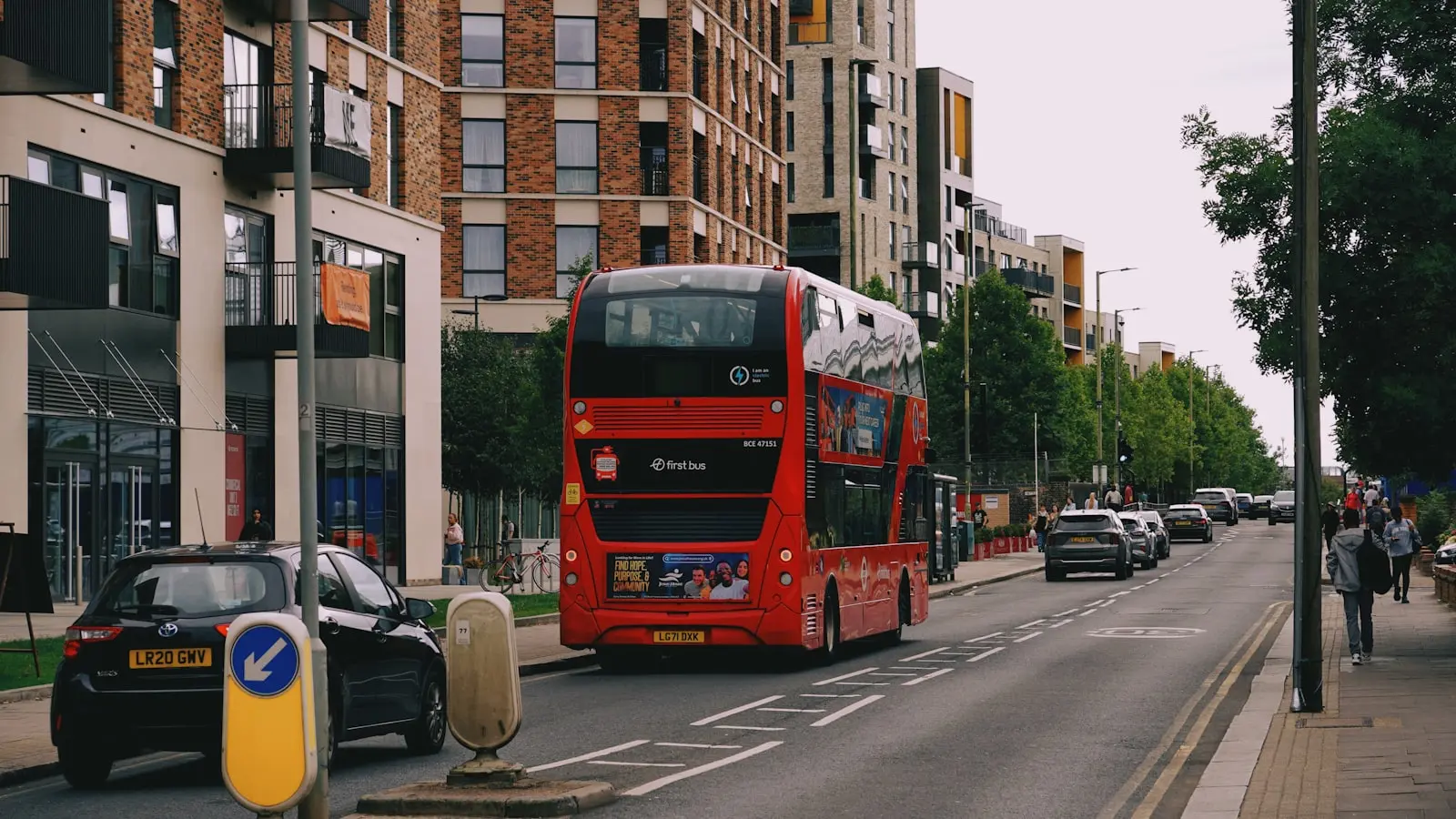
For those who prefer spatial awareness over subterranean speed, the iconic double-decker bus network offers an alternative. Riding on the upper deck at the front window provides a sweeping, elevated tracking shot of the city streets for a fraction of the cost of a guided tour. The bus navigates tight corners and crawls through dense traffic, allowing passengers to study the shifting architecture of different boroughs.
The Anatomy of the Daily Burn Rate
With accommodation secured in the outer zones and transit costs capped, the remaining 150 to 200 pounds filter directly into the local food and beverage economy. Dining in London fractures into distinct tiers. High-end dining establishments in Soho or Chelsea execute menu pricing that can obliterate a daily budget in ninety minutes. The alternative lies in the public house.
The traditional London pub operates as a community living room. It offers shelter, caloric density, and social observation at a fraction of restaurant prices. The environment features worn patterned carpets, etched glass partitions, and the low hum of overlapping conversations. Bartenders pull handles to draw cask ale—a living product served at cellar temperature, distinct from heavily carbonated keg beers. A plate of fish and chips or a savory pie, ordered at the bar and carried to a scarred wooden table, anchors the daily food expenditure.
(Table service commands a premium; counter service preserves capital). Travelers who understand this distinction stretch their funds considerably. They avoid the homogenized chain restaurants lining Leicester Square and seek out corner pubs in residential pockets. The transaction is blunt and efficient.
Street markets provide a secondary arena for budget allocation. Borough Market remains a central draw, operating under cast-iron railway viaducts near London Bridge. Vendors arrange artisanal cheeses, cured meats, and fresh oysters on crushed ice. However, its international popularity drives up prices. The seasoned traveler evaluates Borough Market for visual and olfactory stimulation, then travels to Broadway Market in Hackney or the stalls of Exmouth Market to execute actual purchases. Shifting consumption away from the primary tourist nodes preserves liquidity. The food tastes identical. The rent premium vanishes.
The Pedestrian Arbitrage
Ultimately, London rewards the pedestrian. The financial blueprint of a five-day visit relies heavily on walking as both a transit mechanism and a primary activity. The city functions as an amalgamation of historically distinct villages, each possessing its own architectural rhythm. The transition from the stark brutalism of the South Bank to the narrow, medieval street patterns of the City of London occurs over a single bridge crossing.
Walking slows the rate of expenditure. It redirects attention toward the craftsmanship of the environment. Travelers observe the ornate wrought-iron railings of Bloomsbury squares, the weathered Portland stone of civic monuments, and the intricate brickwork of Victorian viaducts. These elements cost nothing to consume. They define the aesthetic identity of the city.
Budgeting for London, therefore, is an exercise in spatial and behavioral discipline. The 200-pound daily limit forces the traveler out of the sanitized, high-cost tourist corridors and into the working mechanics of the city. They ride the buses, they eat in the pubs, and they walk until the geography makes sense. The financial friction creates a deeper cultural resonance. Tourists buy isolation. Travelers earn immersion.