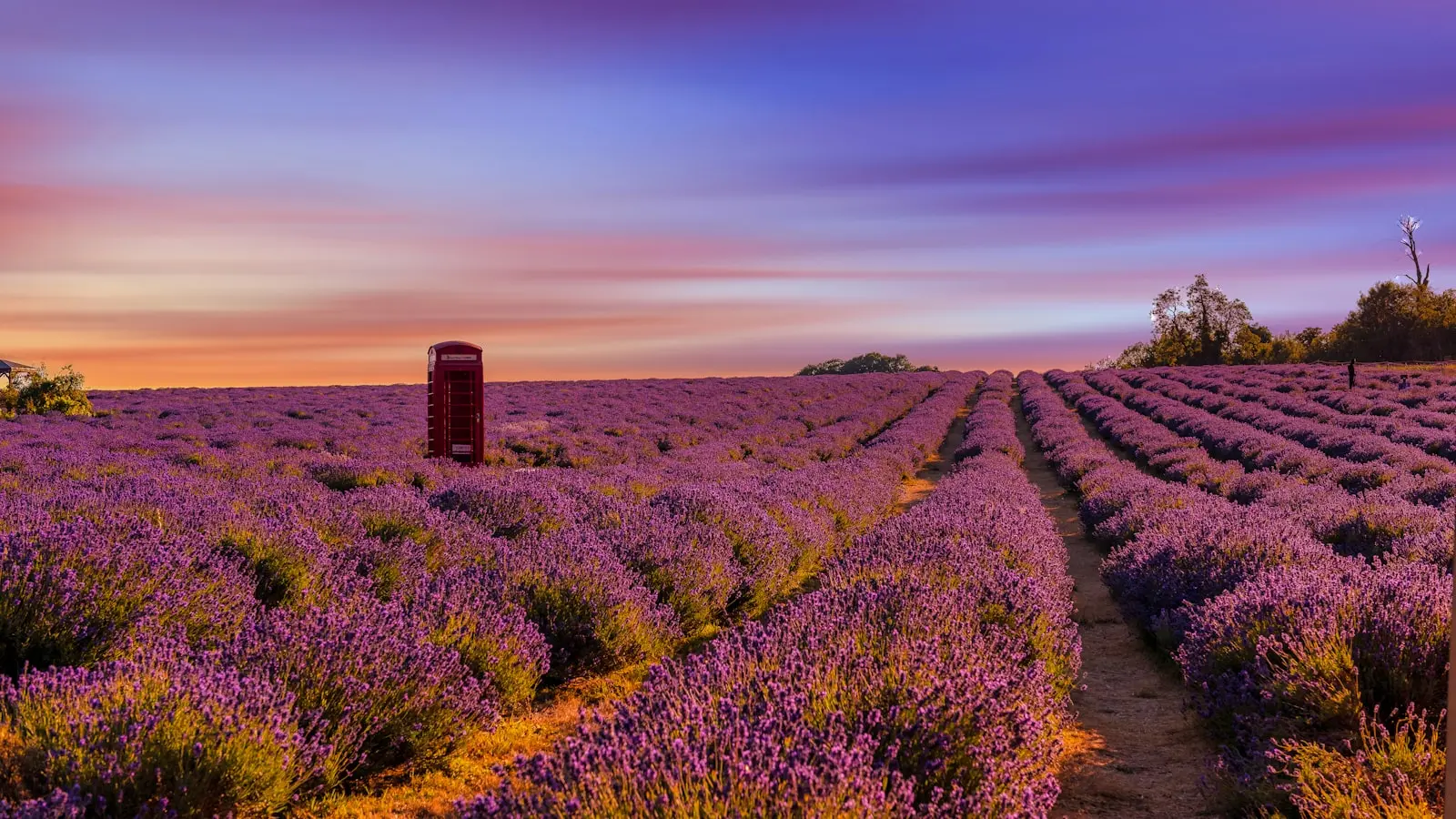
If you are searching for the best lavender photo spots in Provence for 2025, the iconic Plateau de Valensole remains the classic choice, but the most photogenic lavender fields in France also include the less crowded Sault Plateau, the monastery-backed Abbaye de Sénanque, the village-studded Luberon area, and hidden fields near Forcalquier and Banon. Each location offers a distinct composition, and the trade-off usually comes down to crowds versus uniqueness. Below we rank the top spots based on scenic beauty, accessibility, crowd levels, seasonal timing, and uniqueness, so you can decide which ones fit your photography style.
Key Takeaways
- Arrive at Valensole before sunrise (by 6:30 AM) to capture soft light and avoid the crowds that build by 9 AM.
- Sault Plateau offers a quieter alternative with panoramic views, free access, and a later bloom (late July to early August).
- Abbaye de Sénanque delivers a world-famous composition but requires an entrance fee and limited morning access; consider photographing from the roadside with a telephoto lens.
- Hidden gems like Forcalquier, Banon, and Drôme Provençale provide solitude and unique backdrops with fewer restrictions on drone use.
- Golden hour (sunrise and sunset) is the best light for all locations; midday light washes out purple tones.
Criteria for Ranking the Best Lavender Photo Locations
To help you pick the right spot, we evaluated each location on five practical criteria:
- Scenic Beauty: Does the scene offer strong composition potential? Look for leading lines, color contrasts (lavender with wheat or sunflowers), and iconic backdrops like stone farmhouses or hilltop villages.
- Accessibility: How easy is it to get there? Consider parking, roadside access, entry fees, and physical difficulty. A spot with a locked gate or a long hike may not suit everyone.
- Crowd Levels: How busy does it get during peak bloom? Some places are packed by mid-morning, others remain quiet even at midday.
- Seasonal Timing: Bloom windows vary by altitude and microclimate. Knowing the right week can make or break your trip.
- Uniqueness: Does the location have a distinctive element—a monastery, a stone hut, a heart-shaped olive tree—that sets it apart from endless rows?
Plateau de Valensole – Iconic Rows (But Arrive Before Sunrise)
Valensole is the most famous name in Provençal lavender photography, and for good reason. The plateau stretches for miles with endless rows of lavender, often interspersed with golden wheat fields, lone cypress trees, and weathered stone farmhouses. This is the quintessential image of Provence. Specific spots to aim for:
- House with a Cypress near Lavandes Angelvin (GPS: 43.822054, 5.937107). The straight rows lead the eye directly to a classic Provençal house. Best at sunrise.
- D8 road between Valensole and Puimossion – roadside fields with easy pull-offs.
- Road to Mas St Andrieux – a less crowded alternative with similar composition potential. Best time: Sunrise, ideally before 6:30 AM in July, to capture soft light and avoid the crowds that swell by 9 AM. Golden hour also works between 6:30 PM and 10 PM, but sunset can be busier. Photography tip: Use a 24-70mm lens for wide shots that include a farmhouse or cypress tree for scale. A polarizing filter helps reduce glare on the purple flowers. Crowd alert: Many photographers advise arriving early because the iconic spots fill up quickly by mid-morning. Weekdays are less crowded than weekends.
Sault Plateau – Less Crowded, Panoramic Views
If you want a more relaxed experience without sacrificing photographic opportunities, Sault is an excellent choice. The fields here grow fine lavender (used for perfume) and are set against the backdrop of Mont Ventoux and the Ventoux valley. The area also features traditional stone huts called bories, which make for excellent foreground elements. Best time: Late July to early August. Due to higher altitude, the bloom starts later and lasts a bit longer than in Valensole. Photography tip: Shoot toward the hills to add depth. Include a borie or a lone tree in the foreground to anchor the composition. A 70-200mm lens can compress the rows against the mountain. Drone note: Drone regulations are stricter around Mont Ventoux nature reserves. Always check local rules before flying; some parts of the Sault plateau permit drones, but you must avoid protected zones.
Abbaye de Sénanque – Iconic Monastery Backdrop (But Limited Access)
The image of lavender rows stretching toward a 12th-century Cistercian abbey is one of the most reproduced photos of Provence. It is undeniably beautiful, but the experience comes with caveats. Access & fees: The abbey charges an entrance fee. For 2025, you should verify the exact amount and opening hours on the abbey’s official website before visiting. The field in front of the monastery is accessible only during opening hours, and early morning access is not guaranteed. Best time: Early morning, if you can get in before the crowds. Sunrise is not officially permitted, but some photographers arrive before opening to shoot from the roadside. Check if the abbey offers special early-hour photography passes. Cons: The spot is small and often crowded. Some visitors question whether the fee is worth a single perspective, especially when Valensole offers dozens of free compositions. If you want a unique angle, consider shooting from a higher vantage point on the opposite side of the valley (using a telephoto lens) without entering the paid area.
Luberon Villages – Roussillon and Gordes with Lavender Foreground
For travelers who want to combine lavender photography with iconic Provençal villages, the Luberon region is ideal. The villages of Roussillon (with its ochre cliffs) and Gordes (stone houses on a hill) provide stunning backdrops when paired with lavender fields in the foreground. Specific spots:
- Claparèdes plateau between Bonnieux and Saignon – known for vibrant lavender displays and unobstructed views.
- Road from Bonnieux to Goult – classic postcard view with lavender rows leading to a hilltop village. Best time: Late June to early July for early bloom at lower Luberon altitudes. Photography tip: Use a wide-angle lens to capture the village in the distance with lavender as the foreground. A drone can provide a fantastic bird’s-eye composite, but be aware that the Luberon Regional Park restricts drones in many areas—always check with local authorities.
Hidden Gems – Fields Near Forcalquier, Banon, and Drôme Provençale
For photographers seeking solitude and unique compositions, these lesser-known areas deliver.
- Forcalquier: Rolling fields with a distant mountain range. The light here is often beautiful in the late afternoon. GPS coordinates are not fixed, but driving the D12 and D4100 roads reveals plenty of pull-off points.
- Banon: Known for its goat cheese and lavender. The combination of stone farm buildings and neat lavender rows makes for charming detail shots.
- Drôme Provençale: The northernmost lavender region, with wilder, more rugged landscapes. Fewer tourists means you can take your time setting up shots. Drones are generally more permissible here, but you must still avoid any nature reserves (check the official map of protected areas). Photography tip: A telephoto lens (70-200mm or longer) works well to compress the lavender rows against the distant hills. Look for contrasting elements like a lone tree or a winding dirt path that creates a leading line.
Photography Tips for Every Location
- Timing: Golden hour (first hour after sunrise, last hour before sunset) gives warm light and long shadows. Midday light is harsh and washes out the purple color. If you must shoot midday, use a polarizing filter and look for cloud cover that diffuses light.
- Composition: Use the natural lines of lavender rows to lead the eye. Look for foreground elements: a stone, a flower, a fence. Combining lavender with sunflower fields (which bloom roughly at the same time) creates striking color contrast.
- Gear: A wide-angle lens (16-35mm) for sweeping landscapes; a 24-70mm for versatile shots; a 70-200mm for isolating patterns and compressing layers. A tripod is essential for sunrise and sunset long exposures if you want to capture movement in clouds or water.
- Drone regulations: Many areas in Provence restrict drones near nature reserves (Parc Naturel Régional du Luberon, Mont Ventoux) and historic monuments (Abbaye de Sénanque). Always verify with the French Directorate General for Civil Aviation (DGAC) and local prefectures. On private land, you must obtain permission from the landowner. Never fly over people or roads.
Frequently Asked Questions
When is the best time to photograph lavender in Provence? The bloom runs from late June to early August, peaking in mid-July. Lower altitudes like Valensole bloom earlier (late June to mid-July), while higher areas like Sault bloom later (mid-July to early August). For daily timing, golden hour – roughly 6:30 PM to 10 PM for sunset and before 6:30 AM for sunrise – offers the most flattering light.
Is the Abbaye de Sénanque worth the entrance fee for photography? It depends on your priorities. The classic shot is stunning but many photographers feel the composition is one-dimensional and the site feels commercialized. The fee allows you to stand in the field directly in front of the abbey, but you can also photograph it from the roadside (free) using a telephoto lens. Check 2025 entrance fees and hours in advance; if you value variety, Valensole or Sault offer more flexibility for the same effort.
Can I fly a drone over lavender fields in Provence? Drone use is restricted in many areas. The Luberon Regional Park prohibits drones without special authorization. Abbaye de Sénanque and other historic sites also ban overflights. Fields on private land require the farmer’s permission. Always consult the latest DGAC regulations and local prefecture rules before launching. Some open areas in Drôme Provençale may be more permissive, but you must still respect safety and privacy laws.
How can I avoid crowds at popular spots like Valensole? Arrive before sunrise, ideally by 6:00 AM. Visit on weekdays rather than weekends. Skip the most famous pull-off points (like the House with a Cypress) and explore side roads – the D8 and D6 have many quieter spots. Alternatively, choose Sault or hidden gem areas where crowds are naturally thinner.
What GPS coordinates should I use for the best compositions? For Valensole’s iconic house with a cypress: 43.822054, 5.937107. For the D8 roadside fields near Puimossion: roughly 43.944, 5.216. For the Abbaye de Sénanque field: 43.92927, 5.18748 (note that this point is on the roadside, not inside the paid area). For the Claparèdes plateau: around 43.834, 5.371. Always cross-check on satellite view before heading out, as field boundaries may change each season.
Whether you chase the iconic rows of Valensole or seek quiet corners near Banon, the best lavender photo spots in Provence reward those who plan ahead and adjust their timing. Prioritize early mornings, respect local regulations, and keep an eye on the bloom reports as summer approaches. With the right preparation, you will leave with images that truly capture the magic of Provence.