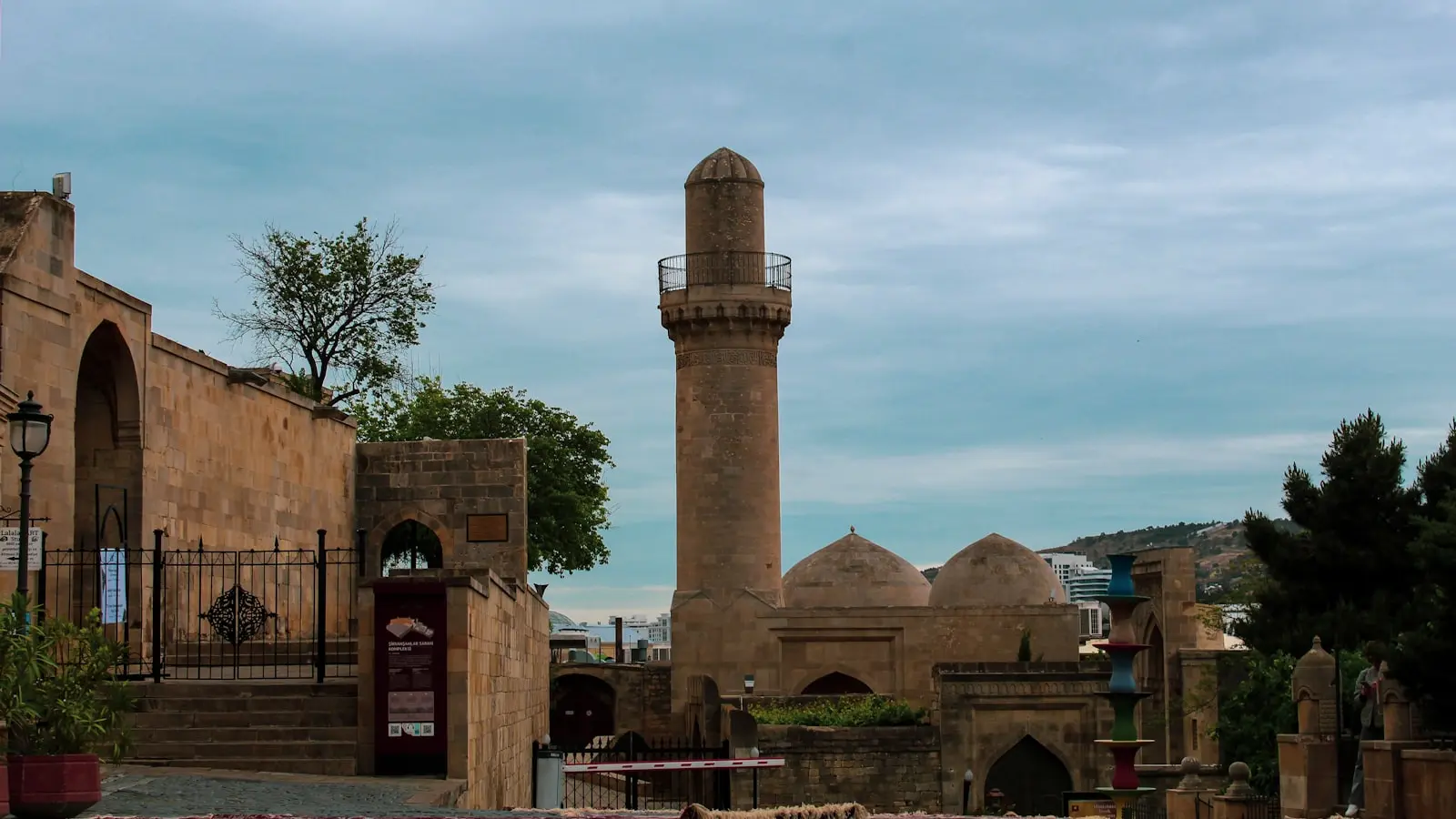
The stone cools underfoot even as midday sun bakes the walls. Narrow lanes twist without warning, opening into courtyards where laundry hangs above ancient caravanserais. The smell of saffron and lamb drifts from a doorway. This is Icherisheher, Baku’s Old City, a UNESCO World Heritage site with over 3,000 years of layered history. For a traveler arriving with limited time, the first question is practical: how many days does this place need?
One week in Azerbaijan, as a Reddit traveler recently noted, turned the Old City into “one of the most beautiful old towns” they had ever seen. The praise came with a nuance: the Old City is not a static museum but a functional neighborhood. People live here. Shops sell copper pots alongside souvenir magnets. Cafes fill with the sound of backgammon tiles. The balance between lived reality and curated heritage makes it a space that rewards patience. And patience requires time.
Based on typical itineraries shared across travel forums, two to three days inside the Old City allows a visitor to explore the Maiden Tower, the Shirvanshahs’ Palace, and the labyrinth of alleys without rushing. The Maiden Tower alone—a 12th-century cylindrical structure of uncertain purpose—demands an hour if you climb its internal staircase and study the small museum exhibits on the way down. The palace complex, with its divankhana and stone mausoleums, easily eats another two hours if you read the placards. Add the nearby mosques, the medieval baths, and the carpet museum tucked behind a gate, and a single day becomes a frantic dash. Two days let you pause. Three days let you sit.
The depth of exploration depends entirely on interest level. A history graduate might spend an entire afternoon decoding the inscriptions on the palace courtyard. A casual traveler might breeze through in two hours and feel satisfied. But the Old City is not a checklist. It is a sensory environment where design shapes behavior: the narrow lanes force eye contact, the sudden shade of a vaulted passage invites lingering, the absence of cars (mostly) turns walking into a primary mode of discovery. (Thankfully, the souvenir touts are less aggressive here than in Istanbul’s Grand Bazaar.)
The Old City as a Living Museum
What makes Icherisheher different from other walled old towns in the Caucasus is its refusal to be purely decorative. Residents still use the hammams. The bakeries still fire tandirs in back alleys. A 15th-century mosque now has a modern prayer hall attached. This functional continuity means that a two-hour walk can feel like a time warp—until you turn a corner and find a coworking space with wi-fi and latte art. The emotional architecture of the place is built on contrast.
Visitors who rush through miss the texture: the way limestone absorbs morning light, the pattern of a 19th-century Russian addition grafted onto a medieval wall, the faint echo of horse hooves in the fortress gates. A guided tour on the first day, as Reddit regulars advise, orients the eye. A local guide (expect around $30 for a two-hour walk) will point out the shift from Zoroastrian to Islamic to Soviet influences, and explain why certain streets are named after oil barons. After that, free exploration becomes more meaningful. You begin to notice the details—the carved lintel above a door, the hitching post that survived the automobile age.
Splitting Time: Old City and Modern Baku
The Reddit consensus recommends splitting time between the Old City and Baku’s modern districts. The city is a palimpsest: Soviet brutalism rubs against glass skyscrapers, and the Flame Towers tower over the medieval skyline like a branding exercise. A five-day itinerary might allocate two full days to the Old City, one day to the Heydar Aliyev Centre (Zaha Hadid’s fluid masterpiece, 20 minutes by taxi), and one day to Gobustan’s petroglyphs and mud volcanoes (a full day trip, about 70 km south). That leaves a fifth day for catch-up or a return to favorite corners.
A shorter three-day stay compresses the Old City into one and a half days, leaving half a day for the Heydar Aliyev Centre and half a day for the Baku Boulevard and the carpet museum near the waterfront. This works, but it forces choices. The Shirvanshahs’ Palace after 2 PM can be crowded with school groups. The Maiden Tower at sunset offers a remarkable view, but only if you time it right. (Frankly, the queue at the tower can eat 30 minutes on weekends.) Better to have flexibility.
The Question of Pace
Why does the Reddit traveler who spent a week call the Old City “one of the most beautiful”? Because they had time to absorb it slowly. The narrow lanes reward multiple passes; a morning walk reveals different light than an evening one. The same shopkeeper might offer tea on the second visit. The cats that sleep on the steps become familiar faces. This is not tourism; it is immersion.
A two-day stay inside the Old City gives enough time to see the three main monuments, eat at a converted caravanserai, and wander without a map. Adding a third day allows a deeper dive: the miniature book museum (a whimsical collection), the archaeological park that digs into the city’s layers, and a sunset walk along the fortress walls. For most travelers, the sweet spot is 2–3 days dedicated to the Old City itself, with 1–2 additional days for the wider Baku region.
Practical Constraints and Trade-offs
Accommodation: Several boutique hotels inside the walls offer rooftop terraces with views of the Flame Towers. Staying inside the Old City saves commute time but limits late-night dining options (most restaurants close by 11 PM). Budget options exist in the Sabayil district, a 10-minute walk away. Food: Try plov at a place recommended by locals, not the Instagram-famous spot with the long queue. Avoid the tourist-trap tea houses near the main gate that overcharge for mint tea.
Weather: Baku is windy even in summer, and the Old City’s stone absorbs heat. Spring and autumn are ideal; July and August push midday exploration into the uncomfortable zone. Wear flat shoes—the cobblestones are uneven and polished by centuries of feet.
The Verdict
So how many days should you spend in Baku Old City for a complete experience? The answer depends on what “complete” means. If it means seeing the UNESCO-listed monuments and walking the main streets, two days will do. If it means understanding how the layers of history coexist with contemporary life, add a third day. And if it means tasting the city’s soul, stay long enough to feel the rhythm of the call to prayer, the afternoon lull, and the evening hum of families strolling along the boulevard. Three days inside the Old City, with one more for the modern landmarks beyond, emerges as the recommendation from travelers who have walked these lanes without a watch. They are rarely wrong.