The Assumption That Crumbles
One traveler recently spent three days in Alsace without a rental car, relying entirely on the SNCF rail network. Their report, shared on a travel forum, upends the common belief that a car is mandatory for exploring the region’s half-timbered villages and rolling vineyards. The post generated a flurry of follow-up questions about itineraries, schedules, and must-see spots. The original poster responded with detailed advice on using trains and walking between attractions. The consensus among the thread: a car-free trip to Alsace is not only possible but highly enjoyable.
Why the Car-Free Myth Persists
Alsace is known for its Route des Vins, a 170-kilometer stretch linking quaint wine villages. Guidebooks and tour operators often recommend driving to cover more ground. Yet the perception that public transport is daunting for first-time visitors masks a simple truth: the region’s rail network is efficient, frequent, and reasonably priced. The TGV connects Strasbourg to Paris in under two hours, and local TER trains run like clockwork. A 30-minute ride separates Strasbourg from Colmar, the two primary hubs. From there, buses or short train hops reach smaller towns. The design of the SNCF system, with its integrated ticketing and real-time app, reduces the friction of carless travel.
Strasbourg: The Glass and the Gargoyle
Strasbourg’s train station is a work of modern architecture—a vast glass canopy that shelters the historic facade behind it. Stepping out, you are immediately in the city’s grid of bike lanes and tram tracks. The Grande Île, a UNESCO World Heritage site, is best explored on foot. The cathedral, with its single spire and intricate rose window, anchors the old town. The absence of a car allows you to notice details: the pattern of cobblestones worn by centuries of feet, the scent of baking brioche from a corner boulangerie, the chatter at a wine bar spilling onto the street. Design shapes behavior here—the pedestrian-only zones force a slower gaze.
Colmar: A 30-Minute Meditation
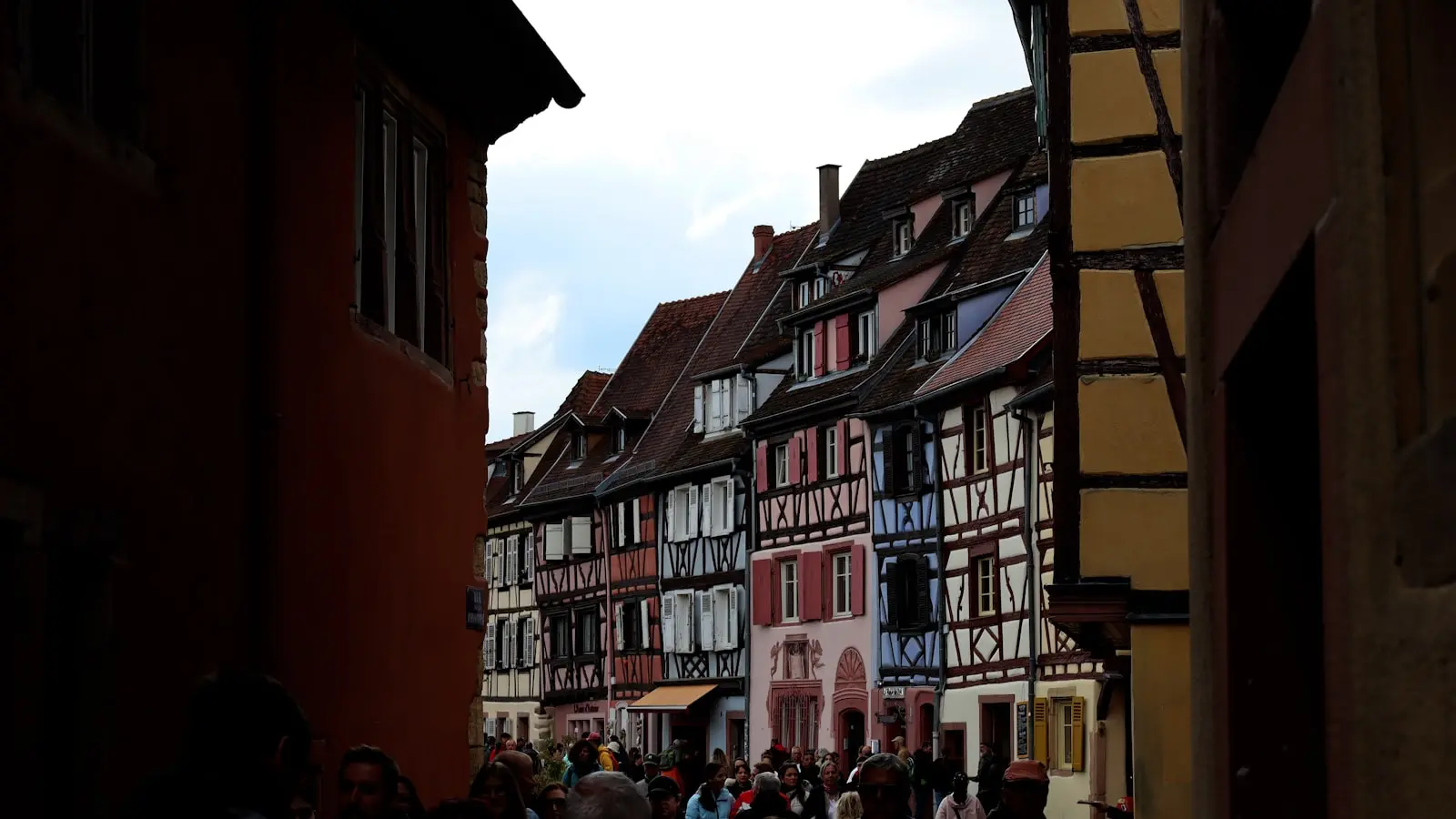
From Strasbourg, the train glides through flat farmland and neat rows of vines. Colmar’s station is a ten-minute walk from the Petite Venise district, where canals are lined with half-timbered houses painted in pastels. The town’s layout is compact; every major attraction—the Unterlinden Museum, the Bartholdi birthplace, the covered market—lies within a 15-minute radius. Without a car, you trade speed for texture. You linger at a pâtisserie window, follow the sound of a violin from a courtyard, and note how the light changes on the timber frames as the afternoon lengthens. The Reddit traveler described the vibe as “amazing” and the people as friendly—a sentiment echoed by many visitors who walk the same streets.
The Wine Route on Rails
The desire to explore the Route des Vins often drives the car rental impulse. Yet a clever use of TER trains and regional buses can replicate the experience. Trains stop at towns like Obernai, Barr, and Ribeauvillé. Once there, the vineyards are walkable from the station. The magic is not in covering the entire route but in choosing one town and letting it unfold. You can taste at a caveau, walk along the vine rows, and catch the next train an hour later. The freedom from driving means you can sample the Riesling, the Gewurztraminer, and the Pinot Noir without penalty. (Is this actually a compromise? Not if you value depth over breadth.)
Practicalities: The SNCF Workflow
The Reddit poster emphasized using the SNCF app to buy tickets on the go. A single ticket from Strasbourg to Colmar costs around €12-€15. The trains run at least twice an hour during the day. Within towns, walking is the primary mode, but Colmar also has local buses. The key is to plan a base—Strasbourg or Colmar—and take day trips. Accommodation near the train station reduces dead time. The experience is not for someone who wants to hit 10 villages in a day. It rewards the traveler who accepts a slower rhythm.
Food Without a Steering Wheel
Alsace’s culinary identity is inseparable from its geography. The heavy choucroute, the savory tarte flambée, the delicate kugelhopf—these are dishes that demand a leisurely meal. Without a car, you are free to pair a full bottle of wine with dinner, to wander back to your hotel along lamplit streets, and to stop at that fromagerie you passed earlier. The food becomes part of the journey, not a refueling stop. The Reddit traveler noted the excellence of the food, and the ability to explore multiple restaurants over a few days without designated driver concerns.
The Essential Village Walk
Not every Alsatian village is train-accessible, but the major ones are. For a deeper dive, take a bus or a taxi for a short hop. The act of walking from a train station into a village center is itself a mental transition. You see the outskirts, the gardens, the bicycle racks. By the time you reach the central square, you have already absorbed the scale and rhythm. This is travel as immersion, not transport.
Design Shapes Behavior
The entire premise of a car-free Alsace trip rests on a design philosophy that prioritizes connection over coverage. The railroad was laid centuries ago, linking towns that grew around trade routes. Today, that infrastructure offers a template for slow travel. The towns themselves are designed for pedestrians—narrow lanes, shared spaces, market squares. The absence of a car does not limit you; it liberates you from the cognitive load of navigation, parking, and traffic. You become a participant rather than a passerby.
Conclusion: A Different Kind of Luxury
The Reddit thread ultimately answered its own question with a resounding yes. A car-free trip to Alsace is not a badge of budget travel but a deliberate choice in favor of presence. It costs a little more planning up front, but the dividends are paid in sensation and memory. The train becomes a thread connecting experiences, each station a threshold into a new scene. For the traveler who asks, “Can I really see Alsace without a car?” the answer is yes—and you might see it better.