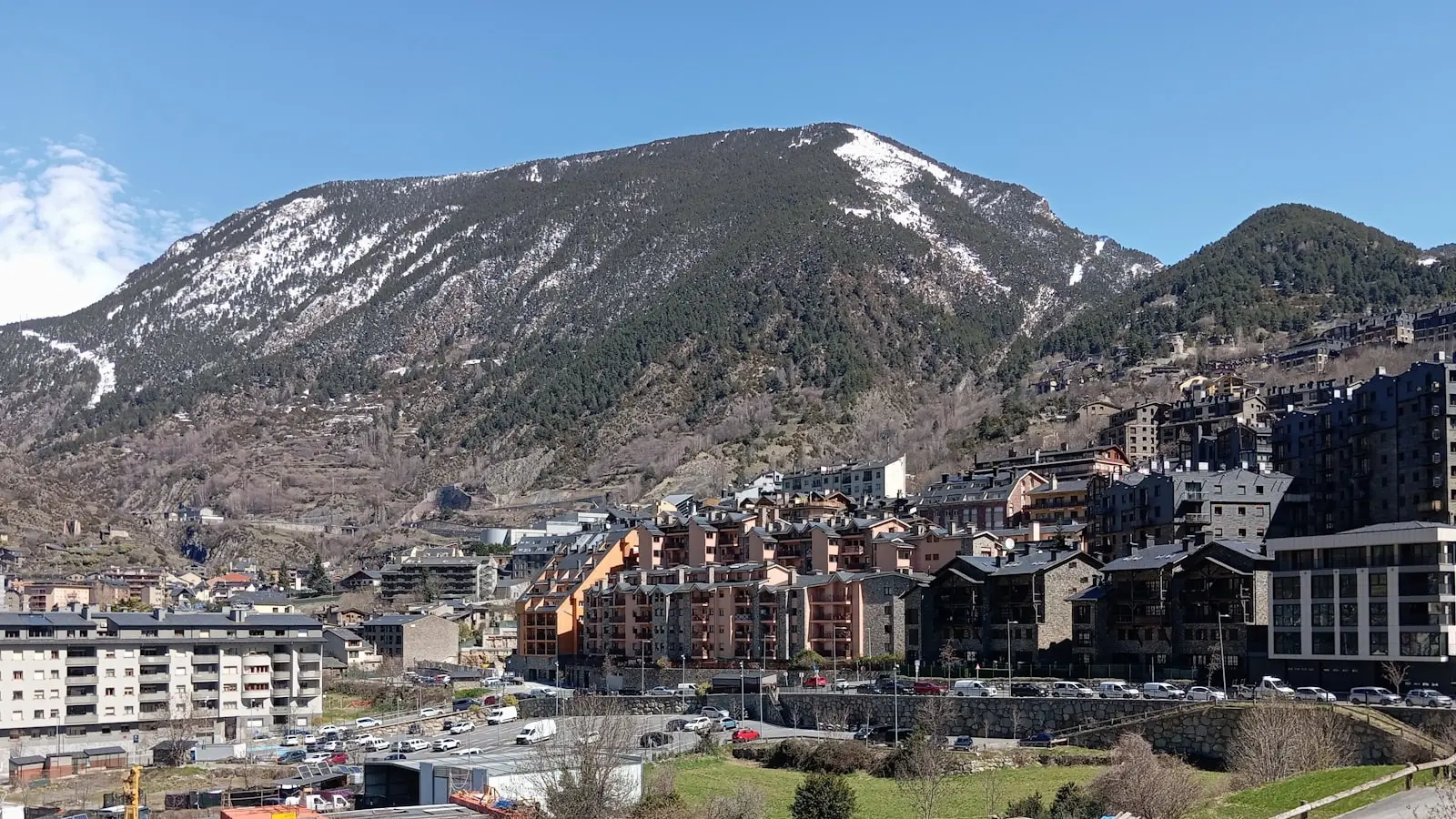
Yes—two days in Andorra can be enough without renting a car, provided you treat the visit as a compact town-and-mountains break rather than an attempt to cover the entire country. Stay in Andorra la Vella or Escaldes-Engordany, arrive early enough to preserve your first afternoon, and plan only one mountain-focused excursion.
The limitation is not Andorra’s size but its terrain. Roads follow narrow valleys, public transport schedules shape the day, and many of the most dramatic trailheads, viewpoints and ski areas are less simple to reach than they appear on a map.
Key Takeaways
- Two days work well for a central base, old-town walking, food, shopping, wellness and one planned mountain outing.
- Andorra la Vella and Escaldes-Engordany are the most practical bases for visitors traveling without a car.
- Local buses can serve major inhabited valleys, but they do not make every trailhead, viewpoint or high pass convenient.
- Build generous buffers around cross-border coaches, weather and final return connections.
- A car-free trip is less suitable for remote hiking, ski-area hopping or a broad scenic tour across several valleys.
Andorra sits between Spain and France, so its language, food and everyday atmosphere may feel familiar to visitors arriving from either side of the Pyrenees. Still, it is a separate principality with its own border logistics, transport patterns and practical considerations. On a 48-hour trip, those details matter.
What You Can Realistically Do in Two Days in Andorra Without a Car
For two days in Andorra, the strongest car-free plan is centered on the capital area. You can walk the Barri Antic, browse central shopping streets, take a riverside stroll, settle into a long meal and book a wellness activity such as a spa session. These are not merely backup activities; they offer the most relaxed way to experience the country’s urban side.
A second day can accommodate one mountain outing if you confirm the transport plan in advance. Depending on the season, that might be a bus-accessible village, a resort connection, a guided excursion or a short walk near a populated valley. Choose one destination and allow time for both the outward and return journeys.
What does not fit comfortably is a self-guided circuit through several parishes, remote lakes and high passes. Famous hiking areas may be reachable only through a combination of bus, taxi, lift or a long approach walk. Trying to combine several of these places in one day can turn a short break into a timetable exercise.
A simple decision test helps. Go car-free if you have two nights, can arrive by early afternoon or earlier, are content with one main mountain excursion and will stay centrally. Consider adding a day or renting a car if the trip depends on remote hiking, sunrise viewpoints, extensive photography stops or several ski areas.
Getting to Andorra and Moving Around
Andorra has no commercial airport or rail station. Most visitors arrive by scheduled road transport from Spain or France after flying into, or taking a train to, a larger city on one side of the Pyrenees. That final coach or transfer is the part of the journey that can determine whether two days feels generous or rushed.
Choose a Spain-side or France-side arrival route according to your wider itinerary, realistic arrival time and onward travel plans. Coach stops, operating days, luggage policies, fares and booking requirements can change, so confirm current details directly with the relevant operator before booking accommodation or fixed activities.
Allow more buffer than you would for a standard city transfer. Mountain weather, holiday traffic, road works, luggage handling and gaps between services can all affect a tight schedule. Avoid booking a non-refundable spa entry, dinner reservation or outdoor activity immediately after a cross-border journey.
Within Andorra, the capital area is the easiest place to explore on foot. Local buses can connect major inhabited areas, but a bus stop does not always provide easy access to an attraction. The final stretch may involve steep terrain, a lengthy roadside walk or a return service that ends earlier than expected.
Taxis, hotel transfers and organized excursions can make one difficult outing feasible. They can also change the cost of a short trip quickly, especially for solo travelers. For couples or small groups, compare the full transfer cost with the cost and convenience of renting a car before deciding.
Before booking, confirm your arrival stop, hotel walking distance, the final useful local bus from any planned excursion, your outbound connection on day three and current access conditions for outdoor activities. Also check whether the hotel is uphill from the stop; slopes and wheeled luggage are an unhelpful combination after a long coach journey.
Where to Stay for an Andorra Without Car Trip
For a first car-free visit, Andorra la Vella or neighboring Escaldes-Engordany is usually the most forgiving base. This area concentrates hotels, restaurants, shops, practical services and onward transport. It also provides a worthwhile fallback if weather or transport disrupts the mountain portion of the trip.
A quieter mountain parish can be appealing if you are focused on one resort, village or trail area. The trade-off is less flexibility. You may depend on a bus timetable, hotel shuttle, pre-arranged taxi or a specific seasonal lift connection, leaving little room for a delayed arrival or changing forecast.
When comparing accommodation, look beyond the room rate. Check walking time from the intercity stop, access to local buses, late check-in arrangements, breakfast hours and surrounding terrain. If a spa visit or ski day is central to the stay, verify reservation requirements and transport arrangements before choosing the hotel.
A central base will not make every corner of Andorra easy to reach. It will make a limited itinerary more resilient, which is usually more valuable than trying to maximize geographic coverage on a Pyrenees weekend trip.
A Realistic 48-Hour Andorra Itinerary With Buffers
Treat this as a flexible template, not a promise that every activity will be operating. Weather, seasonal closures and transport schedules should shape the final plan.
Day 1: Arrive and make the capital area the destination. Check in, then take an unhurried orientation walk through the central area and Barri Antic. Choose one modest cultural stop, scenic street circuit or riverside walk rather than immediately heading for a distant parish.
Have a late lunch or early dinner, then use the evening for a wellness session if your journey ran smoothly. A spa can be a useful anchor for a short stay, but reserve a time with a meaningful delay cushion. If transport runs late, a relaxed meal and a short walk are better than rushing through a fixed booking.
Before bed, confirm the next day’s departure point, weather forecast and operating status of any lift, trail access point or activity. This brief check can prevent a wasted day.
Day 2: Choose one mountain plan and one fallback. Option A is a confirmed bus or excursion to one accessible valley, village or viewpoint. Option B, in winter, is a resort connection that works with your return schedule and does not depend on catching the final transport of the day.
Option C is the bad-weather plan: stay central for food, shopping, cultural stops where available, another wellness activity and a longer urban walk. In a mountain destination, changing the plan because conditions are poor is sensible rather than disappointing.
Return to your central base well before the last useful connection. The final bus should be a contingency, not a comfortable margin. If you leave on the morning of day three, keep day two’s outing close enough that a delayed return will not become an expensive problem.
Season, Costs, Connectivity and Entry Details
Summer generally expands the options for walking and hiking, but it does not make every mountain route easy. High-elevation weather can change quickly, storms can alter plans and lift operations or access arrangements may be seasonal. A marked trail on a map is a starting point for planning, not proof of a simple car-free day out.
Winter brings snow activities and resort life, but also more constraints. Road conditions, footwear, daylight, weather, reservations and shuttle timing all matter. A short winter stay works best when accommodation and activity are connected by a confirmed service.
Andorra travel costs vary more by choices than by a single daily budget. Major variables include cross-border transport, hotel location, season, meals, spa entry, taxis, guided activities and ski or lift access. A central hotel may cost more than an outlying option but still offer better value if it avoids multiple taxi journeys and protects limited time.
Mobile service deserves attention because Andorra is outside the EU roaming area. Do not assume that a usual European roaming allowance applies. Check your provider’s terms before crossing the border, or arrange a suitable travel-data option for maps, tickets and transport updates.
Entry requirements depend on nationality, passport or travel document, and the rules for entering or re-entering Spain or France. Check official Andorran guidance and the relevant neighboring-country requirements before booking, particularly if your visa or residence permission limits entries to the surrounding Schengen area.
FAQ: Are Two Days in Andorra Enough Without Renting a Car?
Can you visit Andorra without a car?
Yes. A central stay supports walking, dining, shopping, historic streets and selected bus- or tour-based outings. Remote trailheads, high passes and multiple valleys are less convenient and may require a taxi, transfer or guided excursion.
Is Andorra la Vella walkable for a weekend?
The central area is practical on foot for accommodation, restaurants, shops and the old town. Mountain attractions beyond the capital area generally require a bus, taxi, hotel transfer or organized excursion.
How much does a car-free two-day trip to Andorra cost?
Price your specific dates rather than relying on a fixed estimate. Include current cross-border transport, two nights of lodging, food, one planned activity, local transport or taxis and mobile-data costs. The biggest budget differences usually come from the season, hotel location and whether the mountain outing requires a private transfer or tour.
Two days in Andorra without a car is worthwhile when the trip follows the country’s rhythm: one central base, one mountain ambition and enough time for the road to have its say.