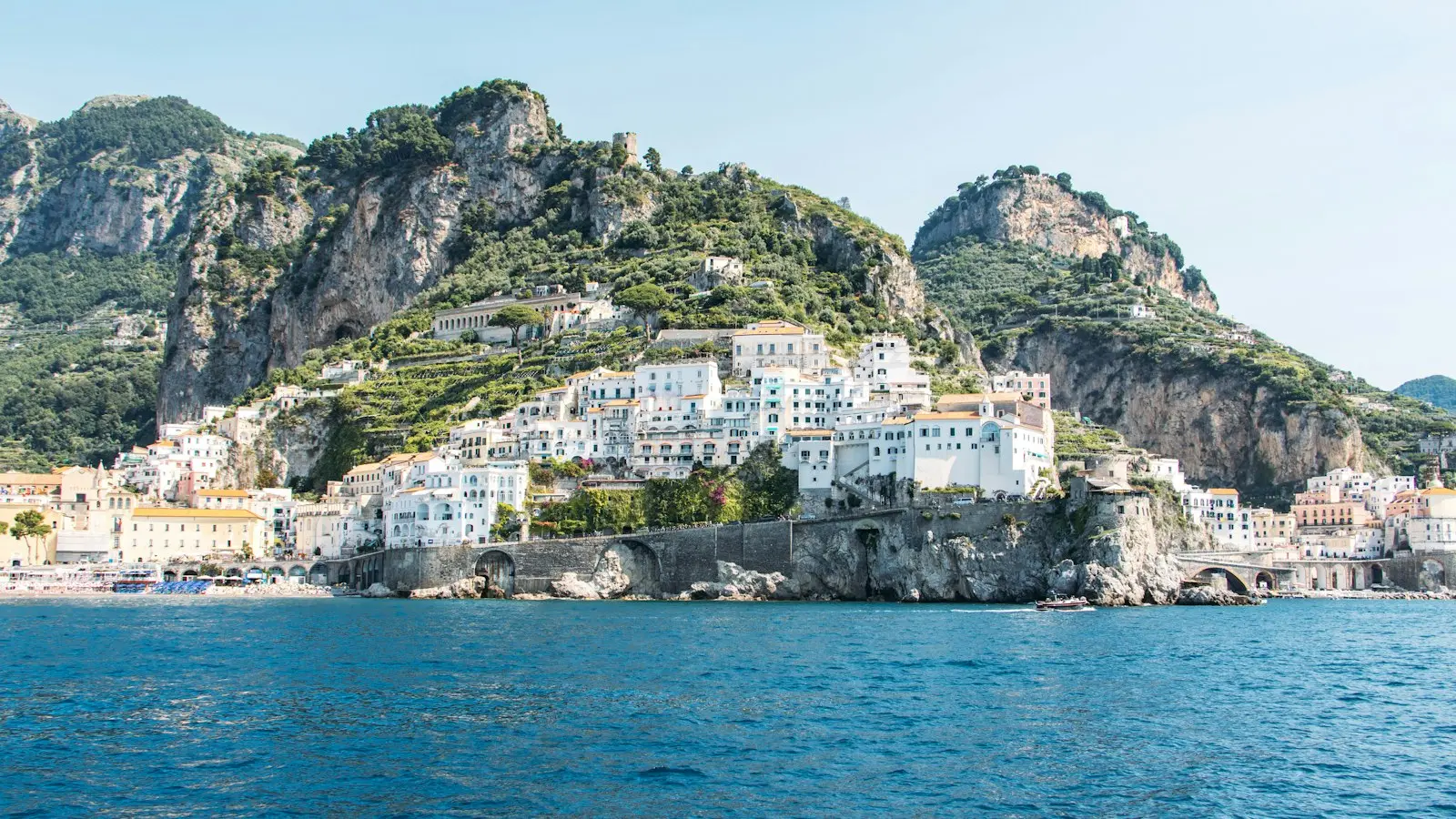
A Rome, Lake Como, and Positano trip can fit into seven calendar days, but it will not feel like seven full sightseeing days. Once flights, hotel changes, luggage, stations, ports, check-ins, meals, and recovery are counted, a three-base route becomes an ambitious highlights trip rather than a relaxed visit.
For most travelers, the better seven-day Italy itinerary is Rome plus either Lake Como or the Amalfi Coast. Choose three bases only if variety matters more to you than unstructured time and you are comfortable booking ahead, starting early, packing repeatedly, and changing plans when transport goes wrong.
Key Takeaways
- Seven calendar days may provide only five or six useful sightseeing days once arrival, departure, and transfers are included.
- Rome plus either Lake Como or the Amalfi Coast is usually more comfortable than attempting all three.
- Treat transfers as door-to-door travel, including luggage, stations, ports, check-ins, and local connections.
- Book flights, hotels, timed attractions, and important transport early, but keep buffer time around complex journeys.
- When delays occur, cut distant stops before cutting rest, meals, or contingency time.
Decide How Many Bases Fit Your Seven-Day Italy Itinerary
Start by separating calendar days from usable days. A late arrival may leave only an evening, while a departure day may offer little beyond breakfast and the journey to the airport. If your trip includes international flights on both ends, seven calendar days can easily become five or six practical sightseeing days.
That distinction changes the shape of the trip. Three bases might mean Rome, Lake Como, and Positano, with two or three nights in the first location and one or two nights in each of the others. On paper, that is a handsome sweep from ancient city to northern lake to southern coast. In practice, at least two days are dominated by relocation.
A hotel change is not just the vehicle ride. It includes packing, checking out, reaching the station or port, finding the correct platform or boarding area, managing bags, waiting for the next connection, reaching the new town, storing luggage if the room is not ready, and checking in. Even a smooth transfer can consume the part of the day when you would otherwise explore.
Three bases suit travelers who enjoy momentum and have a short list of non-negotiable sights. They also suit people who travel lightly, tolerate early departures, and will not be disappointed if a planned neighborhood walk becomes a meal near the hotel.
Two bases are usually wiser for first-time visitors, summer travelers sensitive to heat, families, people with mobility constraints, and anyone who wants time for ordinary pleasures: a long lunch, a market, a laundry stop, or an evening that is not governed by the next departure.
Lake Como and the Amalfi Coast should not be treated as interchangeable scenic stops. Lake Como is organized around a body of water, ferry connections, lakeside towns, villas, gardens, and mountain views. The Amalfi Coast is a steep coastal landscape where roads, buses, boats, stairs, and narrow town centers shape the experience. Both are beautiful, but they impose different transport and energy demands.
Build the Route Around Transfer-Day Reality
Plan every transfer from hotel door to hotel door, not from one station name to another. A published rail journey is only one component of the day, while a ferry itinerary can depend on the port you need, the season, weather, and the connection available after you arrive.
Rome to Lake Como generally involves reaching a northern rail gateway and then continuing toward the particular town where you are staying. “Lake Como” is not one destination with one central station. Your experience will differ depending on whether your base is near Como, Varenna, Bellagio, or elsewhere around the lake.
Lake Como to Positano is an even more involved move. It typically requires several stages, such as rail travel, a connection through the Naples or Salerno area, and then a road or sea journey toward the coast. The exact combination depends on your dates, accommodation, and current services. A map makes northern and southern Italy look tidier than they feel when you are carrying bags between connections.
The most workable order depends on flight prices, arrival and departure airports, accommodation availability, and current transport schedules. An open-jaw flight—arriving in one city and departing from another—may reduce backtracking, but it is not automatically cheaper or simpler. Check the airport transfer as part of the route, not as an afterthought.
Use this planning formula: usable sightseeing time equals calendar time minus arrival, departure, transfers, check-ins, meals, and recovery. Meals are not wasted time, and recovery is not a planning failure. Italy is experienced at a walking pace, with food and conversation included, so removing both from the calculation produces an itinerary that looks full but feels thin.
Before paying for nonrefundable arrangements, check current high-speed and regional rail services, local connections, ferry operators, and the instructions supplied by your accommodation. Recheck schedules shortly before departure. For ferry-dependent routes, allow a fallback plan because weather or seasonal service changes can affect the day.
Do not place a timed museum entry or important dinner immediately after a complex transfer. If the connection runs late, you want to lose an optional walk rather than a reservation you cannot replace.
Use a Seven-Day Schedule That Protects Energy
A three-stop route can work as a framework, but it should be treated as a deliberately compressed trip rather than a guaranteed schedule:
- Days 1–3: Rome. Use separate sightseeing areas on separate days. One day might focus on ancient Rome, another on the Vatican area, and another on a neighborhood, market, museum, or less structured walk. Keep arrival day light unless your flight lands early and you are genuinely rested.
- Day 4: Transfer toward Lake Como. Start early if the connections require it. Treat the afternoon as a bonus rather than a promise. A lakeside dinner or short walk is more realistic than a full circuit of the lake.
- Day 5: Lake Como. Choose one town or one ferry-connected area. Trying to see every famous village can turn a scenic day into a timetable exercise. Leave room for a long lunch, a garden visit, or simply sitting by the water.
- Day 6: Transfer toward Positano or another Amalfi Coast base. This is likely to be a travel-heavy day. If everything aligns, enjoy a sunset view or nearby meal; do not depend on a major coastal excursion.
- Day 7: One focused coastal experience or departure. Your flight time determines whether this is a beach, a short walk, a boat outing, or only breakfast and airport travel.
This version suits travelers who would rather sample three distinct settings than settle deeply into one. Its cost is clear: Rome receives the most substantial attention, while Lake Como and Positano become brief impressions shaped by transfer conditions.
The calmer alternative is three or four nights in Rome followed by three or four nights in either Lake Como or the Amalfi Coast. Local day trips can add variety, but only when they do not recreate the same exhausting pattern. From an Amalfi base, choose one coastal town or nearby experience instead of stacking several destinations into one day. Around Lake Como, focus on a manageable section of the lake rather than attempting every ferry stop.
In a summer Italy itinerary, place outdoor sightseeing early in the day when possible, use the middle of the day for shade, lunch, a museum, or a rest, and reserve walks for the cooler part of the evening. Early starts and sunset outings can be more comfortable, but they do not guarantee empty streets or perfect weather. Build the plan around energy, not an assumption that heat can always be outsmarted.
Book the Parts That Can Constrain the Trip
Book international flights and hotels first, then confirm that the route still works door to door. Hotels close to practical transport links can save time, but a slightly quieter location may be worth more than a central address if it allows proper sleep before an early departure. Ask how the property handles luggage if you arrive before check-in and whether the route to the station or port is straightforward with bags.
Popular museums and major Rome attractions may use timed entry or advance reservations, particularly during busy periods. Reserve the experiences that would genuinely disappoint you to miss, rather than filling every morning and afternoon before you know how tired you will be.
High-speed trains are often useful for long Italian journeys, but the best fare may be restrictive. Compare the saving against the value of flexibility, especially on a day involving a flight, ferry, or several local connections. A cheaper ticket is not a bargain if a delayed regional connection makes it unusable; the specific fare rules matter.
Ferries around Lake Como and along the Amalfi Coast can be seasonal and subject to changes in weather or operating conditions. Check current departure times, service dates, boarding locations, ticket rules, and cancellation or refund policies through the relevant operator. Do not assume that a route shown in an old itinerary will operate on your dates.
Restaurants that are central to the trip—perhaps a special dinner or a small, highly sought-after place—deserve advance attention. Keep at least some meals flexible. A reservation in the wrong town at the wrong end of a transfer day can turn dinner into another obligation.
The practical booking sequence is simple: compare flight routing, choose the number of bases, confirm the transport logic, reserve hotels, then book time-sensitive attractions and long-distance transport. Store offline copies of tickets, addresses, check-in details, and one backup connection. Recheck the plan shortly before leaving.
Know What to Cut When the Plan Starts Slipping
Set priorities before the trip begins. A useful order is one or two non-negotiable sights, one local experience, good meals, and enough recovery to remain pleasant company. Optional day trips and extra towns come later.
If a train is delayed or a ferry is canceled, first cut geographically scattered stops. Do not sacrifice the buffer that protects the rest of the day. Stay in the current base if necessary and replace the missed activity with something nearby: a neighborhood walk, a local meal, a museum that does not require timed entry, or a view reached without another major connection.
Avoid adding Florence, Venice, Capri, or additional coastal towns to this route unless you remove another base. Each new name carries another station, hotel, bag transfer, and set of reservations. The resulting itinerary may look impressive in a planning spreadsheet while leaving little time to inhabit any place.
Choose three bases if you have seven mostly usable days, travel light, enjoy structured days, and accept that disruption may erase part of one destination. Choose two if your trip includes arrival and departure complications, summer heat, children, mobility concerns, or a strong desire for unhurried meals and neighborhoods.
The best seven-day Italy itinerary is not the one with the most pins on a map. It is the one whose transfer days, sleep, reservations, and fallback options leave you enough attention to notice where you are.
FAQ: Planning a Seven-Day Italy Itinerary
Can you visit Rome, Lake Como, and Positano in seven days?
Yes, but only as an ambitious highlights trip. Arrival and departure may reduce the usable time to five or six sightseeing days, and the Lake Como-to-Positano move can consume much of one day. Expect hotel changes, luggage handling, and recovery to reduce exploration time.
Is it better to choose Lake Como or the Amalfi Coast for a one-week Italy trip?
Choose Lake Como for lakeside towns, ferry-linked outings, gardens, and a more northern landscape. Choose the Amalfi Coast for dramatic coastal scenery, steep towns, sea views, and a more road- and boat-dependent experience. Neither is universally better; the choice depends on scenery, mobility, heat tolerance, and transport patience.
How many days should you spend in Rome on a seven-day Italy itinerary?
Three nights is a practical minimum for many first-time visitors, especially when ancient sites, the Vatican area, neighborhoods, and meals all compete for attention. If arrival or departure takes part of a day, three nights may provide only two substantial sightseeing periods, which is another reason to avoid adding too many bases.