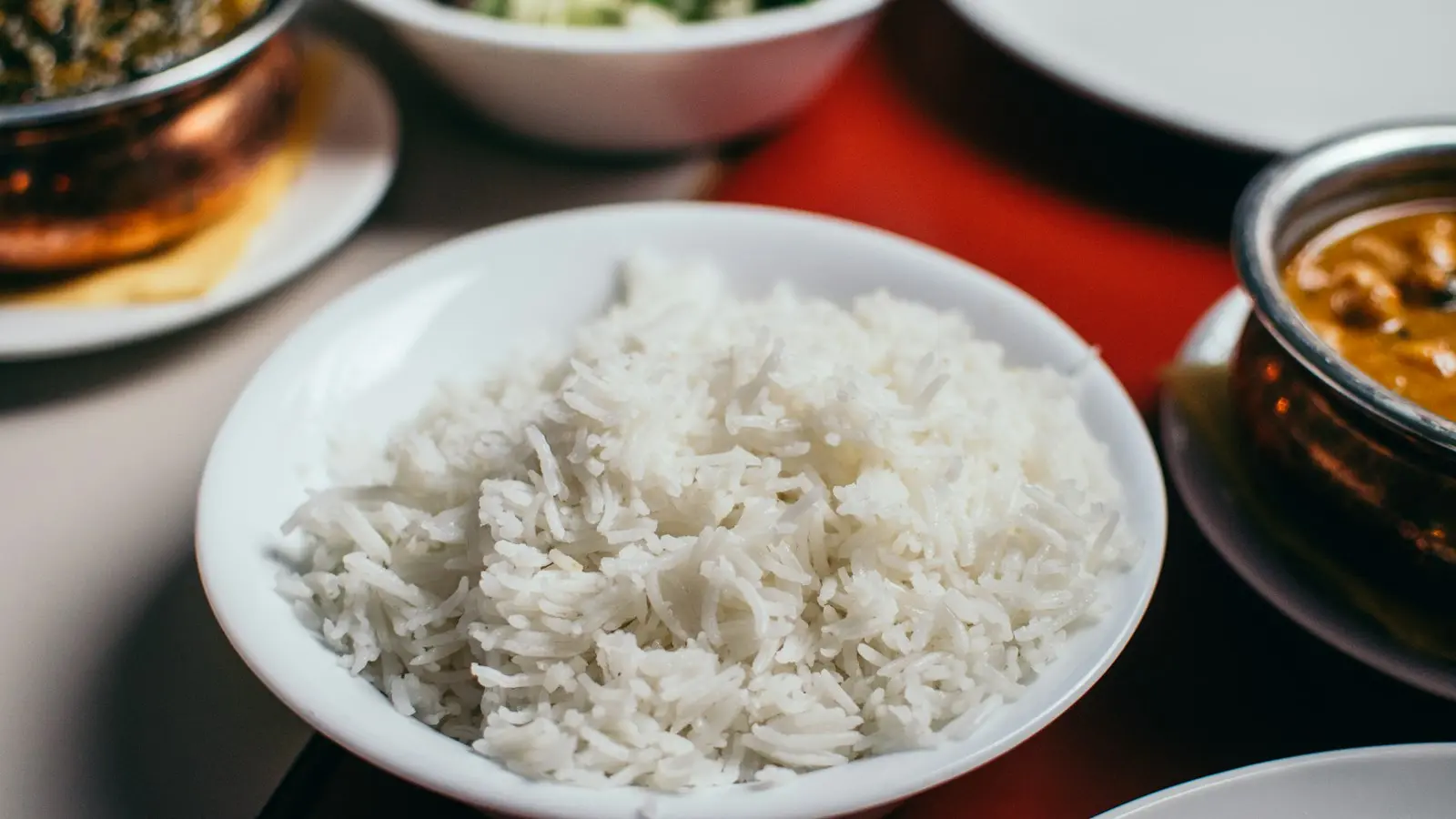
The safest way to store cooked rice is to divide it into shallow portions, cool it promptly, cover it, and refrigerate or freeze it without leaving it warm for a long stretch. Keep the refrigerator at 4°C (40°F) or below, label each container, and reheat only the portion you plan to eat.
Storage windows vary by food-safety authority and by the type of dish. Some guidance recommends using refrigerated rice within one day, while broader leftovers guidance allows three to four days for food that was cooled and stored correctly. If you will not eat the rice within the shorter, applicable window, freeze it instead.
Key Takeaways
- Divide hot rice into small, shallow portions rather than leaving it in a deep pot.
- Refrigerate or freeze it promptly; do not wait for a large batch to cool completely on the counter.
- Keep rice covered at 4°C (40°F) or below, and label it with the cooking date.
- Follow the storage window used by your local food-safety authority, using a shorter limit for mixed dishes when appropriate.
- Reheating cannot reliably make rice safe after prolonged warm storage, so discard rice with an uncertain history.
Why Cooked Rice Can Become Risky
Raw rice can carry spores of Bacillus cereus, a bacterium found in the environment. Cooking destroys many ordinary bacteria, but some spores can survive. If cooked rice then remains warm or sits at room temperature for too long, the spores may grow and contribute to food poisoning.
That does not mean freshly cooked rice is inherently dangerous. The main issue is what happens after cooking. A large pot cools slowly, especially in the center, and can spend too long in temperatures that support bacterial growth. The same concern applies to rice left in a switched-off cooker, a serving bowl, or a closed takeout container on the counter.
Reheating is not a guaranteed rescue step. Heat can destroy some live bacteria, but it may not neutralize every toxin that formed during prolonged warm storage. The important safety decision is therefore made before reheating: rice with a poor storage history should be discarded rather than “fixed” in the microwave.
Smell, taste, and appearance are also unreliable safety tests. Rice can look normal and have no unusual odor even when its handling history makes it unsafe. Use time, temperature, and storage conditions—not a sniff test—as your decision tools.
Plain rice is not the only consideration. Fried rice, rice pudding, paella, biryani, risotto, and other mixed dishes may contain meat, eggs, seafood, dairy, or vegetables. Those ingredients can introduce additional risks, so apply the stricter storage rule for the complete dish.
Cool Rice Quickly After Cooking
Start with portioning. Instead of putting a full pot of hot rice into one deep container, spread it among several shallow, clean, food-safe containers. A thin layer loses heat faster than a dense mound, and smaller portions are easier to chill evenly.
A practical workflow is:
- Decide what will be saved soon after the meal.
- Transfer leftover rice into shallow containers while it is still fresh.
- Keep the portions protected from contamination as they cool.
- Move them into the refrigerator or freezer as soon as practical.
- Once chilled, seal the containers fully and label them with the date.
You do not need to wait for a large batch to reach room temperature before refrigerating it. That habit can lengthen the time rice spends warm. Prompt refrigeration is appropriate when the portions are small enough to cool efficiently and the refrigerator is not overloaded.
Food-safety limits differ by jurisdiction and setting. General leftover guidance commonly uses a two-hour maximum at room temperature, reduced to one hour in very hot conditions, while some rice-specific guidance is more conservative. Whatever rule applies where you live, do not leave rice out through a long meal, an afternoon, or overnight.
Avoid placing a very large, tightly packed, steaming-hot pot in the refrigerator. It may cool too slowly in the center and can warm nearby food. Divide the batch first. If you have more rice than the refrigerator can cool promptly, freeze some in small portions rather than crowding the shelves.
Refrigerate Cooked Rice Safely
Use clean, covered containers with enough surface area to keep the rice relatively shallow. Glass, rigid plastic, or other containers made for food storage are suitable when clean and in good condition. A torn takeaway carton or a container that does not close securely is not a good choice for several days of storage.
Leave space between warm containers when you first refrigerate them. Cold air needs to circulate around each portion, and a packed shelf can slow cooling. Once the rice is cold, the containers can be arranged more efficiently.
Keep the refrigerator reliably cold, ideally at or below 4°C (40°F). A refrigerator that runs warm, is opened constantly, or is packed so tightly that air cannot circulate gives food less safety margin. An appliance thermometer can help if you regularly prepare meals in batches.
Label each container with the cooking or storage date. This prevents the common problem of finding an unmarked container and guessing whether it is two days old or nearly a week old. Store the oldest portion where you will see it first.
Takeout rice needs the same treatment as rice cooked at home. Transfer it from a warm, closed package into a shallow container and refrigerate it promptly. If it has already spent a long time in a car, on a table, or at room temperature, do not assume the sealed package protected it indefinitely.
How Long Rice Lasts in the Fridge—and When to Discard It
The correct refrigerated storage window depends on local guidance, the dish, and its cooling history. Some authorities recommend using cooked rice within one day, while broader leftovers guidance allows three to four days when food was cooled promptly, kept covered, and held continuously at 4°C (40°F) or below. Follow the guidance that applies where you live rather than treating one number as universal.
A shorter window is sensible when you are unsure how quickly the rice cooled, the refrigerator temperature is uncertain, or the rice was served from a communal bowl. Freezing is the better choice when you already know the rice will not be eaten within the applicable refrigerator window.
Discard rice when:
- It sat at room temperature or stayed warm beyond the applicable safety limit.
- It remained in a deep pot or rice cooker for an extended period after cooking.
- You cannot reconstruct how long it was unrefrigerated.
- It has been repeatedly warmed, cooled, and warmed again.
- The container was contaminated, leaking, or left uncovered near raw food.
- It has passed the recommended storage window.
- It has an off odor, unusual appearance, or other clear signs of spoilage. Normal appearance, however, does not prove that it is safe.
When meat, eggs, seafood, or dairy are included, use the shortest appropriate storage period for the complete dish. A rice-and-chicken meal should not be given extra time simply because the rice itself appears acceptable.
Reheat Leftover Rice Safely
Reheat only the amount you expect to eat. Keeping the remaining rice cold avoids repeatedly moving the entire batch between the refrigerator and a warm serving temperature.
The goal is thorough, even heating. In a microwave, spread the rice loosely in a microwave-safe dish, add a small splash of water if it has dried out, and cover it in a way that allows steam to escape. Stir or redistribute the rice partway through heating so cold spots do not remain in the center. Let it stand briefly when the appliance instructions call for standing time, then check that it is hot throughout.
On the stovetop, use a covered pan with a little water and stir regularly so the bottom does not scorch while the center remains cool. For a large portion, divide it before reheating rather than trying to heat one dense mass evenly.
Use a food thermometer if you have one and follow the reheating temperature recommended by your local food-safety authority. Otherwise, the practical standard is that the rice should be thoroughly hot and steaming throughout, not merely warm at the edges. Serve it promptly and do not repeatedly cool and reheat the same portion.
Never use reheating to rescue rice that sat out too long. If the earlier storage was unsafe, the correct action is disposal, regardless of how hot the rice becomes.
Frozen rice can often be reheated directly from frozen in a covered, microwave-safe dish, with stirring or redistribution during heating. It can also be thawed in the refrigerator before reheating. Avoid leaving frozen rice on the counter for hours to thaw, since that recreates the time-temperature problem you were trying to avoid.
FAQ
How long can cooked rice stay in the refrigerator?
The answer depends on local food-safety guidance and the dish. Some guidance recommends using refrigerated rice within one day, while broader leftovers guidance allows three to four days when it was cooled promptly and held continuously at 4°C (40°F) or below. When the storage history is uncertain, use it sooner, freeze it promptly, or discard it.
Can reheating make rice safe after it sat out too long?
No. Reheating may destroy some live bacteria, but it cannot reliably undo every hazard created during prolonged warm storage. Rice with an uncertain or excessive room-temperature history should be discarded.
Is it better to refrigerate or freeze leftover rice?
Refrigeration is convenient for rice you will eat soon. Freezing is better when you want to keep it longer, provided you portion and freeze it promptly. Small portions thaw and reheat more evenly, reduce waste, and prevent repeated warming of the whole batch.
The reliable way to store cooked rice safely is straightforward: portion it shallowly, cool it promptly, keep it cold, label it, and discard rice with a questionable history. That routine preserves useful leftovers without asking smell, appearance, or reheating to do a job they cannot reliably do.