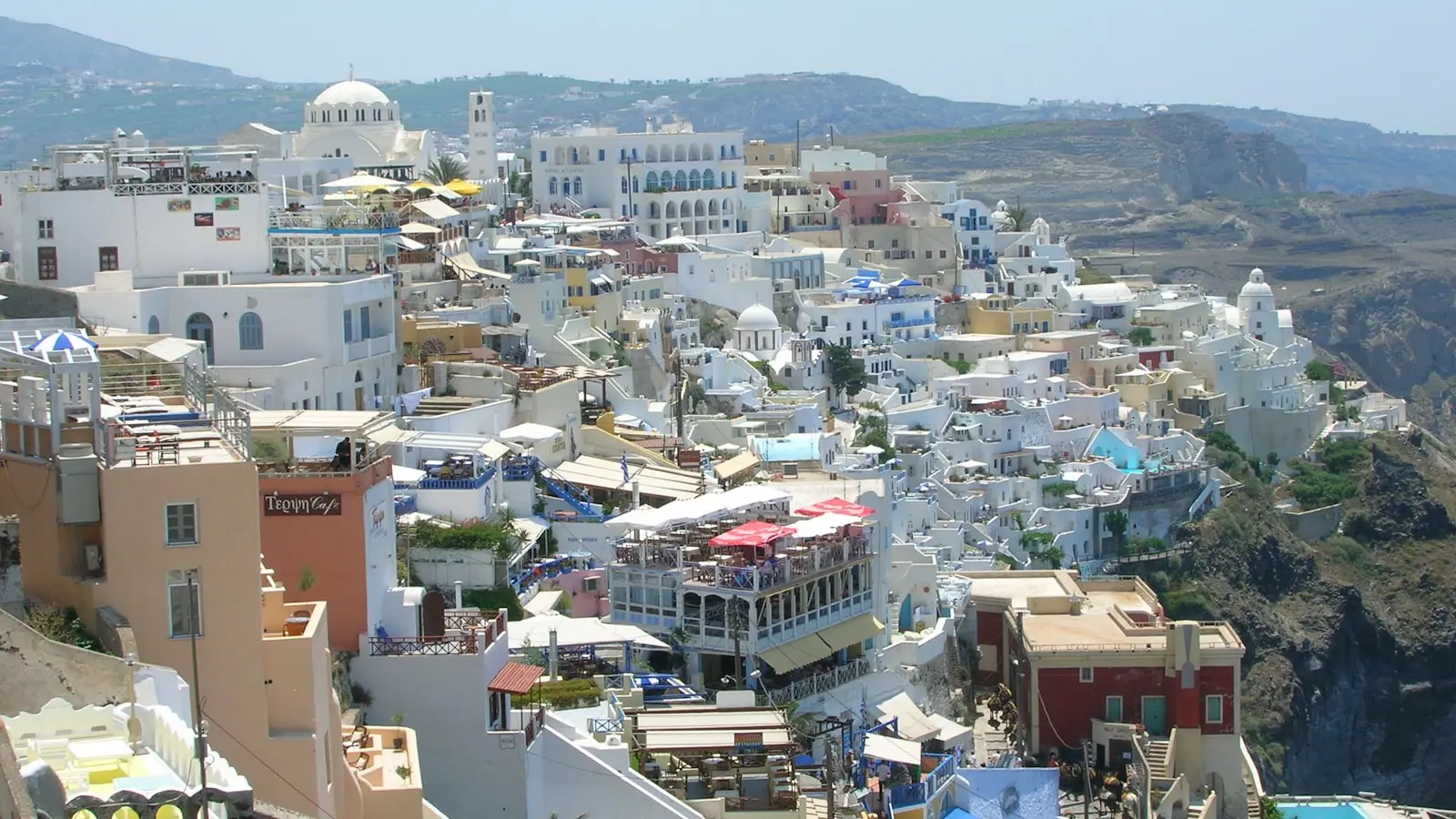
Santorini can be spectacular in peak season, but it works best when you plan around its pressure points rather than expecting them to disappear. July and August usually bring the greatest demand for rooms, transfers, parking, buses, and famous sunset spots. The aim is not to find an empty island; it is to build in enough time, choose the right base, and avoid preventable bottlenecks.
Key Takeaways
- July and August offer the fullest summer atmosphere, but also the greatest pressure on accommodation, transport, roads, and viewpoints.
- Choose your base for the trip you want: caldera access, transport convenience, beach time, luggage ease, or a lower-cost rhythm.
- Plan one high-demand experience per day and protect it with time buffers rather than stacking a packed itinerary.
- Arrange arrival transfers and recheck current ferry, flight, bus, trail, and attraction details shortly before departure.
- Respect shared village spaces: stay on marked paths, keep access clear, and treat residential lanes as homes, not photo sets.
The island’s stress concentrates in predictable places: ferry and airport arrivals, narrow cliffside lanes, limited road space, steep stairways, and the evening pull toward caldera views. Good Santorini travel planning treats those constraints as part of the landscape. Build your days around them, and the island can still feel generous in the moments that matter.
1. Choose the right dates and shape the days you cannot change
July and August are generally Santorini’s busiest months. They suit travelers who want warm swimming conditions, a lively social atmosphere, and the broadest choice of seasonal restaurants, tours, and activities. The trade-off is higher demand, hotter walking conditions, and more people converging on the same views at the same time.
Santorini shoulder season, broadly spring and autumn, may bring milder weather for walking and less pressure than high summer. It can be a better fit for travelers focused on hikes, village wandering, wineries, and slower meals rather than peak beach conditions. But it is not a guaranteed bargain: wind, changing sea conditions, weather shifts, reduced transport frequency, and seasonal closures can affect the experience.
Use a simple decision rule. Choose peak season if warm-water activities and the broadest range of open businesses matter more than a quieter pace. Choose shoulder season if you can accept more variable conditions in exchange for potentially easier movement, then confirm that the specific hotel, tour, restaurant, or boat outing you want is operating.
If summer dates are fixed, do not try to outsmart every other visitor. Give priority sights their own time window. A morning caldera walk is usually more manageable than trying to fit it between a beach transfer, lunch, and a sunset reservation. Midweek flexibility can help, but leaving room in the itinerary matters more.
Check ferry, flight, bus, and attraction information close to departure. Seasonal operations, access arrangements, and service patterns can change, and an old timetable screenshot is not a transport plan.
2. Pick a base that matches your priorities
The main lodging decision is not simply caldera view versus no caldera view. Decide whether you value scenery outside the door, a central transport hub, beach access, easier luggage handling, more space in the budget, or a quieter daily rhythm. Santorini village stays shape almost every practical detail, from breakfast logistics to how much energy remains for dinner.
Oia suits travelers who place its architecture, caldera views, and sunset atmosphere at the center of the trip. Staying there can reduce the need to commute for the signature experience, but the convenience may come with higher prices, stairs, tight lanes, and concentrated evening foot traffic. It works best when the village itself is a main event rather than a nightly stop between island-wide excursions.
Fira can make sense for travelers who want a central hub and access to connections across the island. It may be practical for visitors relying on public transport or arranging several excursions. The experience varies sharply by property, so check the exact location for road noise, stairs, proximity to pickup points, and the route from the nearest vehicle access.
Imerovigli and nearby caldera areas are worth considering when caldera scenery remains a priority but a different pace appeals. The trade-off is that “nearby” can still mean substantial walking, slopes, and staircases. Confirm the luggage route and consider how comfortable you are with the property’s distance from restaurants, shops, and transport stops.
Pyrgos, Kamari, Perissa, and other non-caldera bases offer another version of Santorini. They can suit travelers who value beach access, road access, a village setting, or more separation between their room and the island’s headline viewpoints. The caldera becomes a planned outing rather than a stroll from the terrace, which can be either a drawback or a relief.
Before booking, inspect a map instead of relying on the village name alone. Ask about transfers, vehicle access, stairs, luggage assistance, parking, and cancellation terms. A cheaper room can become a costly compromise if every meal, sunset, and transport connection requires a difficult trip.
3. Build a daily rhythm around the bottlenecks
The quickest route to an exhausting Santorini trip is stacking too many high-demand experiences into one day. A long hike, beach transfer, Oia sunset, and fixed dinner reservation may sound appealing separately. Together, they leave no margin for heat, delays, sore feet, or slow movement through narrow roads and lanes.
Aim for one anchor experience each day. That might be an early caldera walk, a boat outing, a winery visit, or a sunset dinner. Everything else should support that plan rather than compete with it.
For viewpoints and photo walks, sunrise or earlier daytime windows can be more manageable than the late-afternoon rush. This is not a promise of empty streets, especially in summer, but it may offer cooler conditions and less pressure to move quickly. Keep passages clear, do not stand in doorways, and remember that terraces, steps, and entrances may belong to homes or businesses.
Sunset requires realistic expectations. Reserve a restaurant or organized experience if it fits the budget, arrive with time to spare at a public area, or choose a less headline-driven evening. The least reliable plan is arriving at the last minute and expecting unrestricted space at a place many visitors have chosen for the same hour.
The Fira-to-Oia walk is an outing, not a casual shortcut between appointments. Use marked paths, wear suitable footwear, carry water, and prepare for sun and wind. Check current trail conditions and local safety guidance before setting out, particularly during hot or windy periods.
Use hot afternoons for recovery when possible: a long lunch, beach time, a winery visit, a hotel break, or another low-logistics activity. In Santorini, rest is not lost sightseeing; it is what keeps the evening from becoming another rushed connection.
4. Make arrivals and Santorini local transport part of the itinerary
Arrival day often feels harder than it appears on a booking confirmation. Ferry passengers and airport arrivals can converge at similar times, while luggage, narrow roads, limited vehicle availability, and hotel coordination add friction. Avoid scheduling a demanding hike, tightly timed tour, or important dinner immediately after landing or docking.
If you are arriving late, carrying substantial luggage, traveling with children, managing mobility needs, or connecting to a fixed plan, a confirmed accommodation transfer or reputable licensed provider may be worth the cost. Its value is not luxury; it is reducing uncertainty when the island is least forgiving of it.
For independent Santorini local transport, verify current routes, timetables, stops, payment practices, and final departures shortly before travel. Service patterns can vary by season and day. Have a backup plan if a missed connection would affect a ferry, flight, or prepaid activity.
A rental car or scooter can add flexibility for beaches, inland villages, or dinner reservations beyond the caldera. It does not eliminate summer congestion, scarce parking, unfamiliar-road risk, or the strain of driving in heat. Use a vehicle only if it genuinely improves your itinerary, and never combine driving with alcohol.
Build meaningful buffers around ferry departures, airport flights, tours, and dinner reservations. A buffer is not wasted time; it allows you to handle a delayed transfer, find a pickup point, or stop for water without turning a small disruption into a ruined afternoon.
5. Control costs and reduce friction for everyone
High-demand dates and caldera-view properties can command a premium, so compare full-trip costs rather than room rates alone. A lower-priced hotel far from your priorities may require repeated transfers, more time in transit, and less flexibility when transport is busy. A more expensive walkable base may be worthwhile if it eliminates daily travel stress.
Create a budget checklist before booking: accommodation location, port or airport transfer, local transport, vehicle rental and parking, tours, reservations, meals near headline villages, and contingency funds for schedule changes. This helps reveal when an inexpensive room has expensive logistics attached.
Spend more where it removes a real constraint. A flexible booking, confirmed arrival transfer, or hotel within walking distance of the experience you value most can improve the trip noticeably. Spend less where an upgrade does not match your priorities, such as paying for a famous address when you would rather have beach time and early nights.
Respectful conduct also makes the day smoother. Keep noise low in residential lanes, stay out of private property and hotel-only spaces, use bins, avoid blocking vehicle access, and remain on marked trails. On an island with narrow shared spaces, these habits reduce conflict and help preserve the village life visitors came to see.
Does Santorini fit your travel style and how long should you stay?
Santorini may suit you if dramatic scenery matters enough to justify advance planning, some crowding, stairs, and a higher logistical load. It is especially rewarding for travelers willing to start early, reserve selectively, and let geography set the pace.
It may be less satisfying if you want a low-cost, spontaneous, car-free holiday during the busiest summer weeks or guaranteed quiet at famous viewpoints. The island can still be beautiful, but the mismatch between expectations and reality may be hard to ignore.
A day visit is possible, but it compresses the island into arrival logistics, one or two viewpoints, and a departure deadline. Overnight guests can use early mornings and slower evenings, making the experience feel less like a race. For a first visit, at least two nights is a sensible planning benchmark: one for arrival and a major caldera experience, and another for a slower second day. It is guidance, not a universal requirement.
The best Santorini peak season tips are simple: use timing, geography, buffers, and realistic expectations. Santorini summer crowds may be unavoidable at the island’s famous moments, but they do not have to control the entire trip.
FAQ
What are the best Santorini peak season tips for July or August?
Book accommodation and key transfers early, choose one main experience per day, visit viewpoints early when possible, and leave extra time around transport. A walkable base or confirmed arrival transfer can be more valuable than trying to fit every attraction into a short stay.
Is Santorini shoulder season better for fewer crowds and lower costs?
It may be. Spring and autumn can offer milder walking conditions and potentially less pressure than July and August, but weather, wind, sea conditions, and seasonal openings vary. Confirm the experiences that matter most before committing.
Where should I stay for caldera views without relying on a car?
Oia, Fira, and Imerovigli are the main areas to compare, but the exact property matters more than the village label. Check walking distances, stair access, luggage logistics, nearby food options, and current public-transport access before booking.