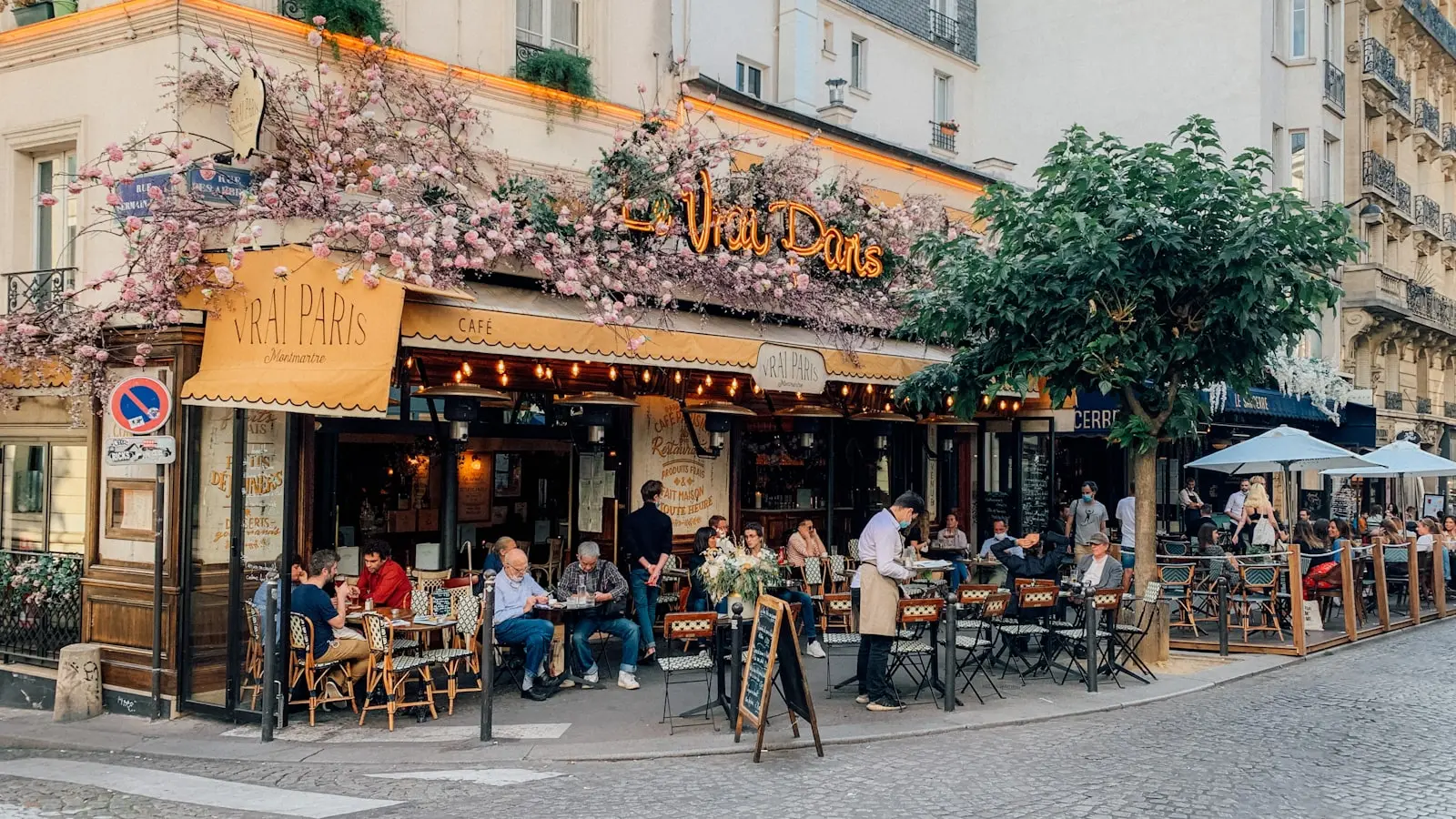
A relaxed 9-day Paris itinerary works when you plan less than you could physically fit in. Give each day one meaningful anchor, one nearby possibility, and one unbooked block. Nine days in Paris are valuable not because they let you complete every famous sight, but because they let you settle into a rhythm, recover from crowds and walking, and return to places you genuinely enjoy.
The trade-off is straightforward: you may skip some celebrated interiors, but you will spend less time crossing the city, standing in queues, or pushing through an attraction after your interest has run out. A slow travel Paris plan should have room for a long lunch, rain, heat, a closure, and the occasional appealing detour.
Key Takeaways
- Plan one timed or high-priority anchor per day, plus one walkable neighborhood activity and an open afternoon or evening.
- Group outings by area rather than hopping between famous landmarks across Paris.
- Choose only two or three high-demand attractions that genuinely matter to you; the rest can remain optional.
- Treat Canal Saint-Martin, Belleville, Montmartre, and other outer neighborhoods as Paris days, not day trips.
- Keep one true day trip optional, and build nearby indoor, outdoor, and no-reservation backups for every day.
Start with one anchor, one nearby choice, and one open block
Set a realistic daily sightseeing ceiling: one timed or high-priority experience. That could be a major museum, a tower visit, a chapel, or a reservation you would be disappointed to miss. Add one walkable neighborhood activity, such as a garden, market, canal walk, or food-shop browse, then leave a block of time unplanned.
This reduces itinerary friction. Shorter journeys mean fewer chances for delays, wrong turns, or crowded transport to flatten the day. The open block also gives you permission to stay longer when somewhere is better than expected, or leave when it is not.
A useful rhythm is breakfast near where you are staying, a morning outing, a flexible lunch, an optional afternoon plan, and a low-commitment evening. Keep dinner reservations occasional rather than nightly. Paris is easier to enjoy when you can choose where to eat after wandering into a neighborhood instead of racing across town for a fixed booking.
For headline experiences, choose only two or three that are personally important. Book an attraction if it is meaningful to you, difficult to replace with something nearby, and likely to be much easier with timed entry. If a landmark matters mainly because it appears on a generic checklist, an exterior view, a nearby walk, or a skip may be enough.
Group a Paris neighborhood itinerary by area
A Paris neighborhood itinerary works better as a set of compact areas than as a scattered list of monuments. Exploring Canal Saint-Martin, Belleville, Ménilmontant, or Montmartre is still exploring Paris. A true day trip means leaving the city for a destination that requires separate transport planning, a return journey, and most of a day.
For central river and island time, combine the Seine, Île de la Cité, Île Saint-Louis, bookshops, and whichever church or chapel visit matters most. The reward here is often a view along the quay, a side street, or a pause beside the water rather than a long sequence of interiors.
The Left Bank suits Luxembourg Garden, Saint-Germain-des-Prés streets, cafés, and perhaps one museum. The important word is one. A garden bench and a late lunch often add more to the day than trying to fit in a second major collection across the river.
In the Marais and east-central Paris, pair Place des Vosges, food shops, and an unstructured wander with a smaller museum, historic house, or gallery. Leave enough time for a bakery stop, a courtyard, or a shop that catches your attention.
For Montmartre, visit early or later in the day if that fits your schedule, then move away from the busiest viewpoints. The quieter pleasure lies in residential slopes, stairways, and streets beyond the most concentrated visitor routes. If crowds drain the appeal from a major site, an exterior view and a slower walk are valid substitutes.
Canal Saint-Martin, Belleville, Ménilmontant, and Jourdain can be especially satisfying on a Paris itinerary without crowds. They replace monument pressure with water, small parks, street art, independent shops, and neighborhood meals. In western Paris, use the same principle: pair any landmark with a garden, market, or café rather than another major attraction.
Use this flexible nine-day Paris itinerary
Day 1: Arrive and establish a routine. Keep everything close to your hotel or apartment. Take an orientation walk, buy breakfast supplies, find a café you would happily revisit, and identify a nearby park or square. Avoid scheduling a major ticketed attraction after a long journey.
Day 2: Walk central Paris. Choose one river-and-islands anchor, then let the Seine and side streets fill the rest of the day. For rain, keep a small museum, covered passage, or leisurely café lunch in mind. For heat, shift toward shaded quays, gardens, and an indoor break.
Day 3: Give one major museum the morning. Choose the Louvre, Musée d’Orsay, or another personal priority, but do not try to combine multiple large museums. Treat the afternoon as intentionally blank: read in a garden, return to your room, take a long coffee break, or simply wander.
Day 4: Explore the Marais at food-shop pace. Browse a market or specialty food stores, choose one smaller cultural stop, and leave dinner unreserved. The aim is to notice places you may want to revisit, not to optimize every block of the day.
Day 5: Make Montmartre or a personal landmark the focus. Visit at a lower-pressure time where possible, but do not attach a distant second headline attraction to the same day. If entry lines or the atmosphere feel discouraging, see the site from outside and keep walking.
Day 6: Take a recovery day beyond the central circuit. Spend it around Canal Saint-Martin, Belleville, Ménilmontant, or another area that matches your interests. Add a park, a local lunch, and open-ended walking. This is not a spare day; it is where slow travel becomes part of the trip rather than an intention.
Day 7: Take one true day trip, or stay in Paris. If leaving the city appeals, make this your only major excursion. If it does not, use the day for a farther-out neighborhood, a long park break, a food experience, or an unhurried return to a favorite area.
Day 8: Return to favorites. Use this day for a neighborhood you enjoyed, a weather-dependent plan, a museum missed because of a closure, or a market and restaurant you want to experience again. Repetition is one of the best reasons to have nine days in Paris.
Day 9: Leave gently. Build the day around luggage, airport timing, and your energy level. A final café, food purchase, short walk, or nearby museum is more satisfying than a cross-city dash for one final landmark.
Decide what is worth booking ahead
Timed entry is usually worth the commitment for a must-see museum, a limited-capacity landmark, or a specific exhibition that would be disappointing to miss. It is less useful for attractions you are only mildly curious about, especially if the booking would dictate the entire day.
Before reserving, check each attraction’s official information for opening days, closure schedules, timed-entry rules, bag policies, accessibility details, and temporary restrictions. Major sites do not all follow the same weekly closure pattern, and access arrangements can change. Check again shortly before your visit.
Use a simple priority matrix. Book the few experiences you would truly regret missing. Decide that morning for gardens, markets, canal walks, smaller museums, and neighborhood meals. Skip without regret anything that requires a long queue, a difficult journey, or a fixed time that no longer matches your energy.
Crowd-light alternatives are not consolation prizes. Markets, gardens, food-focused walks, smaller museums, canal paths, and outer neighborhoods often reveal more of daily Paris than a second crowded interior. A full city day does not require another ticket scan.
Choose a day trip only if it improves the stay
Paris day trip ideas should earn their place by offering something the city cannot: a distinct setting, a specific historical interest, or a change of pace you genuinely want. They also bring separate rail or regional transport planning, return deadlines, and less flexibility if weather or service changes intervene.
Choose Versailles for palace history and extensive grounds, not because an empty day needs filling. It can be a logistics-heavy outing, so verify current ticket options, entry procedures, garden access, and transport conditions through official channels before leaving.
Consider Giverny only when its seasonal opening period, garden conditions, and onward connections fit your dates. It is not a year-round substitute for a Paris day, and garden visits should be approached as seasonal rather than guaranteed. Chartres or another smaller destination may suit travelers seeking a compact, focused change of scene instead of an all-day spectacle.
For most travelers whose main goal is Paris immersion, one day trip is the relaxed limit during nine days in Paris. Staying in the city is often the better choice if fixed trains and return deadlines feel more like work than a welcome change.
Protect the plan from disruption
Build every day with three nearby backups: one indoor option, one outdoor option, and one no-reservation option. If a museum closes unexpectedly, a garden, covered passage, café, or neighborhood walk can preserve the day without a frantic reroute.
Put your most fixed tickets earlier in the trip when possible. Later days become useful cushions for rescheduling, bad weather, fatigue, or a place you want to revisit. Avoid stacking a day trip with an important evening reservation unless you are comfortable with delays.
In warm weather, start earlier, prioritize shade and water, use museums as cooling breaks where available, and keep afternoons lighter. During service disruptions, check official transit and attraction channels on the day of travel, allow extra time, and avoid tightly chained reservations. Transit fares, ticket validity, airport routes, regional rules, and rail schedules can change, so confirm them through official transport, rail, and attraction information before travel.
The best relaxed 9-day Paris itinerary leaves you curious and rested. If you return home remembering a familiar café, a canal-side walk, and a neighborhood you would gladly revisit, you have not underplanned Paris. You have given it room to be a city rather than a checklist.
FAQ
Is nine days in Paris too long if I have already seen the main sights?
No. A longer stay is especially useful after the headline sights because it allows repeat visits, slower meals, parks, outer neighborhoods, and more weather flexibility. Treat it as time to live at city pace rather than as a longer version of a weekend itinerary.
Should I take a day trip from Paris on a nine-day stay?
Take one only if the destination itself matters more to you than another Paris day. Versailles, Giverny, and Chartres can be worthwhile, but none is required. One optional day trip keeps the stay flexible.
How many museums should I plan in a relaxed 9-day Paris itinerary?
Plan a few priorities rather than a museum every day. One major museum morning and one or two smaller cultural stops across the trip is enough for many travelers. Add more only if museums are a central reason for your visit and you still want substantial time indoors.