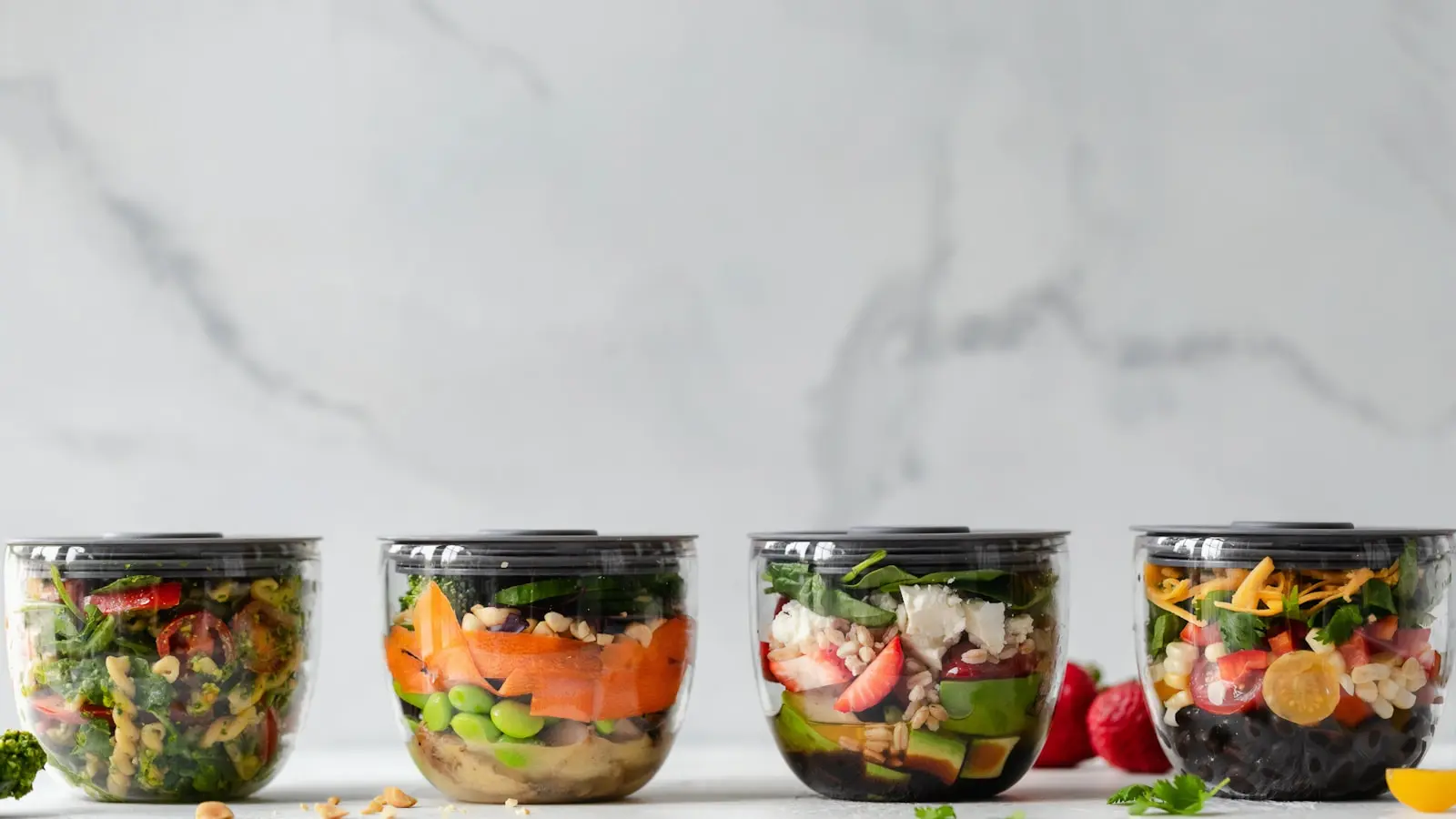
Healthy lunch meal prep doesn’t have to mean five identical containers of chicken and rice. The fastest way to avoid burnout is to prep components, not full meals. Cook two proteins, one grain, one pan of vegetables, and one sauce, then combine them differently each day. That simple system solves the three biggest reasons meal prep fails by Wednesday: repetition, waste, and disappointing reheated textures.
Key Takeaways
- Prep flexible components, not full meals: two proteins, one grain, one pan of vegetables, and one sauce can make five different healthy work lunches.
- Store components separately and assemble day by day to keep textures intact and flavors from turning monotonous.
- Use low-fuss proteins like eggs, canned fish, beans, and tofu to cut cost and effort.
- Freeze anything you will not eat by day three or four; swap sauces and add fresh garnishes to reset the same base.
Why Repetitive Meal Prep Fails by Wednesday
Many people start the week with good intentions and the same chicken, rice, and broccoli container each day. By Tuesday, the texture feels flat. By Wednesday, takeout wins. The problem is not willpower. It is same-lunch fatigue.
Repetition also creates food waste. Multi-recipe meal prep can leave unused herbs, half-eaten sauces, and forgotten proteins. That makes a supposedly cheap routine expensive.
Then there is the transit and reheating problem. Delicate greens wilt under hot ingredients. Crunchy toppings soften. Sauces make rice soggy. When the fifth lunch tastes worse than the first, the system stops working.
The Component-Prep Fix: Mix-and-Match Bowls, Not Five Full Recipes
The fix is to prep components, not complete meals. Build a flexible formula: protein plus grain plus roasted vegetables plus sauce plus a fresh finish. Store each element in its own container, then assemble different lunches in a few minutes.
Start with two cooked proteins. One can be batch-cooked chicken or tofu, and the other can be no-cook, like canned tuna, beans, or hard-boiled eggs. Add one whole grain such as farro, brown rice, or quinoa. Roast a sheet pan of whatever vegetables you like. Whisk one simple sauce. That small batch creates many combinations.
This is where 5 day meal prep ideas become practical: nothing repeats in the same order. Monday might be chicken with rice, roasted carrots, and a lemon yogurt sauce. Tuesday could be a tuna bowl with quinoa, roasted peppers, and the same sauce. In other words, meal prep without eating the same thing twice.
This is also healthy work lunch prep for people who hate repetition. A balanced lunch does not need a complicated formula. Aim for protein, fiber-rich carbohydrates, vegetables, and a little healthy fat. Exact portions depend on your appetite, activity level, and nutrition needs. If you are new to this, start with a bowl that leaves you satisfied for four hours and adjust from there.
Portioning matters even more when you cook for one. Make the amount you plan to eat in the next three days, then freeze half of any larger batch. A batch of braised beans or shredded chicken can become next week’s emergency lunch before you have time to tire of it.
Five Low-Fuss Proteins and a Five-Sauce Shortcut
The proteins you choose determine how easy the week feels. These five work well for healthy lunch meal prep because they are affordable, forgiving, and reheat well.
- Batch-cooked chicken thighs or breasts. Season simply and keep the cooking liquid for a sauce base.
- Hard-boiled eggs. They need no reheating and add texture to grain bowls.
- Canned tuna or salmon. A no-cook option that turns a grain bowl into a real lunch.
- Beans and lentils. Canned beans need only a rinse; lentils can simmer while you do other prep.
- Tofu or tempeh. Cubed and roasted or pan-seared, both hold up in the fridge and absorb flavor.
For the sauce, remember a simple formula: one fat plus one acid plus one creamy element plus a seasoning blend. Examples include olive oil, lemon juice, Greek yogurt, and dried dill; tahini, lime juice, water, and garlic; peanut butter, rice vinegar, soy sauce, and ginger; salsa, mayo, cumin, and smoked paprika; or pesto, yogurt, lemon juice, and black pepper.
Store the sauce in a jar at the front of the fridge. The right sauce can make Wednesday’s lunch feel new. On busy weeks, lean on no-cook proteins like eggs, tuna, and beans. That makes batch cooking lunch a quick assembly job rather than an all-day project.
Containers and Safe Storage for Five-Day Work Lunches
The best container system is the one you will actually carry. For most people, that means a few leakproof, microwave-safe containers with small cups or compartments. Compartment-style simple meal prep containers keep wet and dry components separate. Microwave-safe glass containers work well, and lighter microwave-safe plastic is fine if you prefer something easy to carry.
Keep raw greens and crunchy toppings separate from hot ingredients. If you want a salad-style lunch, pack lettuce in one section, dressing in a small jar, and warm ingredients in another. Add the greens after reheating. This one habit prevents the soggy salad problem that kills weekday enthusiasm.
USDA food safety guidance gives cooked leftovers three to four days in the refrigerator. That includes cooked chicken, grains, roasted vegetables, beans, and sauces. If you want to eat something on day five, freeze it by day three or four.
Label containers with the date before freezing. Most frozen components taste best within one to three months. Thaw in the refrigerator overnight, then reheat leftovers until they are steaming throughout. USDA recommends reheating to 165°F. If a component smells sour, feels slimy, or looks off, trust that cue and throw it out.
A Realistic Two-Hour Sunday Prep Plan (And Anti-Boredom Rules)
You do not need an elaborate Sunday project. This is a realistic two-hour plan:
- Preheat the oven to 400°F.
- Start the grain on the stove or in a rice cooker.
- Chop vegetables, toss with oil and seasoning, and set them on a sheet pan.
- Cook the protein. Sear chicken thighs while the vegetables roast. If using tofu, press it first, then bake or pan-sear.
- Boil eggs while everything cooks.
- Whisk the sauce in a jar.
When each component is cool, store it separately. That week’s lunches are now five minutes away.
For an easy weekday lunch plan, keep an emergency kit at home or work: canned fish, canned beans, frozen vegetables, microwave rice pouches, and a bottle of dressing. Even days with no prep can become a balanced meal in under ten minutes.
The best anti-boredom rules are tiny changes. Swap one garnish daily: sliced cucumber, cilantro, chopped peanuts, pickled onions, or a spoonful of kimchi. Change sauces midweek, even if the base components are the same. Let leftovers become a flex lunch: if last night’s dinner was a simple protein and vegetable, pack it in a container and turn it into tomorrow’s bowl with a different sauce. This gives you variety without adding another recipe.
Frequently Asked Questions
How long do meal-prepped lunches stay safe in the fridge? USDA guidance gives cooked leftovers three to four days. That includes cooked chicken, grains, roasted vegetables, and sauces. If you plan to eat a lunch on day five, freeze it by day three or four instead. Trust your senses when something seems off.
Can you freeze healthy lunch meal prep bowls? Yes, if you freeze the right parts. Cooked grains, proteins, beans, and most sauces freeze well. Raw greens, fresh cucumbers, and crispy toppings do not. Freeze components separately, label with a date, and thaw in the fridge before reheating.
How do you keep greens from getting soggy in meal prep containers? Keep greens in a separate container or compartment, keep dressing in a small jar, and combine them after reheating. A paper towel in the greens container can absorb moisture, but the easiest fix is timing. Add tender leaves and crunchy toppings at lunch, not on Sunday.