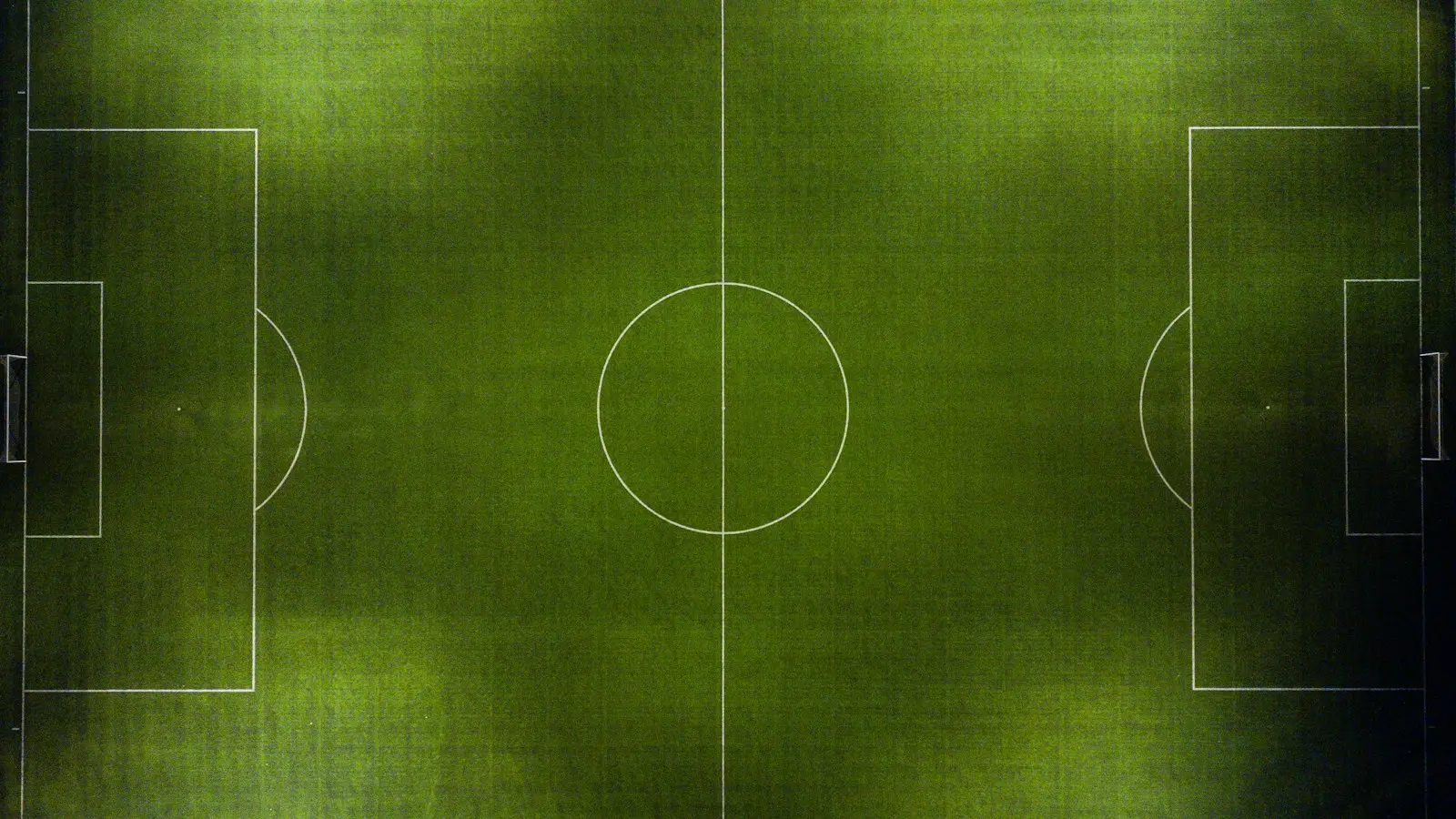
A team can win with less possession because possession measures how long it controls the ball, not how effectively it uses that control. A side with 35% of the ball may defend compactly, win possession in useful areas, and create clearer chances, while its opponent completes hundreds of passes without regularly threatening the goal.
That does not mean possession is irrelevant or that every team should surrender the ball. It means possession must be read alongside the scoreline, field position, progression, defensive structure, transitions, set pieces, and shot quality. In soccer match analysis, the more useful question is not simply who had the ball, but what each team did with it.
Key Takeaways
- Possession is a descriptive statistic, not a complete measure of control or performance.
- A team protecting a lead may allow harmless circulation and finish with less of the ball by design.
- Compact defending and well-timed pressing can create dangerous transition attacks before an opponent resets.
- Field position, progressive actions, penalty-area entries, and shot quality often reveal more than raw possession.
- High possession is valuable when it produces territory, quality chances, and defensive control rather than safe, sterile passing.
What Possession Actually Measures—and What It Misses
Possession percentage is an estimate of the share of match play during which each team controls the ball. The exact collection method can vary between providers, but the basic idea is straightforward: it describes who had the ball and for roughly how much of the game.
It does not, by itself, measure attacking danger, territorial control, defensive quality, or the value of a chance. A centre-back passing sideways to another centre-back contributes to possession just as a midfielder breaking a defensive line can, even though the two actions have very different consequences.
This is why a team can have 65% possession without controlling the most dangerous parts of the pitch. Its circulation may remain in its own half or in wide areas where the opponent is comfortable allowing passes. Meanwhile, the team with less of the ball may attack the space behind an advanced full-back or reach the penalty area quickly after a turnover.
Possession is therefore best treated as a starting point. Add field location, progressive passes, final-third entries, penalty-area entries, shots, shot locations, turnovers, and defensive actions. Together, those measures offer a more complete picture of whether possession created pressure or merely reflected circulation.
The possession-versus-winning debate also needs context. A technically strong team may use sustained possession to create repeated attacks, rest with the ball, and limit the opponent’s opportunities. Another team may use fewer possessions more directly. Neither approach is automatically superior; effectiveness depends on execution, personnel, and the opponent’s response.
How Game State Can Make Lower Possession Effective
The scoreline changes the meaning of possession. A team protecting a lead may deliberately defend deeper, reduce risk, and allow the opponent to pass in harmless areas. Its lower possession can be a consequence of a sensible game plan rather than evidence that it has lost control.
The leading side may prioritise compactness over pressing high. It can close central spaces, protect the penalty area, and wait for a poor pass before attempting to counter. The opponent may accumulate possession because it must attack, but that territorial responsibility does not guarantee clear chances.
The reverse is also true. A team that falls behind may dominate the ball late in the match because the game demands it. Its players push higher, take more risks, and circulate around a defensive block. That can produce pressure, but it can also leave the team vulnerable to a decisive transition in the opposite direction.
A simple fictional example shows the problem with reading possession alone. Suppose Team A leads 1-0 after 20 minutes and finishes with 35% possession. Team B has 65%, but much of it occurs between the halfway line and the edges of the penalty area. Team A records fewer attacks but creates two one-on-one breaks and a close-range chance from a corner. Team B produces several long-range attempts but rarely receives the ball behind the defence.
In that match, the possession figure describes Team B’s activity, not necessarily its danger. The scoreline has shaped both teams’ behaviour, so the final possession split cannot be interpreted as though the match began in a neutral state.
Opponent strength, home advantage, match timing, tournament format, and disciplinary events can also change the pattern. A team may accept less possession against a stronger opponent, while an early goal or red card can distort every later statistic. This is why claims that possession itself causes wins should be made carefully.
Low Blocks, Pressing Triggers, and Counterattacking Football Tactics
A low block is a compact defensive shape positioned closer to a team’s own goal. It is often described as passive, but a well-organised low block can be active in its decision-making. Players protect central lanes, stay close enough to support one another, and try to force the ball into areas where an attack is easier to contain.
The trade-off is territory. The defending team concedes ground and may allow crosses, switches of play, or shots from distance. If the block becomes too deep or stretched, the opponent can deliver repeated balls into the penalty area. A low-block strategy works best when the team can maintain distances and defend the next action, not merely when it places many players near its own box.
Pressing can complement a deeper structure. Rather than chasing every pass, a team may wait for a pressing trigger: a backward pass, a poor first touch, a ball toward the sideline, a pass to an isolated receiver, or a forward who receives with limited support. These moments reduce the opponent’s options and make a turnover more likely.
The value of the turnover comes from timing. When a team wins the ball while the opponent’s full-backs are advanced and midfielders are ahead of play, the first forward pass can attack space before the defensive shape is restored. This is the central mechanism behind many counterattacking football tactics.
Counterattacking does not simply mean giving the ball to the fastest player. It requires coordinated forward runs, a player who can pass through pressure, support around the ball, and enough defensive security to survive if the first attack fails. A team that cannot execute those details may spend long periods defending without creating anything meaningful.
There are risks. The team can become pinned back, concede repeated set pieces, or rely on low-probability breaks. If its first pass after a turnover is inaccurate, it may defend for several minutes only to lose the ball immediately. Low possession is effective only when the defensive and attacking phases fit together.
Territory, Progression, and Chance Quality Matter More Than Raw Volume
Field position often reveals more about control than total possession. A team passing inside its own half has the ball, but a team repeatedly receiving between the opponent’s midfield and defence is asking more difficult questions. The latter may have less possession while exerting greater attacking pressure.
Progressive passing helps distinguish these situations. A progressive pass generally advances the ball significantly toward the opponent’s goal or breaks a defensive line, although definitions differ between analytics providers. It is not automatically a good pass, but it captures forward movement better than a raw pass total.
Penalty-area entries provide another useful reference. A team can circulate patiently around the edge of the box without finding a route inside. Another can reach the area fewer times but create a cutback, through ball, or one-on-one. Those actions carry different levels of threat even if both teams record similar possession spells.
Shot volume has the same limitation. Ten attempts from outside the area do not necessarily represent more danger than four shots from close range after defensive errors or cutbacks. Shot quality depends on location, angle, type of chance, defensive pressure, and whether the shooter has time to set himself.
Expected goals can help here. It is a model-based estimate of the probability that a particular shot will become a goal, based on factors such as location and situation. It is useful for comparing chance quality, but it is not a prediction of the final score and does not tell the whole story.
Different models use different inputs. Small samples can be noisy, penalties and red cards can alter the context, and a model may not fully capture defensive pressure, the quality of the final pass, or a goalkeeper’s positioning. Expected goals should support analysis rather than replace it.
Set pieces also complicate the possession picture. Corners and free kicks can create valuable opportunities without requiring long spells of open-play control. A team that defends well, wins fouls in useful areas, or delivers dangerous corners may have an important attacking route that possession percentages barely describe.
When High Possession Is Genuinely Valuable
High possession is valuable when it produces territory, repeat entries, and defensive control. A team that keeps the ball while moving opponents from side to side can create gaps, force defenders to turn, and generate second attacks after clearances. It may also reduce the opponent’s time in possession and limit transition opportunities.
Purposeful possession is different from sterile possession. The purposeful version changes the opponent’s shape, advances through midfield, reaches the final third, and creates shots from promising locations. Sterile possession may involve safe passes that preserve the ball but do not improve the team’s position.
Possession-based teams can also use counterpressing effectively. After losing the ball, nearby players immediately pressure the receiver and block forward options. If that pressure works, the team can recover the ball high up the pitch and attack again before the defence is organised.
This is why the claim that possession does not matter is too broad. Possession can be a means of controlling space, creating chances, and managing risk. Its usefulness depends on whether the team can turn the ball into progression and whether it can defend the moments immediately after losing it.
Competition context matters as well. Comparisons from one tournament, league, gender category, or period should not be treated as universal laws. Team quality, tactical culture, opponents, and match circumstances all influence the relationship between possession and results.
A practical match-analysis checklist should include:
- Possession share and when that possession occurred
- The scoreline at each major phase of the match
- Where the ball was recovered and where attacks ended
- Progressive passes and defensive-line breaks
- Final-third and penalty-area entries
- Shot locations and expected-goal quality
- Turnovers, pressing success, and transition chances
- Corners, free kicks, and other set-piece opportunities
- The compactness and height of each defensive structure
This approach explains why some teams win with less possession without turning low possession into a doctrine. The headline statistic becomes useful once it is connected to the match’s tactical mechanism.
FAQ: Reading Possession and Winning
Can a team win with less possession?
Yes. It can defend compactly, create efficient transitions, produce better chances, or protect a lead by allowing harmless circulation. Lower possession is not automatically a winning strategy; it works only when the team manages the defensive and attacking trade-offs.
Why does possession not always lead to more goals?
Possession may occur far from goal or fail to produce progressive passes and penalty-area entries. A team can complete many passes without creating a clear shooting opportunity, while its opponent creates danger through a few direct attacks.
What statistics should I check besides possession?
Start with the score state and then examine shot locations, expected goals, progressive actions, final-third and penalty-area entries, turnovers, pressing actions, set pieces, and defensive structure. Reading those figures together is more informative than relying on one possession percentage.