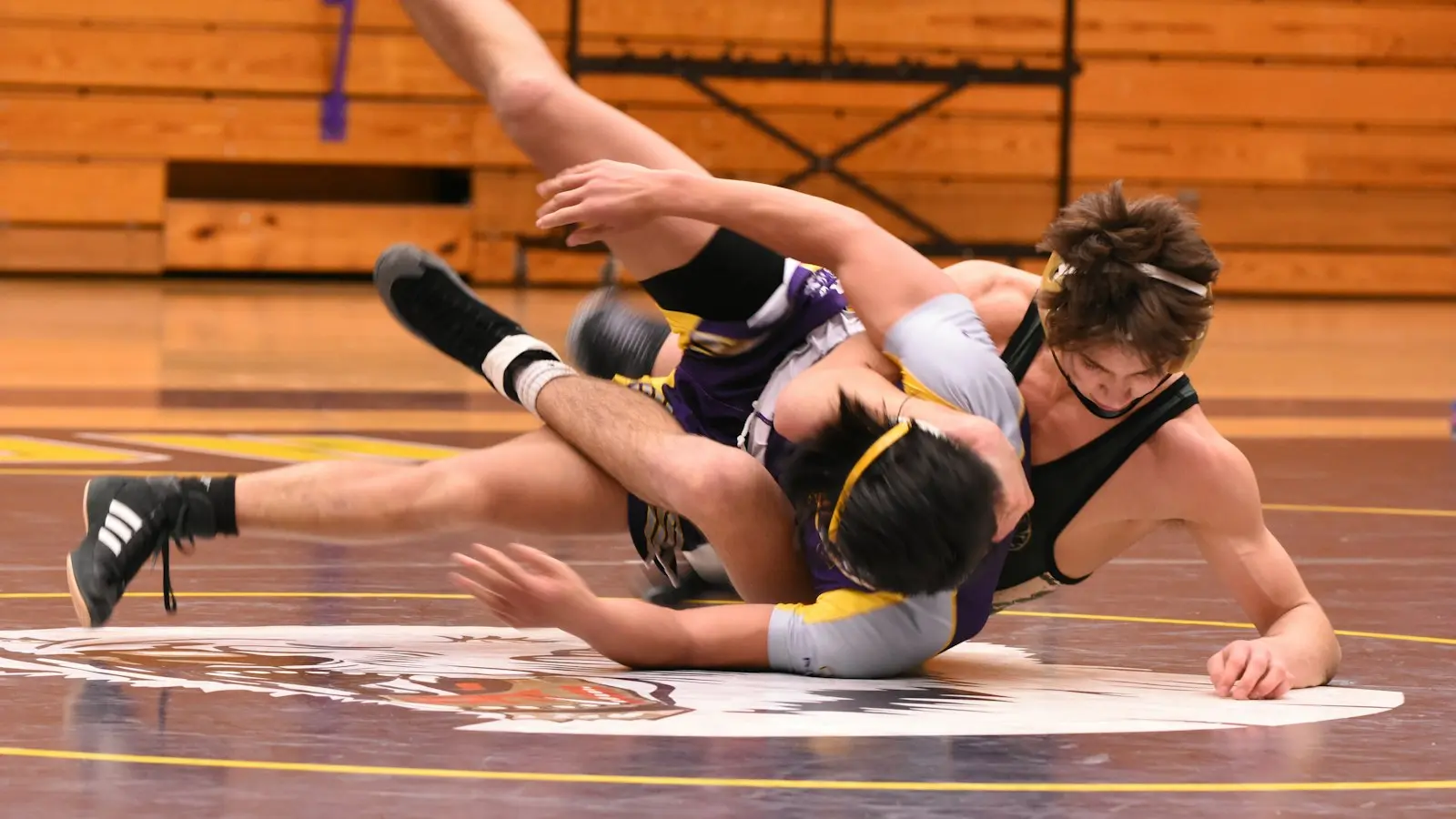
A sumo wrestler can win repeatedly with one main technique when the move fits his timing, balance, body position, and opponent selection. That does not make the technique impossible to stop, nor does a short winning run prove that specialization is better than a broader repertoire.
The real question is not whether opponents know the attack. They usually do. The question is whether they can deny the position required to execute it before the specialist has created an advantage. That is the central trade-off in a sumo single-technique strategy.
Key Takeaways
- Repeating one technique can sharpen timing, decision speed, confidence, and entry distance.
- A leg pick depends on balance, positional access, upper-body control, and precise timing; it is not simply any low attack.
- Opponents can reduce its effectiveness by denying access to the leg, controlling the upper body, or changing the initial collision.
- Rank, opponent style, tournament stage, and sample size can explain a successful run without proving a universal strategy.
- Specialization works best when the preferred attack is reliable and the wrestler retains credible fallback options.
What a Sumo Leg Pick Requires Technically
A leg pick is not simply any low attack or attempt to grab below the waist. In official sumo terminology, a successful leg-pick action may be classified as ashitori, but the exact kimarite should be checked against the bout record rather than assumed from a visual description. A wrestler reaching toward a leg, forcing an opponent down, and winning through a different sequence may receive another classification.
That distinction matters because the tactical demands differ. A genuine leg pick generally requires access to one of the opponent’s legs while the attacker remains balanced and connected through the upper body. The attacker must lower his level without folding forward, close the distance before the opponent can create separation, and control enough of the opponent’s posture to prevent a counter.
The best opportunity often appears when the opponent’s weight is moving unevenly. A heavy forward commitment, a high stance, a missed thrust, or a foot that has become light can create a brief opening. The attacker does not need to overpower the entire body if he can remove the base supporting it.
Hip and shoulder position are especially important. If the attacker reaches for the leg while his shoulders drift beyond his feet, the attempt can become a desperate dive rather than a controlled attack. If the opponent controls the head, arms, or upper torso first, the leg may be technically available but practically unreachable.
This is why a leg pick is situational rather than a universal substitute for pushing, thrusting, belt work, or throwing. It depends on a particular relationship between distance, balance, and timing. A wrestler who tries it from the wrong position can give the opponent an easy route to a push-out or downward force.
Leg attacks must also be separated from prohibited actions. Sumo rules do not make every contact with the leg automatically illegal, but legality depends on the action and its execution. A bout’s official kimarite is therefore more reliable than a casual description such as “he grabbed the leg.”
Why Repeating One Move Can Work
Repetition can sharpen the parts of a technique that are hardest to reproduce under pressure. A specialist learns the entry distance, the visual cue that signals a vulnerable stance, and the amount of force needed to disrupt balance without overcommitting. Those improvements can make a familiar move arrive earlier and with less hesitation.
That matters in sumo because the decisive exchange is compressed into a very short period. A wrestler who has rehearsed one attack extensively may recognize the correct moment before an opponent has consciously identified what is happening. The advantage is not secrecy. It is decision speed.
Confidence also changes execution. A wrestler with a trusted single-move game plan may attack rather than wait for a perfect opening. That initiative can force an opponent into defensive reactions, making the specialist’s preferred position more likely to appear.
Repetition does not have to mean performing the same motion from the same starting point. A wrestler may use a false thrust, an upper-body touch, lateral movement, or a change of pace to make the opponent adjust his feet. The leg pick then becomes the final action in a sequence rather than an isolated trick.
This distinction matters when analyzing a repeated winning pattern. The visible technique may be the same while the setup changes from bout to bout. Opponents may know the intended finish but still struggle to identify which movement will create the opening.
A repeated technique can also reflect matchup selection. A lower-ranked wrestler may face several opponents whose stances, height, movement habits, or attacking preferences make the same entry available. In that case, the pattern may represent good tactical adaptation rather than a complete technical identity.
At the same time, the pattern may expose limited options. If the wrestler cannot win when the leg pick is unavailable, opponents eventually have a clear strategic objective: deny the entry and force a different contest. Without a verified record extending beyond the cited tournament, it is not possible to decide confidently whether repetition represents durable specialization, favorable matchups, or a temporary run.
How Opponents Can Counter a Predictable Attack
The most direct response is to deny access to the leg. An opponent can maintain a lower, wider base, keep both feet active, and avoid allowing one leg to become isolated during the initial collision. The objective is not merely to stand lower; it is to make the attacker reach farther while supporting less of his own weight.
Upper-body control is another possible answer. If the opponent establishes pressure through the head, shoulders, or arms, the specialist may be unable to bend and reach while remaining upright. Controlling the attacker’s posture can turn a fast entry into a slow one, and a slow leg pick is easier to defend.
An opponent may also alter the initial collision. Rather than meeting the specialist squarely in the position he wants, he can use a strong push, a lateral angle, or a belt-oriented exchange to make the attack start from an uncomfortable distance. Forcing the specialist to defend first can remove the time needed for the preferred setup.
However, preparation has a cost. If an opponent becomes excessively focused on protecting the leg, he may raise his stance, narrow his attention, or leave his upper body vulnerable to thrusts and belt attacks. Sumo wrestling tactics are built around these trade-offs: defending one route can open another.
The effectiveness of a counter also depends on physical and stylistic details. A taller wrestler may have more difficulty keeping the legs protected at close range but may be able to use reach to control the attacker’s head and shoulders. A powerful pusher may prefer to deny the entry with immediate forward pressure, while a belt specialist may accept contact and turn the exchange into a grip battle.
There is no guaranteed counter because the leg pick is not a fixed puzzle. Its success depends on when the attack begins, which leg is exposed, how the opponent is moving, and whether the attacker can recover if the first attempt fails. A predictable move becomes less dangerous when its required position is denied, not simply because the opponent has watched it before.
Rank, Matchup, and Tournament Context
A winning record built around one technique must be read alongside rank and opposition. A lower-ranked wrestler may find that several opponents attack in ways that create opportunities for the same counter. That can make the technique look dominant without proving that it would work equally well against every style or at every level.
Tournament stage matters too. Early bouts may involve a different mix of opponents and tactical expectations than the final days, when wrestlers have more information about form and tendencies. A technique that succeeds repeatedly in one stretch may face a different test once opponents have time to adjust their starting positions and preparation.
The sample size is equally important. A defined tournament can demonstrate that a wrestler executed a move successfully under those conditions. It cannot, by itself, establish that the move is the wrestler’s permanent identity, that it caused every victory, or that opponents will remain unable to counter it.
The record also does not separate technique from context. A leg pick may appear in a win, but the decisive advantage could have begun with a strong initial collision, an opponent’s balance error, or a favorable style matchup. The official winning technique records how the bout ended; it does not always explain the entire tactical sequence.
That is why the most responsible conclusion is conditional. The observed pattern supports the claim that the wrestler had a successful leg-pick phase or a highly effective attack during a particular sample. It does not prove universal superiority or long-term sustainability without evidence from later tournaments and different opponents.
Specialization Versus a Broader Sumo Arsenal
A single-move game plan has clear benefits. It simplifies decisions, concentrates training time, and allows a wrestler to build exceptional confidence in one entry. It can also create a distinctive threat that opponents must respect from the tachiai onward.
The risk is that the specialist has fewer good answers when the preferred position disappears. If the opponent stays balanced, prevents leg access, and forces belt contact, the wrestler may be pushed into an exchange outside his strongest area. Repetition then becomes predictability rather than precision.
A broader arsenal provides insurance. Reliable pushing, thrusting, belt work, and secondary throws can punish an opponent who overprepares for the main attack. Variety also allows a wrestler to adapt to differences in height, reach, stance, and initial pressure.
But breadth is not automatically better. Several mediocre options can be less effective than one highly reliable attack. Learning too many techniques may also slow decision-making if the wrestler hesitates between them. The practical issue is not the number of techniques listed in a profile; it is whether the wrestler can reach a preferred position and recover when the first plan fails.
A specialist is best placed when the entry is repeatable, the matchup regularly exposes it, and the wrestler retains at least one credible fallback. That fallback does not need to be equally dangerous. It only needs to prevent opponents from shutting down the entire offense with one defensive adjustment.
So, can opponents prepare for a known leg pick? Yes. Can preparation guarantee that it will fail? No. Speed, balance disruption, and the quality of the setup may allow a specialist to complete the attack before the defense is fully established.
The best reading of a sumo single-technique strategy is therefore neither admiration for repetition nor criticism of predictability. It is an assessment of conditions. One technique is a sound strategy when it consistently creates favorable positions and remains connected to other threats. It becomes a weakness when opponents can remove the entry and force the wrestler into a contest he has not shown he can win.
FAQ: Sumo Single-Technique Strategy
Can a sumo wrestler win by relying mostly on one technique?
Yes. A wrestler can build a successful competitive phase around one main attack if the timing, body position, and matchup conditions support it. Success is more sustainable when secondary options remain available if opponents deny the preferred entry.
Why is a leg pick difficult to stop even when opponents expect it?
Expectation does not remove the need to react in real time. If the attack begins as the opponent’s weight shifts, the specialist may reach the leg before the defender can widen the base or establish upper-body control.
Does repeated use of one sumo move show specialization or a technical weakness?
It can indicate either. Repeated success may show refined timing and a deliberate tactical identity, but it may also reveal limited options. Rank, opponent style, tournament stage, and evidence from later bouts are needed to distinguish the two.