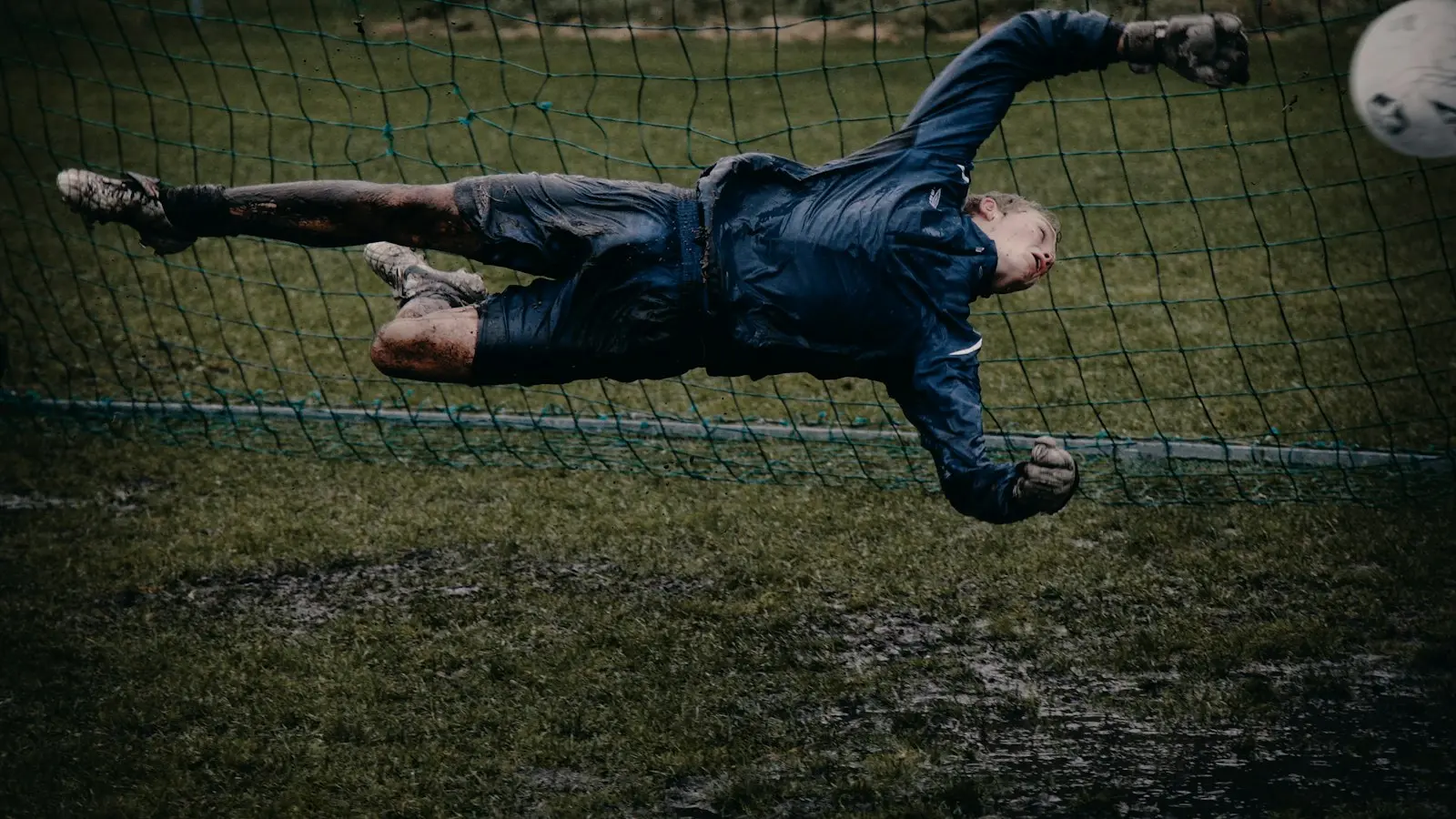
A goalkeeper recovers from a deflection own goal by separating the outcome from the decision-making process, resetting attention quickly, and helping the defence organise for the next phase. The goal may involve goalkeeper positioning, a defender’s touch, poor pressure on the shooter, or simple bad luck—and often several of those factors at once.
This is why a goalkeeper own goal should not be judged only by the final image of the ball crossing the line. The useful analysis is more detailed: what did the ball do before the deflection, what information did the goalkeeper have, and which decisions were still controllable?
Key Takeaways
- A deflection can sharply change a ball’s direction, speed, height, or spin after the goalkeeper has already committed to the original shot.
- Responsibility should be assessed across the defensive sequence, not assigned automatically to the goalkeeper or the player who made the final touch.
- A late, close-range deflection can make a save extremely difficult even when the goalkeeper’s starting position was sound.
- The immediate priority after conceding is to reset attention, communicate the next defensive task, and restore the team’s shape.
- Training should recreate screened shots, deflections, rebounds, and second balls before reviewing which decisions were controllable.
How a Deflection Turns a Routine Defensive Action Into an Own Goal
Consider this clearly hypothetical sequence. An attacker strikes a low shot from outside the penalty area. A defender steps across the line of the ball and makes a partial block. The touch changes the ball’s direction, reduces or increases its speed, and sends it toward a space the goalkeeper was not initially covering.
The sequence can be broken down into five stages:
- The attacker creates the original ball path.
- The defender changes that path with a block, clearance, or accidental touch.
- The ball’s speed, angle, height, and spin alter after contact.
- The goalkeeper adjusts from the original shot picture.
- The new trajectory reaches the goal before a controlled save is possible.
A deflection is not simply a shot moving in a slightly different direction. Contact can redirect the ball across the goalkeeper’s body, make it dip or rise, or send it against the goalkeeper’s initial momentum. A firm defensive touch may also leave the ball travelling quickly even though the original shot looked manageable.
Distance matters. A deflection close to goal gives the goalkeeper less time and less space to move. The angle matters too: a ball redirected toward the far corner may require a lateral push, while one moving back toward the near post can punish a goalkeeper whose weight has already shifted the other way. Spin and an uneven contact point can make the bounce less predictable after the ball reaches the ground.
Video replay can distort this assessment. From a broadcast angle, the full path may be visible and the save may appear available. In real time, the goalkeeper may have been tracking the original shot through bodies, reacting to the defender’s touch late, and moving in response to information that changed only a fraction of a second before the ball arrived.
That distinction is central to football deflection analysis. A deliberate block, a rushed clearance under pressure, a wrong-footed touch, and a goalkeeper who begins from a poor position are different events, even if they produce the same own-goal statistic.
Was It Goalkeeper Error, Defensive Error, or Bad Luck?
Responsibility should be assessed through a sequence rather than assigned from the outcome. A useful review asks six questions: Was the goalkeeper’s starting position appropriate? Could the shot be seen clearly? Was the shooter under enough pressure? When and where did the defender make contact? How much did the ball change direction? Was there a realistic save opportunity after that change?
The goalkeeper has responsibilities before the deflection. These include choosing a position that covers the likely shooting angles, staying balanced, communicating danger, and preparing for a possible rebound. The defender also has responsibilities: closing the shooter, blocking without exposing a central lane, and dealing with the ball in a way that does not create a worse danger when alternatives are available.
Those responsibilities overlap. If the shooter has time to strike cleanly because the defensive line fails to close down, the later deflection may be the final event in a wider defensive breakdown. If the defender is forced into a desperate block by an excellent attacking move, the resulting own goal may be largely unavoidable. If the goalkeeper is positioned too far toward one side before any touch occurs, the same deflection may expose a preventable weakness.
The key question is not, “Who touched the ball last?” It is, “Which decisions could realistically have changed the risk before the ball became uncontrollable?” That keeps the analysis fair for both players.
A deflection is more likely to be described as bad luck when the goalkeeper is balanced, has a clear initial view, reacts promptly, and the defender’s touch produces a sharp late change from a short distance. It is more likely to indicate a preventable error when the goalkeeper is poorly positioned without tactical reason, fails to see an obvious shot, or the defence allows an avoidable, unpressured attempt from a dangerous zone.
Even then, the categories are not absolute. A poor defensive decision can create an unlucky deflection, and a technically sound goalkeeper can still concede a goal that looks spectacularly avoidable in replay.
Why Reaction Time Can Become Impossible
Goalkeepers do not react only to the ball. They read the striker’s body shape, the direction of the shot, the position of defenders, and the likely path of a cross or pass. A late deflection removes or changes those visual cues.
Wrong-footing is one of the clearest examples. If the goalkeeper begins moving toward the original shot and the defender redirects it in the opposite direction, the goalkeeper must first recognise the change, stop or reverse the movement, and then push toward the new path. The problem is not simply reflex speed; it is that the body is already committed to a different action.
A screened goalkeeper faces another difficulty. The ball may disappear behind a defender at the moment of contact, meaning the goalkeeper sees the new path only after the ball has travelled some distance. A near-post deflection can be especially damaging when the initial shot appears to be moving across the body and the touch sends it back toward the goalkeeper’s starting side.
This is why a technically good starting position does not guarantee a save. Positioning improves the available options, but it cannot remove the effects of a late, close-range change in trajectory. Conversely, an impressive dive does not prove the goalkeeper was well positioned if the initial stance created the problem.
Supporters and coaches should therefore distinguish between an extremely difficult save and a clear positioning flaw. The relevant comparison is not whether the goalkeeper touched the ball, but whether a better decision before the deflection would have made the outcome materially more controllable.
The Immediate Response After Conceding
The first priority after a deflection own goal is not to conduct a full investigation on the pitch. It is to reset attention, organise the next defensive assignment, and prevent one incident from creating a second mistake.
A goalkeeper’s communication should be short and specific. Useful instructions might confirm who is marking the nearest threat, identify the most dangerous area for the restart, or tell the defensive line whether to step up, drop, or protect the central channel. The exact words depend on the situation, but the principle is consistent: communicate the next task rather than replaying the previous error.
Defenders can help by acknowledging the event briefly and moving into their next position. A quick gesture or concise exchange is often enough. Prolonged arguing may satisfy frustration, but it consumes attention that is needed for the next phase.
For the goalkeeper, a practical reset can include one controlled breath, a deliberate visual focus on the restart location, and a clear next action such as checking the line, scanning runners, or setting the wall. This is not a guaranteed psychological formula. Different players regain concentration in different ways, and some need a brief private reset while others respond best through immediate communication.
The important point is to avoid both extremes. Pretending the mistake did not happen can leave the underlying issue unexamined, while repeatedly replaying it during the match can damage decision-making. Effective own goal psychology is usually process-focused: recognise what happened, identify the next responsibility, and postpone detailed evaluation until the appropriate review.
Training and Review Methods That Reduce Repeat Deflections
Training should expose goalkeepers and defenders to changing information rather than relying only on clean, predictable shots. A coach can begin with screened strikes from the edge of the area, using defenders who partially block the goalkeeper’s view. The exercise can then progress to controlled deflections from different distances and angles.
Useful variations include:
- A defender making a deliberate block from a shot taken through traffic.
- A close-range touch that changes the ball toward either post.
- Rebounds after an initial save, with attackers following the second ball.
- Low crosses that strike a defender and remain live in the penalty area.
- Shots arriving after a defender has been forced to turn or clear under pressure.
- Communication exercises in which the goalkeeper must organise marking and coverage before and after the strike.
The goal is not to make every deflected shot saveable. It is to improve recognition, body balance, communication, and the team’s response when the ball behaves unexpectedly. Coaches can vary starting positions, contact points, shot speed, and the number of players in the line to test decisions without treating every concession as a technical failure.
Defensive communication should be trained before the shot as well as after it. The goalkeeper may need to call the pressure on the shooter, identify an unmarked runner, or tell a defender whether to hold the line or engage. Defenders, in turn, should understand who covers the space behind a challenge and where the second ball is most likely to fall.
Post-match review should follow a fixed process. First, reconstruct the timeline from the attacking action to the goal. Second, identify what each player could see and know at each moment. Third, separate controllable decisions from the final outcome. Finally, choose one training adjustment rather than producing a long list of faults.
For example, the lesson might be to close the shooter earlier, protect the central lane, begin from a more balanced goalkeeper position, or improve the call before the shot. A fair review does not remove accountability; it makes accountability useful. The objective is better coverage and faster recovery, not a convenient culprit.
Frequently Asked Questions
Can a goalkeeper be blamed for an own goal caused by a deflection?
Sometimes, but the final deflection alone is not enough evidence. Review the goalkeeper’s starting position, visibility, movement, and realistic chance of saving the altered ball. If the trajectory changed sharply and late from close range, the goal may be primarily unfortunate. If the goalkeeper’s initial positioning or communication created an avoidable weakness, responsibility may be shared.
How can a goalkeeper regain focus immediately after conceding an own goal?
A goalkeeper can acknowledge the incident, use a brief breathing or visual reset, and immediately communicate the next defensive task. The most useful focus is specific: organise the line, check runners, prepare for the restart, or identify the next danger area. This supports concentration without pretending the mistake did not happen.
What training drills help defenders and goalkeepers handle deflections and second balls?
Use screened shots, controlled blocks, close-range deflections, rebounds, low crosses, and second-ball games. Add communication requirements before the shot and immediate reorganisation afterward. Vary the angle, distance, speed, and number of players so the exercise develops decisions rather than memorised movements.
A deflection own goal recovery is therefore a team process. The goalkeeper must regain attention, the defenders must restore structure, and the coach must explain the chain without confusing an unlucky outcome with poor technique. That approach produces better decisions than blame—and gives the next deflection a better chance of being managed before it becomes another own goal.